
What happens when women stop backing their doubts and start backing themselves?
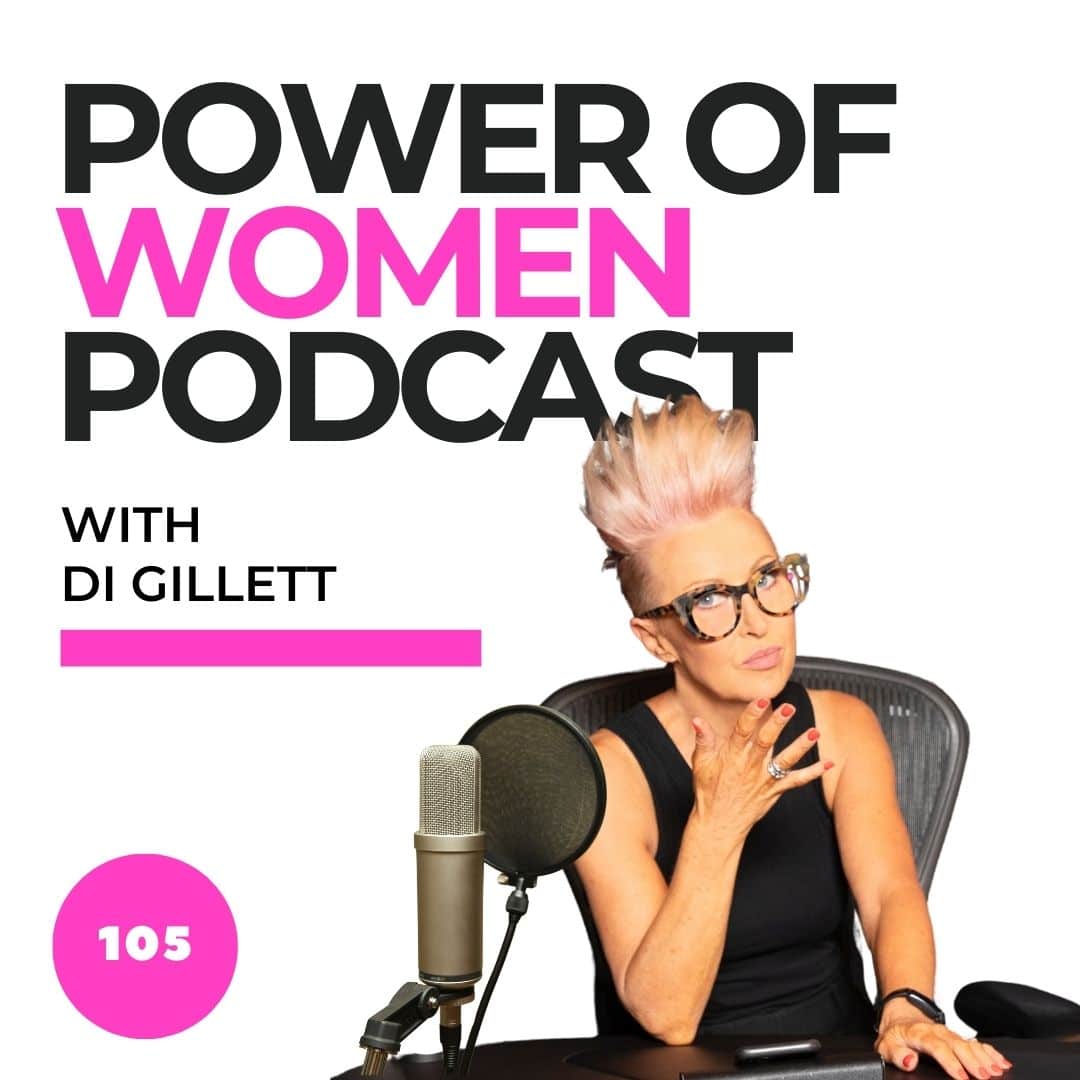
In this unfiltered conversation, Margie Warrell, globally recognised expert in leadership and human behaviour, and bestselling author, joins Di Gillett on the Power Of Women Podcast to explore why self-doubt, not ability, is the biggest limiter of women’s leadership, visibility and agency.
Margie shares her personal journey through adversity, loss, and reinvention, revealing how courage is built through action – not confidence – and why waiting to feel ready is often the very thing holding women back.
This episode is for women who know they’re capable of more, but feel caught between who they are now and who they’re meant to become.
➡️In this episode, we explore:
➜ Why the chances we don’t take cost us more than the ones we do
➜ How self-doubt limits women’s visibility, leadership and financial independence.
➜ Why courage is not a feeling, but a decision
➜ Why choosing your response is the ultimate act of power.
Key takeaways::
➺ It’s the chances we don’t take that we regret the most.
➺ Backing ourselves is crucial to overcoming self-doubt.
➺ Financial independence is foundational to female agency.
➺ Adversity doesn’t define you – how you respond does.
➺ We are not our struggles or doubts; we are more than that.
📖 Read the full transcript of this conversation here 👇
MARGIE WARRELL_Guest (00:11.784)
It’s the chances that we don’t take that we regret the most. And too often we back our doubts versus backing ourselves. And when we let our doubts call the shots and direct our action, they sell us short and they shortchange the future and they actually sell everyone else short of who it is we could be.
Have you ever stopped to ask yourself, what would you do if you went all in and backed yourself? I’m Di Gillett and this is the Power of Women podcast. And what I love about this platform is the opportunity to showcase and celebrate the strength, resilience and achievements of women from all walks of life. Today’s guest, Margie Worrell is somebody who embodies that spirit and fully commits. She’s a bestselling author.
global keynote speaker and leadership coach whose work has inspired countless women to lead with courage and conviction. In this conversation, we’ll explore what limits brave thinking and decisive action, how to turn self-doubt into growth, and why the bravest thing any woman can do is back herself. Margie Worrell, welcome to the Power of Women podcast.
Thank you for having me die.
Margie, I can detect an international accent. I know you’re sitting in New York today and I’m here in Oz, but where exactly did you grow up?
MARGIE WARRELL_Guest (01:46.338)
I grew up, Victorians may stand a chance of knowing where I grew up, most people who don’t come from Victoria have never heard of it, but I grew up in a little tiny place called Nungurna that’s midway between Lake Sentrance and Bairnsdale in East Gippsland, Victoria. We didn’t even have a shop.
There was a school, I was the only kid in my grade, and I grew up on a dairy farm. My dad obviously milked cows, my whole childhood. So it was a very rural Aussie country kid upbringing.
We have that in common, Margie. I too grew up in country Victoria, but we had a couple of shops close by. So yours was slightly more rural than mine. And I always feel that people who have had that rural upbringing, it absolutely plays into who they become later in life because there’s a certain resilience that comes from that.
Does that play into how your character has formed, do you think, over time?
There’s no doubt, Di, I think you learn to be a little scrappy. You learn to pick yourself up a lot. I also feel that it’s such a humble upbringing in many ways. There’s nothing about it that you could use if you were trying to be pretentious about
DI GILLETT: Host (03:04.831)
you
MARGIE WARRELL_Guest (03:21.698)
you know, what you did or where you went to school or and so it’s a wonderfully grounding place to start life from. And I think it shaped me in many, many ways. I think Australian culture shaped me in the sense that it was a bigger insult to be called up yourself or stuck up than it was to be called a bitch or mean.
You know, it’s like, maybe I don’t call me stuck up don’t say I’m up myself and so I think the flip side of that is that we can be too humble and we can talk ourselves down too much but but I I feel like it’s all I always look back at my childhood with with a lot of gratitude for the ways it shaped me and I’m you know, I
It’s probably shaped me in a few ways I’ve had to overcome too. You know, so much self-doubt and who am I to do that? And maybe a lack of self-belief throughout my adult journey, which is sort of why I write and speak and have such a deep passion around courage because I feel like I’ve had to practice it a lot.
And I bet it also came into teaching you to get up early because nobody gets up earlier than dairy farmers.
Well, I will say my dad probably got up earlier than the rest of us. It’s not like, guess people picture me and all my siblings, I’m a big sister of seven, picture us down there at the crack of dawn milking the cows. The fact is, dad did a lot of the hardest work in the early mornings and we pitched in around it. the truth is I am an early riser, so who knows, maybe that’s what shaped it.
DI GILLETT: Host (05:06.67)
I must admit, Margie, we had an infestation of snails in our backyard the other week and I pulled on gumboots and went out and squashed them and my husband grew up in the city and he was horrified and I said in the country there was nothing more fun than going out and stomping on snails.
Stuff like that or throwing cow muck at each other or I mean yeah there’s a lot of things that I did for fun that when I tell people they’re slightly aghast so I have to choose my own.
Yeah, no, I get that. It’s the same in my world. So what took you to the US and how long have you been there?
Well, this is my second time living here. The first time I moved here, I mean, I backpacked around America when I was 21. I saved up my travel as checks as a lot of Aussies do. And I should mention my mum was born in America, but she moved to Australia when she was seven. And so growing up though, I always was like, my mum’s American. She didn’t have an American accent. She was not, she didn’t act
remotely like what we think of as American. She was super introverted and quiet and private and understated. But I always had this little kind of probably emotional connection to the United States simply from mom always cherished her US roots and actually never became an Australian citizen always until she died two years ago always kept her US citizenship even though she didn’t vote or anything. She just
MARGIE WARRELL_Guest (06:42.766)
It meant a lot to her. So I’ll just say that because some people kind of like helps explain a little bit maybe why I was drawn here. But when I, after I met my husband, I was like, I really want to go and live globally. And he is from Melbourne and he is an engineer and work for a big company. And an opportunity came up in 2001. had, actually I was pregnant with our third child to move to their corporate head office.
And honestly, it just seemed like, yeah, let’s do it. What an exciting opportunity for him professionally, but for us as a family. And so we moved to the US. As it turned out, we packed up our house literally the morning that everyone in Australia was waking up to the news of 9-11. And I had a five-week-old baby and a two-year-old and a three-year-old.
We could all remember where we were at that time. Yeah.
We can. I mean, it was a really challenging time. I mean, one having three tiny children, but then moving somewhere where there was zero support and no friends and then add on the whole, you know, 9-11 fear factor and everything. So I lived here actually for 11 years and really came, I mean, my professional career in terms of coaching and speaking and writing, I started that in the United States.
You know, they’re kind of in a deep back studying before I moved to the US, but I launched it living in Dallas, Texas with four kids, five and under. And then moved up to Northern Virginia.
DI GILLETT: Host (08:14.926)
I think, yep.
think it’s just like, you know, you’ve got four kids, five and under, but I can start a coaching business. And then had 11 years and then moved back to Melbourne for five years, Di, which was in 2012 through 2017. And I’m really grateful for that. It came out of the blue. Again, Husband’s Company said, want to move you back to Australia. It wasn’t, we had zero inkling that that was going to happen.
But it was a really beautiful opportunity for my kids to know what it is to be really live in Australia. And they went to primary and high school in Australia. And I think it really solidified their identity as Aussies. They’re very global and all of them.
Do they identify as Aussies or do they identify as global citizens?
The oldest three, my youngest was born in US, but the oldest three, and they all have Aussie accents. They got back, I remember their first day at school, my oldest, Lachlan, was nearly 14 coming home, and he goes, I told people I’m Australian, and they’re saying, they say I’m not, they’re saying I’m an American, because I sound American, and he had a real American accent, and I won’t, I won’t, I won’t do that to you. And so insulted that people didn’t think he was Australian.
MARGIE WARRELL_Guest (09:33.966)
I just know the kids went on up like we are going to sound Australian as fast as we can and they have never given up that Australian like they were there you know several years up to five and a half of my younger two and I think that for them was just to know this is how we’re Australian we will sound Australian.
How wonderful. So tell me what was it experience or your upbringing that drew you into this interest in human behaviour, Margie?
There’s probably a little bit of both, but it was definitely some difficult experiences in my 20s. I actually moved to Papua New Guinea in my 20s. had three years there and then back to Melbourne, then to Adelaide, then to Dallas, then to DC, then back to Melbourne, then to Singapore, and then back to the US. So that’s the trajectory of all the moves. But during my time in Papua New Guinea, I had had an eating disorder. I’d had bulimia through my teens die.
Ironically, I heard about, believe me, a reading of Dolly magazine when I was 13. And I thought…
Doesn’t that ring a chord? Hmm.
MARGIE WARRELL_Guest (10:42.35)
a great way for me to be skinny. I just want to be skinny and I wasn’t skinny. I mean we say that now and we listen to that and go, but that’s me at 12, me at 13 was desperate to be skinny, like centrin to say.
And so many of our listeners would relate to that. I totally relate to that.
had tried taking laxatives and all that anyway cut a long story short I ended up for 13 years struggling with bulimia
In secret, Margie, or was it known to others?
Yeah, really, yeah, really in secret. And my parents knew, but they didn’t know what to do and they never said anything except making the odd off the cuff remark about don’t waste food. Like, don’t waste good food. And I just think they didn’t have the tools, they didn’t know how to deal with why would someone eat and throw up, you know. And of course, I didn’t know what to, you know, it’s not something I shared with anyone.
DI GILLETT: Host (11:46.542)
The system didn’t have many tools to help us with it either.
No, there was still and there was so much shame. I remember just thinking if people knew and they wouldn’t like me and and I was pretty high functioning. I mean, I always did well at school. I was very social. I got great grades. I just see school.
How low is it in, because it needs determination to do that?
Yeah, I so, but I carried that with me. I shared it with my friend Anna, Anna Quinn. Hello Anna, if she ever listens to this in Brisbane. And I shared it with her at university. And I didn’t want to tell anyone and I told her and she said, and it was just the power of friendship. She said, you know, maybe you should go and talk to someone. Maybe you should go see a psychologist. And I was like, but only crazy.
I had this thing that only people who are really not functional see psychologists. But it was like, that maybe that would be a good idea. And that was the start of the journey. But it was while living in Papua New Guinea, five years on, I moved there at 2026, that it flared up again and I did a 12-step program. And I made friends with a few fabulous women.
MARGIE WARRELL_Guest (13:08.258)
who was struggling with their own things. One of them cut herself. you know, people were having, infidelity was rampant. And I found myself the confident of a lot of people, not a lot, but a handful. And I realized I really wanted to, I discovered Scott Peck and Wayne Dyer, and I was like, I wanna be someone that helps people deal with the internal struggles.
and I met so many smart, amazing people that were hurting themselves. And that was really the beginning of the journey. And then while I was there, I ended up in an armed robbery die and I lost a baby, first child, only 20 weeks pregnant, 10 days later. And that was pretty traumatic. And just as I picked myself up from that, I decided, I just want to go back and study psychology. I had been working in marketing.
and that was that took me off on the path that I have been on ever since and that was gee that was 1997. Where are we so you know was that 28 years ago? Yeah something like that and I had no idea where it would go by the way. had no idea. I’d never heard of coaching. I didn’t even know that people got paid to speak. Writing a book never crossed my mind.
It was more, at that moment I would have said, I wanna be a psychologist.
Wow, that’s a huge amount of experience leading into that, Margie. Thank you for sharing. how did that then become, because bold moves and courage has become your thing, how did you even tap into that to then talk about that based on such challenging life experiences that you went through?
MARGIE WARRELL_Guest (15:04.878)
When we share the things that we have shame around, it removes and helps dissolve the shame. So that was one thing. And I felt almost a sense of obligation. I don’t, my identity isn’t that I had an eating disorder and I don’t always share it because I don’t always feel it’s relevant. But when I do feel it can be relevant or helpful, happily share it. don’t know if the word happily, but I’m really comfortable and I feel really, I really feel a strong sense of
conviction and an end obligation around sharing that story. But I should also mention, you know, I have a brother who had a brutal mental illness for a decade, schizophrenia before he took his life. And I have another brother who had a terrible accident two years before Peter took his life and became paraplegic, had developed, it was spinal injury, has paraplegia still ever since then.
and my mom’s really struggled with depression, there was just numerous pretty brutal experiences. I had ended up with five miscarriages, you know, and I think I believe that each of us is born with a unique set of talents and I feel a strong sense of purpose around
the work that I do, but so much of that comes from the hardest experiences that I’ve had. And yes, have I been bold and had a sense of adventure? Sure, yeah, I have. But it’s not been in the absence of a lot of doubt and a lot of misgivings and a voice in my head Di that says, who do you think you are? And just wait, someone’s going to realize you don’t know as much as you think.
you’re not that brave, you’re not that, you know, like that voice is there. And, you know, that comes, obviously comes from the childhood days when big sister, I couldn’t help my mom enough when there was a lot of pressure on me, et cetera, to always be doing things and never feeling like I was measuring up. So just, I think all of those experiences have shaped me, but also that’s where I probably have drawn my own wisdom over the years too.
MARGIE WARRELL_Guest (17:20.142)
Who we are is not our doubts, who we are is not our struggles and our setbacks and our hardships and our heartaches. Who we are is something infinitely more than that. And so often our fear and those stories that we’ve been telling ourselves for a long, time create this barrier that keeps us from really connecting with what I think is the sacredness of who we are.
I see ourselves as not so much physical beings having this occasional spiritual experience, but really spiritual beings who have these earth suits and have this physical experience. a quote that I actually put in my last book, The Courage Gap, is that God had a dream and he wrapped your body around it. I just, that sort of encapsulates a little bit of how I
I view life for myself, do you view all of us as here on this planet for so long and what does it mean for us to live lives that are just really true and honoring who we are and the journey we’ve had.
I did an episode last year, Margie, with Carly Lyon, and she talks about three universal thoughts, and one of them is exactly what you said. Who do you think you are? I mean, your life experiences and the adversity from a personal level could have absolutely broken you and would have broken many.
decisions did you take and can you share how you actually didn’t allow that to become the defining moment that broke you and kept going? Because you had multiple encounters that could have been a tipping point.
MARGIE WARRELL_Guest (19:13.08)
Yeah, you know, I can recall I’m a journal die. I’ve been a journal all my life. Well, since I remember finding a little diary, you know, when I was 11 on back then it was like Sharon’s my best friend and I like Ricky and I hate Ricky and you know, like that’s where I started as an 11 year old. I’ve often, I’ve often just written to process what I think and,
And I’m mindful as I’m speaking to you now, you probably have largely a straight in audience and I’m very mindful of the cynicism around religion sometimes or certainly, you know, spirituality. But I have a really strong faith system and that has been
a huge source of resilience for me and courage. And I recall though after I was in this arm droppery, it was pretty violent. And then 10 days later, I got told your baby has died. And I was 27. No, just turned 27. And I remember journaling a lot because there was a lot of like, what the fuck, God.
Like seriously, how could this happen to me? can’t believe, I mean, I knew intellectually women have miscarriages. knew, you know, that bad things can happen to good people. I knew that, but I just somehow didn’t think it would happen to me in really close succession, like super tight timeframe there. So I hadn’t even processed the first event and the second happened.
And so I journaled a lot and I wrangled and I was like, you know, fighting with reality, fighting with whatever I call it, God, right? I’m just going to say that. And some people might go, I don’t believe in God. I’m like, okay, you’re just fighting with life. Like what has happened here? And, and I just remember journaling a lot, trying to make sense of it all. But I arrived at probably six weeks, two months. And after those events,
MARGIE WARRELL_Guest (21:27.03)
And there came a moment and a lot of people felt really sorry for me. know, word had spread, know, she was in his arm drummer and then she lost her baby and people were feeling really sorry, a lot of sympathy, which is nice. But I could feel people treating me like a victim and I was a victim. There was no doubt I had been a victim of, you know, violence. I had been a victim of miscarriage as are many, many, many women. Mother nature, whatever you call it.
But I remember having this moment of clarity. I do not want to identify as a victim.
absolutely want to reclaim all the power that I’ve given away to woe is me and my pity party and this isn’t fair and how can this happen to me and it didn’t happen to the five other women I know that are pregnant right now who are now getting bigger and bigger and and and so I just remember this moment of decision. I will not give my circumstances the power to define me. I will define myself and it was a real it was a real moment of clarity.
I get to choose who I am and I get to create my story and it will not be a story of poor me. And it was that little name that was on that moment of like, what is it that I will do this year that I’m not? And I went back and I signed up Deakin University back then with distance education and I signed up and did this course in psychology and that was the start of the path I’m on. But I think there’s been many moments since then where
And in more recent years too, when things aren’t the way I’d like them to be. And yeah, I’m as vulnerable as everyone to going down the, it’s not fair. And it shouldn’t be this way. I’ll never make it. know, all the negative tales we can tell ourselves and those shameful stories we can tell ourselves. And I’ve just become a little more masterful. I’m not saying I’m a master, but a little better.
MARGIE WARRELL_Guest (23:29.12)
at catching myself when I’m in the midst of telling this story that I know is not empowering me, that is sucking my HNC, that is keeping me from backing myself.
And so hence the courage piece that I talk about and write about, which isn’t an absence of doubt and fear and everything else, it’s the decision that something else is more important. It’s not an emotion, I disagree with Brené Brown on this one, you the emotion of courage. Like if we’re waiting to feel brave or courageous, you could be waiting until you’re 100. No, it is a decision, it’s a practice, it’s a discipline.
I’m gonna do this thing even though I’m honestly, my stomach is feeling sick and I’m terrified that people are gonna discover I’m really not that good. But I’m gonna do it anyway because I don’t wanna look back one day and go what if.
Can you draw a thread, and I know in my own life through adversity, I draw a thread coming all the way back to growing up in a country setting because there is nothing more challenging than your survival being dependent on the weather. You can’t control it. So you’ve got to be incredibly damn resilient to bounce back.
When things outside of your control keep getting thrown at you and making life difficult, you either make a decision to fold up and walk away or you make a decision to keep going. Do you see a thread between childhood and those decisions that you’ve made to go, I’m going to take control of this?
MARGIE WARRELL_Guest (25:15.682)
realized that I had experienced some trauma when I was nine until about six or seven years ago. And I’ll share the story because it was interesting when I connected the dots. When I was nine, it was a terrible drought and my dad had to sell his entire herd, couldn’t afford to feed them, except a few cows that he kept for our family and for bartering with local fishermen and et cetera.
And I remember as the cattle truck went down the lane way, just looking at dad and I realized like, how are we going to get money? And none of my other siblings, I think they were too young. They just, I was just so clear for me, it was like, this is the source of income going down the lane way. And I remember my dad saying, I don’t know, but we just have to trust the good Lord will provide. And I remember thinking, how does the good Lord provide? Like, does he, does he just put money on the back of a rander? Do we win tax lotto? Like,
And for the next four years, my dad did odd jobs with his tractor. mean, we, I mean, we never went to restaurant my whole childhood, but we always had op shop clothes. Like there wasn’t, there was never any money. I mean, not that, but we never, of course, went hungry. And so I guess the good Lord did provide, but it was as an adult, a few years ago when something happened and the certainty I had about future financial security suddenly was blown up and I had an anxiety attack.
And I knew it was irrational. knew intellectually it was irrational. I wasn’t going to end up on the streets in destitute. But it was like that truck was going down the laneway again. And suddenly the nine-year-old in me was like, I’m terrified that I’m not going to be, that I don’t have enough security. And of course, as kids, we look to our parents to make us feel secure.
and I had to just look in and go, you know what, Maggie, know, no one’s coming to save you, but seek within yourself the security you look for elsewhere. And I really overreacted to the situation. It was disproportionate. My fear factor was disproportionate. And so I do realize I don’t think I would have ever married a farmer die. I don’t think as an adult, never.
MARGIE WARRELL_Guest (27:39.746)
wanted that level of insecurity that it was dependent on the prices, the cream prices and the weather systems. I also don’t think I’ve ever married an entrepreneur.
Mmm, for the same risk profile.
I don’t want to lose it all. I don’t think I’ve ever met an artist. I’ve always had a crush on Hugh Jackman. It’s funny, my husband is an engineer and it wasn’t a conscious decision.
Well maybe it… yeah.
But I think at a subconscious level, like, engineer, you know. And so I see that now. But I also think those experiences that were a little jarring for me and did create some insecurity in me also fueled agency and fueled drive. And my mom actually was a fairly passive person.
MARGIE WARRELL_Guest (28:36.204)
I think also reacting against my mom, like no one’s ever gonna say I’m sitting back and being passive, like really fueled, like, you know, if it’s gonna be, it’s up to me, like go out and get shit done. And I think that also shaped me too.
Yeah and I tell a story Margie about what defined my agency about being financially independent was in growing up in in the country setting that I grew up in it was commonplace every week to hear my mother say on a Monday morning, Max can you leave me a check on the dresser? Now wasn’t that mum had to beg for money it’s just that dad controlled the bank account in
as was done in those times, even though she was the daughter of a bank manager. And I can remember hearing that every week and it would play over in my head and I used to think, why does mum have to rely on dad to have any income? And it was a drip feed to go.
I’m not going to do that. I am going to be financially independent and not rely on anybody else or a man for my financial security. different story, but same impact.
think there’s a lot of women who have witnessed that or they witnessed their parents breaking up and dad, sure, mom got something, but she could only get, she could only do an hourly job because she hadn’t worked for years. She couldn’t afford to keep the house because she couldn’t afford the rates on it, you know, or whatever. Yeah, men aren’t a financial plan is what I would say. I’ve often said, don’t.
DI GILLETT: Host (30:12.046)
Exactly.
DI GILLETT: Host (30:19.456)
That might be a grab, Margie. aren’t a financial plan. I kind of like that. And not to be disrespectful to any of the men in our lives, but I get it.
Men are awesome. I’m a huge man fan. I have three awesome young sons and a great husband, But I do think as women, it’s so important for us to be rooted in both our, obviously our feminine power, but you know, some of the masculine like, you know what, you don’t need, I mean, they choose to be with someone because they make you better and they bring out your best, not because you need it. And something I’ve seen die,
with women so many times and it hurts my heart is women who settle for a man because it’s the best I can get because they’re afraid of being alone because they don’t feel complete without a man to protect them and I’m not saying I don’t love that my husband gives me a sense of feeling protected and we’re together, sure great, but I know I can stand on my own two feet and that was a really wonderful place to go into.
a relationship when I was in my 20s. Because it’s like I’ve traveled around the world. I’m extremely independent.
You arrived there early, Margie, because I mean I think a lot of women don’t land at that point of standing on their own, you know, feeling empowered enough to stand on their own two feet until much later in life than early 20s, so.
MARGIE WARRELL_Guest (31:47.822)
Yeah, well I think that is to die. left home at 18 to move to Melbourne for university. There was no family. I had to find somewhere to live through the papers. You know, that was the Wednesday age. I, there was no school dormitory. didn’t, there was no living at Trinity college or I. You if you had that, I would have loved it. It would be awesome. I was living with random people in random.
Indeed, I apologize.
MARGIE WARRELL_Guest (32:16.696)
sometimes like really
Ordinary setting, yeah.
MARGIE WARRELL_Guest (32:23.87)
I mean, got something from the government because my parents
would have been called teese in those days, Margie.
But I also work three jobs and so I think by the time I got to 22, I’m four years being 100%. I mean, even before I left home, I was making all my own money, buying my own bedding. So it sort of gave that grittiness, that tenacity, resourcefulness that I think some kids, when parents are buying you your own car, when your dad’s helping you figure out how to sell or whatever,
You’re used to putting your hand out and not driving your own decisions.
actually even as a parent die, you know, my kids would never accuse me of over-parenting. I’ve been very much like, figure it out. you know, I think as they’re getting now into their twenties, they can see that they have a self-reliance and independence that even though I could have given them things that my parents couldn’t afford to give me, I’m like,
MARGIE WARRELL_Guest (33:33.696)
I’ve got kids living in New York and people go, you do help them with rent? A lot of people I know help their kids with rent. I’m like, no, you want to live in New York? You need to learn how to live in New York on your school salary and in the hovel that you can afford. even though I could help you, I want you to know what it is to be poor.
Well, and I love that because I think there is so many parenting mistakes made of, want to give my kids everything I didn’t have. I think that point is an error and I know in my own upbringing if I was a horse rider and a dressage rider and if I wanted anything to do with livestock or anything to support that career and I didn’t have the money, I’d have to go to dad and negotiate and I had invested in.
a small herd of cattle, in fact, with my father. And I used to sit down and he would say, well, how many are you prepared to sell to fund what you want? And if you’re prepared to do that, I’ll tip in the shortfall. So everything was a negotiation, but nothing was just given. And I think there’s huge lessons in that. And I paid my own rent from day dot post.
post-Trinity and I think that plays a lot into building character.
Yeah, absolutely. Yeah, I mean, we’re all figuring out as parents and I think it’s a little more complex, but honestly, the more affluent you are, I think the more thoughtful and intentional you are. Because when you can afford to solve all your kids’ problems by buying them things and paying for them to get out of trouble and helping, okay, you didn’t go to that school because you’re expelled, let me put you in this other elite school. I think…
MARGIE WARRELL_Guest (35:22.248)
Actually we can make a lot bigger mistakes and faster than when we don’t have those means.
So coming up, we’re going to explore bold thinking and how that can propel you forward. If you’re loving the Power of Women podcast, be sure to jump onto our YouTube channel and hit that subscribe button to ensure you never miss an episode.
So I’m talking with Margie Worrell, global expert and leader in human behavior. Margie, in the break, you mentioned something, a phrase, post-traumatic growth. Could you expand on that for me?
We’ve all heard of post-traumatic stress or post-traumatic stress disorder, PTSD.
Post-traumatic growth is in one sense the opposite of it, though the two of them can coexist. But post-traumatic growth is when people emerge from a traumatic circumstance, traumatic experience, as a more positive, more evolved, more mature, more purposeful, more connected person than they were before.
MARGIE WARRELL_Guest (36:41.866)
And so there are various things that can help to facilitate post-traumatic growth. And as I said, we can be suffering symptoms of PTSD, which I did after that armed robbery in hindsight. I didn’t recognize it at the time. had some PTSD in the, like I just completely overreacted one day, six months later when I was in Chapel Street, Melbourne, and I couldn’t find my husband who was supposed to rendezvous at a point outside Safeway or something.
And my brain went straight away to he’s being murdered, he’s lying in a back alley and he’s dead. And then when I found him after 20 minutes, I went hysterical. I thought you were dead, which was a completely ridiculous response. But it was clearly triggered by the experience six months earlier, the very close order of the robbery and the miscarriage that helped me, that jarred my world that bad things don’t happen to And I’m like, I was waiting for the next penny to drop.
What’s the next terrible thing? My husband’s going to get murdered. And so I had PTSD, which I’m pleased to say I don’t have anymore. However, I did emerge through that experience over time.
far more purposeful with an enlarge. actually, our mental maps of the world get smashed and we’ve got to come up with new mental maps that can incorporate that bad stuff happens and it happens to me. But that life is good and that life is worthwhile and that we can find purpose and positive things even in the hardest and harshest of circumstances.
And even I you know, I think back of say having the eating disorder had I not had that I might have been a little bit more judgmental and righteous about people who are stuck in cycles of addiction or in patterns of behavior that were whether it was alcoholism or gambling addicts or Shopaholics or you know, I might was sex addicts at such I’m like, for God’s sake just stop it. I might have said
MARGIE WARRELL_Guest (38:52.238)
But having been in that, I knew, you know, we could just stop it. We’d just stop it.
Glass houses, yeah
Yeah, so you know more empathy all of these things and so you know I really strongly believe and now I mean I you know some people might know the name of Gabor Mate who has talked so much about this thing. and obviously I’ve only come to know him in the last couple of years but for all of us I
Yeah.
MARGIE WARRELL_Guest (39:26.366)
I think those things that wound us, we’re all gifted and wounded by our childhoods. And those experiences that test us the most, that can sometimes just really hurt our hearts, don’t have to be things that leave massive scar tissue, would, you forevermore, I am never opening up to someone, I’m never trusting someone that make us bitter.
and I know it’s cliche, but I think when we can pour a lot of love into ourselves and do the work and heal ourselves, and often that’s in relationship with others, that we can actually emerge from that a fuller, deeper version of who we could become. And those experiences actually can ultimately be incredibly shaping and formative in positive ways.
And I absolutely applaud what you’ve said, but I also realize there is a fork in the road of going left or right when these things hit. Is there a piece of wisdom that you could share with listeners, about how you make that decision to take that?
and build that into the strength of character rather than allow it to pull you into the abyss.
Yeah, firstly I think if anyone that’s listening is in the midst of a really difficult time, this isn’t to diminish that sometimes life’s experiences can be just incredibly painful. We can feel tremendous heartache and anguish and so I don’t want to diminish that for anyone that’s going through that because it’s real.
MARGIE WARRELL_Guest (41:32.302)
But I also know, and the research bears this out, as hard as it is right now, it doesn’t stay this hard forever. We often underestimate our ability to heal. And the emotions, as intense as they are right now, over time, those emotions aren’t as intense. And so I think of…
Victor Frankel and a book that I always recommend to everybody which is Man’s Search for Meaning and he was obviously for those some of you may know who he is already he a he was a Jewish man caught up in the Holocaust in Auschwitz but you know that in the midst of the most difficult circumstances the ultimate freedom the human freedom is to choose our response and to decide you know
Who it is we will be in the midst of all of these things that we would never have chosen, didn’t feel prepared for. And, you know, I wrote a lot about this in, the courage gap, like just anchoring in on who is it that you want to be and not letting what’s going on around you define who it is you want to be and putting who before do. And I think for me over the years with, you know, the 101
shitty things that have happened in the years since some of those experiences I’ve talked about. It’s come back, well, you know what, if I’m someone who has the capacity to rise above any circumstance, then what can I do today that will help move me in that direction? And maybe it’s just nursing the wound and giving myself time to just really cry. Maybe it’s just sharing it with someone else. Maybe it’s writing about it.
Maybe it’s taking myself out for a long walk under a bunch of trees because I always feel a little bit better when I’ve been in nature. But it’ll help me instead of just being a victim to the circumstance to go, no, what is it I could do that’s going to help me move through this? And there’s a phrase that life doesn’t happen to us, it happens for us. And that may sound a little cliche and patsy, but if life is
MARGIE WARRELL_Guest (43:43.374)
always giving you an issuing a silent invitation for you to grow in your own humanity. What might it be pointing you toward right now? And we can put a lot of energy into fighting with reality. It shouldn’t be this way. My husband shouldn’t have cheated on me. We shouldn’t have gone broke. I shouldn’t have a kid that’s got this addiction. I shouldn’t have a parent as I just went through.
who is I’m losing to the fog of dementia or, you know, and we can just get stuck up, stuck in railing against realities versus who is it I choose to be in the midst of all of this? And, you know, I do a lot of work in the leadership space, but the number one person we ever have to lead is ourselves and really anchoring in, you know, those values and the virtues of who it is we choose to be. And I think in our relationships that,
We need that most of all because it’s in our relationships that causes the most stress and heartache. And you know, I know when my brother was in and out of psych hospitals and then, you know, in trouble with the law and I was trying to help him and I was, you know, trying to give him tips on how to turn his life around. And then I just had to let go and go, this is his path to forge and he’s going to do, I mean, I can, I’ll support him, but
I can’t save him. And even with my kids, not that my kids have been in a circumstance like that, but they sometimes make choices that I take a breath and I’m like, know what? They’ve got their path to forge and I just love them. And maybe I point out and have them think through the second and third order consequences of decisions, but this is their path to forge.
their journey and their learning. But again, just choosing who is it that I choose to be. I want to be a source of love. I want to be a source of encouragement. And I want to be someone who continually shows up with some consistency on the values that I care about too.
DI GILLETT: Host (45:49.474)
Fantastic, Margie, that’s incredible. And I think one of the most powerful lines I take away from that, from where I started the question that led to that incredible response is, choose your response. So, or we choose our response rather than allowing circumstances to define you. And I think that’s incredibly powerful and a great message.
Margie, could I throw a couple of quickfire questions, rapid fire to wrap up today? What’s the bravest decision you’ve made in the past five years?
Ooh, five years. I know. So when I moved back to United States, I was recruited, it was the midst of deep dark COVID, to become a senior partner at Cornferry, which is a big global consulting firm. And I was in the advisory practice working with board CEOs and exec teams of the world’s biggest companies. It was a lot of status.
It provided a lot of nice things, including the security of income. And after my mom died two years ago, I just got so much clarity that one day I’m going to die. And I’m going to look back and I just knew that I needed to leave because I was like, you know what? You are not using your talents for the highest good here. I felt like I was starting to shrink a little. I was losing touch with
what I think is that makes me different. And so I chose to leave that. And you know what, going back out on my own, you know, one is that, yes, there’s the financial salary that yeah, do I miss that? Sure. I know over time I’ll make up for it. But I think for me, that was a brave thing to do. But by the same token, I’ll also say I knew I had to do it. I just had to do it because actually it was more, what would have been more terrifying to me is not to do it.
DI GILLETT: Host (47:54.786)
Yeah, wow, thank you. And for a woman listening right now who feels unseen, what would you want her to hear from you?
would say pour love into those parts of you that feel like you’re not enough and that feel unseen and just extend grace into yourself and all of the kindness and things that you’ve given to others, like really pour it into you and know that you are innately worthy and wholly adequate and
And I believe fully seen by God, whether people believe that God or not, believe that. And I would just say, just know that who you are and your worth and your value is not determined by anybody else. It is just innate and intrinsic in you.
Could you finish this sentence for me? Bravery is.
fear walking.
DI GILLETT: Host (49:04.814)
Amazing. Margie, there is so many valuable insights from the story that you have shared and you have been extraordinarily generous in sharing some pretty challenging circumstances that you faced into through your life. But more importantly, how you’ve actually come through that out the other end and are now applying that to a
purpose-led life, think that is just incredibly inspiring. So thank you so very much for the candid conversation today. If somebody wants to engage your services, Margie, how do they do that?
Well, you can just head over to my website, margieworal.com and obviously there’s books there. I actually just launched a brand new course on LinkedIn that people might enjoy doing. It is just the best quality and highest production quality course I have ever done. It’s super exciting.
But you can find everything on my website, just for anyone who would like more. And I also have my own podcast called the Live Brave podcast that people are welcome to check out wherever you’re listening to this, you’ll find the Live Brave podcast too.
Wonderful. I’m sure there are many more powerful stories there. Margie, thank you so much. think the best advice I can give anybody is share this episode with somebody you think might just need a little bit of help in getting over a dose of adversity or a setback or a feeling of self doubt because there is so many messages that are uplifting and
DI GILLETT: Host (50:52.844)
Choose your response is going to be one of the ones that I’m going to keep replaying. Margie Worrell, thank you so much. Until next time.
Connect with Di:
Follow Power Of Women on LinkedIn
The Power Of Women Podcast Instagram
Find Margie at:
Website https://www.margiewarrell.com
LinkedIn https://www.linkedin.com/in/margiewarrell/
Instagram https://www.instagram.com/margiewarrell
This is the home of unapologetic conversations and powerful stories of reinvention. New episodes drop every Monday to fuel your week with insights on leadership, resilience, and success. Subscribe and join a community of women who are changing the game.
Want to hear more powerful conversations with women who lead, take action and redefine what’s possible?
✨ Subscribe to the Power Of Women Podcast on YouTube, Spotify, or Apple Podcasts
➜ Your ⭐⭐⭐⭐⭐star review on Apple Podcasts or Spotify keeps these stories alive.
📩 Sign up for our newsletter where I share raw reflections and thought leadership on the Power Of Reinvention.
Disclaimer: https://powerofwomen.com.au/podcast-disclaimer/