Select Page
Navigating AI and Making Bold Career Moves

Navigating AI and Making Bold Career Moves

I’m sure you already realise – AI isn’t coming. It’s here.

Across close to three decades in executive search and talent acquisition, Di Gillett has sat across the table from thousands of women. Capable, experienced, accomplished women, who talked themselves out of the move before they ever made it. Who underestimated, almost systematically, the very skills today’s market is beginning to reward above all others.

The market has now made its position clear. And what it is asking for is not what most women think it is asking for.

In this episode of the Power Of Women Podcast, Di Gillett sits down with Georgie Hubbard, recruiter, career strategist and founder of Pivoter, to unpack what AI really means for women at work.

No fear, just a conversation about strategy and what to do next. Georgie shares what the market values in 2026, why human skills are becoming career currency, and why waiting for confidence is costing women visibility.

If you’ve ever questioned your relevance in an AI-driven world this episode reframes the narrative and kicks fear to the curb.


➡️You’ll Hear :

Why courage comes before confidence

The three attributes the 2026 market is rewarding

The biggest misconception about AI and job loss

Why the career ladder has disappeared

How women can validate and articulate their real value

Where to start if upskilling feels overwhelming.

📖 Read the full transcript of this conversation here 👇

FULL TRANSCRIPT:

GEORGIE HUBBARD [Guest] (00:02)

My biggest fear isn’t failing or not succeeding at something. It’s would I regret not doing this? And that fuels me more than anything else. I future cast and I go, 10 years on from now, would you regret not writing that book? 10 years on from now, would you regret not starting that business? And that gives me this sense of urgency to just think, screw it. I’m going to go for it. I’m going to give this a go and I’m going to start before I feel ready.


So for example, like when I’m about to go for something, I won’t just focus on all the things that could go wrong. And I think this is what lot of women do. Because I’ve spoken to a lot of women about this. We focus on all these things that could go really wrong, and that’s not a reason to do it. So I have this framework that I work through anytime I make a decision. I go, okay, what’s the worst case scenario? Because we’re going to think it regardless. And getting it out onto paper, out of our minds, we see it for what it is. Someone asked me the other day,


Georgie, how are doing all this? How are you running a recruitment company and a mentorship program, running events? I was like, AI. Good question. was like, do you want to… I said, literally, I sat down and I said to myself, what tasks take up my most time and how could AI help me do this better? How can it help me be more efficient? But I think what it’s going to do is I think we, instead of seeing ourselves as a job, we see ourselves as skills.


and how can we monetize those skills? So I think what it’s gonna do is it’s gonna create a new wave of female entrepreneurs. And the mindset I want women to have is, is not who, my job title’s not who I am.


Thank you so much for having me on today. I’m absolutely delighted to be on your podcast. And hopefully we get to talk about lots of things today. We get to talk about careers and how it’s going to, well, how AI and how the world’s going to look in the next five or 10 years, because it’s certainly going to look very different. And look, a real quick background, I guess, to me. I’ve been in recruitment now for the last 12 years. I moved over from the UK, 14 years ago with a rucksack.


fell in love with this country, made my own career pivot from beauty into tech recruitment, that’s a whole story in itself. For the last eight years, I ran my own business in recruitment and that’s been quite the journey building that. I’m a massive advocate for women and I want to see women thrive, especially in the age of AI. I also run a mentorship program and an event company called Sisterhood Club.


And I’ve also recently written a book called The Bold Move, Build Confidence and Reinvent Your Career in the Age of AI. And I also built an AI tool called Pivoter to help people make these career transitions and reinventions in the age of AI. So it’s a real quick snapshot about myself and my deep belief is that every single woman listening to this podcast has got incredible potential and we just need to have the courage to believe in ourselves because courage comes before.


confidence, not the other way around.


DI GILLETT [Host] (03:11)

What bold career move is waiting for you? Maybe it’s the one you’ve talked yourself out of or convinced yourself that the timing just isn’t right. I’m Di Gillett and this is the Power of Women podcast. And what I love about this platform is the opportunity to showcase and celebrate the strength, resilience and achievements of women from all walks of life. And today’s conversation expands that tapestry even


further because we’re delving into the bold moves women are making, the skills the market truly values, and how confidence, clarity and reinvention are becoming the real currencies in the future of work. And today we’re going to explore what it truly means to reinvent because you’ve already heard from Georgie Hubbard, she has reinvented her own career and done some incredible work in advocating and creating new businesses as an entrepreneur.


And we’re going to talk about what it takes to reposition your career in the age defined by AI, accelerated change and unprecedented opportunity. And Georgie is going to help me do that because she brings more than decade in tech recruitment. I bring probably 30 years. So there’s the age differentiation today in executive search. And Georgie is also the author of the bold move, build career confidence and reinvent


your career in the age of AI. And Georgie’s had hundreds of conversations also on her own podcast, Career Confidence Podcast, which gives her a unique vantage point in the patterns, behaviors, and beliefs that are shaping women’s careers today. Georgie Hubbard, welcome to the Power of Women podcast.


GEORGIE HUBBARD [Guest] (05:04)

Thank you


DI GILLETT [Host] (05:07)

Like I have, you have sat across the table and conducted thousands of interviews with candidates and listened to the needs of hiring leaders. Why do you believe so many highly capable women hesitate to make bold moves?


GEORGIE HUBBARD [Guest] (05:25)

I love this question. So I really listen for patterns, when I’m on conversations, on calls, speaking to women on the podcast or just having conversations with random women on the street like I’ve been doing. And I think the key pattern that I’ve kind of put it down to from those that really struggle in their careers and those that go on to thrive, get promoted, do really well, the ones that go on to have a lot of success,


They have this ability to understand that first they have to have that belief in themselves. They have to have that courage. And I think that this is the key piece is like, hear a lot of women say, I’ve got to wait till I feel ready. I’ve got to go and do another course, or I’ve got to go and read another book, or I’ve got to go and listen to another podcast, or I just don’t feel like I’m good enough for that.


And it’s those that hesitate. It’s those that don’t make the move. They’re the ones that fall behind. And the women that go, do you know what? I’m going to give this a go. I’m going to just jump in, put my hat in the ring, put my hand up, make myself a bit more visible in my organizations. Those are the ones that go on to achieve incredible things in their career. And they’re no different to the ones that don’t. They just decide that they’re just going to go anyway. And they’re going to figure things out along the way.


And if I look throughout my whole life, this has literally been the story day. I didn’t feel ready to move to Australia when I was 23. I didn’t feel ready to pivot from beauty and to tech recruitment. I didn’t feel ready to start my own business. I certainly didn’t feel ready to write a book. I didn’t feel ready to step on stage, to start podcasting, but I did it regardless. And the one thing that’s helped me make these decisions that I want to share with your amazing audience is this whole thing about


My biggest fear isn’t failing or not succeeding at something. It’s would I regret not doing this? And that fuels me more than anything else. I future cast and I go, 10 years on from now, would you regret not writing that book? 10 years on from now, would you regret not starting that business? And that gives me this sense of urgency to just think, screw it, I’m going to go for it. I’m going to give this a go and I’m going to start before I feel ready.


And that’s what I see all the women that go on to achieve incredible things. They do that as well. So that’s the difference that I’ve seen. I’d love to get your thoughts on that as well.


DI GILLETT [Host] (08:00)

The podcast I did in 2025 with Wade Kingsley and he said so many people die with the idea inside. So to your point, you’ve brought that idea out and you’ve put it on the table and you’ve lived it and I love that. what I’m interested in from the women that you and we’re going to keep focused on females for the purposes of being power of women. What differentiates


People like you, people potentially like me who say, ⁓ stuff it, I’m going to do it versus those who don’t.


GEORGIE HUBBARD [Guest] (08:41)

So I think it’s the way we frame things. So for example, like when I’m about to go for something, I won’t just focus on all the things that could go wrong. And I think this is what lot of women do. Because I’ve spoken to a lot of women about this. We focus on all these things that could go really wrong, and that’s not a reason to do it. So I have this framework that I work through. Anytime I make a decision, I go, OK, what’s the worst case scenario? Because we’re going to think it regardless.


and getting it out onto paper, out of our minds, we see it for what it is. And every time I’ve done this and I’ve looked at it, I’ve gone, do you know what? If that actually happened, yeah, okay, it would suck, but it wouldn’t be that bad. I’d still live, I’d still breathe, and I’d get through it. So I think that’s the one thing that I see people do. They focus on the worst thing, and then they talk themselves out of it because they’re so afraid. The other side of that is, what’s the best case scenario? If everything went really well, like if this actually worked, what would that look like?


But then the problem with that is that if we focus too much on that, we set our expectations way too high. And then if we don’t exceed, if we don’t get to those expectations, we feel like a failure and then we don’t try again. And then in the middle is the likely case. And this is where I focused on, and I know a lot of women that I speak to focus on as well. It’s like, okay, yes, things would go wrong. Yes, I could fail, but you know what? I could also learn. And


If all of this stuff happens over here, that would be amazing, but maybe that’s a little bit too much of an expectation. So what’s the likely case? And I think our ability to just think practically, sometimes remove those emotions as well and just go, I’m going to go for this because the chances are that this could work for me. And hey, if it doesn’t, it’s not the end of the world. And if it does, how amazing would that be? So I think that framework’s always really helped me make big decisions in my life.


The women I’ve spoken to, they’re very rational sometimes in their thinking. They don’t fear. They know that they’re going to be, there’s fear there, but that doesn’t let them, they’re not stopped by fear. They’re not paralyzed by fear. They go anyway. So that’s the framework that’s really helped me make big decisions and go for my dreams.


DI GILLETT [Host] (10:51)

default point of I’m not ready, I’m scared to do it comes into play quite often. I’m not sure that everybody gets to the blue sky thinking of this could be the outcome if I jump in now, but I think they do get to that midpoint of what is the worst thing that could happen and jump in and let that evolve. And I think that is more often than not. However,


As we know, that one thing that holds so many back is that four-letter word being fear. And they are afraid of what is the worst thing that could happen.


GEORGIE HUBBARD [Guest] (11:31)

have the same fear and every single woman that’s gone on to do something has had the same fear and I don’t want anyone to listen to this and think ⁓ you know they’re just confident or they’re brave it’s like no we have sat with that fear ourselves but like I said I always come back to the fear of regret that’s my biggest fear not the fear of failure or success or what people think of me I’m like okay what the biggest fear for me is


What if I regret not doing this?


DI GILLETT [Host] (12:02)

doing it. Yeah. And that is very motivating and you won’t be alone. You won’t be alone in that. So let’s talk about the marketplace and the workplace for a moment if we could. So what are organisations looking for right now in candidates in a marketplace that is more dynamic in the rate of change than it’s ever been before?


GEORGIE HUBBARD [Guest] (12:31)

I sit in boardrooms and I listen to hiring managers tell me, right Georgie, next year we’re going to be hiring this skill, this skill, we need people with this skill and we’re letting go of people with this skill. So I was hearing all these things from hiring managers telling me all this. And then on the flip side, I was hearing from the candidates that were so confused because they’re not sure what to learn, what skills to develop, they’re not even getting interviews. And I just thought, my goodness, like I have to help people now because I say it, the career ladder has gone.


Careers are no longer linear. We don’t go to university, get a job and work our way up the corporate ladder. Those days are gone. And if you don’t know what the new rules of work are, you’re going to get left behind. So there’s a conversation I had with a hiring manager the other day that really stood out to me. And he said this, he was recruiting for a sort of a senior product role. And he said to me, Georgie, on a scale of one to 10, technically, we need somebody who’s about a five.


because now AI can do a lot of the grunt work. So is that okay? That’s interesting. Now this is new because going back 10 years ago when I started, it was all about we need 10 years of this, we need five years of this. It was like a tick box exercise on a job description. Not anymore. Then he said to me, but when it comes to adaptability, emotional intelligence, empathy, leadership, communication skills, I need someone who’s a nine.


DI GILLETT [Host] (13:56)

for the list.


GEORGIE HUBBARD [Guest] (13:57)

That’s the difference. It’s the human skills are now becoming the career currency. And this is what I’m shouting from the rooftops. We don’t need to be experts in technology. We don’t need to become AI experts overnight. What we do need to do is work on our communication. We need to be adaptable. We need to be resilient. And we need to understand that it is our human abilities now.


that are going to really stand out in a crowded marketplace where technology is evolving so fast.


DI GILLETT [Host] (14:33)

That’s super, super important and it’s not about an AI replacement discussion. It’s actually about how to stand out in a marketplace where AI is present. And you can train for skill. Training for attitude is a very different matter. Very different matter. So thank you for pointing that out. That’s really interesting.


Women often underestimate or dismiss the skills that the market values the most being influence, EQ, relationship, intelligence, all those things you’ve talked about. So how do we now get that message across and talk to them about the fact that these skills are now highly regarded and rewarded in the marketplace? Because sometimes these are the skills women feel are the ones that


don’t necessarily stand them in their best light.


GEORGIE HUBBARD [Guest] (15:34)

I completely agree and it’s the whole reason I wrote the book, it’s the reason why I want to come on podcasts like this because you’ve got the audience and I want to speak directly to women because honestly, Dean, my biggest fear is that we’re going to fall behind. And I actually think women have a unique advantage right now because these human skills are what kind of naturally come to women. We’re naturally more empathetic. We are naturally, I believe, problem solvers. We’re very good at multitasking.


Like you ask a woman to get something done, she’s got 10 other things going on. She’s going to get it done, right? We have these incredible capabilities. The only thing that I think is going to get in our way is the belief, is the confidence. And that’s why the whole start of my book is all around that because I can tell people right now, you need to go learn AI, you need to work on your communication, you need to network more. But if you don’t believe that you have got the capabilities, if you don’t believe that you’re enough, if you’re not confident in your own skin,


you’re never going to take that first step. So I think it’s the state of mind that we live in every single day that’s the most important. And that’s what I constantly work on myself because I’ve come up against myself so much. And this is the other thing I think that doesn’t get discussed enough. We talk about imposter syndrome, right? But when I’ve experienced imposter syndrome the most is when I’ve been pushing myself out of my comfort zone. It’s when I’ve been coming on to talk about this topic on podcasts or panels.


Right, and I think that this is what we don’t realise. So when we go to do something that scares us, we feel those imposter, we get those negative thoughts and we back out. But actually, I’m saying to women, lean in. Because yes, you’re going to come up against yourself, but that’s where all the growth is. And we can’t sit this next phase out. We need to be present, we need to be supporting each other. And we need to be shouting from the rooftops now that women cannot get left behind in this new era of work. And we need to be…


standing side by side, need to be lifting each other up. That’s what I want to see. So how do we get the message out there? We have conversations like this. We continue to share these conversations with the women that we care about. And that’s how we make a movement. That’s how we make sure that no woman gets left behind as we move into this next tech era.


DI GILLETT [Host] (17:48)

So are you seeing a shift Georgie where the candidates are actually embracing these skills that have been elevated to the top of the list, these interpersonal skills more so than hard skills?


GEORGIE HUBBARD [Guest] (18:01)

I those that are really taking this, people that they want to get ahead, yes they are. I think that I’ve seen quite a few women actually say to me that they’ve enrolled in, most of them are doing AI courses. So the women that I’m coaching at the moment, I’m telling them to go out and do, go to Coursera for example, go and do an AI course. just, that’s how you’re going to build a bit of confidence, right? Just start playing around with tools, but also gaining a micro-credential.


posting it on your LinkedIn profile, showing the world that you’re staying ready and relevant in this new world. So I think learning the AI tools is important and getting those micro-credentials is also a sign that you’re staying ready, you’re taking this seriously, you’re being visible. But on the flip side, working on your communication is equally as important. So one thing I did when I wrote in the book, I actually did Toastmasters. So this is going back years ago.


DI GILLETT [Host] (18:54)

That’s something I haven’t heard of for years Georgie.


GEORGIE HUBBARD [Guest] (19:00)

Listen, I did this I did this five years ago and it was the best thing I ever did because no joke There was a time in my life that I could not get up and say my name in front of a room of people Without almost passing out. I would see like spots I would like sweat and I’d get so panicked and I knew it was gonna hold me back I knew that I thought okay. I want to get some messages out there I want to start spreading the the beliefs and the values that I have with the world. How am I gonna get better?


better communication. So I enrolled in the Toastmasters, I did it for two years. It was the most uncomfortable thing I’ve ever done in my life. I remember the first speech I ever did. I fumbled through it. It probably didn’t even make sense, but I did it. And this is the key piece I always tell people. When you go to do something new, when you step outside your comfort zone, it is not going to feel comfortable. You are going to be made to feel embarrassed. You’re going to be made to feel like you’re, you know,


what’s going on, you’re going to feel really awkward. And that’s all part of growth. But I’m so grateful that I did that years ago, because I honestly wouldn’t have been able to come on this podcast, like even five years ago do, just without really panicking. So I think that we’ve got to own our strengths, but we also need to be realistic of the gaps that we have as well. So I think that communication is key, emotional intelligence is key.


reading some great books on these topics, listening to some great podcasts, doing some courses. We don’t need to go and get a degree or do anything crazy like that, but we can just find little cracks in the day where we could just absorb a bit of information, work on things that we want to work on. And that’s what I’ve continued to do throughout my entire life and my entire career. And I think that’s why I’ve continued to evolve as a human being and kept on getting better in the areas that I needed to improve upon.


DI GILLETT [Host] (20:52)

Yeah, that’s brilliant. And I joke about Toastmasters. ⁓ I describe growing up in my household as Toastmasters. It was the only way you could get heard. I did a little earlier in a slightly different setting because standing on stage was almost the only way you could be heard in a household of five other A-type personalities, but each to their own.


So coming up, we’re talking the future of work and how AI is reshaping opportunity and how women can articulate what they’re known for in ways that shift their entire career trajectory.


If you’re loving the Power of Women podcasts, be sure to jump onto our YouTube channel and hit that subscribe button to ensure you never miss an episode.


You’re listening to the Power of Women podcast and I’m here with recruitment and career advocate Georgie Hubbard. Georgie, you mentioned earlier you’ve built an AI tool, Pivoter, and to help people navigate the change in the age of AI. I’d like to hear a little bit about what Pivoter is. But what’s the biggest misconception also that people have about AI being a threat to the career?


and the marketplace.


GEORGIE HUBBARD [Guest] (22:23)

think that the thought process is AI is going to take my job. look, I do think AI is going to take certain jobs, yes. I’m not going to sit here and say it’s not. I think that there’s going to be certain jobs that will be really impacted by AI, customer service, admin, anything that is very task and repetitive.


those will be automated. Yeah, I do believe that will happen. When it will happen, it kind of is already happening. Like you’re seeing redundancies, you’re seeing restructures and things going on in organisations. So, look, I’m not going to sit here and say that we’re all safe. I think that we need to be very alert and aware of what’s going on. But what I am seeing, what I believe is true is that AI won’t take your job.


but someone who knows how to use it will. This is the phrase that keeps on going around. So there are certain jobs that yes, AI will definitely take. That’s going to happen. But then in the corporate world, I think it’s really important to understand what tasks do you do that AI could basically take away from you. And we’re going to get to a point soon where agents are going to come in, where we’re literally going to be able to pass so much to AI agents, which is just going to be like, save us so much time.


and energy. So the world’s going to change quickly. And I’m just saying to women especially, don’t be afraid of this technology. Don’t bury your head in the sand and pretend it’s not coming. You need to be aware and you need to be ready for what’s to come. And the best way to start is just using it, playing around with it, downloading Chat GBT, Claw, Gemini, Microsoft Copilot, whatever one you want to start playing with, don’t be afraid of it because it’s here and it’s not going anywhere.


So that’s the first thing I would say. Now, when it comes to Pivoter, so the reason why I wanted to create this is because I wanted to give people an actual roadmap. So let’s just say that the jobs that are going to be unfortunately made redundant due to AI, right? So let’s just say customer service role. Well, as a customer service agent, you have got a lot of transferable skills.


You’re really good with people, you get a problem solving, you get a thinking on your feet. So that can be translated into another area. So what you can do with Pivotal is you can literally type in your current role title, customer service. It will then help map all of your transferable skills. It will get to know you, will ask you a number of questions, like what are your strengths, what do you enjoy, where do you see yourself going next? And then it will give you some options in terms of where you can go to next. So it will basically pull up job ideas, job titles,


then it will give you a roadmap to follow to get you from where you are to where you want to be. that’s the idea. tool. That’s what we’ve created. yeah. it’s, we’ve launched it, we’re getting great feedback. We are, we’re at the start of this, like, I really want to build this into something very, very helpful for people because


The reality is whether we’re moving into a whole other industry, whether we’re going to go off and start our own business, I think it’s going to be very much a rise of an entrepreneurial era. think there’s a lot of people that are going to go off and start their own businesses, monetise their skills.


DI GILLETT [Host] (25:36)

Because all of that repetitive stuff’s going to be taken away. And I think you can reframe this in a complete positive. If AI takes all of those repetitive tasks, all of those tasks that were done on a spreadsheet or similar away from you, and free up time and head space to work on something more innovative and the things you never get time to get to, that’s nirvana.


GEORGIE HUBBARD [Guest] (26:04)

million percent and you know someone asked me the other day, Georgie how you doing all this? How you running a recruitment company and a mentorship program and running events and I was like AI. Good question. I said literally I sat down and I said to myself what tasks take up my most time and how could AI help me do this better? How can it help me be more efficient?


DI GILLETT [Host] (26:13)

You


I imagine writing a short a candidate shortlist is very different to what it looked like five years ago. Yeah because those those used to be things that we would have to put aside half a day or a day or more depending on the on the level and and the caliber and I imagine now that looks very very different.


GEORGIE HUBBARD [Guest] (26:50)

totally different. Summarizing candidate skills. So if I’m on a call, for example, I’ll be popping my notes into ⁓ one of the AI notebook or something, then I’ll whack it into Google Gemini. I you summarize these candidate skills for me from my notes? Boom, that’ll give me a nice summary. Then I send that to the higher manager with their CV. That literally saved me three hours. So all this time that I’m getting back, then I can think.


huge amounts of time. And then I can use that to be doing something else like building an AI tool or writing a book. there’s so much time and productivity that we can get back. Or you might not want to go and start a business or something. And that’s okay. Maybe you could use that time to spend more time with your family. All these things that AI can give us back is incredible.


We just need to learn how to use it, not be afraid of it and ask ourselves the question, what mundane tasks take up the most time in my week and how could I outsource this to AI? That’s what I did and I realized that it was


DI GILLETT [Host] (27:52)

I think we both agree AI is not going to eliminate jobs, but it’s certainly going to eclipse the people who don’t know how to use it. So if we look at females specifically, Georgie, what are the opportunities that AI is actually creating? Can we list some of the jobs that perhaps people could aim for?


GEORGIE HUBBARD [Guest] (28:19)

I don’t think anyone knows the jobs that are to come from this. think that I won’t want to sit here and think, right, it’s going to be this job, this job, this job. But I think what it’s going to do is I think we, instead of seeing ourselves as a job, we see ourselves as skills. And how can we monetize those skills? So I think what it’s going to do is it’s going to create a new wave of female entrepreneurs. And the mindset I want women to have is this is not who, my job title is not who I am.


What are my strengths? What are my skills? What do people come to me for? If I walked into your organization tomorrow, what would you, what would people say about you? What are you known for? And I think the more we can get clear on what we, what skills we have, what strengths we have, then we can actually take those skills and strengths and potentially package them up and offer them to businesses and make money back. So I think it’s not necessarily thinking about this mindset of,


Where’s the next job going to be? It’s like, how can I now really utilize my incredible skills? Like I even look at you Dee, you’re such a great communicator. You come across as so confident you start this podcast. Like that in itself is so entrepreneurial. It’s so bold. It’s so brave. And that’s what I want women to do. I want women to see themselves as like more than just a title, more than just the next promotion. I want them to see themselves as, okay, I am this incredible woman with all of these skills.


Where can I take that next? And one final thing about AI that I want women to hear, because I speak to so many women about this. So many women say that they think AI is cheating. I can’t do that, it’s cheating. Well, I’m here to say it’s not cheating. You are using it to your advantage, you’re using it to get ahead. And if you don’t, someone else using it is going to get ahead of you. So it’s not cheating, you need to be using this technology. And even if like,


that I talk to it. So don’t know about how you use it deep, but I literally just chat to it. So I don’t necessarily type, I talk into it. And if I’m thinking about a new idea or how I can come up with something, a new idea for my business, I’ll just chat to ChatGBT or Claude and I’ll say, hey, act like a top business coach. We want to prompt it correctly and help me really sort of, guess, understand my thoughts. This is my skills currently. This is what I’m doing in my job.


What opportunities are out there right now? What problems could I solve? What value could I bring to the marketplace? Use it as like your co-pilot, use it as your business coach almost. And it’s given me so many great ideas that the opportunities ultimately is what I’m trying to say is absolutely endless. And I want women to have a really positive outlook about the future and what AI can give them. It can give them that time, it can give them that productivity, it can give them business ideas, it can make them money.


in other areas. I do generally think we are going into a really fantastic phase for those that are adaptable and those are curious and those that get on this now and not wait.


DI GILLETT [Host] (31:18)

So if you said we’re into the new year now, it’s 2026, what would you say the top three things females should focus on in terms of upskilling themselves as they head towards the really potent part of the hiring year as we get into the June’s and July’s where we know the market gets really meaty?


GEORGIE HUBBARD [Guest] (31:43)

So I would 100 % look to do some courses on AI. would definitely gain some micro credentials just to give yourself that confidence. That’s the first thing that I would do. So that’s the tech side. Go to Coursera, it’s exactly what I did. There’s a range of courses. There’s IBM courses, Google courses. Like just pick one, they’re short and take you about like a lesson hour to do and then add that to your LinkedIn profile. That’s really important. The second thing I would be thinking about


for next for 2026 is your network. I say this to every single woman, your reputation is now your resume. Start in January building up those strong foundations of the women around you, the male allies around you, the people that could advocate for you in your business and outside of the place of work. Because too many women, I think, wait until they need a job or they need another opportunity and then they’re going to start reaching out to their network.


I’ve been really, really intentional over the last 12 months. Yeah, 100 % too late. Over the last 12 months, I’ve really invested in my networking and my relationships. And I think that that human to human connection is going to be incredibly important for next year. And then the final thing I would say is do a bit of a time audit and really be thinking about where you spend your time every week.


Because I think that too many women, and myself included in this, we can be busy. Busy not doing the right things and busy putting everybody else above our own needs. And I think that the best thing we can do for 2026 is get honest about where we spend our time. And we don’t need to add more onto our already busy plates. I talk about in the book, I talk about these three balls that we juggle. We’ve got bouncy balls, which are


the laundry, the admin, the email we didn’t respond to. And they can just be dropped because they bounce back up. Then we’ve got the concrete balls and these are the obligations, the people that don’t light us up or support us, the things that weigh us down, drop them. Then we’ve got the glass balls and these are the balls that we really need to focus on in 2026 and beyond. They’re our family, they’re our relationships, they’re our career development, they’re our health. These are the balls that need to be prioritized.


So this is such an important exercise to do as we move into the next year, like where are you spending your time? Making sure it’s on the right things, making sure it’s investing in yourself, in your learning, in your relationships, dropping everything else that doesn’t matter. And really, I guess, you know, putting yourself at the top of your priority list because you don’t want to wait until you need a new job or you need something for next year to start. So start as you mean to go on 2026, prioritize yourself, learn that new skill.


Work on your network and your relationships and be really honest about where you’re spending your time and making sure you’re spending on the right things.


DI GILLETT [Host] (34:39)

Yeah, love that. And I love the example of the three balls and to add further weight to the glass ball, if you don’t focus on those things and you drop the ball literally, it’ll shatter. So it’s a really, really, really important message. So if we then try and wrap all of these points together, Georgie.


Is the resume the number one place to articulate what you have to offer or is it only one place where we articulate what we have to offer?


GEORGIE HUBBARD [Guest] (35:19)

I think in this new world, your resume, yes, always have it ready and prepared. But where you need to spend most of your time and energy is on LinkedIn. So I say LinkedIn now is very, very important. And I’ll tell you why. So as a recruiter, I have access to the back end of LinkedIn. And when I’m searching for candidates for a job, now LinkedIn has embedded AI. And this is what people don’t understand.


So when I’m searching for candidates now, I’ll type in the job title and LinkedIn will use AI to bring up the top applicants. And what I’m telling all of the women that I’m coaching right now is that you need to be seen and you need to be searchable. So yes, your resume is important and you also want to customize that for all of the jobs that you send because you want to make sure the keywords and the job description that you’re applying for are in your resume.


or the ATS system’s not going to bring your resume to the top. But more important than that, what hiring managers do, recruiters do, talent people do, is they will look you up online. And this is why I keep saying to women, visibility leads to opportunity. So if you want to stand out in 2026 and get hired and get a job and have opportunities come to you, you need to make sure that your LinkedIn profile is set up for success because it’s where a lot of recruiters and hiring managers hang out and find talent.


You want to make sure that you’ve got the right title. You want to make sure all of the keywords that you want to be known for are in your bio. You want to make sure that your job titles are all up to date and what you’ve done, the outcomes you’ve achieved are all in your LinkedIn profile. And a big tip I’d give is if you know where you want to go to next or you’ve got a rough idea of where you’d like to pivot into or move into, make a list of all the job descriptions that you are going to be wanting to apply for potentially next year.


and just read them and scan them and think, okay, what words are coming up all the time and how can I make sure that’s reflective, yes on my resume, but also on my LinkedIn profile? Because as a recruiter like me, I’m not necessarily posting ads anymore and waiting for applicants to come to me. I’m being proactive and going on LinkedIn and trying to source talent, headhunt talent. And if you’re not looking at your LinkedIn profile this way,


You could really be not selling yourself for success in 2026.


DI GILLETT [Host] (37:38)

Yep and that’s really valuable. While I’ve spent most of my career in the search side where I’ve had to do the digging, to your point even the recruitment market now is taking the proactive approach of searching the market for talent rather than posting the old-fashioned job ad and so you need to be displaying your wares in the best


way to to improve your your likelihood as a candidate in a in competitive marketplace. So that’s really really good advice Georgie. Thank you. Brilliant. I’ve got a couple of rapid fire questions to ⁓ to wrap up today if I could throw them throw them at you. Who’s the boldest leader you admire?


GEORGIE HUBBARD [Guest] (38:33)

going to say Catherine Boychuk. She’s the CTO of EY. She’s bold, she’s brave and she’s continually inspired me as a woman.


DI GILLETT [Host] (38:41)

Brilliant. A skill every woman needs in 2026.


GEORGIE HUBBARD [Guest] (38:47)

the


DI GILLETT [Host] (38:48)

An AI tool you can’t do without?


GEORGIE HUBBARD [Guest] (38:55)

say chat TBT. It’s my therapist, it’s my business coach, it’s my productivity tool.


DI GILLETT [Host] (39:02)

I


hope you’re not relying on it to keep giving you affirmation. And finally, one word that defines women at work in the next decade.


GEORGIE HUBBARD [Guest] (39:07)

No I’m


want to say bold. We need to be bold, D. We need to be bold and brave.


DI GILLETT [Host] (39:24)

Brilliant. Georgie, thank you so much for sharing the insights into the marketplace. And I think what’s really ⁓ important takeaways from this is the marketplace is changing. And for anybody who listened to the episode that I ran the other a couple of weeks ago with Kelly Slezor, who’s one of Australia’s top AI specialists, the marketplace is moving in, has been moving in six month increments since AI launched.


but over the next two years, we are going to move forward 20 years. So we’ve never seen change happen at such a rate. So to reiterate, don’t be afraid of AI. It’s not that it’s going to replace you, but if you don’t know how to use AI, somebody who does is gonna be in front of you in the pecking order for the job market. So make sure


you’re upskilling. And I love that phrase that Georgie uses, which is micro-credentials. There’s lots of courses you can do. There’s lots of upskilling you can do. I’ve been on an upskilling journey myself in my 60s for the last two years at a faster rate than I ever, ever have before. And that is what fuels me, because the more I learn, the more I can do and the more I want to do.


Don’t underestimate the power of continuous learning. Learning agility is a muscle that you absolutely need to leverage. Thank you, Georgie. I’m going to add all the details of where we can find you in the show notes and the links to Pivoter and all of the tools that you’ve done. That will be helpful for anybody who wants to engage with you. But I think you’ve got a fair idea. You can probably find Georgie on LinkedIn.


you will definitely find me on LinkedIn. And please share this episode with somebody who’s struggling with how to approach this tricky job market. It’s competitive, but it’s never been more dynamic. Until next time.


Chapters:

00:01 Introduction to Bold Moves in Careers

02:52 The Importance of Courage and Confidence

05:50 Understanding the Marketplace Dynamics

08:34 Human Skills as Career Currency

11:39 Women’s Unique Advantages in the Workplace

14:25 Embracing Interpersonal Skills

17:22 Navigating AI and Career Transitions

20:14 The Future of Work and AI’s Impact

22:47 The Impact of AI on Employment

24:14 Navigating Career Transitions with Pivoter

26:03 Embracing AI for Productivity

28:35 Opportunities for Women in the AI Era

32:02 Essential Skills for 2026

35:37 The Importance of LinkedIn in Job Searching


Connect with Di:

Connect with Di on LinkedIn

Follow Power Of Women on LinkedIn

Follow Di on Instagram

The Power Of Women Podcast Instagram

Contact Di


This is the home of unapologetic conversations and powerful stories of reinvention. New episodes drop every Monday to fuel your week with insights on leadership, resilience, and success. Subscribe and join a community of women who are changing the game.

Want more insightful, unfiltered stories?


💫 Subscribe to the Power Of Women Podcast on YouTube, Spotify, or Apple Podcasts

Your ⭐⭐⭐⭐⭐star review on Apple Podcasts or Spotify keeps these stories alive.


📩 Sign up for our newsletter where I share raw reflections and thought leadership on the Power Of Reinvention.


Disclaimer:  https://powerofwomen.com.au/podcast-disclaimer/
Knowledge is Power When Navigating Menopause

Knowledge is Power When Navigating Menopause

Power Of Women Podcast with Lisa Curry OLY.

For most of her life, Lisa trusted her body. As an elite athlete, discipline and endurance were non-negotiable. But perimenopause brought a different challenge. One she was not prepared for.

Emotional volatility. Anxiety. Irrational reactions. Sleep disruption.

Her internal question was blunt:

“What the f*ck is wrong with me?”

At the time, no one was talking about perimenopause. Doctors weren’t naming it. Women weren’t comparing symptoms. In this conversation, Lisa shares how hormonal change affected her identity, relationships, mood, and confidence, and why women do not have to wait for symptoms to escalate before becoming proactive.


➡️You’ll Hear :

  • The emotional impact of hormonal change
  • How perimenopause affects identity and relationships
  • Why pushing through can backfire
  • The role of inflammation, alcohol and sugar
  • The four pillars of self-care [SELF]: Sleep, Exercise, Lifestyle, Food
  • HRT, natural therapies and informed choice
  • What post-menopause feels like

Lisa now supports over 1.5 million women through hormonal education and community.

Her message is practical and clear:

Hormonal change is not a flaw.
It is biology.

Work with it.

➡️Lisa’s key learnings:

💡Track your symptoms before they escalate
💡Don’t dismiss sleep disruption
💡Understand your options: HRT, natural, integrated
💡Remove accumulated neglect
💡Every decision today impacts your future health.

📖 Read the full transcript of this conversation here 👇

FULL TRANSCRIPT- LISA CURRY TALKING WITH DI GILLETT ON THE POWER OF WOMEN PODCAST.


DI GILLETT [HOST] (00:02)

Lisa, when you hear the words power of women, what’s the first lived experience that comes to mind?


LISA CURRY OLY [GUEST] (00:11)

that comes to mind is everything that I’ve done in my life feels like a stepping stone to where I am today and every stepping stone matters.


DI GILLETT [HOST] (00:24)

What happens when your body suddenly stops responding the way it always has? When exhaustion, weight gain, anxiety, sleep disruption and emotional volatility become everyday feelings. And you guessed it because we are going to talk about menopause. I’m Di Gillett and this is the Power of Women podcast. And what I love about this platform is the opportunity to showcase and celebrate the strength, resilience and achievement


of women from all walks of life. And this is where we have intelligent, grounded conversations about women’s authority, health, leadership, and lived experience without minimizing sugar coating or outsourcing agency. My guest today is Lisa Curry triple Olympian, Australian sporting icon.


and co-founder of Happy Healthy You, one of Australia’s trusted women’s health platforms. This is Lisa’s story, her perimenopause and menopause journey, and together with Jeff Butterworth, Lisa has helped build a platform that now supports over 1.5 million women, not just with supplements, but with education, assessment, and informed choice.


Lisa Curry welcome to the Power of Women podcast.


LISA CURRY OLY [GUEST] (01:48)

Thank you so much, Di Thanks for having me.


DI GILLETT [HOST] (01:50)

Lisa, you’ve had to trust your body for most of your life as an elite athlete and a mother and you truly understand discipline and resilience, particularly in that elite sporting framework. What were the signs that something had fundamentally shifted?


LISA CURRY OLY [GUEST] (02:12)

You’re right, I did have to trust my body a lot as an athlete. And I understood every feeling that I had because there are days when you train, you feel great. And there are days that you train and you don’t feel great. But in sport, and particularly in elite sport, you learn to push through. When your coach says you have to do 10 more, when you’ve only got one more in you, you do 10 because that’s what’s required. And you can’t go to the Olympic games, you can’t go to three Olympic games.


without that dedication, that motivation, that work ethic of pushing through. And yet at the same time, for my last Olympics, I was also a mother, a mother of two little girls. And there were times when I tried to recreate that feeling of pushing through like I did as an athlete in motherhood. And I realized that I couldn’t do it.


It was too hard. had nothing left. And so when I finally retired from my sport and then I had another baby as well. So three kids at that point, I was working, I was still training because I was trying to keep myself in good shape. My body started to change, but more than my body, my mind started to change. So my emotional stability started to crack.


And I kept thinking, am I allowed to swear on this?


DI GILLETT [HOST] (03:44)

You can swear on this because it’s a swearing sort of topic.


LISA CURRY OLY [GUEST] (03:49)

Because I was thinking what the fuck is wrong with me. I really thought that I was going crazy my poor husband, you know, he copped everything and Physically, I felt pretty good except you know every fifth day before a period I would just lose my shit about any single thing but more than that emotionally and intelligently I felt there was something wrong. I thought there was something wrong with me


I couldn’t put my finger on it. couldn’t work it out. was an absolute cow. ⁓ I was a bitch. went to my doctor to find out what was wrong with me. No one, we’re talking back in the 1990s now, no one was talking about this. Not even the doctor could say to me, it sounds like you’re perimenopausal.


DI GILLETT [HOST] (04:38)

I don’t think we even knew the word peri-many-pords.


LISA CURRY OLY [GUEST] (04:40)

No, no, we didn’t and you know if he had said that like they sometimes do today you you’d say what what is that what what’s all about we didn’t know the word menopause because my mum used to talk about it but menopause when you’re 30 menopause feels like it’s for old women yeah and old women i’m talking 50s and 60s and of course now that we’re over 50 and 60 that’s not old right so


DI GILLETT [HOST] (05:02)

Yeah.


LISA CURRY OLY [GUEST] (05:10)

You just think there’s something wrong with you, but I remember going to the doctor and he wrote me out a script for a maid and a massage. Now, I think that was his way of being funny, but it almost trivialized my feeling about everything. And I came away from that thinking, I still don’t know what’s wrong with me.


And so I think it really affected my relationship with my husband at the time. You know, was, it was volatile. And at times, you know, I was irrational, moody, angry for seemingly no reason. The weight gain wasn’t a thing for me back then because I was training so much still. ⁓ but it was the, the reactive emotions that I had that really caused a lot of tension, ⁓ in the home. So did you.


DI GILLETT [HOST] (06:05)

think it all though being being an elite athlete and being driven and focused did you actually recognize the mood swing change or did you just put that down to the sort of fire in the belly that you had as an elite performer?


LISA CURRY OLY [GUEST] (06:22)

No, because I was very in control of my emotions when I was training, as you have to be. ⁓ But I didn’t realize that my outbursts were happening every month. Because in those days, you didn’t track those sort of things. I I tracked everything in my sport, every single thing that I ate, my sleep, my vitamins, my training, my times, how I felt, every single thing. And my coach would write in my log book every single week, but I never tracked.


my feelings and thoughts and emotions. And then when I stopped training, just, I felt lost. I felt almost hopeless. I felt heavy and I felt almost invisible because there was so much going on in my life. And it’s the same with women these days. You know, my daughter’s going through it at the moment. She hates the thought that she’s probably in early menopause.


I keep saying to her, I’m really sorry my sweetheart, but I think you are. ⁓ But when you have three young kids and a husband and you work and you’re trying to have some sort of a life, the last person that gets any sort of hope or clarity or energy is yourself. And then therefore your symptoms become worse ⁓ because deprivation of sleep is


one of the main causes of a lot of things that happen in your life and being a busy working mom, it’s hard to say, just sleep more because there is, yeah, when exactly there’s this invisible load that mothers have and it’s not just about looking after the kids or the family or going to work. It’s about, I’ve got washing to do.


What’s on the weekend? Have I got the lunchboxes? Have I got the food for dinner tonight and for the lunches tomorrow? Who needs a washing uniform? Where are we going? How are we going to do that? I need? Constantly and even at night time you’re thinking about all the things that you need to do for the day and your husband says just go to sleep. like your wish. I wish I could just go to sleep. You know my husband now he’s like he closes his eyes.


DI GILLETT [HOST] (08:26)

instantly on.


LISA CURRY OLY [GUEST] (08:44)

30 seconds later I’ll say babe remember we’ve got to do this tomorrow he says I was asleep I said what you just you just closed your eyes how could you possibly be asleep but you know it’s that invisible load that that busy mums have to deal with every single day while they’re going through perimenopause


DI GILLETT [HOST] (09:06)

I wonder how many divorces, if you could strip it back, actually are caused as a result of menopause and a lack of understanding of everybody in the household as to what that involves. I don’t know that there’s been any stats done on that, but it would be high. It would have to be high.


LISA CURRY OLY [GUEST] (09:28)

It would have to be and I distinctly remember times where I would scream at my husband and then find myself curled up in a ball, crying, saying to him, you don’t understand, you don’t love me. And I remember the look on his face. It was like almost fear, but who are you? And then the next day I was fine.


DI GILLETT [HOST] (09:55)

Yep.


LISA CURRY OLY [GUEST] (09:56)

So it puts a lot of stress, I think, in a relationship. But I truly believe now that we know all of this. And I speak about this often when I’m talking to groups of women that if they feel like they’ve got these symptoms coming on, that it’s really important to sit down with the whole family and talk to them about it, talk to them about the symptoms, how you’re feeling, how you react, particularly to your husband, and what you need from them.


So sometimes you don’t need anything to be fixed. You just need someone to come and give you hug and say, it’s gonna be okay. We’ll get through this. Just take a deep breath. Let me rub your head for you. I don’t know, some simple things that husbands or partners can do. And when kids know that mum is being moody or irrational, not necessarily little kids, but as they’re old enough to understand, you know, they can probably help a little.


DI GILLETT [HOST] (10:52)

That’s so true and it’s such a generational shift Lisa because I do not ever remember and our household was probably not one that was open about emotions and I don’t think I hugged my parents until I married my European husband who was all about kisses on each cheek and all of a sudden my mother got on board. I do not remember her talking about


menopause at all. can remember her becoming tricky but we didn’t talk about periods either. mean the approach to periods was something was put on the top shelf in a cupboard from BTUs which was a bag of period pads. Nothing said, no instructions, no conversation. And by the time I was of an age where I felt that I wanted to talk to my mother about menopause she was suffering from dementia.


So completely missed opportunity. How do you find we’re going to approach that? I mean, you’re having that conversation, as you said, with your daughter now. Is that a quantum shift in what is happening now generationally around perimenopause and menopause?


LISA CURRY OLY [GUEST] (12:13)

Yeah, absolutely. And I think now that we know more about it, it’s so much easier to have those conversations with your daughter, with your granddaughter. And I like to call it, ⁓ there’s two things I talk about. One is the relay of life. So what, and I try and make that ⁓ analogy through my sport, but the relay of life is like the young 10 year old who gets her period.


what she knows about herself what she’s going through she will hand the baton to her 18 year old self and that 18 year old self will learn more about reproductive systems in the body and how to deal with school and university and relationships and work and The way that she develops in that time she will pass that baton onto her 30 year old self and then the 35 year old and it goes on and on until you reach postmenopause so I’m 63 now and


Then the next part of that, where I talk about the long game, the long game is like, um, well, might, go back. I’ll say, I want to go to the Olympics. So you just don’t go to the Olympics. You’ve got all these steps. So when you’re finally at the Olympics, it started way back. We started 10 or 15 years ago. And so the long game is about trying to be proactive as you grow up through the stages of life so that you can have


a great ⁓ third phase of your life. say for example you want to divide your life into three phases. You’ve got you know from zero to 30, 30 to 60, 60 onwards. So that 30 to 60 phase I call midlife which my daughter doesn’t like because she said mom I’m not in midlife. you kind of are.


DI GILLETT [HOST] (14:04)

She thinks of you as midlife and doesn’t want to reframe that. Yes.


LISA CURRY OLY [GUEST] (14:09)

So what you do in each stage affects the next stage. if we can get the information to ⁓ women, to girls, to be proactive with their prevention of the severity of the symptoms that may or may not come, then it will help everybody. And when I say that, there are some people who really struggle with their symptoms. There are people who kind of, you know,


up and down like I was and then there are people who just breeze through it. So everybody is different. But my biggest thing that I want people to take away from this and when I speak to women is that knowledge is power. If you can get the knowledge about being proactive about your life and the fact that hormonal change is


biology. That’s all it is. It’s your body doing what it’s supposed to do. So you don’t want to interfere with what it’s doing, but you want to work with your body. You can’t beat it. You can’t beat your biology, but you can work with it.


DI GILLETT [HOST] (15:17)

Yeah and I talk about Lisa that that you know having the the willpower to push through can be the the characteristic or quality that makes us great but it can also be our biggest you know biggest detriment too because that ability to push through and and not listen to the signs not listen to our to our bodies is is where we can find ourselves in in trouble. How do we


How do we resist if we are inclined to go, I’ve just got to keep going, I’ve just got to keep going, I’ve just got to keep doing things? How do we resist that urge? How do we give ourselves the, and I know it’s an overplayed word, but how do we give ourselves permission to actually address that and listen?


LISA CURRY OLY [GUEST] (16:07)

Yeah, I think there’s a couple of things there. ⁓ Firstly, I don’t feel like we should try and override what our body is trying to do naturally. I think we need to learn to work with what’s happening in our body. And when we understand that hormones are just messengers, they’re telling us, they’re telling our bodies something. mean, when you think about perimenopause, it’s when your body starts the transition to menopause.


it’s giving you all these symptoms, are messages. Whether or not you listen to those messages is up to you. If you understand that they’re messages, your body’s talking to you, your body’s telling you something. So I tell people you have to listen to what your body’s saying before it starts screaming at you because you don’t want to delay thinking.


about what the symptoms are trying to tell you. You want to start to recognize them as they happen and say, okay, I am kicking the cat. I love my cat, but I’m kicking it every month. Why? Why am I doing that? Why am I being a bitch to my best friend when I’m not like that? Why am I getting upset because my husband leaves those funny socks on the floor? Why are these things happening?


And when you start to question what’s going on in your life, ⁓ you can start to understand why it’s happening. So hormonally things are changing, they’re shifting, they’re fluctuating. It’s what your body is doing. So as women go through perimenopause, if they understand that their body is fluctuating, it’s all going all over the shop, it makes it easier to be able to find solutions for that.


So don’t try and override it just to work with it.


DI GILLETT [HOST] (18:02)

I’m talking with Lisa Curry Australian sporting icon and co-founder of Happy Healthy You and coming up proactive steps women can take before menopause symptoms escalate.


If you’re loving the Power of Women podcasts, be sure to jump onto our YouTube channel and hit that subscribe button to ensure you never miss an episode.


Lisa, one of the most important messages you share is women don’t have to wait. And I think we touched on it earlier. We kind of think of menopause as this something 40, sort of 50, 50 years and beyond. But what does proactive perimenopause awareness look like, especially for women your daughter’s age and many of our children’s age in the 30s and 40s?


LISA CURRY OLY [GUEST] (18:59)

It’s recognizing that something feels a bit different and it then reflects having a think about what your hormonal patterns might be and to try and start tracking them. Once your sleep starts to be interrupted, once you start feeling anxious for no reason,


Once you start biting people’s heads off for no reason, that’s not you. That’s your body doing something. And I think if you can start tracking your symptoms, and once again, I’ll go back to swimming days. We used to write down every single thing we felt all our times. We were tracking everything, but no one ever taught us to track our feelings or our outbursts or our happy days or our bad days.


When you see that they become a pattern and they’re cyclical, ⁓ then you can understand how it’s connected to menstrual cycles and all the ups and downs that you have.


DI GILLETT [HOST] (20:12)

So you’re actually in the education side of what you’re doing, educating people to track that so that you can actually identify the rhythm and the pattern within that?


LISA CURRY OLY [GUEST] (20:24)

We talk to people every day. once again, ⁓ it’s out in the media at the moment. No one’s talking about perimenopause. No one’s talking about menopause. Well, we have been for 12 years, right? This is what we do. We’ve had over one and half million ladies download our online hormonal assessment. So if anyone wants to know where to start, that’s a great place to start.


And then we have our Facebook group page that has over 203,000 women in one page. So we’re talking to them about it every single day. yeah, last night ⁓ one of my staff members put a post up and some of the responses were, they were really sad to be honest. I thought about it a lot before I went to bed and went to bed thinking these poor women.


DI GILLETT [HOST] (20:58)

That’s a community.


LISA CURRY OLY [GUEST] (21:17)

but they’re not alone. They’re not the only ones going through that. And within our group, they understand that they’re not alone because sometimes when you’re going through something, grief of some sort, and it’s not just about grief of losing someone, it’s grief about losing your own identity. Who was I? Who am I now? And in response to some of these people who are feeling really down, ⁓ you know, we can talk about all the


solutions that we provide to people. And one of them, I mean, I’ve always said, sometimes the cheapest counseling is a $5 coffee with your friends, you know, and you go and you talk about it. ⁓ But bottling everything up does not help. Absolutely doesn’t help.


DI GILLETT [HOST] (22:05)

What’s your view on identifying and acknowledging menopause in the workplace? Is that a positive thing if it’s recognized as part of our health and wellness journey?


You know, in the day to have period pain that was debilitating, you couldn’t even talk about that because that was seen as a weakness as an employee. So what’s the view on menopause and perimenopause interrupting our ability to do our daily jobs?


LISA CURRY OLY [GUEST] (22:40)

Yeah, look, I find this a really tough question. And I find it tough because they try to implement a ⁓ period leave.


Now, I understand why and I understand people can’t get out of bed sometimes because their periods are so bad. But in saying that, imagine, for example, an airline or a hospital where you’ve got hundreds and hundreds of female staff, each wanting five days off per year. That equates to thousands and thousands of days.


DI GILLETT [HOST] (23:18)

cost a fortune.


LISA CURRY OLY [GUEST] (23:22)

I understand, and this is why it makes it tough, I understand that people have debilitating symptoms, but I understand that life still has to go on for work, all right? We need to work, we need to pay the bills. And so in the past, before we knew about the idea that we could maybe take a day off work, we just sucked it up and we just did the job. We went and did our job as well as we could.


and then come home and fall apart at home. ⁓ So it is a tough question and I get it, but I also see the the business side of it, which makes it terribly difficult for businesses if all their female staff just keep saying, I’ve got to have days off because I’ve got a bad period. And some people actually do have really bad periods and some people would take advantage of that and just say they have a bad period.


DI GILLETT [HOST] (24:17)

Yeah, and it’s also creating another subclass of pushing back on potentially promoting women too. So there could be a whole roll-on effect if that is not implemented and acknowledged appropriately in the workforce.


LISA CURRY OLY [GUEST] (24:36)

Yeah and and this is where we really like to talk about prevention before things become a crisis.


DI GILLETT [HOST] (24:44)

Yep. So what are some of those steps if we look at managing our body versus being educated? Tell us why the understanding of body is key to managing that hormonal transition. What information does that provide us?


LISA CURRY OLY [GUEST] (25:04)

And I think being managed means being managed is being told what to do without understanding why, but being educated, you know what’s happening in your body, you understand your options, and therefore you can make informed choices. And I think that’s really important because when you’re educated and when you understand, and it’s like having, it’s like people having those light bulb moments.


They read something or they listen to something they are right now I know now I know why I feel like I feel and that is empowering. And when you’re empowered you feel confident enough to say I know what I need now.


Sometimes you know what you need, but are you prepared to do what you need? Because life gets in the way, life gets busy. You know you should sleep seven, eight, nine hours a night. You know you should exercise. You know your lifestyle should be good and you know you should eat well, but are you doing it? So that’s my little acrimony is to, that’s my four pillars of health is to look after yourself. Self, S-E-L-F.


Sleep, exercise, lifestyle, food. So if you ask yourself those four questions each day, what’s my sleep like? Have I exercised? What is my lifestyle like? Have I eaten well today? Four questions. You can start to see that there’s a bit of a pattern. You can start to see, well, no, I’m not exercising. I only ate well for a little bit of the time. ⁓ My lifestyle, ⁓


hate my job, I’m in toxic relationship, I don’t do anything in my spare time, I sit on the phone, scroll all day, I’m not doing anything worthwhile. And I stay up all night watching series and sleep for five hours and then I’m a moody bitch at work the next day.


DI GILLETT [HOST] (27:12)

You probably just described half the population, ⁓


LISA CURRY OLY [GUEST] (27:17)

Sorry. That’s the thing. We’re all adults. If I wanted to be blunt like my coach used to be to me sometimes, he would say, we’re all adults and we all have a choice. You can have the choice of accumulated neglect every single day or you can have the choice of repetitive good habits every single day. It’s not about being perfect. It’s about doing


It’s like the 80-20 rule. It’s about doing things right most of the time.


DI GILLETT [HOST] (27:49)

Yeah, I know in my own world, Lisa, I ⁓ beat myself up about this a bit because I do wonder whether I could have ⁓ made my own menopause journey a little easier. I’m not saying it was the worst of journeys. However, I have been a lifetime sugar addict and I satiated that addiction pretty…


generously over the years and I was fish and I was healthy and I was not obese but I had a lot of sugar. I gave up sugar two years ago, processed sugar and with that comes giving up a whole lot of other processed foods that have a follow on effect but I do feel that a lot of the symptoms that I attributed to menopause were probably the symptoms of


having a high intake of sugar, inflammation, blood sugar, go on and on and on. But I think, so to your point about self, whilst I ate well most of the time, I probably balled it up with all this sugar that I’d have grazing at my desk until late in the evening working and everything went out the window as a result of it.


LISA CURRY OLY [GUEST] (29:11)

Because it’s not just one thing that you have to focus on it. You’ve got to look at the holistic picture Right and there’s there’s so much more to it and you’re right. It’s the inflammation in the body is a massive driver of hormonal imbalance so if people are really honest with What they’re doing every single day Then they can start to see


Okay, I can improve here. I can improve here. That’s okay. I can improve here. So I liken it to, ⁓ I talk about this in my speeches too, about people having their jigsaw puzzle in front of them and it’s their life jigsaw puzzle. And if they don’t like their life, if they don’t like how they feel, throw out all the pieces, throw them all out and then only put back the pieces that makes your life the one that you desire. And


you leave the sugar out. All right. You leave whatever you want to leave out of it. But two years ago, I quit alcohol as well. And I just realized that I know I remember saying to myself one night, my God, Lisa, if nothing changes, nothing changes. I know that that’s what I tell people all the time, but I wasn’t applying it. Yeah. And so I thought this has got to stop. I was having probably


DI GILLETT [HOST] (30:28)

to saying it.


LISA CURRY OLY [GUEST] (30:34)

You people might think that’s a lot or not a lot, but probably two or three wines a night. One, one, you know, when I was cooking dinner and then two with dinner or after dinner. But if you start to add it up, it’s a lot


DI GILLETT [HOST] (30:48)

It becomes a lot. Yeah, I think we’ve come to understand there is no good amount anymore. I think that’s that’s where we’ve got to


LISA CURRY OLY [GUEST] (30:57)

It’s amazing because now if I have a wine and I do have one every now and again, gee, can taste it. And if it’s a shit wine, you go, it tastes like meth. It also goes straight to my head. So it’s, it’s interesting. So yeah, like just, just think about your jigsaw puzzle. Think about your life. Think about what you want in your life to make the best possible outcome for you as you move through the phases of your life so that when menopause finally comes,


DI GILLETT [HOST] (31:07)

Was it worth it?


LISA CURRY OLY [GUEST] (31:25)

And then you’re in post-menopause for the rest of your life, you’re an empty nester, the kids are gone, they’re looked after themselves. You can start to travel, you can start to do everything that you’ve wanted to do. You’re free. I call it the freedom years. You know, to be able to do it. You haven’t worked all this time to be exhausted by the time you’re 60. You know, you’ve got to work so that you can live, not the other way around. So by the time you’re in that third phase in your life,


You are free to be who you want to be, go where you want to go, do what you want to do.


DI GILLETT [HOST] (32:02)

And health and wellbeing is the piece that underpins all of your ability to do that along with financial stability. But if you’ve got your health as the saying goes, if you haven’t got your health, you’ve got nothing.


LISA CURRY OLY [GUEST] (32:14)

That’s right, yep. So every decision you make today, and it’s never too late to start, every decision you make today is going to benefit you in the future.


DI GILLETT [HOST] (32:25)

Yeah. Lisa, the debate between natural therapies and HRT or doing, taking nothing for it’s been raging for years and I know there’s been misinformation that has come out and that has been amended over time. What does an integrated evidence-informed approach look like for managing HRT or menopause?


LISA CURRY OLY [GUEST] (32:53)

depends who you talk to. So if you speak to a doctor, you will get a different answer than if you spoke to an integrative doctor. And then you might get another answer if you spoke to a natural practitioner. So my whole life, I’ve always tried to always go the natural way. It’s just the way I am. think because


I think mainly because I saw what my mum went through and she had a pill for this, a pill for that, a pill for that and then she had all the side effects and then they gave her more pills and I used to see them all lined up and I thought, my God, I never want to be like that. So I’ve always gone the natural route. So we have a really great protocol on our website at the moment about people who are on HRT and what their options are. So


I’ll try and explain it this way. So HRT is one option and it works fantastically for some people. ⁓ HRT is one option and I can call that the quick fix. And then I have a medium term fix, which is like a combination of HRT and natural supplements. So that’s, and that’s where we come in. We have a really great approach to that and a great protocol for that on our website.


The third approach is a longer term approach, which is the natural supplement approach. It takes longer. You’re not going to get that quick one week fix. It’s going to take three, four months for everything to kick in until you start feeling normal, calm, and balanced again. And then there’s another approach of what I call the self fix, which is you don’t take anything, but you really look after yourself. You eat well, you exercise, you do everything, and you’re very educated and you know exactly what you need to do.


So that’s a choice. there’s four choices. There’s four options there. Now, if I take that one step further, there’s, I think, like three different types of women. The first type of woman is the one who, at the moment, feels down, hopeless, completely desperate and struggling. She doesn’t know where she’s at. Everything’s overwhelming. She’s burnt out. She’s lost herself. She doesn’t know where she is.


The second type of woman is someone who’s really trying hard, you know, she’s trying to eat well, she’s trying to exercise, she’s trying a little bit of this and a little bit of that, but sometimes it works and sometimes it doesn’t, but maybe she’s not being consistent enough to see results. And then the third type of woman is someone who’s really got their act together. So they know exactly what they need to do, they eat well, they exercise and they feel great. So when you, and I don’t know maths very well, but you’ve got four options here.


three different types of women but when you interact those options and those types of women there’s a lot of different options.


DI GILLETT [HOST] (35:54)

There is and I imagine we dip in and out of, you know, can be one option but you dip in and out of one of the others at different points and times or different days.


LISA CURRY OLY [GUEST] (36:04)

And


depending what’s happening in your life, you might go from that number three lady to the number one lady because you’ve got some grief in your life and then, you know, something, the HRT doesn’t work or the natural supplement doesn’t work or the combination does. There’s so many different options, but at least today we have options. At least today, we in my company, HappyLFU, we have solutions for people. We’re really proud of that. We have a lot of people who have had such great results.


And we know that because we have so many ladies within our groups taking our products, we know. We don’t think, we know. Having over one and half million ladies download our online assessment, great research. And it’s just over 20 % of the Australian population of women who are in perimenopause and menopause. So we know our statistics, we know what ladies need and want.


DI GILLETT [HOST] (36:49)

Good research base.


LISA CURRY OLY [GUEST] (37:02)

We polled our ladies in our Facebook group page and asked them what their main symptoms were and the top three were sleep, anxiety and weight gain. So we know that ⁓ those symptoms are the primary symptoms and we make products to suit those symptoms. So we pretty much have something for everyone. ⁓ We know that women are passing their products over to their


husbands as well. They’re getting great results. we don’t think we know.


DI GILLETT [HOST] (37:36)

They have mood swings too.


LISA CURRY OLY [GUEST] (37:38)

They


do, they do. But you know, I think the great thing for us is we don’t think we know what we’re talking about. We know what we’re talking about because we’ve been doing for 12 years. My business partner, he’s a hormonal specialist. All my staff are amazing, highly educated practitioners and people should feel safe with us.


DI GILLETT [HOST] (37:47)

It’s evidence based.


Yeah, yeah, that’s brilliant. How many in the organization Lisa, how many people do you employ?


LISA CURRY OLY [GUEST] (38:07)

  1. Some are contractors, some are full-time, part-time, but we are a remote business. By being remote, we can choose the best around Australia and around the world. We have people all over the world.


DI GILLETT [HOST] (38:23)

Having spent 30 years in executive search, used to pitch that as options rather than having to compromise based on only selecting the person who was available right in your market. I think COVID cracked that thinking wide open because all of a sudden it became possible.


LISA CURRY OLY [GUEST] (38:43)

That’s what makes us different to everyone else as well. We have a team of practitioners who are talking to and working with our ladies every single day. And for women in our Facebook group, it’s free of charge. They don’t have to pay hundreds of dollars to go and chat to a naturopath. We provide that for them.


DI GILLETT [HOST] (39:06)

So tell me as a 62 year old female, do the post menopause symptoms phase out and disappear over time? Where to from here for you and I? ⁓


LISA CURRY OLY [GUEST] (39:21)

I


don’t know if you meant you’re 62 but I’m 63. There you go. I don’t feel it though.


DI GILLETT [HOST] (39:26)

Well I’m 62.


No, neither do I. Absolutely don’t.


LISA CURRY OLY [GUEST] (39:35)

I


think once menopause is over, which is 12 months for no period, done, the symptoms that you had leading up there don’t just stop, they linger. They continue and they linger and they finally start to peter off. Now, depending on how you looked after yourself in the previous phases will depend on how long or how severe those symptoms will continue. So for me now, ⁓


If I’m moody or cranky, my husband will say, have you been taking happy hormones? And I’ll say, no, you’re actually just giving me the shit. So there’s a difference, right?


DI GILLETT [HOST] (40:16)

That’s not an excuse for your crabby behaviour. No, I know.


LISA CURRY OLY [GUEST] (40:20)

No, he’s gorgeous. But every now and again, I’ll get a hot flush. So I’ve just been over in Quebec and Canada. It was minus 30, minus 20. And at some point I’m like, oh my God, I’ve got to this jacket off. And just all of a sudden I had a hot flush. And usually now I know if I’d had a wine, I get hot flush. If I have too much coffee, I get a hot flush. So now I can see the absolute relevance with what I just had.


to what I’m just getting now. So ⁓ I think another side effect of postmenopause is your tolerance for bullshits.


DI GILLETT [HOST] (40:50)

No.


post-murder pause or is that just age?


LISA CURRY OLY [GUEST] (41:05)

No, I don’t know. there’s a couple of things. I feel much calmer. Things that used to bother me just don’t anymore. I don’t care. I mean, if someone wants to do that or say that, you know what, it says more about you than me, I don’t care. And I’m able to move on. before, I’d be really reactive and I wouldn’t lie, it would sit with me for a long time. But I’m happy to know and feel


that all the symptoms that I’ve had for the last 20 years are finally just settling down. And that’s what happens. Everything settles down. So there is light at the end of the tunnel for all the women out there who are tearing their hair out, feeling like there’s something wrong with them, which is there’s nothing wrong with them. It’s just what your body’s doing. It’s just biology and you will get through it. Take a breath. Everything will be okay.


DI GILLETT [HOST] (42:00)

Beautiful. Lisa, I’m going to throw three quick questions at you if I could to bring today to a ⁓ conclusion. One thing you wish you’d known five years earlier.


LISA CURRY OLY [GUEST] (42:16)

⁓ One thing that I wished I’d known five years earlier was what was coming and I think like I’ve said it’s I mean I didn’t exercise physiology at uni and if everybody could do a course in a semester in biology they would understand. It’s all biology, it’s what your body is meant to do so don’t fight it just work with it.


DI GILLETT [HOST] (42:43)

Yeah, it’s so true. One symptom women often dismiss, but they shouldn’t.


LISA CURRY OLY [GUEST] (42:49)

I think the big one knowing how we polled so many women is the sleep. I think if you can, once again, it’s really hard with, you know, moms that have got kids and work and sleep is the biggest thing. But if you can just try and prepare yourself for sleep at nighttime by making sure the room is cool and dark, even if you sleep in a separate room where there’s no noise or disruptions. I now wear an eye mask and I find that’s a lot better.


but just feeling that peace and contentment as you go to sleep. Everything’s done. I’m write my list so it’s not in my head, which I often did. I learned that from my mom. Everything for today has been done. There’s nothing more that I need to do today. So just take a breath and feel content that my day has finished.


DI GILLETT [HOST] (43:32)

Yep.


Yeah and to your point about the sleep I must admit even now Lisa I still find some nights I wake up and I’ve got a leg sticking out the side as my temperature control mechanism just to get some air on my foot so I don’t know whether they’ll ever go away or not.


LISA CURRY OLY [GUEST] (44:02)

I


I’ve worked out the pajama situation. I think if you wear a singlet top and just undies, like don’t have longs on your legs. And I think that I think I’ve got the combination right. So yeah, cause you can just put your arm out, but your legs aren’t hot. So ⁓ I put the air conditioning on my husband said, it’s not that hot. I go, you’re not me. So he’s like snuggled up in the blankets and, ⁓


DI GILLETT [HOST] (44:12)

Yes.


LISA CURRY OLY [GUEST] (44:31)

But he says, come over here, know, come in for a cuddle.


DI GILLETT [HOST] (44:35)

last


thing you want to do because it makes you too hot.


LISA CURRY OLY [GUEST] (44:38)

Ten seconds like, okay babe, love you but you know, you’re too hot, too much body heat.


DI GILLETT [HOST] (44:45)

I can relate to that and I suspect there are many listening who will relate to that.


LISA CURRY OLY [GUEST] (44:50)

But I think to have a laugh about it every now and again because if you don’t laugh about it, you’re going to cry.


DI GILLETT [HOST] (44:59)

Now Lisa, do we find you? Because you mentioned there is ⁓ some online tools that people can jump on, on your website I presume, and access those.


LISA CURRY OLY [GUEST] (45:11)

Yeah, so the website is happyhealthyew.com.au and on there you’ll find a huge range of resources. But the main one is to download the online assessment. So that’ll give you a really good snapshot of where you are at this point in time. If you follow some of the things that we talk about, you can do that assessment again in six to 12 months time and see if symptoms have changed a little bit. Obviously we do have support, we have products that have been


proven to be really great for a lot of women. And then we ask people to join our community. there’s 203,000 women in one group. We have about six or seven different groups. So we’ve got a group for PCOS and endometriosis. We’ve got a teenage group. We’ve got a happy reset group, happy weight group. So there’s different groups of different subsets of people. But the main one is our happy, healthy new community. And I’m in there.


All our staff are in there. talk every single day. you know, we just want to, that’s, you know, I think if I had to summarize what I stand for now, going back to what we spoke up, spoke about first up was my whole life has been like a stepping stone to where I am now. And now I’m that woman who has, who has turned my lived experience into


light for other women. I’ve walked the path and now I walk beside women and help them along their way. I wanna see people I wanna see women stand on their own dais. I wanna see ladies stand up and go I did it. I feel I made I did it. You know I achieved this or I did that or I changed this or I went there or changed my life. Standing on your own dais


And it doesn’t have to be a huge achievement, but just even small achievements add up to make you feeling that life is worthwhile and life matters.


DI GILLETT [HOST] (47:15)

Yeah and that’s exactly what Power of Women is about because it’s through the lived experience and sharing of that through storytelling that we can offer resourcing to others be it mentoring formally or informally and that’s not to say that you don’t have to go through something to truly understand it but there’s loads of lived experience out there to be gleaned from others and I think we’re far more inclined


to share that now rather than to have all of these no-go zones of things that we don’t talk about. And that’s the benefit of hindsight and how lucky are we? We can actually access that. Thank you so much for joining us today, Lisa. I’m gonna add your website details onto the show notes. Be sure to follow the podcast and if you think this is an episode that somebody in your network can benefit from,


Pass it on, share it to them, bring it to their attention. And in terms of subscribing and following so that you know what fabulous next episodes are coming because there is a string of extraordinary guests in the lineup for 2026 and I look forward to sharing them with you. Until next time.


Chapters:

00:00 The Power of Women: Introduction to Menopause

03:09 Lisa’s Journey: From Elite Athlete to Menopause Advocate

06:05 Understanding Perimenopause: Signs and Symptoms

09:06 The Emotional Toll: Relationships and Mental Health

11:52 Generational Shifts: Talking About Menopause

15:02 Proactive Awareness: Tracking Hormonal Changes

17:58 The Importance of Community Support

20:58 Menopause in the Workplace: Challenges and Solutions

23:51 Managing Symptoms: Education vs. Management

26:55 Lifestyle Choices: The Jigsaw Puzzle of Health

30:06 Navigating HRT and Natural Therapies

32:53 The Future: Post-Menopause Life

36:04 Final Thoughts: Empowerment Through Knowledge


Connect with Di:

Connect with Di on LinkedIn

Follow Power Of Women on LinkedIn

Follow Di on Instagram

The Power Of Women Podcast Instagram

Contact Di


Find Lisa at:

Website https://happyhealthyyou.com.au/

👉Women begin by completing a free online hormonal health assessment at: https://happyhealthyyou.com.au/pages/assessment

Instagram https://www.instagram.com/lisacurry/

LinkedIn https://www.linkedin.com/in/licurry/


This is the home of unapologetic conversations and powerful stories of reinvention. New episodes drop every Monday to fuel your week with insights on leadership, resilience, and success. Subscribe and join a community of women who are changing the game.

Want more fearless,, informative and unfiltered stories?


💫 Subscribe to the Power Of Women Podcast on YouTube, Spotify, or Apple Podcasts

Your ⭐⭐⭐⭐⭐star review on Apple Podcasts or Spotify keeps these stories alive.


📩 Sign up for our newsletter where I share raw reflections and thought leadership on the Power Of Reinvention.


Disclaimer:  https://powerofwomen.com.au/podcast-disclaimer/
Would You Say: Sure I Can Do That!

Would You Say: Sure I Can Do That!

If you have ever doubted your ability, this podcast will show you what becomes possible when you decide, “Sure. I can do that.”

In this episode of the Power Of Women Podcast, Di Gillett interviews Claudia Chan Shaw: designer, curator, broadcaster and author, about building a portfolio career anchored in courage and commercial instinct.

From growing up in the Vivian Chan Shaw fashion house to exporting Australian knitwear globally, curating large-scale public art installations, co-hosting ABC TV’s Collectors, and leading international Art Deco tours, Claudia’s career defies single-lane thinking.

And if her face is familiar, perhaps you have seen her hanging in an art gallery, having sat for eleven Archibald Prize portraits.


➡️We explore :

Courage & self-belief

Portfolio careers and creative entrepreneurship

Why saying yes builds capability

Fashion legacy and the Powerhouse Museum collection

Exporting Australian design globally

Art Deco, collecting and cultural capital

Reinvention at 50 and beyond

Why women don’t need to choose just one identity


Claudia said:

“Sure. “I can do that.”

“You don’t have to limit yourself to anything.”

“Working in the creative industries, you never know what the next gig is going to be.”

📖 Read the full transcript of this conversation here.

FULL TRANSCRIPT_CLAUDIA CHAN SHAW


DI GILLETT [HOST] (00:02)

When you hear the words power of women, what’s the first lived experience that comes to mind?


CLAUDIA CHAN SHAW [GUEST] (00:09)

For me, Claudia Chan Shaw, it is a powerful mother. And having a powerful mother who raised a family of five children on her own, from the minute I was born, I was experiencing the power of one hell of an incredible woman.


DI GILLETT [HOST] (00:25)

Would you have the courage to say yes to opportunities and trust yourself to work out the how later? I’m Di Gillett and this is the Power of Women podcast and we’re a platform that showcases and celebrates the strength, resilience and achievements of women from all walks of life. Today I have the privilege to showcase the incredible career of Claudia Chan Shaw.


A woman whose career has never been limited to one sector or one role. Claudia’s career spans fashion, television, radio, curation. She’s an author, public speaker, collector, visual artist, cultural tour leader, and business owner. A career shaped by curiosity, legacy, and a willingness to say yes before knowing exactly where that yes might lead.


So today we’re going to explore what becomes possible when you trust your capacity to work things out as you go. Claudia Chan Shaw, welcome to the Power of Women podcast.


CLAUDIA CHAN SHAW [GUEST] (01:36)

Thank you, Di. It’s so lovely to be talking to you in this area rather than across the dinner table.


DI GILLETT [HOST] (01:43)

I quite like a cross a dinner table, we don’t get the fantastic backdrop for those who are watching us on YouTube as we have today. What is in the background of your screenshot?


CLAUDIA CHAN SHAW [GUEST] (01:58)

Okay so welcome to my home. ⁓ I have to preface this with, this is not the house of a crazy person, ⁓ I am sitting in front of a three meter high robot rat and why would that be she says and next to me is a giant giant key that winds the robot up. was, it’s a design.


DI GILLETT [HOST] (02:22)

We might be talking AI.


CLAUDIA CHAN SHAW [GUEST] (02:24)

Now this is the real thing. It’s a robot rat because I designed it for the Sydney Lunar Festival during the year of the rat and it was one of the hero designs as a piece of public artwork and one of them lives in my lounge room. There were nine.


DI GILLETT [HOST] (02:40)

wow, now can understand why nine of them don’t live in your lounge room at that height. But for those of you who jump on the YouTube channel and have a look at this episode, this is the most divine display of Art Deco, both with how Claudia’s dressed and then with this robot image behind her. It’s just divine. But let’s, I digress. Claudia, what was your first job?


CLAUDIA CHAN SHAW [GUEST] (03:10)

I was thinking about this and do we go with the first gig I actually pitched for or do we go with when I was five years old being selected to be the face of an overseas telecommunications ad? let’s with Okay, five years old, little Eurasian person holding a telephone. It kind of predates the phone home to Italy ads.


DI GILLETT [HOST] (03:25)

One.


First job? Where did the money come


CLAUDIA CHAN SHAW [GUEST] (03:37)

First


job. ⁓ don’t even know. Hopefully it went to feed our family.


DI GILLETT [HOST] (03:42)

There we go good good line good


CLAUDIA CHAN SHAW [GUEST] (03:45)

could have been a favour, could have been a favour, but that was my first gig.


DI GILLETT [HOST] (03:48)

first gig at five that trumps mine. So you’ve, you’ve got this tendency to say yes and work out the how later. I’m a control freak and an A type personality. And I have to say that scares the crap out of me because I don’t like surprises. Where did that instinct come from?


CLAUDIA CHAN SHAW [GUEST] (04:14)

⁓ I think because I’ve always been told you can do anything you set your mind to and also working in the creative industries you never know what the next gig is going to be so if something piques your interest and you go you know what I can do that or somebody says to you would you like to blah blah blah okay yeah I can do that and then I always say yes and then go what have I done


And so it doesn’t mean that you go into every time you say yes with this. I am so confident about what I’m going to do for these people that it’s just not funny. It’s a wonderful, healthy trepidation. Wow, okay, what have I bitten off and how am I going to tackle it? And am I really qualified for it? But so far so good. And I always say yes. And mainly, I think, because working in the creative industries.


DI GILLETT [HOST] (05:08)

the opportunities are within scope. But how do you cherry, do you cherry pick or you’ve just said you say yes to everything? There must be a couple of no-go’s.


CLAUDIA CHAN SHAW [GUEST] (05:20)

⁓ Yes yes yes there are I say yes to many opportunities and sometimes the most unexpected things ⁓ and some because I’m in this area where I’m sometimes quite visible you get all sorts of ridiculous offers coming out of the woodwork you know open your email every day and this would you like to appear here or would you like to do this and sometimes it’s no I wouldn’t. ⁓ I don’t necessarily want to want to associate me.


With what it is you’re wanting me to do or promote so. It’s generally yes and and the yeses have led to a very varied career one might these days used to call somebody like me a slashy now they call me a multi hyphenate.


DI GILLETT [HOST] (06:09)

multi-hyphenate because I was going to say if I bumped in what what’s the elevator pitch what’s the elevator pitch of who who you are what you do


CLAUDIA CHAN SHAW [GUEST] (06:19)

Yeah, that’s always the question at the dinner party, isn’t it? And what is it that you do? I’m a brain surgeon. End of story. ⁓ Not a brain surgeon. So what do I do? I always say designer first because that is what I trained for. That is what I lived in most of my life. And through design, everything else has come out. So designer first. Then I say I’m a TV and radio presenter. I’m an author. I’m a visual artist. I’m a curator.


So and and and cultural tour leader and public speaker. So everything goes out of the next. Well, and then this great look of confusion comes over them or they get out on level three and leave me there in the elevator. That’s too hard.


DI GILLETT [HOST] (07:05)

Yeah, because it’s taking you three floors to get all of that out.


CLAUDIA CHAN SHAW [GUEST] (07:09)

I know, know, so it’s too much. When I have to fill out, you know when you’re coming into the country and you’re filling out your immigration landing card and it says profession?


DI GILLETT [HOST] (07:21)

Yeah, that’s a good point. What do you put there?


CLAUDIA CHAN SHAW [GUEST] (07:24)

I designer because design is the basis for every every other jumping off point in my life.


DI GILLETT [HOST] (07:31)

and which qualifies having this divine three meter image, statue, robot rat.


CLAUDIA CHAN SHAW [GUEST] (07:39)

He’s 3D.


DI GILLETT [HOST] (07:43)

where did you have him built? I mean that’s just the most extraordinary piece of art.


CLAUDIA CHAN SHAW [GUEST] (07:49)

I know, it’s pretty fabulous.


DI GILLETT [HOST] (07:51)

How do you know where to start to get that done, for example?


CLAUDIA CHAN SHAW [GUEST] (07:54)

Well, because this was done for the Sydney Lunar Festival, there are whole range of ⁓ companies that have engineers and artisans that are able to take an idea on paper into a very, large 3D piece of work that is going to withstand wind and rain and crowds and anything else that…


it needs to cover, safety-wise, to be a piece of public art for the city of Sydney. So there’s a range of wonderful, wonderful makers that have to pitch ⁓ to the city of Sydney to make the ideas that the artists come up with.


DI GILLETT [HOST] (08:34)

Yeah, wow. So let’s come back to design and let’s, if we could bring it back to perhaps the origins in fashion, because I studied fashion design and there was a raft of Australian, well known Australian designers at that point in time in the 80s that I looked to as extraordinary. And one of those was your mother, Vivian Chan Shaw.


and I remember her work vividly and I understand the collection now sits in the Powerhouse Museum, all parts of, we’ll come back to that. Tell us about the brand and the persona behind the brand and then your involvement.


CLAUDIA CHAN SHAW [GUEST] (09:26)

Okay, so it starts in 1972 when my mother is a very creative woman, no design training at all, but just naturally gifted. She trained as a musician, went to the Sydney Conservatory of Music, didn’t think she had what it takes to be a concert pianist. So then she discovers she’s married with all these little children on her own, she needs to make a living. So she goes to work for a bridal company where she’s the owner of the company says,


You can sketch, we’re selling beautiful fabrics for bride or frocks. Can you sketch something for this lady and show her what to do with some fabric? So she starts becoming a fashion coordinator and designer. After she’s made a lot of money for a lot of people around Sydney, she thinks, I can do this on my own. So Vivian opens a boutique under the Sydney Hilton Hotel in 1972 and she’s making garments out of jersey and silk and…


very elaborate detail and decoration on them. Preface this with her mother ⁓ had a little children’s wear shop in Sydney and Crown Street and prior to that in the 1930s in Shanghai where she used to make exquisite children’s wear. Mum grows up learning how to make little handmade roses, helping her mother in the business, fast forward to opens her own business. The Vivienne Chan Shaw label takes off


But Vivian decides, well, I’m using fabric. Other people can buy the same fabric. How do I become unique? How does my look set itself apart? So she decides to go into knitwear because she had always knitted, taught to knit when she was five years old by her grandmother. And so she started putting a few hand knits into the shop. People went mad for them. And then she started to hand loom on a domestic flatbed knitting machine, one by one, not cut and sewn. So the whole business


starts with a handmade knitted product. Who the hell does that in Australia? It is. It is.


DI GILLETT [HOST] (11:27)

It’s pretty intense.


So did that evolve into ⁓ those being constructed in garment factories or did it remain hand loom design by design? How do you scale that?


CLAUDIA CHAN SHAW [GUEST] (11:46)

Yeah, always. Well, we say it’s cottage industry proudly. ⁓ No mass production. No mass production. Everything made by hand in Sydney. We had a decent size team. But of course, it limits your production. But that’s OK, because we don’t want to be in it. It is. It is. And you can truly say, because each piece is handmade, that each piece is unique. The hand is different every time it’s


DI GILLETT [HOST] (12:04)

Yeah.


CLAUDIA CHAN SHAW [GUEST] (12:15)

touches a design. So it goes from retailing under the Hilton Hotel to in 1986 Vivian looks across the road and the Queen Victoria building is coming alive and she says that’s the place to be and moved across the to the QVB. Indeed. And how many years was that? 28 years in the QVB. she’d started in 72, moved in 86 to the QVB.


DI GILLETT [HOST] (12:34)

you there?


CLAUDIA CHAN SHAW [GUEST] (12:44)

We closed the QVB in 2014, so 28 years, but in that time not just retailing, but wholesaling and exporting to the USA, the UK, Germany, Switzerland, New Zealand, even Papua New Guinea to this crazy group of expats. So the label, while small and handmade, had this reach that was really quite extraordinary for a little business.


DI GILLETT [HOST] (13:09)

So when did the power of one being your mother become the power of two with you added into the business?


CLAUDIA CHAN SHAW [GUEST] (13:16)

Officially in 1986 when the business became incorporated as a company and I became Vivian’s business partner and co-designer. Prior to that when I was about 11 I would be falling asleep in the fitting room at the Hilton and then going, oh can we go home now mum? And coming out and there’s a woman looking on the rack and go, Mrs. Jones I’ve got something fabulous for you, look at this. So this precocious little monkey is selling.


and on the floor and doing book work ⁓ and working with my mother since I was a kid. we also, when we started selling to the United States, I took a year off college to embark on this journey to go door knocking across America from San Francisco to New York. And just two little ladies just knocking on doors and we did it.


DI GILLETT [HOST] (14:06)

How did that go? Did that open doors?


CLAUDIA CHAN SHAW [GUEST] (14:10)

It sure did. It was interesting because before we left, we went to see Austrade. this is 1982. And there weren’t a lot of fashion exports going on at that stage. It was pretty early. And Austrade didn’t really know how to deal with placing Australian handmade fashion with different connections overseas when they used a primary industry or something like that. So we


Went to us trade and some of the office trade offices overseas were very, very helpful, letting us use their office to make phone calls, set up appointments, do showings, and others were absolutely hopeless and had no idea what to do. ⁓ Some were so wonderful that they dragged our bags and helped us take bags to boutiques. And then we would literally door knock. So we’d do a stakeout, peer through the window of a shop and go, that looks like us. That looks good. I would overdress.


unbearably. So I’ve got everything on. And then we’d bowl into the shop, no appointment, and walk in and say, hi, I’m Claudia. I’m from Australia. And we have something fabulous to show you. the Americans would go, and this is, know, like Australia is pretty hot in the USA. ⁓ my God, your accent is darling. And so we go in and the staff would look at us and go, hang on, hang on. I’m just going to go get the owner because these are owner operated stores in those days.


DI GILLETT [HOST] (15:23)

Yeah, really cut.


CLAUDIA CHAN SHAW [GUEST] (15:38)

And then I pull out the portfolio, start showing, and they go, my God. And I go, mom, come in. We’re on. Exactly. She dragged the bags in and we’re pulling things out. And that’s how we started. And two of the stores, ⁓ one in Chicago and one in New York, we approached them in that way. We took our orders and we sold to them for over 25 years. So it was just the right fit, the right time.


the right way to do business. tried that approach in, I tried the door knocking in on Rodeo Drive in LA. I was thrown out of the store. I was out of the store for loitering around the racks. Ma’am, would you leave? Excuse me, ma’am. No. Do you have an appointment? No. We tried some big stores without appointments. And then when we did get appointments, it just


DI GILLETT [HOST] (16:18)

slightly different style.


CLAUDIA CHAN SHAW [GUEST] (16:35)

You know it was some buyer that was bigger than Ben Hur and buying from multi stores and it wasn’t the way to do it. So you know the door knocking was hokey and then in the UK ⁓ by this time I’ve done an export marketing skills course at Monash University.


DI GILLETT [HOST] (16:53)

He says, hope he doesn’t cut it.


CLAUDIA CHAN SHAW [GUEST] (16:55)

He doesn’t cut it and so and they send us to Los Angeles to do a field trip and all these different products from chef chef uniforms to ⁓ a mainstream fashion to this this quirky handmade high-end label and ⁓ Made the appointments went to Cal Mart where all the agents are saw all the people I needed to see and what do I do at the end? I’m not taking this bag of samples home. So I go door knocking and get rid of them ⁓


But now I know the difference. I have the desk learning. 5 % of the population of the United States can buy your product. Great. 5 % is huge.


DI GILLETT [HOST] (17:33)

5 % will do, thank you very much. That’s right. That’s all right. But seriously, that has to significantly feed into the say yes and work it out later mentality.


CLAUDIA CHAN SHAW [GUEST] (17:47)

I hadn’t thought of that, I think so, because it takes a lot of kutspa.


DI GILLETT [HOST] (17:52)

That’s the word I was reaching for.


CLAUDIA CHAN SHAW [GUEST] (17:54)

to roll into a high-end boutique New York City yeah and I’m here


DI GILLETT [HOST] (18:01)

Yeah, yeah, no, that is truly, truly extraordinary. So how what what sits now in the powerhouse museum as a reflection of the brand?


CLAUDIA CHAN SHAW [GUEST] (18:15)

So we have my wedding gown Sitting in sitting in the powerhouse so Vivian my mom and I designed that together and it was like You can have anything you want when you’re a designer and you make things for your wedding gown It was the hardest thing ever. We’re like, do I want? I know I didn’t want strapless. I know I didn’t want white. I know I don’t want a sweetheart neckline No, it’s white and black


DI GILLETT [HOST] (18:36)

Why is it?


CLAUDIA CHAN SHAW [GUEST] (18:41)

And so it’s a very special frock and it has been in several exhibitions since it was in the Powerhouse Museum’s 200 Years of Australian Wedding Fashion exhibition, which was a very proud moment for us. And it’s been in an exhibition in Bendigo on wedding frocks. It’s been in two Vivienne Chan Shaw retrospectives. So that’s the main one. And then they also have garments from different decades, 70s, 80s, 90s, 2000s. So they’ve got…


designs from each of those key times.


DI GILLETT [HOST] (19:14)

So there’s another title we didn’t add to that list of skills and titles, job titles that you have, house model in other words. It’s clearly you’ve been a walking talking billboard for the brand for most of your life.


CLAUDIA CHAN SHAW [GUEST] (19:24)

right? Yes, that’s true.


That’s true. When I was about 17, my mother sent me off to June Daly Watkins Modeling Agency. so I did the…


DI GILLETT [HOST] (19:42)

connection


for our baby boomers listening


CLAUDIA CHAN SHAW [GUEST] (19:45)

Yes, we know how to walk and apply nail polish and makeup so I went to Dally’s and they signed me up to be on their books as a model as the shortest girl on the books and Then I transitioned and went across to Chadwick modeling agency and was the shortest girl on their books ⁓ Sometimes I felt like I was the mascot honestly


⁓ Too short for main catwalk unless they sent me out first or last with no frame of reference for height. Reference of course. Yes, but mainly TV commercials and print. naturally I was modeling for our label and it made sense because I’m available. I’m there.


DI GILLETT [HOST] (20:36)

Reasonable


price point, what’s the rate card for? Yeah.


CLAUDIA CHAN SHAW [GUEST] (20:39)

I’m cheap.


We’ll work for food. And I think when you’re selling fashion, and you know this, Di, that it’s not just a frock on a coat hanger and it’s going to sell itself, especially when it’s something a little bit off beat. ⁓ It needs a personality behind it. When we would do showings for wholesale clients or export clients, I would be walking and talking and explaining and showing how it worked. So that works well too.


when it’s a very individual way of selling.


DI GILLETT [HOST] (21:12)

What is that fabulous line from Coco Chanel, it’s not luxury if it’s not comfortable, is that something along those lines? And that would play into the beautiful brand of Vivienne Chan Shaw because niche gives, it moves, it breathes, it’s got all of those, all of those.


CLAUDIA CHAN SHAW [GUEST] (21:35)

It hand washes, it’s forgivable if you add or lose. It’s timeless. It’s timeless.


DI GILLETT [HOST] (21:41)

Yeah,


yeah, which is extraordinary. So that creates a legacy. What does legacy mean to you? Why is that part important?


CLAUDIA CHAN SHAW [GUEST] (21:54)

⁓ I’d be may have gathered just from my my my gushing about how important our mother is to to our family because she was our you know our everything our mother our father our our everything ⁓ and ultimately my my business partner my mate. ⁓ It’s important legacy because she never blew her own trumpet she’s decided mouthpiece yeah wave the flag silver label go here go there so she she.


was always letting the work speak for itself and ⁓ deep down she’s really quite shy in that way whereas I’m not shy and I’m very happy to wave the flag and do it because I believe in it. the legacy is really important because with this lovely product we were at so many milestone occasions for our customers.


We were at their weddings, we were at the christenings, we were at their birthdays, we were at their celebrations. And so, and they would share those moments with us. So it wasn’t just a frock that you threw on, it was something that was part of their life, part of the milestones, part of the family. And I don’t know how I felt when somebody rang me and said, we buried mum in one of your outfits. And how do you feel about that?


DI GILLETT [HOST] (23:13)

Yeah, there’s


a couple of ways of feeling about that. Yeah. Yeah.


CLAUDIA CHAN SHAW [GUEST] (23:18)

Yeah, so because it was her favorite because she loved it so much because she was beautiful. ⁓ So it’s very, very powerful. Yeah, it’s very powerful. And when I go lecturing around the country, ⁓ people come up to me and pull out photos on their phone saying, I bought this from your mom in 1970 blah, and my granddaughter wears it now.


Or I was in Singapore a week ago and I’m sitting in the writers bar in Singapore with a group of Aussies and one of them sees a friend of hers and they’re chatting away and the friend comes over and says I just want to show you something Claudia and I said good to meet you and it’s a picture of her mother wearing one of our outfits to her wedding and I’m in Singapore last week. Incredible.


DI GILLETT [HOST] (24:10)

Yeah,


that is absolutely magic. You’re listening to The Power of Women and I am talking to the epitome of power of women, Claudia and about her mother and coming up we’re going to talk about the curiosity that connects Claudia’s incredible career.


If you’re loving the Power of Women podcasts, be sure to jump onto our YouTube channel and hit that subscribe button to ensure you never miss an episode.


I am talking with the multi-talented Claudia Chan Shaw and Art Deco is a deep passion and it shapes your work as a curator, as an author, as a collector, as a cultural guide, Claudia. What is it about Art Deco and collecting that’s captured your attention?


CLAUDIA CHAN SHAW [GUEST] (25:10)

⁓ Well I suppose we have to do this chronologically. Everything starts with collecting absolutely everything so as a as a kid I’m on the couch now die it all began when I was a child as a kid I was a bit of a weird nut.


Okay, all right. I’m on your virtual couch. I was a bit of a weird nut as a kid. I’m obsessive about certain things that I’m interested in and ⁓ I was obsessive about Humphrey Bogart as an 11 year old. Now he’s, you know, dead, not particularly handsome. ⁓ I know it was pretty unusual. Other girls are in love with Rod Stewart or something and I’m in love with a dead movie star. And so I’m absolutely obsessed.


DI GILLETT [HOST] (25:48)

…is an 11-year-old.


CLAUDIA CHAN SHAW [GUEST] (26:01)

My collecting started with Humphrey Bogart. So I had a poster of him that cost me a dollar and then I was buying lobby cards. was getting buying books, anything to do with Bogart t-shirts, badges that I used to make and wear this high school. And the collecting starts there. I even have a Maltese Falcon, which is, know, 1941 Humphrey Bogart.


DI GILLETT [HOST] (26:27)

Quirky kid at 11.


CLAUDIA CHAN SHAW [GUEST] (26:29)

I weird, was a little unusual. ⁓ So the collecting starts there. And then I move from Humphrey Bogart and I used to also take a tape recorder to the cinema and record his movies, pre-videos and learn all the dialogue in the bathroom. My brother’s banging on the door asking me when I was going to be finished.


DI GILLETT [HOST] (26:51)

Anyway, and so there’s passion. Yeah.


CLAUDIA CHAN SHAW [GUEST] (26:53)

Obsessive, obsessive. And then I moved to collecting tin toys and robots. So we talked about the robot behind me, robots feature. Tin toys and robots because when I was about 15, I sold all of my childhood toys at the Balmain markets in Sydney because I was enterprising but also


DI GILLETT [HOST] (27:16)

That’s the salesperson coming through.


CLAUDIA CHAN SHAW [GUEST] (27:18)

But I thought I was too grown up. I’m too sophisticated to talk for toys So I sold them all and the minute I sold them I thought you idiot you just sold your memories the things that you loved your little your little comfort things So I have been overcompensating ever since by collecting tin toys and robots Tin toys, so the collecting thing


then transitions into collecting tin toys and robots. Then through toys and collecting, opportunity comes when I’m asked to be a guest on the ABC TV show Collectors. And I go on.


DI GILLETT [HOST] (28:05)

⁓ sorry, that’s another show. is. That’s another show.


CLAUDIA CHAN SHAW [GUEST] (28:08)

That’s right. But I could have ended up with Dexter the Robot, couldn’t You could have. So I’m a guest on Collectors showing off my toys, waxing lyrical about this and fitting into that that canon of crazy collectors. And then shortly after I appear as a guest, I get a call from the ABC saying, would you like to audition for a role as a presenter on Collectors? And I say, yes, I can do that.


DI GILLETT [HOST] (28:13)

Good. ⁓


Hey, I can do that.


CLAUDIA CHAN SHAW [GUEST] (28:38)

I can do that so I audition and I get the role ⁓ as a presenter on collectors. Now the interesting thing is that I thank Humphrey Bogart for getting the role because at the audition they said to me bring along something you can talk about. Don’t bring a robot because we’ve just had four minutes of you in a segment talking about your toys. Bring something you can talk about. So I brought along


replica of the Maltese Falcon from the Humphrey Bogart 1941 film. And I’m going on, talking about this object and I get a call the next day, you got the job. And I said that night I watched the Maltese Falcon and it was thank you Humphrey Bogart for channeling my interests so that you kind of become an expert on whatever your area of interest is. So collecting leads to a role on collectors.


⁓ Which leads to an email from Harper Collins saying to me, could you write a book on collecting for us? Sure, I can do that. So I write a book on collecting and all its various facets, interview collectors, everything from Rolls Royces to Snowdomes. ⁓ And so that now makes me an author. Because of collectors and because of the profile that I now have, even though I’ve always been interested in these things.


I ⁓ receive an email saying, would you be interested in leading a tour to Shanghai on Art Deco?


I can do that. Sure.


DI GILLETT [HOST] (30:19)

Because in the connection it’s just extraordinary.


CLAUDIA CHAN SHAW [GUEST] (30:23)

So the art deco thing again goes back to growing up with watching American films from the 1930s and 40s and these fantastic black and white scenes and wonderful environments. I’ve always been interested in art deco. In the 80s when we were exporting, I would go to antique shops and collectible shops looking at art deco objects. ⁓ I grew up with Erete prints on the wall, the great Russian born


Paris-based ⁓ fashion artist who did the most incredible designs for film and Harper’s Bazaar and stage. So I grew up with Airtay on the wall, who is the epitome of the Art Deco woman on the walls. ⁓ So can I lead an Art Deco tour to Shanghai? Sure, I can do that. And then I get an email from the Art Gallery of New South Wales. Would you like to lecture at the Art Gallery of New South Wales?


we’re thinking of a topic abstraction in design. Sure, I can do that. So it starts off this, so TV career then then ⁓ and then I’m interviewed on a radio station authoring, lecturing, tour tour leading.


DI GILLETT [HOST] (31:41)

Yeah


CLAUDIA CHAN SHAW [GUEST] (31:43)

⁓ And then also I’m interviewed on Eastside radio and the after we come off air the presenters asked me, would you like to be a co-presenter on the radio station? Sure, I can do that. So this is the yes, yes, yes, yes, yes. ⁓ Anyway, so collecting leads to Art Deco. The ⁓ Art Deco interest, as I say, was always there, but now focusing on


Art Deco in different countries around the world Shanghai, New York, Miami, Singapore, ⁓ all over the world and also an interest in art and design because my degree is in design. ⁓ Everything just comes together. collecting Art Deco, it’s the jumping off point for my later career.


DI GILLETT [HOST] (32:30)

It does.


Wow. And how many, over what period of time did this start to really snowball and shape itself as this portfolio of extraordinary roles that you’ve been fulfilling?


CLAUDIA CHAN SHAW [GUEST] (32:57)

The TV appearance was in about 2010, think. 2011. No, about 2010. And then I was presenting on air on the ABC in 2011. So the TV kicked off there. But there was TV in my late teens and early 20s when I was a house model for Good Morning Sydney on Channel 10.


So I wasn’t afraid of touching that.


DI GILLETT [HOST] (33:28)

Who


hosted Good Morning Sydney in those days?


CLAUDIA CHAN SHAW [GUEST] (33:32)

I was Maureen Gival. And I was in a thing called the Sheila segment for Sheila magazine. And it was an advertorial segment and I was their house model. So I wasn’t afraid of a TV studio.


DI GILLETT [HOST] (33:49)

Claudia, if I was to say is your career at its richest point now, would that be a fair statement?


Absolutely. And in the spirit of it being power of women and as we age being more visible with the opportunity to be more impactful than ever before, could I ask you how old you are?


CLAUDIA CHAN SHAW [GUEST] (34:19)

how old am I? I have to do the maths on this. What year is it? I’m ⁓ 62.


DI GILLETT [HOST] (34:26)

You’re 62 and this portfolio. And you somewhere thereabouts. Yeah, there we go.


CLAUDIA CHAN SHAW [GUEST] (34:35)

I could be 63.


I think, yeah.


DI GILLETT [HOST] (34:40)

  1. And Claudia’s going, when is this podcast coming out? I might be 63 by the time the date goes live. Very good theory. Now, in terms of that, I mean, that is the absolute epitome of power of women saying, yes, keep going. No line in the sand of where this ends. You just keep going with this whilst this


Fabulous experience, Kate’s presenting opportunities.


CLAUDIA CHAN SHAW [GUEST] (35:14)

Certainly I’m not stopping. Unless I was unwell or not here anymore, there’s no reason to stop. And interestingly, a friend of mine said, when I turned 50, she said to me, it’s so amazing you’re doing all this new stuff at your age. was bristle, bristle, bristle, bristle. 50 was the most amazing, amazing time. I turned 50.


And in my fiftieth year I had my first solo art exhibition. I published my book. It was just bang, bang, bang, bang, bang, bang. And I thought, here we go. Yeah, it was the beginning. And it just keeps getting more and more interesting.


DI GILLETT [HOST] (35:56)

Yeah, that’s extraordinary. Now, coming back to collecting, must ask, given ⁓ I ⁓ am aware that you live in a ⁓ Sydney home in the inner city suburbs, so I’m going to assume it’s not sprawling, but you’ve got a three-foot tin robot behind you.


CLAUDIA CHAN SHAW [GUEST] (36:23)

meter.


DI GILLETT [HOST] (36:24)

Sorry, three meter robot behind you and you are a collector. What does your home look like?


CLAUDIA CHAN SHAW [GUEST] (36:33)

Well, it doesn’t look like yours, Di. It’s not minimal. It’s a cottage in the inner west of Sydney. And I like to say my husband and I are maximalists. So it is chock full of goodies. So I look around me. On every wall, there is artwork with about that much space between each image. So there’s artwork on every wall, virtually from floor to ceiling. Floor to ceiling books, display cases.


full of collectibles, tin toys, robots, ⁓ fossils. Everywhere I look, there’s something. And it’s interesting, because there’s two types of people who come to our house. Those who look around and go, I don’t know where my eye will rest. There’s just so much to look at. And those who walk straight through the door, sit down at the dinner table, and didn’t notice a thing.


DI GILLETT [HOST] (37:25)

extraordinary and nothing in between. but are there many of


CLAUDIA CHAN SHAW [GUEST] (37:28)

I don’t understand how that works.


Interesting. ⁓ Sometimes if we have a party and there’s a lot of people, it’s split down. Probably three quarters are spending the party just staring at objects and asking about the provenance or something. is. It’s pretty rich. And those who just say nothing, which is interesting. I can’t explain that. can’t explain that. Maybe it’s a option.


DI GILLETT [HOST] (38:00)

could be over


CLAUDIA CHAN SHAW [GUEST] (38:01)

could be overwhelmed or repulsive all this stuff I could not live like that they might be


DI GILLETT [HOST] (38:06)

be why


dust at all maybe maybe that’s concerning them yeah


CLAUDIA CHAN SHAW [GUEST] (38:11)

yeah what a terrible concern


DI GILLETT [HOST] (38:14)

What


a terrible concern. Exactly. That doesn’t leave time for saying yes to all these wonderful opportunities if you do that. So not only are you immersed in art, Claudia, but you have also been the subject of multiple Archibald Prize ⁓ paintings. Yeah. Paintings. Yeah. You have sat for how many?


artists at this point in your life.


CLAUDIA CHAN SHAW [GUEST] (38:46)

11.


DI GILLETT [HOST] (38:47)

Eleven.


CLAUDIA CHAN SHAW [GUEST] (38:49)

11.


So of those 11 sittings, ⁓ three of the artists are Archibald finalists. Four of those artists are finalists in the Salon des Riffusées, which is the other Archie. One is a finalist in the Porsche-Geech ⁓ Memorial Prize. ⁓ One is a finalist in the Doug Moran Portrait Prize. really, there’s only about two who didn’t get across the line with a major Australian.


portrait prize but yeah three times hung in the Archibald which is which is a thrill it’s it’s and it’s very flattering to be asked it’s it’s very


DI GILLETT [HOST] (39:27)

Lovely. But to be asked 11 times, that is extraordinary. ⁓ as a character for a portrait, I can see why. Once our audience who doesn’t know you, if anybody doesn’t already know who you are, they will be able to see that. What is it like having somebody else interpret you?


on canvas. How does that feel?


CLAUDIA CHAN SHAW [GUEST] (39:59)

It’s interesting, ⁓ yet another example of saying yes. Can I thank you? ⁓


DI GILLETT [HOST] (40:06)

Fingers


crossed and hope for the best.


CLAUDIA CHAN SHAW [GUEST] (40:09)

⁓ Sometimes when the artwork is unveiled, there’s a lot of trepidation because you think, how do they see me? What aspects of me are they going to choose to accentuate or ignore? Or do we just go face value? What do you see? ⁓ And on occasion when the painting has been revealed, it’s, ooh!


Ooh! Isn’t it big?


DI GILLETT [HOST] (40:43)

What’s that code for?


CLAUDIA CHAN SHAW [GUEST] (40:45)

Wow, it’s huge. you don’t always, sometimes it’s, while it’s flattering to be asked, sometimes it’s not always flattering as an end result. you know, you love everything in my eyes, in my eyes. But as a visual artist, I also respect 100 % whatever the artist comes up with because that


DI GILLETT [HOST] (40:59)

Yeah


CLAUDIA CHAN SHAW [GUEST] (41:14)

is their vision and that’s the way they chose to portray me for that painting. So I respect that but I don’t want to own all of them.


DI GILLETT [HOST] (41:26)

I was going, and that was going to be my question. Do you own any of them?


CLAUDIA CHAN SHAW [GUEST] (41:31)

I do. My husband Stuart calls this house the shrine. ⁓ She’s taken over. There’s one in the bedroom, there’s one in the spare bedroom, there’s one in the dining room, that’s only a little one. There’s one in the study in the hallway. Yeah, this is shrine. Yeah. So it sounds horrible, doesn’t it?


DI GILLETT [HOST] (41:37)

to Claudia.


No, no, and I must admit we have the good fortune of having, ⁓ my husband George has only been ⁓ asked to sit twice and the second time didn’t get submitted and ⁓ it was probably one of those paintings where we felt about it. But the principal one,


features in our entrance hall and it’s large, it’s not three metres, but it’s well over one metre and it is magnificent. is it a photographic portrayal of George? No, it’s the artist telling the story of his Armenian Greek lineage through the narrative on canvas and it is just


wonderful and it is a very cherished piece of art. So I can understand why Stuart has said build a shrine. think it’s a beautiful thing to do. ⁓ Beautiful thing to do. extraordinary. Well, what an incredible career. If you had thought back to all of those years ago as an 11 year old, could you have imagined half of this coming together that you would have said yes to?


CLAUDIA CHAN SHAW [GUEST] (43:21)

No, but interestingly, when I was little, when I was really, really young, I thought I was going to be a doctor. Ha ha. That didn’t last long, that dream, because I was hopeless at maths and science and would rather colour in the book instead of read it ⁓ for the maths. ⁓ But when I was at college, I did a degree in visual communication design at Sydney College of the Arts.


One of the first projects we had in first year was like a visual diary of where we saw ourselves. And in that visual diary, I had me sitting on a studio camera, you know, the old studio cameras that they wheel around the studio with a big camera on it, TV station studio camera, with an ABC logo on it.


And this is, you know, like first year of college. And I want, I’d always wanted to work in television. And when I wanted to be a doctor, I was also going to be an author. So it’s kind of interesting that the way that that turned out. And, and before I went into the family business and, and became a partner, my mother said to me, what am I going to do now that you finished college?


what are you going to do? And I was specializing in photography and film. And I thought I wanted to be a still life photographer as in product photography, make something simple, look beautiful. And my mother said to me, I offer you a partnership, not through nepotism, but because you’re capable. And if you worked with me since you were a kid, do you accept? And I thought, yeah, I’ll take a partnership over being somebody’s assistant. Big head, big head.


But that dream to be doing photography, now my visual art is expressed through photography and that’s what I exhibit. the dreams…


DI GILLETT [HOST] (45:27)

You’ve manifested it along the way.


CLAUDIA CHAN SHAW [GUEST] (45:29)

have


have come through yeah which is


DI GILLETT [HOST] (45:32)

Yeah, it is.


Well, there’s a lot of drive behind that, but there is a vision and a desire and a passion and a talent all wrapped together that has created this absolutely extraordinary career that you have built and absolutely exploded out onto the stage over the last 10 or 15 years. Quite extraordinary.


Some rapid fire questions to close for you today, Claudia. One yes that changed everything.


CLAUDIA CHAN SHAW [GUEST] (46:13)

Collectors.


DI GILLETT [HOST] (46:16)

Best example of where saying yes and working it out later paid off.


CLAUDIA CHAN SHAW [GUEST] (46:22)

⁓ taking on role as a curator for the Sydney Chinese New Year Festival for three years.


DI GILLETT [HOST] (46:28)

And finally, what advice would you give a woman who feels pulled in many directions but fears she should just choose one?


CLAUDIA CHAN SHAW [GUEST] (46:38)

You don’t have to limit yourself to anything. I don’t believe in that. Just because you train to be something doesn’t mean that’s what you need to be for rest of your life. Don’t be afraid to say yes. Don’t be afraid to have a lot of balls in the air. And if you feel frustrated, drop some of the balls. But go for something because it interests you, because you’ll learn from it, because you think you can master it. And if you don’t master it, use one of the other balls. But don’t limit yourself to one.


if that’s the way you’re being pulled.


DI GILLETT [HOST] (47:09)

Yeah, I absolutely love that. Claudia, you’ve just got back off a recent tour from Singapore. Are there more tours in the wind for 2026?


CLAUDIA CHAN SHAW [GUEST] (47:21)

Yes, in May I’m taking a group on an Art Nouveau tour to Spain and it’s from Gaudí to Guggenheim. So we’re going through Spain, we’re going to Bilbao to the Guggenheim Museum up there, we’re going to Madrid and then finishing in Barcelona to study the work of the wonderful Mr. Gaudí.


DI GILLETT [HOST] (47:41)

So how, if somebody’s interested in jumping onto your tours, how do they do that?


CLAUDIA CHAN SHAW [GUEST] (47:47)

So the tours are through the Art Gallery Society in New South Wales, the World Art Tours, but if they go to Renaissance Tours, which is renasancetours.com.au, and just type in Claudia Chan Shaw or Spain or look at the list of wonderful tours offered, they will find many, many special interest tours on the Renaissance Tours.


DI GILLETT [HOST] (48:09)

website. ⁓


CLAUDIA CHAN SHAW [GUEST] (48:17)

Yeah, Collectors is no longer up anymore, but the last show that I’ve been working on is Antiques Down Under, that’s available to watch online now.


DI GILLETT [HOST] (48:28)

nine now. Fantastic. So there’s plenty of Claudia available out there. But what I would like to close with today as just wrapping up everything that we’ve heard from Claudia today. I think ⁓ in essence, Claudia did that with the response to her final question of, do not limit yourself and this wonderful ⁓ resulting career that has come from


not being afraid to say yes, to take a risk and to work out the how later. Claudia is just an example of one of the most diverse, extraordinary and compelling careers that has come as a result of that. We have a fair dose of talent and chutzpah beneath it and the ability to sell because I think there is.


an ability to actually take that to market that underpins everything that Claudia has done. And then if you said, where does that come back to? There’s an enormous dose of self-belief and I can’t underestimate that enough. And if you have somebody in your sphere who you think needs to have a small injection of self-belief and


an example of taking a risk and what you can do. Share this episode and be sure to subscribe so you don’t miss the next upcoming one. Until next time.


Chapters:

00:00 The Power of Women: A Personal Journey

09:04 Claudia Chan Shaw: A Multifaceted Career

18:01 Legacy and Family Influence in Fashion

25:10 The Art of Collecting and Curating

34:01 Embracing Opportunities and Lifelong Learning

46:03 Advice for Women: Embrace Your Journey


Connect with Di:

Connect with Di on LinkedIn

Follow Power Of Women on LinkedIn

Follow Di on Instagram

The Power Of Women Podcast Instagram

Contact Di


Find Claudia at:

Website https://claudiachanshaw.com/

LinkedIn https://www.linkedin.com/in/claudia-chan-shaw-20706123/

Instagram https://www.instagram.com/claudiachanshaw/?hl=en

Facebook https://www.facebook.com/claudia.chanshaw/


This is the home of unapologetic conversations and powerful stories of reinvention. New episodes drop every Monday to fuel your week with insights on leadership, resilience, and success. Subscribe and join a community of women who are changing the game.

What’s one “yes” that changed your trajectory for the better?


💫 Subscribe to the Power Of Women Podcast on YouTube, Spotify, or Apple Podcasts

Your ⭐⭐⭐⭐⭐star review on Apple Podcasts or Spotify keeps these stories alive.


📩 Sign up for our newsletter where I share raw reflections and thought leadership on the Power Of Reinvention.


Disclaimer:  https://powerofwomen.com.au/podcast-disclaimer/
Playing Professional Cricket with MS

Playing Professional Cricket with MS

Power Of Women Podcast with Jemma Barsby explores what it takes to compete at elite level while living with multiple sclerosis.

Diagnosed at 19, Jemma has built a professional cricket career without missing a game. In this episode, she speaks openly about managing fatigue, adapting preparation, navigating anti-doping protocols, and advocating for MS awareness.

This is a conversation about leadership in women’s sport, the realities of pay disparity, and the discipline required to build a career that works with your body rather than against it.


➡️You’ll Hear :

The moment Jemma realised cricket was her life

The pay gap realities in professional women’s cricket

What MS changed – and what it didn’t

Heat management, recovery and pre-cooling strategies

Drug testing and navigating athlete medical protocols

Why vulnerability builds respect, not weakness.


Jemma is raising $6 million to fund Australian MS clinical trials though her Whack MS for 6 campaign.

You can donate to Jemma’s cause here:
👉https://www.mycause.com.au/page/385730/whack-ms-for-6

📖 Read the full transcript of this conversation here.

DI GILLETT [Host] (00:00)

doing stats. how are you thinking of launching? You’ve just got three or four points you want to make.


JEMMA BARSBY [Guest] (00:09)

Well yeah, I pretty much just went off your examples. So the three, yep, the three examples,


DI GILLETT [Host] (00:13)

Yeah, perfect. Perfect, Yep.


And then what I’ll do is come in and introduce the podcast. And then when I come, when I actually throw and say, you know, welcome to the welcome to the podcast, Jemma, then then we’ll start the the Q &A. One question that I didn’t have in the run sheet that I’d love to ask you and probably should have put in is ⁓ professional athletes are held to


know, high standard on what you’re allowed to consume and those sorts of things. Can I ask you about that in relation to managing MS and is that a juggling act? Is that something I can touch on?


JEMMA BARSBY [Guest] (00:57)

Yeah, that’s fine. Yeah. That’s the end. wish you all.


DI GILLETT [Host] (01:01)

Because I mean, if we think about, God, it was 1986 that we only turned around and said PRP is blood doping and hey, it’s got major advantages. So I’m sure it’s a general interest question just in terms of how you manage that. beautiful, beautiful. Well, I’m in your hands. You can fire away whenever you’re ready and I’ll…


JEMMA BARSBY [Guest] (01:21)

Yeah, yeah, no, easy done.


You


DI GILLETT [Host] (01:31)

I’ll follow in after you.


JEMMA BARSBY [Guest] (01:33)

Yep, sounds good.


DI GILLETT [Host] (01:35)

Okay.


JEMMA BARSBY [Guest] (01:36)

I ⁓ women when I feel heard and respected. I believe that everyone has a voice. ⁓ My purpose in life is to help people in the sporting arena and people living with MS.


DI GILLETT [Host] (01:57)

Thanks, Jemma. Now you’ve got a puppy dog in the background.


JEMMA BARSBY [Guest] (02:01)

Yeah, of course she just went off then,


so… Do you need me to redo them?


DI GILLETT [Host] (02:05)

That’s all right.


No, no, no, no, we’ve got we’ve got enough of a gap and I’ll do mine. What does ambition really demand over the long term? I’m Di Gillett and this is the Power of Women podcast. And what I love about this platform is the opportunity to showcase and celebrate the strength, resilience and achievements of women from all walks of life.


And through revealing lived experience, it becomes a chorus of wisdom that makes sure women are seen just not for what we do, but for who we are. And today’s conversation is one of those conversations that sits right at the intersection of performance, ambition, and endurance. My guest is a leader in Australian, let me do that piece again, Daryl. My guest is a leader in Australian women’s cricket.


performing at an elite level in a sport that continues to fight for parity while asking its athletes to deliver excellence. Her name is Jemma Barsby. Jemma’s career is a study in endurance, physical, mental, and professional, and it’s shaped further by the realities of living and competing with MS, multiple sclerosis. This is a conversation about what it takes to show up.


week after week at the highest level. And she’s already a winner in my book, Jemma Barsby, Welcome to the Power of Women podcast.


JEMMA BARSBY [Guest] (03:40)

Thank you, thanks for having me. What an intro.


DI GILLETT [Host] (03:43)

Jemma, what was the inspiration behind the decision to play cricket and why cricket?


JEMMA BARSBY [Guest] (03:53)

Yeah, it’s a good question. I asked this quite a lot. I was very fortunate to grow up in a cricketing family. my dad, Trevor Barsby, played cricket for Queensland for quite a number of years. And he was a part of the first shield win for Queensland, which was now 30 years ago, which is pretty incredible. So I think it was just from being around his games and just from a young age, was a picture of me picking up a


instead of getting a photo with dad for his last game, it me going for the cricket ball and just had the eyes for it. So was pretty much since I could walk that I kind of had… ⁓


DI GILLETT [Host] (04:29)

There’s


the competitive streak right out the gate.


JEMMA BARSBY [Guest] (04:34)

Yeah, going for


the ball, not wanting a photo or whatnot, just going straight for that ball to get it into my hands. yeah, it was kind of like pretty, yeah, pretty, like I said, pretty much since I could walk, there was definitely no pressure from mom or dad to go down that path of cricket. And they wanted me just to fall in love for it for my own reasons. And yeah, I just naturally did that from going from backyard cricket to starting at the local club in Brisbane.


DI GILLETT [Host] (04:37)

Yeah.


JEMMA BARSBY [Guest] (05:02)

playing under sevens with the boys and then following that through to under 17s and then heading over to the women’s side of things from there. So yeah, I was pretty much from the get-go, got straight into cricket.


DI GILLETT [Host] (05:10)

If.


Wow, so how old were you literally when you picked up that ball?


JEMMA BARSBY [Guest] (05:20)

or I was this white haired little girl, I probably maybe like three maybe? Yeah, so I was just like, yeah it was pretty much, yeah, probably I could pretty much walk.


DI GILLETT [Host] (05:28)

Yeah, wow.


And are you an


only child or have you got siblings?


JEMMA BARSBY [Guest] (05:36)

I’ve got an older brother and a younger sister. So my brother played a couple of games for Queensland as well. And ⁓ my sister, I think, one season, but says she never played cricket. So she’s the real girly girl in the family. ⁓


DI GILLETT [Host] (05:52)

There you have it. So who was the inspiration? Was it dad or was it more than that?


JEMMA BARSBY [Guest] (05:59)

⁓ yeah, when I always get asked this question, I always like, I always try and I guess think of someone, but I probably necessarily didn’t really have anyone, but obviously, yeah, it was great to see. Yeah. Yes. I probably, yeah, I probably should say it was dad and just, guess what he was able to achieve during his career and even how he went about his, ⁓ style of batting is very aggressive. ⁓ everyone that I spoke speak to.


DI GILLETT [Host] (06:08)

You know he’s listening. You know he’s hanging out for you to say it’s him.


JEMMA BARSBY [Guest] (06:24)

about the way when he played his cootie, was like, he wasn’t there to muck around, he’s got on with his business. So yeah, I loved that about the way dad went about it. And I think that’s where I probably enjoyed watching the likes of Matthew Hayden, Adam Gilchrist go about the way they batted because they were very aggressive and took the game on too. So they were probably the people growing up that I liked to watch playing.


DI GILLETT [Host] (06:49)

Yeah, and were they your heroes?


JEMMA BARSBY [Guest] (06:52)

⁓ I wouldn’t necessarily say heroes, but I did enjoy watching the way they went about it. I ⁓ probably didn’t really have any heroes growing up. I kind of just liked to watch the game for what it was and just kind of went about it my own way, ⁓ the way of playing. So yeah, wouldn’t say I necessarily had any heroes growing up.


DI GILLETT [Host] (07:15)

Outside of cricket, were there others that you looked to on the sporting arena though?


JEMMA BARSBY [Guest] (07:22)

⁓ outside of cricket, ⁓ not necessarily. did enjoy just, think, ⁓ probably just like our backyard career with my brother. And we had a few of his mates, ⁓ stay with us over the years growing up because I was from the country. So when they were playing state cricket, ⁓ they’d come down for competitions and stay with us. So it kind of then, guess that competition of playing with guys three years older than me and my brother that it kind of, ⁓ built that resilience into me of, ⁓


not being able to get them out or they’d get me out first ball and then go and crying so to mom and dad so it taught me a lot of lessons growing up too so yeah was good fun.


DI GILLETT [Host] (07:52)

Yeah.


I too grew up with Brothers One in particular who was highly competitive and achieved on the sporting stage and all of my resilience with a capital R came from that childhood and the experiences of really survival. So I can get it.


JEMMA BARSBY [Guest] (08:16)

You


Yes, yes. Yeah, I can, yeah, it


helped me. Yeah, it helped me in my underage with the boys as well, because obviously myself and then I was very fortunate to have another girl playing my side from pretty much all the underage from up to 17s where we play with the guys. you kind of obviously once you got to the under 17s with them, they obviously grew and started having their growth spurts and becoming into a man. So they started to grow and I stayed the same height. So it was definitely.


good learning curve and built that resilience up as well playing against them and the under 17s where I was just getting bounced the whole time while was batting but yeah it was cool.


DI GILLETT [Host] (08:54)

Yeah.


So was


there a female league at that stage under 17 or was playing with the boys your only option?


JEMMA BARSBY [Guest] (09:09)

Um, yeah, probably back with, yeah, when I was in and around there, was mainly just playing with the boys. Like that was obviously women’s cricket, but I was still, um, quite young to be playing women’s cricket. So they didn’t really have any actual women’s sides or girls sides growing up. So yeah, it was just myself and another girl playing yet all underage. So it’s only been probably the last, or maybe 10 years that there has started to be an all girls teams coming through. So yeah, that’s exciting that they are then.


DI GILLETT [Host] (09:21)

Mm.


JEMMA BARSBY [Guest] (09:39)

having full girls teams and actually playing against the guys still as well.


DI GILLETT [Host] (09:39)

Mmm.


So were there mentors for you as you made that transition ⁓ from a 17 year old into starting to pursue this endeavour?


JEMMA BARSBY [Guest] (09:57)

Yeah, definitely. think the one that stands out for me is, it was obviously a really crucial time for me. I used to bowl medium pace, but I obviously stopped growing and quite short. a gentleman called Paul Pink, which unfortunately he’s not with us anymore, but he, I remember he was a selector for the Queensland Fire, which is the state women’s side. And he pulled me aside and was like, if you want to get any further with your cricket, I think you should.


go to ⁓ spin and he took me down to the nets for a few sessions and taught me how to spin bowling and yeah, have massive credit to him to be able to, I guess, have that effort to take me down to the nets to teach me a whole new skill and ⁓ then to, I guess, do that for probably six months and then get picked in the Queensland side. Yeah, forever thankful for him for his time and effort to, I guess, pursue that opportunity for me.


DI GILLETT [Host] (10:54)

And for you, do you see the role of mentor being an important role that you’re gonna play for the generation coming in behind you?


JEMMA BARSBY [Guest] (11:04)

Yeah, absolutely. And I would be the first to say that I forget about doing that sometimes too, or I forget that I am a role model to the younger ones coming up. And it’s not until they say a couple of things or when we do our culture sessions at the start of the year. And I remember one of them goes, yeah, I look up to you and I was like, kind of just, I guess, stopped me in my tracks. I was like, yeah, right. Like I forget that, yes, they’re my teammates, but they also look up to me and ⁓


DI GILLETT [Host] (11:20)

Mmm.


JEMMA BARSBY [Guest] (11:33)

watch everything that I do, how I train, how I go about it, even in and around games. So yeah, it’s pretty surreal still and getting used to that, but ⁓ I find I’m very fortunate that I’ve seen it from being non-professional to guess for me being a hobby to now being somewhat professional. ⁓ It’s been pretty cool and I definitely would not change that at all.


DI GILLETT [Host] (11:42)

Mmm.


Yeah. And you just mentioned somewhat professional. I mean, what’s that step between somewhat professional and your pure focus?


JEMMA BARSBY [Guest] (12:11)

Yeah, so I do do cricket full time. Well, ⁓ sorry, not necessarily full time, but it is my job. But we’re classified as point eight. So we’re not officially full time. Yeah, it’s really silly. Very silly. But ⁓ yeah, so that classifies us as not. Yeah.


DI GILLETT [Host] (12:15)

Yeah.


Point eight, where are you in life? Point eight, that’s, I mean, that’s


a little bit grating. How does that land?


JEMMA BARSBY [Guest] (12:35)

Yeah, it’s annoying. Like, and that’s probably the thing that we’ve, I guess, fought for, for number of years. Like, yes, it’s very good that the women’s pay has gone up over the years and that we are like, that I am able to do this now solely. But then when you compare it to the men and where they’re at, we still have that massive gap, even at the, the way up to the Aussie level. Like say, for instance, I don’t know, like, but the Aussie captain is on millions of dollars where the Aussie captain at the women’s sides.


on maybe a couple hundred thousand, like that difference is still huge and that goes, flows all the way down. So it’s, I guess it’s respecting, yes, our position has gone up and it’s got better, but we still also have a long way to go as well. And we need to continue to push those barriers down to make it as equal as we can.


DI GILLETT [Host] (13:24)

Can I ask, is it ⁓ realistic and is it possible to survive as a ⁓ professional cricketer with, in the absence of significant sponsorship deals in place or is it only through the marriage of that and the remuneration that you can truly make a fist of it?


JEMMA BARSBY [Guest] (13:47)

I think it depends on this with crickets, obviously cricket in general is very confusing as a sport, but then you add contracts on that as well. And there’s two different contracts. So there’s obviously the state based one, which is all year round. And then you got the WVBL one, which is you play that for two months. So there’s two contracts. So yeah. So if you have two contracts, would say, yes, you’re able to live on that. ⁓


DI GILLETT [Host] (14:07)

You got a couple of jobs. Yeah. Yeah.


JEMMA BARSBY [Guest] (14:17)

depending obviously how good you are because the contracting ⁓ scale is quite high. But then some people in our state side only have the state contract so they’re then quite well below other players. So it’s them trying to, guess, manage and negotiate but that’s mainly a lot of the younger girls. So they’re probably still fortunate that they’re living at home and have that access. So I think we’ve only got one girl who’s a rookie which is then even lower but she’s, well she had just completed school so.


DI GILLETT [Host] (14:22)

Mmm.


Mmm.


JEMMA BARSBY [Guest] (14:47)

⁓ Yeah, the variance is still quite high even within the state system.


DI GILLETT [Host] (14:53)

Yeah. So did seeing women play at a high level spur you on or was it regardless of seeing that and being able to follow that yourself?


JEMMA BARSBY [Guest] (15:06)

Yeah, was probably regardless of that, to be honest, didn’t really growing up, I didn’t really know, or we didn’t have the access to what we do now of watching women’s cricket. I didn’t really know the pathways or where like, yeah, that there was really an Australian side. Like it was kind of, wasn’t until I got older ⁓ that then I started to realize that there is a slight little pathway into negotiate down that path. So yeah, obviously growing up, I didn’t really know that women played.


DI GILLETT [Host] (15:09)

Mmm.


Mmm.


JEMMA BARSBY [Guest] (15:36)

create for Australia or for the state. yeah, I was kind of just doing it for the love of it to begin with. then that’s probably, yeah, once I got older, realized that it is a path that you could could go down.


DI GILLETT [Host] (15:43)

Mm.


So what was that tipping point Jemma? What was the tipping point of playing it out of love versus realising this could seriously become your full-time focus?


JEMMA BARSBY [Guest] (16:00)

Yeah, well, I was very fortunate. I debuted for Queensland at the age of 15, so I was still in school at that time. So I was juggling. remember I was, it was, we used to play T20 on the Friday afternoon and then play a one day, a Saturday and then play T20 on Sunday morning. So I’d go to school for up until lunchtime on the Friday and then go play cricket ⁓ pretty much Friday afternoon, Saturday, Sunday morning, have the pretty much Sunday morning off.


I mean, sorry, Sunday afternoon off and then go back to school Monday. So it probably wasn’t until ⁓ maybe even a few years down the track out of school when it actually started to, the pay started to increase and whatnot that I could actually do that as a full-time job. Cause I used to, ⁓ I love my coffee. I used to work in a cafe. So I’d go in between the two of cricket training and working at a cafe. And it’s probably only been maybe the last.


DI GILLETT [Host] (16:32)

Mm.


JEMMA BARSBY [Guest] (16:56)

Probably four years that I have like actually not worked in a cafe and just done this so it’s probably I’ve been within the last four years to be honest


DI GILLETT [Host] (17:00)

you


Yeah, wow. So from school picking up the hospitality gig to sustain that and bridge that gap. Yeah. Yeah.


JEMMA BARSBY [Guest] (17:15)

Yeah,


yeah. was, yeah, obviously still living at home and everything then too. um, yeah, the, the little, I guess, pocket money of the games that we used to play. think my first contract was maybe like $500 and that was for the season. I was, yeah. So, yeah, not many women were living off that back when I first started.


DI GILLETT [Host] (17:29)

Yeah ⁓


No, no, that’s quite the thing. Well, you’re listening to the Power of Women podcast and I’m joined by Australian women’s cricketer Jemma Barsby. And coming up in the conversation, we’re gonna talk about what really fuels Jemma’s ambition and how she prepares, competes and thrives whilst managing MS. That’s just a break in recording, Jemma. So that will do. Excellent.


JEMMA BARSBY [Guest] (18:03)

So good.


DI GILLETT [Host] (18:06)

So early on, were you driven by more the love of the game or was it the competitiveness that you learnt in the backyard that fuelled you?


JEMMA BARSBY [Guest] (18:18)

⁓ I’ve actually recently done my strength profiling, obviously being a leader within the side, SACO have been very good at letting me expand in my leadership side of things and my number one ⁓ strength came out was competitiveness. ⁓


DI GILLETT [Host] (18:21)

Mmm.


What was next?


What were the top three? Competitiveness?


JEMMA BARSBY [Guest] (18:45)


Then I used humor and then so that also humor is good but it also gets me in trouble sometimes when I take it too far. You know me too well already. ⁓


DI GILLETT [Host] (18:54)

can also be deflection, could also be deflection. yeah. Okay, so yeah. Number three,


what was the third one?


JEMMA BARSBY [Guest] (19:07)

Oh that is a very good question, I’ve gone blank. what was… Yeah, I’ll have to… Yeah, that is a very good question. Yeah, I’ll have to…


DI GILLETT [Host] (19:10)

That’s alright.


Let’s circle


back. Tell me about when humor’s got you into trouble.


JEMMA BARSBY [Guest] (19:21)

⁓ so many times when I don’t process what my mind’s thinking for then it to come out of my mouth. It’s the bit where it like comes out and then it’s like that part where you just want to like put it back in your mouth because I’ve used it.


DI GILLETT [Host] (19:27)

you


I do


that all the time. I say it’s an Aries trait. I’m not sure what star sign you are, Jemma.


JEMMA BARSBY [Guest] (19:38)

I’m a Libra. Yeah, it’s yeah, it me dirty. Yeah.


DI GILLETT [Host] (19:41)

Okay, okay.


Yeah, I mean, my standard line is, you know, I’ll speak now and apologize afterwards. And sometimes that works and sometimes it doesn’t. So, yeah.


JEMMA BARSBY [Guest] (19:59)

I know and you think yeah


the older you get the more like you have time to filter it but now that I’m 30 I’m still making the same mistake so it’s like the girls just look at me and go you’re still making I’m like yeah I apologize and then yeah.


DI GILLETT [Host] (20:07)

you


not going to stop. I’m over 60, Jemma, and I’m still doing it. So you’ve got years to go. So good luck with that. So could we get on to ⁓ your journey with MS? I know you’ve spoken openly about living with that.


JEMMA BARSBY [Guest] (20:14)

Yeah ⁓


It’s good to know that then.


DI GILLETT [Host] (20:36)

What’s the impact having multiple sclerosis has on your training and how you prepare every week?


JEMMA BARSBY [Guest] (20:44)

Yeah, yeah. So I’ve had it for about 10 years now. So I’ve been able to deal with it quite well. But I guess with MS, it’s the big unknown. Each day is different. I could wake up completely fine, go through training like there’s nothing wrong with me. there’s ⁓ days where I get really bad fatigue and have to, guess, chill out a bit. Or I get pins and needles and whatnot. know recently in the WBBL just gone, we had a hectic travel schedule. ⁓


and went through, yeah, it was pretty much really the play, we’d get on a flight. We went down to Hobart, so then it was obviously the Melbourne, well Adelaide, Melbourne, Melbourne to Tassie. And of course, like our flight got delayed, so I was like waiting around, and then that was a Sunday, and then the Monday I woke up and I had just had like, I was so fatigued, I was like, I was meant to go to training and stuff, and I was like, no, like I can’t get out of bed, so I was just laying ⁓ in bed all morning. ⁓


But it’s, guess like when I do have those bad days, it’s like that fighting of obviously I’m a very active person as well. So it’s like, okay, getting that rest in, also vitamin D is important to keep moving as well. So try and get out and get some fresh air and get some sun onto you. Just to, I guess, try and lye them back up.


DI GILLETT [Host] (22:00)

That’s one of ⁓ the key supplements, isn’t it, for MS is vitamin D.


JEMMA BARSBY [Guest] (22:06)

Yeah, it definitely is. that’s where I guess very thankful playing cricket. In the summer, I get a lot of vitamin D.


DI GILLETT [Host] (22:12)

I was going to say,


yeah, so in actual fact, there’s a fantastic marriage of being outdoors and in the daylight and a natural way of addressing some of the symptoms.


JEMMA BARSBY [Guest] (22:26)

Yeah, definitely. That’s where, yeah, very thankful that I’m able to still play cricket and it helps me get out and, ⁓ yeah, get some sunshine, but also food plays an important part too. So it’s just making sure that I’m, making sure that I’m fueling myself properly. And yeah, I guess I noticed that when I’m having, ⁓ if I have a couple of binge days or unleash a few days, like you can just know, feel a bit off. So it’s just, yeah, making sure that I fuel myself well in and around games, but also in life as well.


DI GILLETT [Host] (22:37)

Mmm.


You mentioned that your diagnosis was about 10 years ago. Was there a period of time in the lead up to that that you had symptoms that you didn’t know what they were before MS was actually diagnosed?


JEMMA BARSBY [Guest] (23:16)

No, I had none whatsoever. ⁓ yeah. No, not that I even noticed. So it wasn’t until like, yeah, the tips of my fingers went all numb for about three weeks post. I get, yeah, post like the weekend that I was invited into the Aussie camp, bowl. That’s when I had, yeah, sore shoulder and all the tips of my fingers were numb and numb for weeks. And then that’s when I decided to say something. like, this is, this is a bit weird that my tips of the fingers are numb and have been for weeks. So, ⁓


DI GILLETT [Host] (23:19)


JEMMA BARSBY [Guest] (23:45)

I voice up and say something. I guess within the sporting realm and also cricket, we’re very fortunate to have such quick access to MRI scans. So yeah, we were straight into getting an MRI scan from there and yeah, that’s pretty much how I found out.


DI GILLETT [Host] (23:57)

Mmm.


And how did that land at the time? For you.


JEMMA BARSBY [Guest] (24:09)

Yeah, it was very overwhelming. I didn’t know what MS was. It was, I was kind of like, okay, like cool. When she told me, ⁓ but then it wasn’t until she was like, started telling me to still have my career, like my goals and aspirations. That’s when I knew it was something serious. And I did the silly thing of, ⁓ Dr. Google straight after. Yeah. Recommend. Yeah. I don’t recommend because like the first things I saw was.


DI GILLETT [Host] (24:30)

Dr. Google. Of course you do. We all do. Yeah.


JEMMA BARSBY [Guest] (24:38)

in a wheelchair, life’s not great. And I was like, oh, like that’s probably when it hit me. And I was like, okay, this is something pretty serious. And I remember, yeah, like walking out of the doctor’s, just absolutely balling my eyes out. Cause I was just like, I’ve just pretty much started my career career. I’m 19. I’m about to like live, go live my adult life. And to be told this, it’s like, what’s next? And I remember it was the Thursday afternoon and then,


DI GILLETT [Host] (25:02)

Mm.


JEMMA BARSBY [Guest] (25:05)

not seeing the neurologist till the Monday. So being in that limbo of those days of being told you have an amnesia, but you’re just like, that was it. And you’re like, okay. And it wasn’t until saw the neurologist on the Monday to, I guess, go through it all and ask all the questions that I could. So yeah, was definitely, definitely overwhelming. And yeah, it was just taking it day by day from those next couple of months after that.


DI GILLETT [Host] (25:31)

So what have you had to adapt in terms of your physical and mental prep to ensure that you can perform at your best despite this being in the background?


JEMMA BARSBY [Guest] (25:45)

Yeah, I find I’ve been very fortunate even though I have got MS that I’ve been able to play every game. I have not missed a game, Touchwood with Kruget. Yeah, with it. So yeah, I’ve been very fortunate. Obviously I have days where I wake up or I’ve got, have, I guess like little relapses throughout the game because of the heat brings symptoms on. it’s, it’s been smart. used to obviously being that young kid, just try and fight through it and be like,


DI GILLETT [Host] (25:53)

That’s amazing. Wow.


Mmm.


JEMMA BARSBY [Guest] (26:13)

I’ll be fine. ⁓ Just head down. Yeah, that’s probably been the big learning over the years is actually to listen to my body and trying to tell me something when it’s, ⁓ I guess, yeah, having a bad day. So to rest and and to be open with the coaching staff, because I remember those definitely days throughout ⁓ pre-seasons or even trainings where I’m just like, I’m nowhere like the body’s starting to react.


DI GILLETT [Host] (26:15)

Yeah, you’ve learnt a lesson.


JEMMA BARSBY [Guest] (26:41)

And I try and push through where now I’m like, no, I’ve like I’ve got to say something or else will go on for days. So Yeah, I’ve definitely got better


DI GILLETT [Host] (26:49)

And


that’s a big deal, Jemma. Let’s just talk about that because I mean, you’re in a competitive space, you’re competitive by nature. We’ve already established that. How have you come to accept this degree and this level of openness without it feeling like it’s a bit of a leg rope that’s holding you back? Because that’s not easily done.


JEMMA BARSBY [Guest] (27:19)

Yeah, yeah, don’t get me wrong. definitely still have, I fought that big time where I’m just like no power on, but yeah, but ⁓ I think it’s also, it just shows that if you’re open in you and you’re honest and you have that trust and that relationship with the coaching staff, then ⁓ they’re more willing to listen and being brave. think that’s as soon as you’re willing to be open and be vulnerable and be like, no, I need to have a


DI GILLETT [Host] (27:25)

I bet you do. Yeah.


JEMMA BARSBY [Guest] (27:47)

quiet a day because I’m not feeling great ⁓ or can I reduce this and make up for it another day when I’m feeling better? ⁓ I think it just then gains that respect from them too of being like, right, like she actually must be feeling it. So we’ll just, yeah, so we’ll trust her and get on with it. And I think, yeah, obviously now being around for a long time in the cricketing circles, they know what I need to be able to prep for each game. So ⁓ they have that trust within me to


DI GILLETT [Host] (27:55)

Mm.


Mmm.


JEMMA BARSBY [Guest] (28:16)

to be right still to go when games come along.


DI GILLETT [Host] (28:20)

Yeah, and I think you’ve hit the nail on the head in terms of trust that goes both ways and that comes over time, but that is built through building rapport and it sounds like you have a fantastic network around you to sustain what you need to share and how you’re feeling.


JEMMA BARSBY [Guest] (28:43)

Yeah, 100%. And even prior to like the season, I caught up with our dietitian and went through what I need or required because we’ve got a new coaching staff. So we got a new physio and ⁓ S and C. just so they were aware of what’s required during a game when it is hot. So what my pre-cooling strategies are. So if that’s slushies before a game to make sure my my in yeah, my body temperatures.


as cool as possible before going out there to play. it’s just that communication. we have a word document now that they’re aware of what I like in and around games. And then it’s just on me to be open of when I feel like I need that. then, yeah, more than happy to help out, which I’m forever thankful for.


DI GILLETT [Host] (29:30)

What about the competitive space, Jemma? Do you feel supported by your competitors or do you think they look at that as perhaps ⁓ a point to actually gain momentum and one-upmanship?


JEMMA BARSBY [Guest] (29:44)

No, I don’t think so. think, yeah, they’re very good. think it’s, I think the more I’ve been able to speak about it be open about it, the more people are, guess, willing to more accepting of it. think at the start, people didn’t really know what MS was and was just kind of like, ⁓ like, go hurry up. But like, say if I’m wanting to drink, ⁓ more frequently, if I’m batting, ⁓ they’ll be like, ⁓ teams used to be like, come on. They were time wasting. Like we’re on a time limit.


DI GILLETT [Host] (29:55)

Mmm.


Mmm.


JEMMA BARSBY [Guest] (30:11)

But now


I think the more that I’ve been able to be open about, I guess, the symptoms and how I feel within a game, the ⁓ more respect and the more courtesy they have for me. And yeah, I can’t fault anyone, like any team or whatnot for that, where I just tell them I just need a couple extra drinks and they’re like, yeah, no worries, like take your time. yeah.


DI GILLETT [Host] (30:32)

Yeah, that’s great.


Because I know even we’ve got the Australian Open on in Melbourne at the moment and I know as viewers and members ⁓ of the crowd, we make judgment calls when somebody’s taking longer between ends and the like, but we must never assume to know what’s actually going on ⁓ in the bigger scheme of things.


JEMMA BARSBY [Guest] (30:57)

Yeah, 100%. I you nailed that on the head and even just in life in general as well. Just not with, I guess, the hate and that. just, yeah, in life you can’t judge people because you don’t know what they’re actually going through.


DI GILLETT [Host] (31:02)

Mm-hmm.


Yeah. So I know with high performing athletes and we’ve had plenty of examples over the years where, and even in cricket, think Shane Warren took something and had to blame his mum. So we’ve got examples of that. But how do you manage the protocols of what you do to manage your condition and still fit?


within the confines of what the doping and regulations are as a professional athlete.


JEMMA BARSBY [Guest] (31:46)

Yeah, definitely. know it was a bit uncertain when getting on medication for MS, obviously that’s you have to get going through those loopholes of what you can and can’t take as an athlete because yeah, we do get drug tested. So we had to triple check everything about the drug that I’m on, if it was accepted within the sporting avenue. even now I have to, I declare ⁓ when I do get drug tested that I am taking this so that they are


DI GILLETT [Host] (31:57)

Mmm.


JEMMA BARSBY [Guest] (32:15)

aware of it. But yeah, it’s just now like triple checking everything with the dietitian. If there’s something out there, I send it to her or there’s an app that you can check to see if you’re allowed to take that within your sport. ⁓ it has got better over the years, but yeah, you have to be super careful, even just little things when you’re out buying. ⁓ For instance, if you’re at a juice store, I don’t know if I can name the store, but say a juice store and they have ⁓


DI GILLETT [Host] (32:16)

Mm.


Absolutely,


yeah.


JEMMA BARSBY [Guest] (32:44)

Yeah, so if you’re for instance, you’re at a booth and you go and you see a protein ball, like we’re not allowed to have them because we’re not sure what protein they’re being is used. So it’s just like, I guess, things that I guess normal everyday people don’t even realize, but we have to make sure that we can’t have any of that anything that


DI GILLETT [Host] (32:53)

Mmm.


Yeah, so that


falls way outside your outside MS. That’s just everyday life. Yeah.


JEMMA BARSBY [Guest] (33:09)

Yep, yeah, everyday life.


But yeah, within the MS stuff, I don’t really have anything. It’s just the medication that I had to get checked off and cleared to be sure that I can take that and still be able to play cricket and not get done.


DI GILLETT [Host] (33:23)

you


Yeah, and look, and I’m sure that’s a moving minefield. I mean, it wasn’t until nine, even as recent as 1986 that we called PRP and blood doping and it was found to be performance enhancing because it sped up the way in which one recovers. And as a mere mortal, I know I can do it, but I’m pretty sure you’re not allowed to do it, I would guess.


JEMMA BARSBY [Guest] (33:55)

Absolutely not. But yeah, we have people come around to us every season and tell us our do’s and don’ts of ⁓ what’s changed for the year. ⁓ For instance, we weren’t allowed up and goes the protein energizers for a while, but now we’re allowed. So it’s just forever changing and just making sure ⁓ we’re on top of if anything’s changed.


DI GILLETT [Host] (33:58)

Yeah.


Is caffeine


an issue for you as an athlete? I mean, if you drank a Red Bull, is that problematic?


JEMMA BARSBY [Guest] (34:24)

Depends red the red balls are fine V’s when all I had to have so it’s even just live. Yeah Yep, so it’s even just little things like that where like one company might be fine But the other one is banned so you just yeah have to triple check everything to to make sure even Panadol there’s some Panadols that we’re not allowed to take even on game day out of competition like it just honestly you could go down a loophole with all like the


DI GILLETT [Host] (34:29)

wow, it’s very specific, yeah.


Mmm.


Wow.


JEMMA BARSBY [Guest] (34:52)

the do’s and don’ts and within competition without the competition. It’s crazy.


DI GILLETT [Host] (34:58)

So was opening up about having MS an easy decision or was it a strategic one to make your management of it easier?


JEMMA BARSBY [Guest] (35:12)

I think ⁓ I’ve been very fortunate over the years ⁓ that I’ve been on a lot of panels with MS and just hearing other people’s, ⁓ the way they obviously found out they got diagnosed and just the way they live their life with MS. yeah, it was quite ⁓ a real eye-opener for me where obviously, like I said prior, we get MRIs very quickly where people, ⁓ it takes them six months to a year to get an MRI. ⁓


DI GILLETT [Host] (35:40)

Yeah.


JEMMA BARSBY [Guest] (35:42)

And it was just a real eye-opener for me and to even then hear people get discriminated at work because they look completely fine, but they might be having a really bad day, but their boss tells them to push on because, ⁓ I can’t see anything wrong with you. So I think it was the more that I sat on those panels and spoke to other people living with MS that I was like, wow, like some people have gone through hell with this, let alone being diagnosed and found out all that process to then.


DI GILLETT [Host] (35:58)

you


JEMMA BARSBY [Guest] (36:11)

⁓ have that going on as well. That’s when I kind of realized I was like, right, with the little platform and profile that I have, I’m going to try and create that awareness. And even just talking about it now with people, ⁓ day to day, they go, ⁓ I know someone with MS and I know someone with MS and it’s actually incredible how many people do actually know people living with MS. I guess with anything, the more we speak about it, the more we can normalize it and ⁓


DI GILLETT [Host] (36:12)

Mmm.


Mmm.


JEMMA BARSBY [Guest] (36:40)

and help those people living with MS.


DI GILLETT [Host] (36:43)

Yeah, I think that’s fantastic. Are there other professional athletes ⁓ in the current day that have come out and shared their story with the same condition?


JEMMA BARSBY [Guest] (36:56)

I know this lady I met her through when I was working with MS Queensland. ⁓ name’s like Janine Watson. ⁓ She does taekwondo at the Paralympics and she’s a great example of, ⁓ she’s in and out of a wheelchair. So some days she’s having a really bad day, so she’s in a wheelchair. Other days she’s walking around ⁓ completely fine. So yeah, I just remember her so clearly and even just


how competitive she is where she’s like, she’ll even sometimes at competitions. Yeah. So sometimes you’ll rock up in a wheelchair and then get out and just go to town on her competitor and then get back in the wheelchair. it’s kind of.


DI GILLETT [Host] (37:28)

in such a physical sport.


There could be an advantage in that. Yeah, they might not see


you coming as a real threat.


JEMMA BARSBY [Guest] (37:45)

Yeah, so yeah, she’s been


incredible to get to know and learn her story over the years as well.


DI GILLETT [Host] (37:52)

Yeah, fantastic. So has living with MS changed your definition of strength as an athlete?


JEMMA BARSBY [Guest] (38:03)

Yeah, obviously cricket in general is a tough sport and then to add on trying to play with that with MS, I guess it gave me ⁓ real resilience and ⁓ but also gratitude that I’m able to still play the sport and cricket is about 90 % bad times or annoying times and that 10 % gets me back ⁓ playing with the fun times. So, ⁓


DI GILLETT [Host] (38:25)

you


Sounds like a golf game.


JEMMA BARSBY [Guest] (38:30)

Yeah, there’s days where you question why you play and it’s that 10 % that gets you


over the line of that competitiveness of winning a game. Yeah, but yeah, I think it’s just that competitive side of me that always kicks through and ⁓ shines through, especially when times do get tough.


DI GILLETT [Host] (38:48)

Yeah, well done. Well done you. So finally, as a message to the power of women community Jemma, for women watching athletes or not managing health alongside ambition, what does sustainable ambition look like when you’ve got to factor in your body as part of the equation?


JEMMA BARSBY [Guest] (39:15)

Yeah, think we touched on it earlier. I think it’s that openness to tell people around you how you’re feeling, to lean on the support networks that you build throughout, even if that’s family, friends, work colleagues, yeah, earning that trust within them and them giving it back. I think that’s a massive way of being able to live with MS within everyday life, work life, sporting life.


Yeah, to know that yes, you are going to have your ups and downs, but to be able to lean on those ones around you to get you through those ⁓ tougher days is really crucial and to be willing to accept help along the way too. think that’s massive and something I continue to tell myself and is a good learning for me too is to, yeah, that it’s okay to ask for help and lean on the ones around you.


DI GILLETT [Host] (40:09)

Mm.


And I think Jemma and I think the audience would agree, all of what you’ve just said and those traits and that vulnerability relates to life, whether you’re carrying a condition such as the one that you’ve got to cope with or not. think being vulnerable, knowing when to ask to help, all of those things can belong to the journey of life.


I think you’ve probably named really the recipe of that journey of how you face into the good days and the bad. But your job has probably a higher level of satisfaction. The bar’s higher than the average. think most people probably don’t have only the 10%. I think they’ve probably got a slightly better balance. So you live in very high performance.


JEMMA BARSBY [Guest] (40:58)

Yeah.


Hahaha


DI GILLETT [Host] (41:12)

space with all of you’ve got going on. think you just do the most incredible job. And as I opened up this podcast, I said, I think you’re a winner already and there is no doubt about it. I imagine you have made those around you very, very proud.


JEMMA BARSBY [Guest] (41:31)

Nah, thank you. Thank you for the kind words. And yeah, hopefully I can continue to help people along the way and ⁓ hopefully, yeah, one day be able to find a cure or be able to help people living with MS and people just in general. think, yeah, I think that’s it’d be pretty cool achievement.


DI GILLETT [Host] (41:42)

Mmm.


So how many years of cricket still in front of you Jemma? What’s the average age of retirement age for a cricketer? You’re coming up on 30, yeah.


JEMMA BARSBY [Guest] (41:53)


Yeah, I am 30. So turn 30 and yeah, hit my thirties. I thought that day would never come, but here it is. But yeah, people, people actually play well into their mid thirties. Yeah. Some are even hit that the 37 mark. So I still have a few years left in me, hopefully. And I guess that main thing obviously in sport, goes down to your performance and, the love and drive for it as well. So if the love and drives there and I’m still playing


DI GILLETT [Host] (42:01)

You’ve hit 30.


Mmm.


JEMMA BARSBY [Guest] (42:29)

Good cricket then yeah, hopefully continue playing for many more years to come. That’d be nice


DI GILLETT [Host] (42:34)

Yeah, brilliant. Well, you’re a fantastic role model in terms of the sport, in terms of life. I know the MS community value the ⁓ work that you’re doing and being a voice for it. It’s a powerful way to your life, Jemma. And you’ve got to cope with…


more hurdles than the average and you do it brilliantly. So thank you for your honesty and thank you for the inspirational messages that you’ve shared with us today. It’s been an absolute pleasure talking with you.


JEMMA BARSBY [Guest] (43:10)

No, I’m dying. Thank you for having me on the podcast. It’s yeah, I’m very appreciative. So thank you


DI GILLETT [Host] (43:15)

Brilliant. Wonderful. So if I think I’d put it to anybody to share what Jemma’s had to say to us today, because the fact of the fact of life of being able to show up every day, despite the hurdles that you may face and do it in a competitive environment, this becomes such an inspirational message for somebody that you feel you could give just at that little bit of a boost and a little bit of a nudge over the line.


Please share. Until next time.


Chapters:

00:00 Empowerment Through Voice and Purpose

01:38 The Journey into Cricket: Family and Inspiration

07:41 Transitioning to Professional Cricket: Mentorship and Growth

10:09 The Reality of Women’s Cricket: Pay Disparities and Professionalism

13:04 The Love of the Game: From Passion to Profession

18:27 Living with MS: Challenges and Adaptations

25:53 Building Trust: Openness in a Competitive Environment

33:03 Raising Awareness: The Importance of Sharing Stories

36:08 Redefining Strength: Resilience in the Face of Adversity

37:49 Sustainable Ambition: Balancing Health and Performance


Connect with Di:

Connect with Di on LinkedIn

Follow Power Of Women on LinkedIn

Follow Di on Instagram

The Power Of Women Podcast Instagram

Contact Di


Find Jemma Barsby at:

LinkedIn https://www.linkedin.com/in/jemma-barsby-210116103/

Instagram https://www.instagram.com/jemmaabb/?hl=en


This is the home of unapologetic conversations and powerful stories of reinvention. New episodes drop every Monday to fuel your week with insights on leadership, resilience, and success. Subscribe and join a community of women who are changing the game.

Want more fearless, unfiltered stories?


💫 Subscribe to the Power Of Women Podcast on YouTube, Spotify, or Apple Podcasts

Your ⭐⭐⭐⭐⭐star review on Apple Podcasts or Spotify keeps these stories alive.


📩 Sign up for our newsletter where I share insights and thought leadership in the weekly Power Of Women Podcast Brief.


Disclaimer:  https://powerofwomen.com.au/podcast-disclaimer/
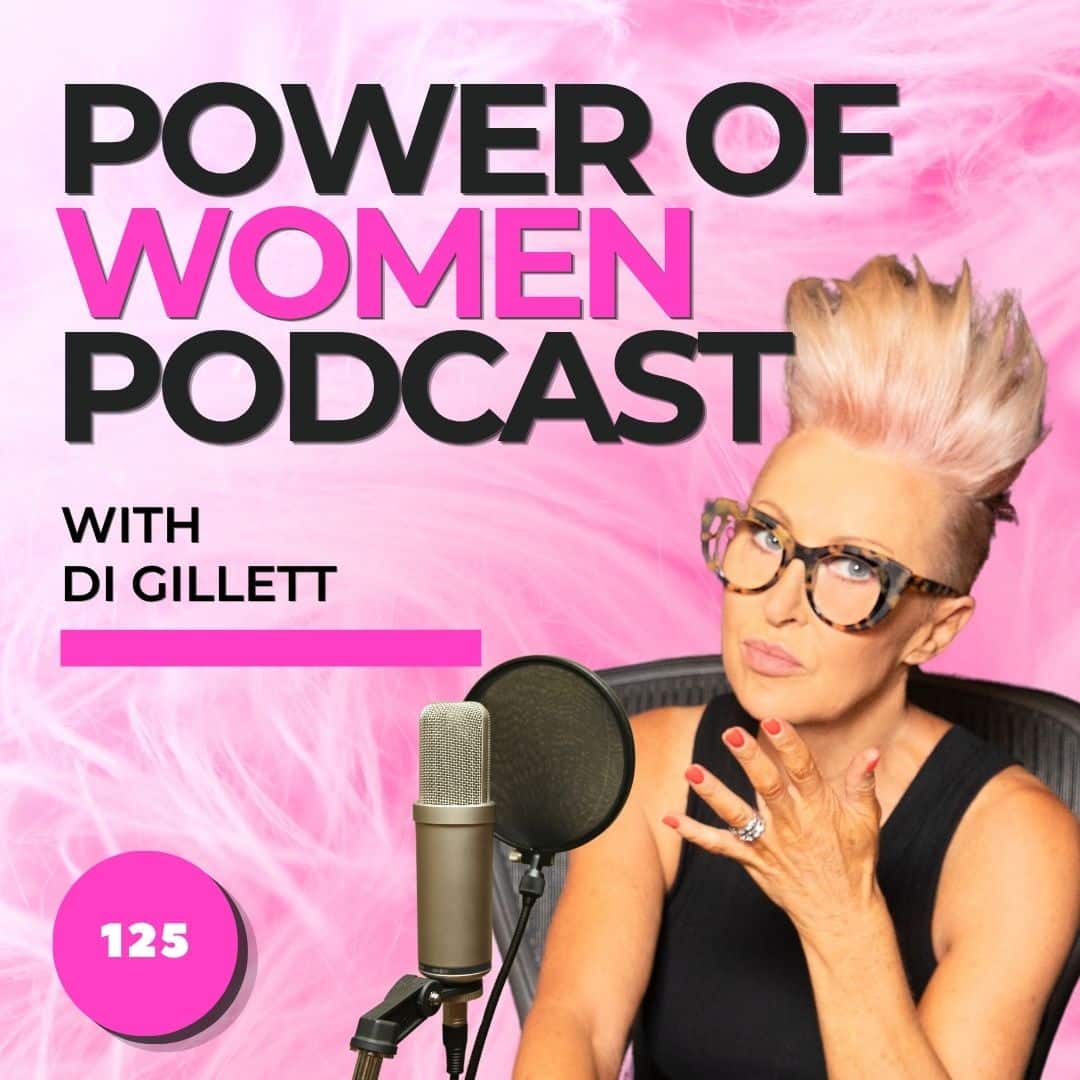
Financial Abuse, Economic Coercion and Creating Safety by Design

Financial Abuse, Economic Coercion and Creating Safety by Design

What if financial abuse isn’t a hidden issue, but a structural one?

This episode includes discussion of domestic and family violence.

On the Power Of Women Podcast, Di Gillett sits down with Catherine Fitzpatrick – former bank executive turned social entrepreneur and Founder of Flequity Ventures, to understand how financial systems can be weaponised and what it truly means to design safety into products, services and policy.

With more than two decades across banking, government, ASX-listed companies and regulation, Catherine has led national reforms that are reshaping how institutions respond to – and prevent – financial abuse.

This is not theory.
This is reform grounded in evidence and lived experience and we all need to hear it.


➡️ In this conversation, we explore:

  • Why financial abuse is often the central mechanism of coercive control
  • How everyday products: bank accounts, insurance, utilities, can be misused
  • The chilling rise of abusive micro-transactions and digital monitoring
  • What “safety by design” looks like inside major institutions
  • Why over 60 organisations have now adopted financial abuse terms into their fine print
  • The role men can and must play in disrupting abuse
  • The financial questions every woman should be able to answer without hesitation


➡️Key learnings:

Financial abuse is structural, not just personal

Prevention must be built into products

Financial literacy now includes financial safety

Every woman should know where her name sits financially


Support [Australia]:

  • If you or someone you know is affected by domestic and family violence, contact 1800RESPECT, the national service for free and confidential counselling, information and support. Call 1800 737 732 or chat online 24/7 at www.1800respect.org.au
  • If you or someone you know is an Aboriginal or Torres Strait Islander person in need of a culturally safe support line, you can call 13YARN (13 92 76)
  • In an emergency, or if you are not feeling safe, always call the police on 000
📖 Read the full transcript of this conversation here 👇

CATHERINE FITZPATRICK [GUEST] (00:02)

I’m Catherine Fitzpatrick. a former bank executive turned social entrepreneur. I believe that safety isn’t accidental and nor is equity. Both of them are designed. I work with businesses, industry, government and regulators around the globe to show them how domestic abusers are misusing everyday products and services and how safer design can close those loopholes.


DI GILLETT [HOST] (00:32)

What if financial abuse isn’t a hidden issue, but a structural one? And what if it isn’t about bad actors, but about systems that lack safeguards? And then what if the most powerful form of prevention actually starts in their design? Today’s conversation is about the money we don’t talk about because as we know, money is often a taboo topic. The risks women aren’t taught to look for and the systems that need to change.


I’m Di Gellert and this is the Power of Women podcast. And my guest today has an extraordinary depth of understanding in this particular topic, both intellectually and structurally. Catherine Fitzpatrick has spent more than two decades inside Australia’s most powerful institutions, banking, government, ASX listed companies, and not-for-profits and media. And she’s seen up


close how financial systems can either protect people or in fact be weaponized against them. She’s led national reforms, advised regulators and governments and now as the founder of FLEQUITY Ventures is reshaping how financial products, services and policies are designed with safety at their core. Catherine doesn’t speak about financial abuse from theory. She speaks from evidence reform.


and lived proximity to harm. And given the abuses are ever present in society, conversations such as this one are essential. Catherine Fitzpatrick, welcome to the Power of Women podcast.


CATHERINE FITZPATRICK [GUEST] (02:16)

Thank you. I’m really excited to be having this conversation because not many people know about financial abuse, but also people don’t quite understand how products and services, everyday ones, are being manipulated to cause the harm. So I’m really excited to dive into that with you.


DI GILLETT [HOST] (02:33)

Fabulous and I think what I’d really love to be able to achieve for the listeners is highlighting the different forms in which it takes and some strategies to help put in place some of the safeguards for women in particular. But at the same point I want to touch on, because I know your passion about it, what men can do to help.


CATHERINE FITZPATRICK [GUEST] (03:00)

Yeah, there’s so many things that we can do individually, but also if you’re working in an organisation where you might not have seen before what’s going on, once you see it, you can’t unsee it. And so you feel compelled to do something. And I think it’s been a real awakening for me when I first saw this happening.


quite a number of years ago and then for everyone I talked to the light bulb switches on and you just have to do something.


DI GILLETT [HOST] (03:32)

Brilliant and that’s exactly what you’re doing. So when people hear the term financial abuse, so many people think that’s kind of secondary to physical or emotional abuse. But from your perspective, is financial abuse a central mechanism of control?


CATHERINE FITZPATRICK [GUEST] (03:56)

Yes, absolutely. Financial abuse is when someone uses money or access to money to control or manipulate another person. And it is something that can happen very quietly by stealth over time. And it can be a precursor to physical violence or it could occur alongside physical violence. We know that financial abuse happens in


more than 90 % of cases where there are physical violence is being used, it is a form of domestic abuse. It is, and it is something that we know that financial abuse can often, or is most often accompanied by harassment and monitoring and tracking, which we’re seeing a lot more of.


as we’re moving to this digital society. ⁓ And it’s quite often what keeps women, mainly women, but not just women, trapped in a relationship that is really abusive and controlling and manipulating because they don’t have the means to leave, they don’t have the means to start again. And ⁓ we know from fantastic research that Anne Summers has done that it can often mean


a choice between violence or poverty.


DI GILLETT [HOST] (05:27)

neither of those are palatable. yeah. So you’ve said people don’t just weaponize ⁓ behavior, they weaponize products and services. Can you explain what that really looks like when we’re talking about banking, utilities, insurance, all of those points of financial engagement that we have ⁓ with institutions?


CATHERINE FITZPATRICK [GUEST] (05:55)

Absolutely. So if I talk a little bit more, I never want to excuse the behaviour of the person who is exerting control through access to money. So what this could look like in a relationship is that it could be limiting a partner’s access to money unless they do what you say. It could be tracking or challenging every dollar that they spend.


until they give up trying and they’re solely dependent on you. It could be belittling ⁓ your ability or their ability to manage money and until they just believe you, I’m so bad with money and they beg that you will take it over.


DI GILLETT [HOST] (06:39)

So money’s weaponized, it’s a psychological drip feed.


CATHERINE FITZPATRICK [GUEST] (06:44)

Absolutely. And it could also can be criminal, right? It could be racking up debt in somebody else’s name without their knowledge or consent. ⁓ And that’s done so that they can never leave, so that they can’t start again and so that they’ll regret breaking up with you if they do end up being able to leave that situation. ⁓ What we do know is that unlike physical violence, financial abuse often involves


the misuse of a product or a service ⁓ or a system. What do I mean by that? So in banking, it could look like racking up debt in somebody else’s name, taking out a credit card because you know enough about that person to be able to open it within minutes online without their knowledge and use that credit card and rack up that debt.


DI GILLETT [HOST] (07:39)

How would you know that’s happened, Catherine? Would you have any idea?


CATHERINE FITZPATRICK [GUEST] (07:43)

It’s really awful, but a lot of people don’t know what’s happened until it’s happened multiple times and they’re tens of thousands of dollars in debt. A way that you can make sure you’re keeping an eye on that, which is something we should all be doing in any case because of the rise of scams, is check your credit report. It’s free and you can do it online and some banks also will allow you to do it in their apps. But you can go online


check your credit report and you can see what debts you have. And I know I’ve looked at it, you know, in over the years and I do make sure I do it about twice a year. You can look at it and you can see, hang on a second, I never applied for this or there’s a credit card here that I didn’t know about. We’re seeing fraudsters do that all the time. So you need to be a bit hot on it too because one, there’s debt in your name.


to if that if you don’t pay it or if the person doesn’t pay it if they’re a criminal they’re not going to that liability puts a black mark on your credit score and that means if you got to apply for another loan or even if you’re applying for buy now pay later that with you you are and it


damages your score and then it impacts on your ability to get on with your own life. So it’s quite a bit to unpick it. So you should be taking a look at that. The other products that are weaponized, so I’ve done for the last three years, I’ve been writing what I call the perpetrator playbook for business. And it’s basically documenting the ways that abusers are misusing products and services. Not as a how-to guide, because they’ve actually already got it, but it’s.


how businesses could intervene, guide.


DI GILLETT [HOST] (09:36)

that, preventative strategy.


CATHERINE FITZPATRICK [GUEST] (09:39)

It is,


it is. so other examples would be in insurance. There were two big things that came through ⁓ research, which and ⁓ speaking to victim survivors. One is that if you have a joint policy with somebody, a lot of times you can change that policy online. It’s really simple to do that or with a really simple phone call. But


quite often the joint policy holder is not alerted to those changes. why? Yeah, it’s basically because insurers have taken the friction out of the system, which is really fantastic, right? You can do…


DI GILLETT [HOST] (10:20)

There’s an upside and a downside to that. I mean, if your partner’s passed away? So there’s the upside, however.


CATHERINE FITZPATRICK [GUEST] (10:27)

However, if you are in an abusive situation, what we know is that abusers may cancel an insurance policy or change it without the co-insured knowing. I spoke to one woman ⁓ for my paper on general insurance who said that she didn’t know that the home insurance was cancelled.


until her ex-partner threatened to burn the house down with her and the children inside it.


And when she discovered that she was no longer insured to add salt into the wound, they had repaid the premium into his account, even though she’d been paying for it for many years. one of my recommendations was. insurers need to change the system and put a bit more friction into that. I’ve been really pleased. In fact, my own insurer, I saw a notification


saying that if you do make some changes we will notify the co-insured to make sure everyone’s happy with that. ⁓ Fantastic.


DI GILLETT [HOST] (11:37)

Yeah,


no surprises.


CATHERINE FITZPATRICK [GUEST] (11:41)

Yeah and I think


it does and there are really simple things like that that different organisations can do. Other examples just from everyday accounts, I looked at energy and water last year. Who would have thought your electricity account could be manipulated? The same with your


DI GILLETT [HOST] (12:00)

I that’s something that I wouldn’t even think about as being at risk. So what happens there?


CATHERINE FITZPATRICK [GUEST] (12:07)

It basically anywhere, any type of service where it’s a joint account, so it’s in more than one name, or where there is credit or debt that’s related to it. So if you’re getting billing from an electricity provider or an energy provider or a water provider, they’re in effect giving you credit and you need to pay that back, right, when you pay your bill. So we know that debt is the weapon of choice for financial abusers.


what they will do is not pay it ⁓ and then leave that debt in your name. ⁓


DI GILLETT [HOST] (12:46)

We


saw quite frequently. the ⁓ non-provision of that service in that being turned off.


CATHERINE FITZPATRICK [GUEST] (12:55)

Potentially water doesn’t get turned off but they might slow it but electricity certainly gets turned off. absolutely. The other thing that we see with any joint accounts or any online services and it doesn’t matter what kind of service it is, is that it’s really easy if you know enough about somebody to get in login to their account and see what they’re doing.


which means that abusers are using online access to monitor and to surveil their partner or ex-partner. And I can give you an example of this ⁓ where in banking where I used to work in a couple of Australia’s major banks, when you have an account, you can see who’s spending money where. A number of the banks have also got these really


great fraud protection, which is an alert whenever your account has some money taken out of it. When it’s a joint account and those alerts go to more than one person, or if it’s a credit card and they’re going to the primary credit card holder, and we know most of the time that is the male partner in a relationship and the female partner has a secondary card, the alerts might go to somebody.


and they can see what’s happening in that account. And if it’s a relationship where there is abuse, ⁓ then, or violence, then they can monitor what is happening. So, you know, taking money out at the ATM, for example, ⁓ or put it, squirreling money away so that you can flee that unsafe relationship, ⁓ that can all be monitored.


DI GILLETT [HOST] (14:45)

That’s that’s goosebumps stuff because it’s so ⁓ unexpected. It’s so easy to have somebody actually monitoring your movements and presumably that in the same way if you’ve moved that gives them access to your address and all sorts of other details that could leave somebody extremely vulnerable.


CATHERINE FITZPATRICK [GUEST] (15:13)

Yeah, most businesses have built their systems and their products and their services as if every relationship is healthy and that there isn’t any violence in it. Which means that the systems are built when that two people are enmeshed and they’re not necessarily being able to manage that account as if they’re two individuals in the one account.


DI GILLETT [HOST] (15:39)

That’s


a great example to understand what’s going on.


CATHERINE FITZPATRICK [GUEST] (15:43)

Yeah, and so if you think about it, the systems are built like that. I’ve worked inside big organisations. It’s millions and millions of dollars to unpick those systems. I joke about it, it’s a bit facetious, but I have said, you know, we’ve built the systems around the patriarchy and unpicking the patriarchy is really expensive.


DI GILLETT [HOST] (16:00)

Yes,


yep kind of heard that somewhere before.


CATHERINE FITZPATRICK [GUEST] (16:04)

Yeah, that’s right. Yeah. I want to give you, yeah, I also just want to give you probably the example that crystallized things for me when I said, when I really understood how products and services are being weaponized was in 2019, I worked for Australia’s biggest bank, Commonwealth Bank, and I had set up a specialist team supporting


customers experiencing vulnerability and particularly we had a focus on people experiencing domestic abuse and also people experiencing problem gambling. And when I visited the team I was talking to them about the kinds of things they were doing to help our customers and one of them showed me in the account of a woman that she was helping these deposits into that account from the ex-partner.


and they were one cent at a time. And in the transaction description, you know where we would write, thanks for dinner, we might write the invoice number, we might say happy birthday. There were messages of abuse. And then I spoke to the team and I said, ⁓ is this happening all the time? Have you all seen this? And they said, yeah, we see it all the time. And it’s really chilling.


DI GILLETT [HOST] (17:12)

Yep.


CATHERINE FITZPATRICK [GUEST] (17:27)

when also we see the messages saying, love you, I want you back. It’s like a secret. It was. And so I had a team of data scientists and I said to them, can you just take a look at this and see what you can find? We’d only had one complaint to the bank about this, but they did ⁓ analysis and they looked through 11 million transactions in a three month period. And what they found was 8,000


DI GILLETT [HOST] (17:33)

S.I.G.S.S.S.S. ⁓


CATHERINE FITZPATRICK [GUEST] (17:57)

really serious forms of abusive messages. I read one, 900 messages, one cent at a time, it cost the abuser $9. It included messages like, I’m out the front, I can see you, I want to kill you, I want to kill them all.


DI GILLETT [HOST] (18:18)

What do do with that?


CATHERINE FITZPATRICK [GUEST] (18:20)

Well,


when my team showed me first of all, I burst into tears and just said, I can’t believe this is happening. How awful can


DI GILLETT [HOST] (18:27)

people be.


CATHERINE FITZPATRICK [GUEST] (18:30)

I still get goosebumps because it was just something so unexpected. We hadn’t been looking for it. didn’t know about it.


DI GILLETT [HOST] (18:39)

patterns.


CATHERINE FITZPATRICK [GUEST] (18:46)

It is mind blowing and so that’s when I met, so we talked to a lot of people with lived experience, we talked to the women’s safety sector, to consumer advocates and also the e-safety commissioner and she said, well why don’t you apply safety by design? And so we mapped a whole lot of interventions that we could have done, 52 possible interventions and the first one was we need to detect these patterns, we need to


block the abuse of messages and we started doing that. I took this evidence to all the banks and all the banks in Australia have now moved on this. The majority of them have got blocks in place. More than a million abusive messages have been blocked in real time. Not by stopping the money but masking or sending a message to the person who’s trying to send the abuse to say you’re not allowed to do it anymore.


and you have to change the message. A number of them have got artificial intelligence and they’re monitoring the pattern and then they’re writing to the sender, yeah, they’re writing to the people who are sending it and they’re saying, we can see you, you’ve got to stop. And what we know is that more than 90 % of people who get those warning letters stop sending the messages.


DI GILLETT [HOST] (20:08)

Who would have thought a, I mean, we’ve got a heightened alert to high value transactions being the problem. Who thought these nondescript one and two cent transactions could be carrying as much danger?


CATHERINE FITZPATRICK [GUEST] (20:25)

That’s right. And could you imagine receiving those messages, especially if you had those alerts and it was popping up all the time, like just it’s another form of control and fear and intimidation. ⁓ Some people had written in it, unblock me from Facebook. It was like the last resort. But now the banks are watching and they’re doing something about it. And I think that that’s it’s a really fantastic ⁓ example of.


We didn’t see it, we didn’t understand it, but once we started looking at it, everyone was saying, we can’t walk past this, we’ve got to do something about it. So that’s what’s really inspired my work.


DI GILLETT [HOST] (21:05)

I can imagine. mean that’s a, that is such a significant example that most people wouldn’t even think could happen.


CATHERINE FITZPATRICK [GUEST] (21:15)

Exactly.


We also see it on higher value transactions like child support and those sorts of things. It’s just, it’s awful. People can be awful to everybody.


DI GILLETT [HOST] (21:25)

Wow. So you’ve led, and that leads into this question because you’ve led reforms such as this. What actually shifts when an organisation stops saying, you know, how do we respond? And to this point, start actually baking it into preventative processes in their systems in the first places. Are there more examples like that?


or examples that haven’t necessarily taken place but should take place.


CATHERINE FITZPATRICK [GUEST] (22:01)

Yeah, there’s a very long list, I’m also really pleased that lots of people are, you know, I’m pushing on open doors having these conversations, which I think is really exciting. So what I would say is most organisations and most businesses will start with when they think about domestic abuse, they start with how do we support our colleagues who might be experiencing domestic abuse?


How do we give them time out when they need it? How do we help them with their safety? So that is absolutely the right place to start. Look after your colleagues. A number of organisations are also saying, ⁓ we also need to think about our colleagues who are using violence and abuse because we know that it is so prevalent in our society and every…


every person I talk to, whether it’s in business, in my personal life, in government, in regulators, everyone knows somebody who is impacted by domestic abuse, whether they were a victim or they are a victim, whether they are using violence, whether they grew up in a house or they know children who are also experiencing abuse. So this is something that touches everybody. So in your workplace, you’ve got to think about


people who are both experiencing and using.


DI GILLETT [HOST] (23:29)

saying that, I was thinking, actually I don’t, and then I’ve just gone, actually I do. It’s quite a challenge to actually think that through your own personal lens.


CATHERINE FITZPATRICK [GUEST] (23:36)

Yeah. Yeah.


Yeah, and you know, you will also know people even if they never disclose to you.


because they’re living with it and they’re deeply ashamed whether they are using violence or they are living in that fear. ⁓ So it is just so prevalent in our society and just so many people I talk to, they know someone or as we start talking about financial abuse, they’re realizing, I’ve got a friend or even this is happening to me actually.


⁓ I think that’s why this conversation is so important and why I’m just so up for having it all the time. So that’s where most businesses will start. They’ll start with their workplace and that’s absolutely the right place. Then they move to customers. So if you are a B2C business ⁓ and you’re supporting customers, there will also be victim survivors who are saying, this is happening to me, can you help me?


And banks are one of those places where people quite often go to first and in fact there’s research that shows women are more likely to talk to their bank about economic abuse than they are to go to a specialist service. It is and why is that? Because I want to set up a safe account so that I can leave. I need to disentangle from the abuser and I need to start again. And if you don’t have money you don’t have choices.


DI GILLETT [HOST] (25:02)

Isn’t that interesting?


CATHERINE FITZPATRICK [GUEST] (25:18)

I think that that’s a really critical role for banks, but it is also for other organisations as well. then people will think about that from their customer service perspective and they’ll say, what do I need to do if someone tells me they need help? How can I help them? Quite frequently it’s because they can’t pay a debt. What my work is doing and where we’re now seeing this shift is


actually are our products and services inadvertently enabling this abuse? And I gave you those examples. So yeah, if you don’t have friction in the system, it will be exploited and it is being exploited. Whoa, we didn’t mean for that to happen. So what do we do about it? So it’s like we have these conversations and these people in business are going, I’ve never seen it like that before. That’s not why I’m here in business.


That’s not what we’re here to do. We’re here to serve our customers. So, okay, we can start treating this like a risk management process and start closing those gaps. So I gave you the example about the abuse in payment descriptions. And so that’s been a very comprehensive one. ⁓ And then we also know that, say, I can give you an example from insurance. ⁓ A number of insurers have now


in what’s called a conduct of others clause. Now I feel like the world’s biggest feminard, I read terms and conditions all the time right? Join me feminards unite. But it is it’s really important to have look at what’s in the fine print. We’ve just done about 200 or so.


DI GILLETT [HOST] (27:06)

I


been working on for long and realised that my car for the last three years has been insured as a diesel when it’s a petrol so sometimes it’s not even the really fine print but…


CATHERINE FITZPATRICK [GUEST] (27:17)

It’s so


important, it’s really important you need to read it particularly in insurance where you know a claim can turn on where a comma is placed basically. So in insurance there is most insurance products have got a term that’s called ⁓ malicious damage and there’s an exclusion. What that means is if I deliberately smashed up my television


I can’t go and claim it and say, thanks, I’d really like a television. In an abusive situation, it might be someone who lives in the house or who’s invited to the house and they may damage property or destroy property as part of a domestic abuse situation.


Yeah, and because of the malicious damage exclusion, what we know is that victim survivors are then penalised again because they can’t claim. So they’re getting the abuse, the violence and then the financial penalty, they don’t have the protection that they thought. So a number of insurers have started introducing what’s called a conduct of others clause. And what that means is that


If those kinds of situations happen, it could also happen where someone has a mental illness and they are causing property damage as well during an episode, the insurer is now saying, well actually we’re going to take that into account and we might pay out on a claim that otherwise would be denied. So that’s a fantastic


DI GILLETT [HOST] (28:57)

These are fantastic clothes.


CATHERINE FITZPATRICK [GUEST] (28:59)

It is. so I would be checking and asking your insurer, do you have a conduct of others?


DI GILLETT [HOST] (29:06)

You know what


I’m doing after this podcast, I’m going to do a deep dive because I’ve got a home insurance policy coming up for renewal. I’m going to do exactly that. And I would challenge anybody listening to this to do the same.


CATHERINE FITZPATRICK [GUEST] (29:19)

Yeah, you absolutely should. A number have got them, but not everyone has. It was a recommendation of a big parliamentary inquiry a couple of years ago that every insurer should do it. So do ask your insurers about it. It’s really important. Another example, and I know I’m going deep into ⁓ nerd territory, feminine territory.


DI GILLETT [HOST] (29:43)

What other fine print have you read?


CATHERINE FITZPATRICK [GUEST] (29:45)

So


there’s another one. In 2022 when I wrote my first Design to Disrupt paper I made a recommendation that every bank and then subsequently every company should put in their terms financial abuse is a really serious problem. If you misuse our products for financial abuse there will be consequences. It could be that we warn you, it could be that we suspend you, we might close your account.


or might even report you to law enforcement.


DI GILLETT [HOST] (30:17)

the do not smoke warning.


CATHERINE FITZPATRICK [GUEST] (30:19)

Correct. put it out there. Exactly. Yeah. It’s also the same as after September 11. Yes. We know we cannot joke about terrorism and get on a plane. Yep. So this recommendation is not about saying I’m going to close every, we want to close everyone’s account. It’s actually about saying, is the standard we expect. This is what respect looks like. We don’t want to inadvertently enable your abuse. So if you do it,


You can’t be part of our organisation. Nowhere had ever done that before in the world. ⁓ And I launched it. No one had done that in this context around financial abuse. By the first, after the first year of advocating for that with the Centre for Women’s Economic Safety, and we partnered on my first paper, 14 banks had moved on that recommendation, which was terrific.


And so last, no, gosh, doesn’t time fly. In 2024, I launched a campaign called Respect and Protect, which was to encourage every organisation to do that. There’s now more than 60 companies that have those terms. They range from banks to insurers to energy to water to there’s a fintech startup in their education. There’s health insurance.


There’s a lot of different organisations that are embracing this. That is a safety by design measure and it’s really putting perpetrators on notice. This is a standard of behaviour that we don’t accept, we don’t tolerate, we don’t want you to weaponise our products. A bank account, an insurance account is no place for abuse if you do it there’s consequences.


DI GILLETT [HOST] (32:13)

We have a lot to thank you for, Catherine.


CATHERINE FITZPATRICK [GUEST] (32:16)

Well, I have a lot to thank survivors who have entrusted me with their stories and people who work in the sector who have been doing this for decades for spending time with me and helping me to understand what is going on. think my superpower is that


I’m the translator. I’ve been working inside corporates for such a long time that I know this is a policy change, a procedure change, a process. Does it require training? Is it in risk management? I can use all the nerd words and the words inside an organisation that help to translate it into practical action.


And I think that’s why, and I also think people genuinely want to help and they don’t know what to do. So here’s a bit of a toolkit, the financial safety by design toolkit I call it.


DI GILLETT [HOST] (33:11)

Well coming up we’re going to talk about the warning signs women often miss, the financial questions women should be able to answer and why more men are stepping forward and asking to help.


If you’re loving the Power of Women podcasts, be sure to jump onto our YouTube channel and hit that subscribe button to ensure you never miss an episode.


Catherine, in recent months you’ve been talking about the fact that men have been reaching out and asking, what can I do to help? What do you think is actually prompting that and is that actually helping the work that you do?


CATHERINE FITZPATRICK [GUEST] (33:57)

Yeah, absolutely. It’s funny, I have been doing this work for a number of years and it’s always been with the support and leadership of fabulous men and women ⁓ who are just, who like me, think that this is an issue that we all need to tackle.


What I think is really hard is it’s hard sometimes to know where to start. It’s a violence against women and financial abuse is part of that is such a big problem that it can feel really overwhelming. And I have found a number of people have also said to me, I don’t want to get it wrong. What if I do the wrong thing? What if I make it worse for that person? ⁓ And


What if I say the wrong thing? First of all, you are going to say the wrong thing probably. want to tell you know, more than 30 years ago, I was a young journalist. That’s how I started my career. Much younger. And ⁓ I met a woman. But I met a woman who meeting her has impacted me profoundly.


DI GILLETT [HOST] (35:11)

Stampiness.


CATHERINE FITZPATRICK [GUEST] (35:22)

We were the same age, her name’s Anne O’Neill. ⁓ She had suffered a terrible, terrible crime and she’d lost both of her children. She was wounded for life and I was the first journalist to ever speak to her. ⁓ And I asked her a question that is so often on many people’s lips, right? I said, what did you do? Because I couldn’t fathom.


that this person could do something. Like, it’s like, you must have provoked him, right? Was going through my head. And she said to me, Catherine, it wasn’t what I did. This was what he did. And I just felt mortified. And she explained to me.


with her really quiet and unassuming and very gracious way how domestic abuse works. And it’s never the victim’s fault. And it’s never something that they’ve done. It’s a person making a choice to use violence, intimidation, technology, finance to control another person. And so what I say to people when they ask me,


you know, when they say I’m worried about getting it wrong is you may not use the right words, but if you believe somebody when they are telling you this is happening to me, that’s the place to start. And a lot of the men who I talk to are in positions of power. And so they have the ability to set the tone in their organization about gender equality. And they also have the position of power.


to lead change, is ⁓ flushing out this issue, having discussions about it, not with blame, but having a really uncomfortable conversation, and it is uncomfortable, but stepping into it and making sure that your workplace is a safe place and making sure your products and services are safe. The more organizations that do that, the better. It’s why last


my goodness, it’s beginning of 26. So end of 2024, ⁓ I co-founded with a not-for-profit thriving communities Australia, Australia’s business alliance against domestic and family violence. It’s called One Generation. There’s seven corporates from across different sectors that are all part of it. And our aim is to get to understand what will help victims survivors when they are your customers.


so that everyone can do more of that.


DI GILLETT [HOST] (38:08)

So this is a B2B platform. Sorry, a B2C platform.


CATHERINE FITZPATRICK [GUEST] (38:11)

It is.


So it’s basically there are seven corporates drawn from different sectors. They are part of the One Generation Alliance and our aim is to, we’re just working on lived experience research to understand if you have a customer who is experiencing domestic abuse, what is going to serve them the best? What are the things that you need to do? Because we know not everyone’s doing it and they’re not doing it well.


There are plenty of organisations that are doing it well, so we’re learning from them and learning directly from customers. What did you need from organisations and how can everyone do that? There are things like, don’t make me tell my story over and over and over again. Yeah, that’s right. ⁓ Don’t ask me for evidence that I don’t have. Not everyone goes to police. Not everyone will get a conviction.


but please believe me. So there are very simple things that you can do in training. And so that’s what that alliance is doing. And I think that that’s why when we have practical tips that are really well informed by people with lived experience, by people who are working with them and are practical suggestions, I think that’s why more and more people are coming in and asking, what can I do?


DI GILLETT [HOST] (39:37)

That is such a powerful example because I mean we all know that the reverse is how systems are set up. You you go for an insurance claim and it starts with an interrogative process and you’re always on the back foot. So just that simple premise of, please believe me, and changing the lens in which the dialogue is framed.


changes everything. Now yes, there are people who are looking to scam systems and the like. That’s not what we’re talking about. We’re talking about people who are coming in in times of need and personal distress.


CATHERINE FITZPATRICK [GUEST] (40:22)

Yeah and you know I also get asked a lot about well what happens if someone’s trying to rip us off and someone’s lying about this. Well first of all we know that very very few people who are victims of violence lie about it. There is a narrative that there are false reports but that is it’s very very seldom that that happens. In fact the data shows it just doesn’t


right? Very frequently. ⁓ Most organisation, if someone is coming to you and saying this is it I’m experiencing this you should believe it because they just need your help and most of the time they’ll come and ask and say can you just give me time to pay or it actually I was coerced into this debt or it I didn’t even know about it so it is one of the reasons I say that financial abuse should be treated in the same way as we treat fraud and scam.


because quite frequently that’s what’s happening to a survivor. They’ve got fraudulent debt, you know, if you get a debt, ⁓ if you get a credit card, something happening on your credit card, you didn’t know about it, it’ll be wiped off because that’s fraud and banks are insured against that. If it’s a scam, we’re now seeing much more…


response, you know, ⁓ a greater and collective response from business and government actually to respond to this organised crime ⁓ and scams. And we don’t have the same response, unfortunately, to financial abuse, but it is very similar tactics that people are using. And I do believe that we need to see that happen across Australia.


DI GILLETT [HOST] (42:09)

So if we move away from businesses just for a second and start to look at individuals one on one, could you give us a little bit of an overview of what are the early warning signs that somebody might be experiencing financial abuse? Because I’m thinking if we take the educational lens of this isn’t something a listener is experiencing, but what


what might they be looking to observe in their broader sphere of day-to-day contacts and community.


CATHERINE FITZPATRICK [GUEST] (42:49)

Yeah, and I think I find as we talk about financial abuse, the light bulbs go on. What we know from research is most people who are in it don’t recognise it. And that’s why it’s really important we do have these conversations to raise awareness. So financial abuse is where someone is using money or access to money to control another person. What that might look like for someone who’s experiencing it is their choice is being taken away.


their knowledge is being taken away. ⁓ So really practical examples and ones that I hear a lot ⁓ is ⁓ you might get paid an allowance, for example. So quite often we know that if someone starts caregiving and they leave the workplace, there’s an agreement and we frame it. We even talk about it as, well, the main breadwinner will give you an allowance. ⁓


That can be constricted.


DI GILLETT [HOST] (43:50)

Because


it sounds controlling just by nature.


CATHERINE FITZPATRICK [GUEST] (43:55)

It does, but it’s also a conversation that people have. How are we going to live when we go from two incomes to one income? And so I think a healthy money relationship is saying, what’s my money? What’s your money? What’s our money? We don’t have that when we start ⁓ having conversations. We know young people are starting to talk more about what is consent in a sexual relationship.


How do you ask for it? How do you give it? How do you withdraw it? How do you check in? We’re not having the same financial consent conversation. What’s my money? What’s your money? What’s our money? How do we manage it?


DI GILLETT [HOST] (44:36)

rooted in the talking money is taboo.


CATHERINE FITZPATRICK [GUEST] (44:40)

I think there’s many reasons, absolutely. you know, it’s part of, in some societies, some cultures, everyone’s very open about money. In some cultures, it’s very clear that this is a man’s role is to manage the money. And a woman’s role is to be the caregiver. And you know what? There’s nothing wrong with that. When it becomes problematic is when you’re not open about it.


Two people are not involved in the decision making, even if there is one decision maker, when you’re not transparent and when you’re not clear on how does this work, ⁓ when there is secrecy, where there is deceit and where there is control. And so some of those early warning indicators could look like ⁓ I’m having to ask for money all the time.


And I’m feeling guilty about that. being shouted at. I’m being told you can’t spend money on these things. You don’t have that choice. I don’t know what accounts my name is on. I don’t know what debts there are in my name. There are much more. There are. You’ve spent money on that. ⁓ Now there is violence that’s related to that. And so actually that control that is


controlling you about how you’re going to spend money by ⁓ through ⁓ abuse or violence. So it’s all very much interrelated and obviously that’s a really serious example but I’ve you know.


DI GILLETT [HOST] (46:15)

And it’s not defined to any socioeconomic group, is it? Because this can be happening in the poorest of households and in the most financially sound of households.


CATHERINE FITZPATRICK [GUEST] (46:28)

Absolutely, and I hear it from mainly women, but women from every walk of life. ⁓ I think sometimes it can feel even more challenging for a victim survivor who is in a high-powered professional career living in the dream house where


actually behind closed doors, they’ve got no control over their money. They are acquiescing to every single whim ⁓ because they are walking on eggshells. And those women have described how it’s much harder for anyone to believe them because surely, that’s right. ⁓


DI GILLETT [HOST] (47:13)

that couldn’t be happening.


CATHERINE FITZPATRICK [GUEST] (47:16)

But also people who are experiencing financial abuse are some of your best budgeters that you will ever find because they will make every cent count and every dollar account. So I think what I would say is you need to trust your gut. If this doesn’t feel right, if I don’t feel like I know or I’ve got choice in


what’s happening with the money and sometimes those choices are going to be really hard. Then that is an early warning sign. It’s a little bit like we, you might have heard the expression love bombing and coercive control. So financial abuse is a tactic of coercive control and coercive control is the pattern of behaviour that someone uses to control someone to make them do what they say.


⁓ It’s being outlawed all around Australia. Different governments are bringing in these laws and that’s because it is so corrosive and we know that unfortunately where there is coercive control it is a lead indicator of homicide.


DI GILLETT [HOST] (48:26)

And that point is a red flag. Different governments are bringing it in. Why can we not be Australia and bring in a blanket ruling?


CATHERINE FITZPATRICK [GUEST] (48:38)

Yeah, thank you Federation. Yeah.


DI GILLETT [HOST] (48:40)

Federation is a little more problematic than train gauges not lining up between Sydney and Melbourne, isn’t it?


CATHERINE FITZPATRICK [GUEST] (48:42)

You


Yeah, look, even in my Design to Disrupt paper that I looked at energy and water last year, because the laws are inconsistent across the country, it means that if a survivor flees from one state where an energy provider can get access to grants related to domestic abuse to help pay the energy bills, that’s not the same in other states.


DI GILLETT [HOST] (49:18)

And I appreciate all our listeners aren’t from Australia, but ⁓ just think of Australia as a whole bunch of different countries and that’ll kind of resonate because that’s the dynamic at play. Tell me, if I was to ask you, if you said to the average married couple whose name’s on the mortgage, how often would the female’s name be on the mortgage?


CATHERINE FITZPATRICK [GUEST] (49:47)

I think these days most often that will be. quite housing is so expensive that quite often it takes two incomes to be able to purchase a house. What I would say and I’m going to get into feminine terms and conditions again. Exactly. It’s like we need a little ding. Let’s talk about that.


DI GILLETT [HOST] (50:07)

Yep


CATHERINE FITZPATRICK [GUEST] (50:15)

So most mortgages are set up and it’s called joint and several liability. That’s the expression and the term that is in the contract. And so most mortgages are joint mortgages, joint facilities. What joint and several liability means is that you are both on the hook for 100 % of that loan. It’s not 50-50.


So it helps you buy the home, but it also means that if one person doesn’t pay, you are on the hook for 100%. And it’s not just mortgages, it is also a range of other debts as well. So it could be an energy account. We also know that it can be tax liabilities when you are a director of a company, for example.


DI GILLETT [HOST] (51:09)

So purely set up to protect the organisation with no consideration of the circumstances individuals might find themselves in.


CATHERINE FITZPATRICK [GUEST] (51:17)

Look, and I understand why. mean, obviously, I a mortgage.


DI GILLETT [HOST] (51:20)

It makes…


It’s problematic.


CATHERINE FITZPATRICK [GUEST] (51:25)

Yes, so there are ways that you can protect yourself against that. I would say if you take a look at your mortgages that joint and severally liable, you could potentially if you’re going for a new mortgage or a new home loan, you could ask for what other structures, what other ways could we structure this? And there are a number of different ways you can do that. There are there’s one called tenants in common, means which is quite often a business.


DI GILLETT [HOST] (51:53)

Kind of


CATHERINE FITZPATRICK [GUEST] (51:55)

Yeah, that’s right. And that one offers a different way of structuring it. So you could say, well, this person’s on the hook for 70 % and this person for 30%. You need to think about all of these. And I would encourage people to look at the options. Then also, if you have got that, a lot of people will have offset accounts. So they’re trying to reduce the amount of interest. And we know with the current climate that ⁓


where interest rates are fluctuating, that it’s a really good idea to try and pop some money into an offset account to try and reduce the interest. A number of banks are now introducing separate offset accounts and multiple offset accounts. So what I’ve seen in my work is that at the point of separation or before, ⁓ which is where financial abuse can start or get worse because it can happen.


for a long time after the relationship has ended, those joint accounts, like offset accounts or redraws, can be cleaned out. And you might have been putting all this money into that joint offset account and then all of a sudden that’s all gone. you’re left with 100 % of your home loan to pay. So a number of banks now have multiple offsets. So you could have one in your name and one in your partner’s name. And that money,


is yours and it’s both going to reduce their interest and so if it’s healthy all hunky dory but if the worst happen


DI GILLETT [HOST] (53:29)

You’ve got the safety valve. That’s a terrific idea. Such simple strategies. I guess it comes down to, Catherine, everything’s great while it’s great. This is the, know, how many marriages end up in divorce scenarios. And everything’s often good until you start talking about money. having


these types of structures, even when everything is terrific, is a great forward thinking strategy of responsibility to each other.


CATHERINE FITZPATRICK [GUEST] (54:08)

Yeah, and financial independence because money gives you choices. And ⁓ if you’re having a conversation about what’s mine, what’s yours, what’s ours, how are we going to do this together? That’s fantastic. And you’re right. No one goes into a relationship where it’s abusive straight away, right? It happens over time. so ⁓ my view is that you need to just ask some simple questions. I’m launching a


podcast to give people some practical financial safety tips, which is really exciting. And it’s because we, you know, even when you’re setting up your apps on your phone and your technology, a lot of us, if you’re like me and a Gen X, this is all still new. Are these apps tracking me? Can you track me? ⁓


Can I just switch that off? Do I need that tracking system on, for example? Can someone else see ⁓ into my account? Do they need to? Can I switch it off? There’s a whole lot of different safety ⁓ protections that maybe we don’t know about. And they don’t have to be part of a scary conversation about, what happens if this relationship separates or if there’s abuse in it? It’s actually just, my view is financial safety. ⁓


is and tech safety are as important as financial and digital literacy. In fact, it’s the new form of literacy.


DI GILLETT [HOST] (55:36)

Absolutely. And you just pointed out you’re a Gen X and I’m on the cusp and I actually fall into the baby boomers. So for all of the baby boomers listening, this is about being ahead of the game and about being aware. So it’s invaluable. So Catherine, what else is in the pipeline for you for 2026 in terms of this incredible work that you are doing to… ⁓


put in some safeguards both into organisations and awareness for individuals around many of these issues that we’ve touched on today.


CATHERINE FITZPATRICK [GUEST] (56:13)

Well a couple of things, we’re launching the Design to Disrupt podcast.


DI GILLETT [HOST] (56:18)

Which


will be… Yes.


CATHERINE FITZPATRICK [GUEST] (56:21)

Yep,


and that is really practical financial safety tips. Here’s how you can set up your bank accounts, your telephone accounts, energy accounts, water accounts, your ⁓ technology accounts to be safe and to protect both you and your money. ⁓ This year we’ve launched the Financial Safety Alliance which is a partnership between Flequity and ⁓


a number of finance sector industry associations and we’re helping to build some resources around safer design that can be consistently applied across ⁓ banks and lenders, whether they’re buy now pay later products for example or banking products and also with the credit bureaus as well. So we’ll be working on that and I’m intending to continue to speak


to anyone and everyone who will listen about what is financial abuse, what is safety by design and financial safety by design because I believe that we all have a role to play. And so I’m really grateful to you, Di, for asking me to explain what is financial abuse and what can you do about it as an individual but also from an organisational perspective.


DI GILLETT [HOST] (57:44)

I’m eternally grateful to you for the work that you have done to date and for the work that you continue to do because I typically wrap up a podcast and say, can we find you? Well, FLEQUITY Ventures, and we’re going to put that link into the show notes because that will then take somebody to your podcast once it’s live too. Will that be the case? They’ll find that.


CATHERINE FITZPATRICK [GUEST] (58:09)

Yes it will. Yes it will. And the other thing I would say is that if you want to be a feminard like me, I’m


DI GILLETT [HOST] (58:17)

You’re going to need magnifying glasses because there’s a lot of small print.


CATHERINE FITZPATRICK [GUEST] (58:22)

There is but what I have done is on the respect and protect website you can go to the page that says the fine print and you can take a look and see if any of the organizations you do business with are listed there. We’ve listed the financial abuse terms so you can read them and see them.


DI GILLETT [HOST] (58:43)

Be one of your podcast episodes, The Fine Print.


CATHERINE FITZPATRICK [GUEST] (58:47)

The fine pig, great idea. Thank you.


DI GILLETT [HOST] (58:49)

That’s a perfect one because that’s where so many are tripped up. We’re caught out by the fine print. that’s my marketing tip today.


CATHERINE FITZPATRICK [GUEST] (59:01)

Awesome. I was also wondering how many people would wear a cap or a t-shirt saying feminine ⁓ Maybe not as many I don’t mind self-identifying


DI GILLETT [HOST] (59:11)

Yeah, I think that’s harder to sell just quietly, but you know, it depends. Maybe there’s a generation coming through the Gen A’s probably think that’s absolutely cool, but I don’t know that they want to identify as any badgers, so maybe not, I don’t know. But seriously, for our listeners, this is the type of episode that I would really implore that you do share, because this is


CATHERINE FITZPATRICK [GUEST] (59:17)

Ha


That’s very true. That’s very true.


DI GILLETT [HOST] (59:40)

This is great for parents to share with their children, for you to share with your friends, friendship network, or if you feel somebody… ⁓


is in a situation where something just doesn’t count. might be an easy way to actually approach a conversation that’s more difficult and say, listened to this, you might take something from it, this is what I took from it. So I would really encourage somebody to think through that lens. The podcast is available on all of the podcast platforms, both audible and on YouTube, so easily shared.


very much look forward to your podcast going live as well, Catherine, because the informative nature of that is the core fundamentals that we really all need to hear and help us put in all of the systems into place. Personally, I have to declare I live in a household where my husband said to me 20 years or 21 years ago when we got married, you’re captain of the ship. And I’ve taken that literally and I have taken control.


but I personally don’t make any financial moves without full disclosure so that we are both informed on the decisions even though I might be taking the action.


CATHERINE FITZPATRICK [GUEST] (1:01:06)

which is absolutely a healthy money relationship. Go you Di


DI GILLETT [HOST] (1:01:11)

Thank


you, thank you. But I do like being the captain of the ship.


CATHERINE FITZPATRICK [GUEST] (1:01:15)

Yeah.


DI GILLETT [HOST] (1:01:18)

Just quietly.


CATHERINE FITZPATRICK [GUEST] (1:01:20)

Sounds like he likes it too, so that’s pretty cool.


DI GILLETT [HOST] (1:01:25)

Let’s leave it that way. Catherine, thank you for your time and fabulous for the listeners. Thank you for joining us. Until next time.


Chapters:

00:00 Understanding Financial Abuse and Its Impact

03:00 The Weaponization of Financial Products

05:55 The Role of Institutions in Preventing Abuse

09:04 Real-Life Examples of Financial Abuse

12:00 Designing Systems for Safety

14:47 Shifting Organizational Mindsets

17:57 Innovative Solutions and Reforms

20:54 The Future of Financial Safety

32:13 The Role of Translators in Financial Safety

33:11 Men Stepping Up: A Shift in Support

34:52 Understanding Financial Abuse and Its Impact

42:09 Recognizing Early Warning Signs of Financial Abuse

49:47 Navigating Joint Financial Responsibilities

54:34 Building Financial Safety and Independence

56:04 Future Initiatives for Financial Safety Awareness


Connect with Di:

Connect with Di on LinkedIn

Follow Power Of Women on LinkedIn

Follow Di on Instagram

The Power Of Women Podcast Instagram

Contact Di


Find Catherine at:

Websites
https://flequity.au/

https://catherinefitzpatrick.com/

LinkedIn https://www.linkedin.com/in/catherine-fitzpatrick-designedtodisrupt/

Instagram https://www.instagram.com/catherinefitzpatrick.official/


This is the home of unapologetic conversations and powerful stories of reinvention. New episodes drop every Monday to fuel your week with insights on leadership, resilience, and success. Subscribe and join a community of women who are changing the game.


If this episode matters to you, share it.
Financial literacy now includes financial safety.


💫 Subscribe to the Power Of Women Podcast on YouTube, Spotify, or Apple Podcasts

Your ⭐⭐⭐⭐⭐star review on Apple Podcasts or Spotify keeps these stories alive.


📩 Sign up for our newsletter where I share raw reflections and thought leadership on the Power Of Reinvention.


Disclaimer:  https://powerofwomen.com.au/podcast-disclaimer/