
I’m sure you already realise – AI isn’t coming. It’s here.
Across close to three decades in executive search and talent acquisition, Di Gillett has sat across the table from thousands of women. Capable, experienced, accomplished women, who talked themselves out of the move before they ever made it. Who underestimated, almost systematically, the very skills today’s market is beginning to reward above all others.
The market has now made its position clear. And what it is asking for is not what most women think it is asking for.
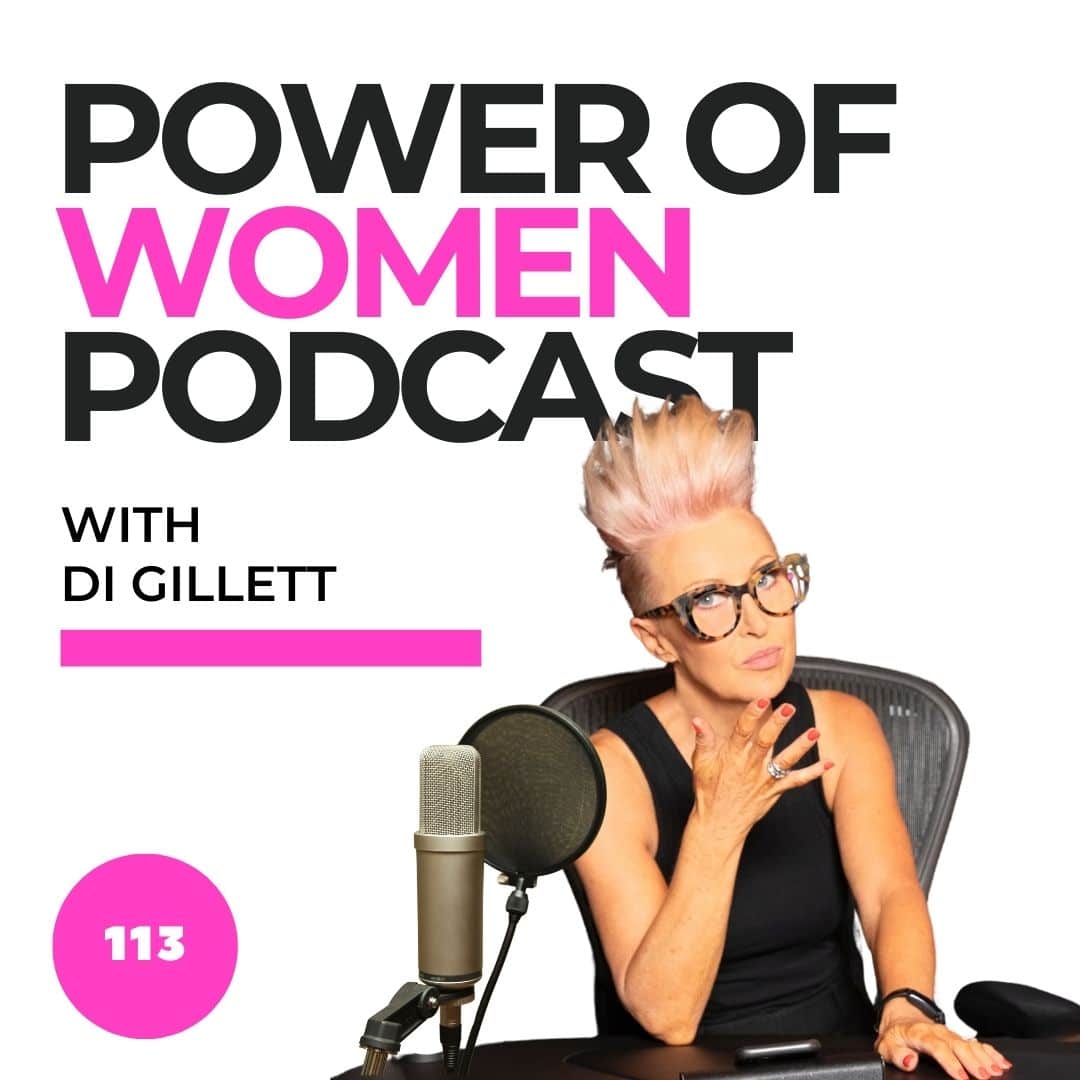
In this episode of the Power Of Women Podcast, Di Gillett sits down with Georgie Hubbard, recruiter, career strategist and founder of Pivoter, to unpack what AI really means for women at work.
No fear, just a conversation about strategy and what to do next. Georgie shares what the market values in 2026, why human skills are becoming career currency, and why waiting for confidence is costing women visibility.
If you’ve ever questioned your relevance in an AI-driven world this episode reframes the narrative and kicks fear to the curb.
➡️You’ll Hear :
Why courage comes before confidence
The three attributes the 2026 market is rewarding
The biggest misconception about AI and job loss
Why the career ladder has disappeared
How women can validate and articulate their real value
Where to start if upskilling feels overwhelming.
📖 Read the full transcript of this conversation here 👇
FULL TRANSCRIPT:
GEORGIE HUBBARD [Guest] (00:02)
My biggest fear isn’t failing or not succeeding at something. It’s would I regret not doing this? And that fuels me more than anything else. I future cast and I go, 10 years on from now, would you regret not writing that book? 10 years on from now, would you regret not starting that business? And that gives me this sense of urgency to just think, screw it. I’m going to go for it. I’m going to give this a go and I’m going to start before I feel ready.
So for example, like when I’m about to go for something, I won’t just focus on all the things that could go wrong. And I think this is what lot of women do. Because I’ve spoken to a lot of women about this. We focus on all these things that could go really wrong, and that’s not a reason to do it. So I have this framework that I work through anytime I make a decision. I go, okay, what’s the worst case scenario? Because we’re going to think it regardless. And getting it out onto paper, out of our minds, we see it for what it is. Someone asked me the other day,
Georgie, how are doing all this? How are you running a recruitment company and a mentorship program, running events? I was like, AI. Good question. was like, do you want to… I said, literally, I sat down and I said to myself, what tasks take up my most time and how could AI help me do this better? How can it help me be more efficient? But I think what it’s going to do is I think we, instead of seeing ourselves as a job, we see ourselves as skills.
and how can we monetize those skills? So I think what it’s gonna do is it’s gonna create a new wave of female entrepreneurs. And the mindset I want women to have is, is not who, my job title’s not who I am.
Thank you so much for having me on today. I’m absolutely delighted to be on your podcast. And hopefully we get to talk about lots of things today. We get to talk about careers and how it’s going to, well, how AI and how the world’s going to look in the next five or 10 years, because it’s certainly going to look very different. And look, a real quick background, I guess, to me. I’ve been in recruitment now for the last 12 years. I moved over from the UK, 14 years ago with a rucksack.
fell in love with this country, made my own career pivot from beauty into tech recruitment, that’s a whole story in itself. For the last eight years, I ran my own business in recruitment and that’s been quite the journey building that. I’m a massive advocate for women and I want to see women thrive, especially in the age of AI. I also run a mentorship program and an event company called Sisterhood Club.
And I’ve also recently written a book called The Bold Move, Build Confidence and Reinvent Your Career in the Age of AI. And I also built an AI tool called Pivoter to help people make these career transitions and reinventions in the age of AI. So it’s a real quick snapshot about myself and my deep belief is that every single woman listening to this podcast has got incredible potential and we just need to have the courage to believe in ourselves because courage comes before.
confidence, not the other way around.
DI GILLETT [Host] (03:11)
What bold career move is waiting for you? Maybe it’s the one you’ve talked yourself out of or convinced yourself that the timing just isn’t right. I’m Di Gillett and this is the Power of Women podcast. And what I love about this platform is the opportunity to showcase and celebrate the strength, resilience and achievements of women from all walks of life. And today’s conversation expands that tapestry even
further because we’re delving into the bold moves women are making, the skills the market truly values, and how confidence, clarity and reinvention are becoming the real currencies in the future of work. And today we’re going to explore what it truly means to reinvent because you’ve already heard from Georgie Hubbard, she has reinvented her own career and done some incredible work in advocating and creating new businesses as an entrepreneur.
And we’re going to talk about what it takes to reposition your career in the age defined by AI, accelerated change and unprecedented opportunity. And Georgie is going to help me do that because she brings more than decade in tech recruitment. I bring probably 30 years. So there’s the age differentiation today in executive search. And Georgie is also the author of the bold move, build career confidence and reinvent
your career in the age of AI. And Georgie’s had hundreds of conversations also on her own podcast, Career Confidence Podcast, which gives her a unique vantage point in the patterns, behaviors, and beliefs that are shaping women’s careers today. Georgie Hubbard, welcome to the Power of Women podcast.
GEORGIE HUBBARD [Guest] (05:04)
Thank you
DI GILLETT [Host] (05:07)
Like I have, you have sat across the table and conducted thousands of interviews with candidates and listened to the needs of hiring leaders. Why do you believe so many highly capable women hesitate to make bold moves?
GEORGIE HUBBARD [Guest] (05:25)
I love this question. So I really listen for patterns, when I’m on conversations, on calls, speaking to women on the podcast or just having conversations with random women on the street like I’ve been doing. And I think the key pattern that I’ve kind of put it down to from those that really struggle in their careers and those that go on to thrive, get promoted, do really well, the ones that go on to have a lot of success,
They have this ability to understand that first they have to have that belief in themselves. They have to have that courage. And I think that this is the key piece is like, hear a lot of women say, I’ve got to wait till I feel ready. I’ve got to go and do another course, or I’ve got to go and read another book, or I’ve got to go and listen to another podcast, or I just don’t feel like I’m good enough for that.
And it’s those that hesitate. It’s those that don’t make the move. They’re the ones that fall behind. And the women that go, do you know what? I’m going to give this a go. I’m going to just jump in, put my hat in the ring, put my hand up, make myself a bit more visible in my organizations. Those are the ones that go on to achieve incredible things in their career. And they’re no different to the ones that don’t. They just decide that they’re just going to go anyway. And they’re going to figure things out along the way.
And if I look throughout my whole life, this has literally been the story day. I didn’t feel ready to move to Australia when I was 23. I didn’t feel ready to pivot from beauty and to tech recruitment. I didn’t feel ready to start my own business. I certainly didn’t feel ready to write a book. I didn’t feel ready to step on stage, to start podcasting, but I did it regardless. And the one thing that’s helped me make these decisions that I want to share with your amazing audience is this whole thing about
My biggest fear isn’t failing or not succeeding at something. It’s would I regret not doing this? And that fuels me more than anything else. I future cast and I go, 10 years on from now, would you regret not writing that book? 10 years on from now, would you regret not starting that business? And that gives me this sense of urgency to just think, screw it, I’m going to go for it. I’m going to give this a go and I’m going to start before I feel ready.
And that’s what I see all the women that go on to achieve incredible things. They do that as well. So that’s the difference that I’ve seen. I’d love to get your thoughts on that as well.
DI GILLETT [Host] (08:00)
The podcast I did in 2025 with Wade Kingsley and he said so many people die with the idea inside. So to your point, you’ve brought that idea out and you’ve put it on the table and you’ve lived it and I love that. what I’m interested in from the women that you and we’re going to keep focused on females for the purposes of being power of women. What differentiates
People like you, people potentially like me who say, ⁓ stuff it, I’m going to do it versus those who don’t.
GEORGIE HUBBARD [Guest] (08:41)
So I think it’s the way we frame things. So for example, like when I’m about to go for something, I won’t just focus on all the things that could go wrong. And I think this is what lot of women do. Because I’ve spoken to a lot of women about this. We focus on all these things that could go really wrong, and that’s not a reason to do it. So I have this framework that I work through. Anytime I make a decision, I go, OK, what’s the worst case scenario? Because we’re going to think it regardless.
and getting it out onto paper, out of our minds, we see it for what it is. And every time I’ve done this and I’ve looked at it, I’ve gone, do you know what? If that actually happened, yeah, okay, it would suck, but it wouldn’t be that bad. I’d still live, I’d still breathe, and I’d get through it. So I think that’s the one thing that I see people do. They focus on the worst thing, and then they talk themselves out of it because they’re so afraid. The other side of that is, what’s the best case scenario? If everything went really well, like if this actually worked, what would that look like?
But then the problem with that is that if we focus too much on that, we set our expectations way too high. And then if we don’t exceed, if we don’t get to those expectations, we feel like a failure and then we don’t try again. And then in the middle is the likely case. And this is where I focused on, and I know a lot of women that I speak to focus on as well. It’s like, okay, yes, things would go wrong. Yes, I could fail, but you know what? I could also learn. And
If all of this stuff happens over here, that would be amazing, but maybe that’s a little bit too much of an expectation. So what’s the likely case? And I think our ability to just think practically, sometimes remove those emotions as well and just go, I’m going to go for this because the chances are that this could work for me. And hey, if it doesn’t, it’s not the end of the world. And if it does, how amazing would that be? So I think that framework’s always really helped me make big decisions in my life.
The women I’ve spoken to, they’re very rational sometimes in their thinking. They don’t fear. They know that they’re going to be, there’s fear there, but that doesn’t let them, they’re not stopped by fear. They’re not paralyzed by fear. They go anyway. So that’s the framework that’s really helped me make big decisions and go for my dreams.
DI GILLETT [Host] (10:51)
default point of I’m not ready, I’m scared to do it comes into play quite often. I’m not sure that everybody gets to the blue sky thinking of this could be the outcome if I jump in now, but I think they do get to that midpoint of what is the worst thing that could happen and jump in and let that evolve. And I think that is more often than not. However,
As we know, that one thing that holds so many back is that four-letter word being fear. And they are afraid of what is the worst thing that could happen.
GEORGIE HUBBARD [Guest] (11:31)
have the same fear and every single woman that’s gone on to do something has had the same fear and I don’t want anyone to listen to this and think ⁓ you know they’re just confident or they’re brave it’s like no we have sat with that fear ourselves but like I said I always come back to the fear of regret that’s my biggest fear not the fear of failure or success or what people think of me I’m like okay what the biggest fear for me is
What if I regret not doing this?
DI GILLETT [Host] (12:02)
doing it. Yeah. And that is very motivating and you won’t be alone. You won’t be alone in that. So let’s talk about the marketplace and the workplace for a moment if we could. So what are organisations looking for right now in candidates in a marketplace that is more dynamic in the rate of change than it’s ever been before?
GEORGIE HUBBARD [Guest] (12:31)
I sit in boardrooms and I listen to hiring managers tell me, right Georgie, next year we’re going to be hiring this skill, this skill, we need people with this skill and we’re letting go of people with this skill. So I was hearing all these things from hiring managers telling me all this. And then on the flip side, I was hearing from the candidates that were so confused because they’re not sure what to learn, what skills to develop, they’re not even getting interviews. And I just thought, my goodness, like I have to help people now because I say it, the career ladder has gone.
Careers are no longer linear. We don’t go to university, get a job and work our way up the corporate ladder. Those days are gone. And if you don’t know what the new rules of work are, you’re going to get left behind. So there’s a conversation I had with a hiring manager the other day that really stood out to me. And he said this, he was recruiting for a sort of a senior product role. And he said to me, Georgie, on a scale of one to 10, technically, we need somebody who’s about a five.
because now AI can do a lot of the grunt work. So is that okay? That’s interesting. Now this is new because going back 10 years ago when I started, it was all about we need 10 years of this, we need five years of this. It was like a tick box exercise on a job description. Not anymore. Then he said to me, but when it comes to adaptability, emotional intelligence, empathy, leadership, communication skills, I need someone who’s a nine.
DI GILLETT [Host] (13:56)
for the list.
GEORGIE HUBBARD [Guest] (13:57)
That’s the difference. It’s the human skills are now becoming the career currency. And this is what I’m shouting from the rooftops. We don’t need to be experts in technology. We don’t need to become AI experts overnight. What we do need to do is work on our communication. We need to be adaptable. We need to be resilient. And we need to understand that it is our human abilities now.
that are going to really stand out in a crowded marketplace where technology is evolving so fast.
DI GILLETT [Host] (14:33)
That’s super, super important and it’s not about an AI replacement discussion. It’s actually about how to stand out in a marketplace where AI is present. And you can train for skill. Training for attitude is a very different matter. Very different matter. So thank you for pointing that out. That’s really interesting.
Women often underestimate or dismiss the skills that the market values the most being influence, EQ, relationship, intelligence, all those things you’ve talked about. So how do we now get that message across and talk to them about the fact that these skills are now highly regarded and rewarded in the marketplace? Because sometimes these are the skills women feel are the ones that
don’t necessarily stand them in their best light.
GEORGIE HUBBARD [Guest] (15:34)
I completely agree and it’s the whole reason I wrote the book, it’s the reason why I want to come on podcasts like this because you’ve got the audience and I want to speak directly to women because honestly, Dean, my biggest fear is that we’re going to fall behind. And I actually think women have a unique advantage right now because these human skills are what kind of naturally come to women. We’re naturally more empathetic. We are naturally, I believe, problem solvers. We’re very good at multitasking.
Like you ask a woman to get something done, she’s got 10 other things going on. She’s going to get it done, right? We have these incredible capabilities. The only thing that I think is going to get in our way is the belief, is the confidence. And that’s why the whole start of my book is all around that because I can tell people right now, you need to go learn AI, you need to work on your communication, you need to network more. But if you don’t believe that you have got the capabilities, if you don’t believe that you’re enough, if you’re not confident in your own skin,
you’re never going to take that first step. So I think it’s the state of mind that we live in every single day that’s the most important. And that’s what I constantly work on myself because I’ve come up against myself so much. And this is the other thing I think that doesn’t get discussed enough. We talk about imposter syndrome, right? But when I’ve experienced imposter syndrome the most is when I’ve been pushing myself out of my comfort zone. It’s when I’ve been coming on to talk about this topic on podcasts or panels.
Right, and I think that this is what we don’t realise. So when we go to do something that scares us, we feel those imposter, we get those negative thoughts and we back out. But actually, I’m saying to women, lean in. Because yes, you’re going to come up against yourself, but that’s where all the growth is. And we can’t sit this next phase out. We need to be present, we need to be supporting each other. And we need to be shouting from the rooftops now that women cannot get left behind in this new era of work. And we need to be…
standing side by side, need to be lifting each other up. That’s what I want to see. So how do we get the message out there? We have conversations like this. We continue to share these conversations with the women that we care about. And that’s how we make a movement. That’s how we make sure that no woman gets left behind as we move into this next tech era.
DI GILLETT [Host] (17:48)
So are you seeing a shift Georgie where the candidates are actually embracing these skills that have been elevated to the top of the list, these interpersonal skills more so than hard skills?
GEORGIE HUBBARD [Guest] (18:01)
I those that are really taking this, people that they want to get ahead, yes they are. I think that I’ve seen quite a few women actually say to me that they’ve enrolled in, most of them are doing AI courses. So the women that I’m coaching at the moment, I’m telling them to go out and do, go to Coursera for example, go and do an AI course. just, that’s how you’re going to build a bit of confidence, right? Just start playing around with tools, but also gaining a micro-credential.
posting it on your LinkedIn profile, showing the world that you’re staying ready and relevant in this new world. So I think learning the AI tools is important and getting those micro-credentials is also a sign that you’re staying ready, you’re taking this seriously, you’re being visible. But on the flip side, working on your communication is equally as important. So one thing I did when I wrote in the book, I actually did Toastmasters. So this is going back years ago.
DI GILLETT [Host] (18:54)
That’s something I haven’t heard of for years Georgie.
GEORGIE HUBBARD [Guest] (19:00)
Listen, I did this I did this five years ago and it was the best thing I ever did because no joke There was a time in my life that I could not get up and say my name in front of a room of people Without almost passing out. I would see like spots I would like sweat and I’d get so panicked and I knew it was gonna hold me back I knew that I thought okay. I want to get some messages out there I want to start spreading the the beliefs and the values that I have with the world. How am I gonna get better?
better communication. So I enrolled in the Toastmasters, I did it for two years. It was the most uncomfortable thing I’ve ever done in my life. I remember the first speech I ever did. I fumbled through it. It probably didn’t even make sense, but I did it. And this is the key piece I always tell people. When you go to do something new, when you step outside your comfort zone, it is not going to feel comfortable. You are going to be made to feel embarrassed. You’re going to be made to feel like you’re, you know,
what’s going on, you’re going to feel really awkward. And that’s all part of growth. But I’m so grateful that I did that years ago, because I honestly wouldn’t have been able to come on this podcast, like even five years ago do, just without really panicking. So I think that we’ve got to own our strengths, but we also need to be realistic of the gaps that we have as well. So I think that communication is key, emotional intelligence is key.
reading some great books on these topics, listening to some great podcasts, doing some courses. We don’t need to go and get a degree or do anything crazy like that, but we can just find little cracks in the day where we could just absorb a bit of information, work on things that we want to work on. And that’s what I’ve continued to do throughout my entire life and my entire career. And I think that’s why I’ve continued to evolve as a human being and kept on getting better in the areas that I needed to improve upon.
DI GILLETT [Host] (20:52)
Yeah, that’s brilliant. And I joke about Toastmasters. ⁓ I describe growing up in my household as Toastmasters. It was the only way you could get heard. I did a little earlier in a slightly different setting because standing on stage was almost the only way you could be heard in a household of five other A-type personalities, but each to their own.
So coming up, we’re talking the future of work and how AI is reshaping opportunity and how women can articulate what they’re known for in ways that shift their entire career trajectory.
If you’re loving the Power of Women podcasts, be sure to jump onto our YouTube channel and hit that subscribe button to ensure you never miss an episode.
You’re listening to the Power of Women podcast and I’m here with recruitment and career advocate Georgie Hubbard. Georgie, you mentioned earlier you’ve built an AI tool, Pivoter, and to help people navigate the change in the age of AI. I’d like to hear a little bit about what Pivoter is. But what’s the biggest misconception also that people have about AI being a threat to the career?
and the marketplace.
GEORGIE HUBBARD [Guest] (22:23)
think that the thought process is AI is going to take my job. look, I do think AI is going to take certain jobs, yes. I’m not going to sit here and say it’s not. I think that there’s going to be certain jobs that will be really impacted by AI, customer service, admin, anything that is very task and repetitive.
those will be automated. Yeah, I do believe that will happen. When it will happen, it kind of is already happening. Like you’re seeing redundancies, you’re seeing restructures and things going on in organisations. So, look, I’m not going to sit here and say that we’re all safe. I think that we need to be very alert and aware of what’s going on. But what I am seeing, what I believe is true is that AI won’t take your job.
but someone who knows how to use it will. This is the phrase that keeps on going around. So there are certain jobs that yes, AI will definitely take. That’s going to happen. But then in the corporate world, I think it’s really important to understand what tasks do you do that AI could basically take away from you. And we’re going to get to a point soon where agents are going to come in, where we’re literally going to be able to pass so much to AI agents, which is just going to be like, save us so much time.
and energy. So the world’s going to change quickly. And I’m just saying to women especially, don’t be afraid of this technology. Don’t bury your head in the sand and pretend it’s not coming. You need to be aware and you need to be ready for what’s to come. And the best way to start is just using it, playing around with it, downloading Chat GBT, Claw, Gemini, Microsoft Copilot, whatever one you want to start playing with, don’t be afraid of it because it’s here and it’s not going anywhere.
So that’s the first thing I would say. Now, when it comes to Pivoter, so the reason why I wanted to create this is because I wanted to give people an actual roadmap. So let’s just say that the jobs that are going to be unfortunately made redundant due to AI, right? So let’s just say customer service role. Well, as a customer service agent, you have got a lot of transferable skills.
You’re really good with people, you get a problem solving, you get a thinking on your feet. So that can be translated into another area. So what you can do with Pivotal is you can literally type in your current role title, customer service. It will then help map all of your transferable skills. It will get to know you, will ask you a number of questions, like what are your strengths, what do you enjoy, where do you see yourself going next? And then it will give you some options in terms of where you can go to next. So it will basically pull up job ideas, job titles,
then it will give you a roadmap to follow to get you from where you are to where you want to be. that’s the idea. tool. That’s what we’ve created. yeah. it’s, we’ve launched it, we’re getting great feedback. We are, we’re at the start of this, like, I really want to build this into something very, very helpful for people because
The reality is whether we’re moving into a whole other industry, whether we’re going to go off and start our own business, I think it’s going to be very much a rise of an entrepreneurial era. think there’s a lot of people that are going to go off and start their own businesses, monetise their skills.
DI GILLETT [Host] (25:36)
Because all of that repetitive stuff’s going to be taken away. And I think you can reframe this in a complete positive. If AI takes all of those repetitive tasks, all of those tasks that were done on a spreadsheet or similar away from you, and free up time and head space to work on something more innovative and the things you never get time to get to, that’s nirvana.
GEORGIE HUBBARD [Guest] (26:04)
million percent and you know someone asked me the other day, Georgie how you doing all this? How you running a recruitment company and a mentorship program and running events and I was like AI. Good question. I said literally I sat down and I said to myself what tasks take up my most time and how could AI help me do this better? How can it help me be more efficient?
DI GILLETT [Host] (26:13)
You
I imagine writing a short a candidate shortlist is very different to what it looked like five years ago. Yeah because those those used to be things that we would have to put aside half a day or a day or more depending on the on the level and and the caliber and I imagine now that looks very very different.
GEORGIE HUBBARD [Guest] (26:50)
totally different. Summarizing candidate skills. So if I’m on a call, for example, I’ll be popping my notes into ⁓ one of the AI notebook or something, then I’ll whack it into Google Gemini. I you summarize these candidate skills for me from my notes? Boom, that’ll give me a nice summary. Then I send that to the higher manager with their CV. That literally saved me three hours. So all this time that I’m getting back, then I can think.
huge amounts of time. And then I can use that to be doing something else like building an AI tool or writing a book. there’s so much time and productivity that we can get back. Or you might not want to go and start a business or something. And that’s okay. Maybe you could use that time to spend more time with your family. All these things that AI can give us back is incredible.
We just need to learn how to use it, not be afraid of it and ask ourselves the question, what mundane tasks take up the most time in my week and how could I outsource this to AI? That’s what I did and I realized that it was
DI GILLETT [Host] (27:52)
I think we both agree AI is not going to eliminate jobs, but it’s certainly going to eclipse the people who don’t know how to use it. So if we look at females specifically, Georgie, what are the opportunities that AI is actually creating? Can we list some of the jobs that perhaps people could aim for?
GEORGIE HUBBARD [Guest] (28:19)
I don’t think anyone knows the jobs that are to come from this. think that I won’t want to sit here and think, right, it’s going to be this job, this job, this job. But I think what it’s going to do is I think we, instead of seeing ourselves as a job, we see ourselves as skills. And how can we monetize those skills? So I think what it’s going to do is it’s going to create a new wave of female entrepreneurs. And the mindset I want women to have is this is not who, my job title is not who I am.
What are my strengths? What are my skills? What do people come to me for? If I walked into your organization tomorrow, what would you, what would people say about you? What are you known for? And I think the more we can get clear on what we, what skills we have, what strengths we have, then we can actually take those skills and strengths and potentially package them up and offer them to businesses and make money back. So I think it’s not necessarily thinking about this mindset of,
Where’s the next job going to be? It’s like, how can I now really utilize my incredible skills? Like I even look at you Dee, you’re such a great communicator. You come across as so confident you start this podcast. Like that in itself is so entrepreneurial. It’s so bold. It’s so brave. And that’s what I want women to do. I want women to see themselves as like more than just a title, more than just the next promotion. I want them to see themselves as, okay, I am this incredible woman with all of these skills.
Where can I take that next? And one final thing about AI that I want women to hear, because I speak to so many women about this. So many women say that they think AI is cheating. I can’t do that, it’s cheating. Well, I’m here to say it’s not cheating. You are using it to your advantage, you’re using it to get ahead. And if you don’t, someone else using it is going to get ahead of you. So it’s not cheating, you need to be using this technology. And even if like,
that I talk to it. So don’t know about how you use it deep, but I literally just chat to it. So I don’t necessarily type, I talk into it. And if I’m thinking about a new idea or how I can come up with something, a new idea for my business, I’ll just chat to ChatGBT or Claude and I’ll say, hey, act like a top business coach. We want to prompt it correctly and help me really sort of, guess, understand my thoughts. This is my skills currently. This is what I’m doing in my job.
What opportunities are out there right now? What problems could I solve? What value could I bring to the marketplace? Use it as like your co-pilot, use it as your business coach almost. And it’s given me so many great ideas that the opportunities ultimately is what I’m trying to say is absolutely endless. And I want women to have a really positive outlook about the future and what AI can give them. It can give them that time, it can give them that productivity, it can give them business ideas, it can make them money.
in other areas. I do generally think we are going into a really fantastic phase for those that are adaptable and those are curious and those that get on this now and not wait.
DI GILLETT [Host] (31:18)
So if you said we’re into the new year now, it’s 2026, what would you say the top three things females should focus on in terms of upskilling themselves as they head towards the really potent part of the hiring year as we get into the June’s and July’s where we know the market gets really meaty?
GEORGIE HUBBARD [Guest] (31:43)
So I would 100 % look to do some courses on AI. would definitely gain some micro credentials just to give yourself that confidence. That’s the first thing that I would do. So that’s the tech side. Go to Coursera, it’s exactly what I did. There’s a range of courses. There’s IBM courses, Google courses. Like just pick one, they’re short and take you about like a lesson hour to do and then add that to your LinkedIn profile. That’s really important. The second thing I would be thinking about
for next for 2026 is your network. I say this to every single woman, your reputation is now your resume. Start in January building up those strong foundations of the women around you, the male allies around you, the people that could advocate for you in your business and outside of the place of work. Because too many women, I think, wait until they need a job or they need another opportunity and then they’re going to start reaching out to their network.
I’ve been really, really intentional over the last 12 months. Yeah, 100 % too late. Over the last 12 months, I’ve really invested in my networking and my relationships. And I think that that human to human connection is going to be incredibly important for next year. And then the final thing I would say is do a bit of a time audit and really be thinking about where you spend your time every week.
Because I think that too many women, and myself included in this, we can be busy. Busy not doing the right things and busy putting everybody else above our own needs. And I think that the best thing we can do for 2026 is get honest about where we spend our time. And we don’t need to add more onto our already busy plates. I talk about in the book, I talk about these three balls that we juggle. We’ve got bouncy balls, which are
the laundry, the admin, the email we didn’t respond to. And they can just be dropped because they bounce back up. Then we’ve got the concrete balls and these are the obligations, the people that don’t light us up or support us, the things that weigh us down, drop them. Then we’ve got the glass balls and these are the balls that we really need to focus on in 2026 and beyond. They’re our family, they’re our relationships, they’re our career development, they’re our health. These are the balls that need to be prioritized.
So this is such an important exercise to do as we move into the next year, like where are you spending your time? Making sure it’s on the right things, making sure it’s investing in yourself, in your learning, in your relationships, dropping everything else that doesn’t matter. And really, I guess, you know, putting yourself at the top of your priority list because you don’t want to wait until you need a new job or you need something for next year to start. So start as you mean to go on 2026, prioritize yourself, learn that new skill.
Work on your network and your relationships and be really honest about where you’re spending your time and making sure you’re spending on the right things.
DI GILLETT [Host] (34:39)
Yeah, love that. And I love the example of the three balls and to add further weight to the glass ball, if you don’t focus on those things and you drop the ball literally, it’ll shatter. So it’s a really, really, really important message. So if we then try and wrap all of these points together, Georgie.
Is the resume the number one place to articulate what you have to offer or is it only one place where we articulate what we have to offer?
GEORGIE HUBBARD [Guest] (35:19)
I think in this new world, your resume, yes, always have it ready and prepared. But where you need to spend most of your time and energy is on LinkedIn. So I say LinkedIn now is very, very important. And I’ll tell you why. So as a recruiter, I have access to the back end of LinkedIn. And when I’m searching for candidates for a job, now LinkedIn has embedded AI. And this is what people don’t understand.
So when I’m searching for candidates now, I’ll type in the job title and LinkedIn will use AI to bring up the top applicants. And what I’m telling all of the women that I’m coaching right now is that you need to be seen and you need to be searchable. So yes, your resume is important and you also want to customize that for all of the jobs that you send because you want to make sure the keywords and the job description that you’re applying for are in your resume.
or the ATS system’s not going to bring your resume to the top. But more important than that, what hiring managers do, recruiters do, talent people do, is they will look you up online. And this is why I keep saying to women, visibility leads to opportunity. So if you want to stand out in 2026 and get hired and get a job and have opportunities come to you, you need to make sure that your LinkedIn profile is set up for success because it’s where a lot of recruiters and hiring managers hang out and find talent.
You want to make sure that you’ve got the right title. You want to make sure all of the keywords that you want to be known for are in your bio. You want to make sure that your job titles are all up to date and what you’ve done, the outcomes you’ve achieved are all in your LinkedIn profile. And a big tip I’d give is if you know where you want to go to next or you’ve got a rough idea of where you’d like to pivot into or move into, make a list of all the job descriptions that you are going to be wanting to apply for potentially next year.
and just read them and scan them and think, okay, what words are coming up all the time and how can I make sure that’s reflective, yes on my resume, but also on my LinkedIn profile? Because as a recruiter like me, I’m not necessarily posting ads anymore and waiting for applicants to come to me. I’m being proactive and going on LinkedIn and trying to source talent, headhunt talent. And if you’re not looking at your LinkedIn profile this way,
You could really be not selling yourself for success in 2026.
DI GILLETT [Host] (37:38)
Yep and that’s really valuable. While I’ve spent most of my career in the search side where I’ve had to do the digging, to your point even the recruitment market now is taking the proactive approach of searching the market for talent rather than posting the old-fashioned job ad and so you need to be displaying your wares in the best
way to to improve your your likelihood as a candidate in a in competitive marketplace. So that’s really really good advice Georgie. Thank you. Brilliant. I’ve got a couple of rapid fire questions to ⁓ to wrap up today if I could throw them throw them at you. Who’s the boldest leader you admire?
GEORGIE HUBBARD [Guest] (38:33)
going to say Catherine Boychuk. She’s the CTO of EY. She’s bold, she’s brave and she’s continually inspired me as a woman.
DI GILLETT [Host] (38:41)
Brilliant. A skill every woman needs in 2026.
GEORGIE HUBBARD [Guest] (38:47)
the
DI GILLETT [Host] (38:48)
An AI tool you can’t do without?
GEORGIE HUBBARD [Guest] (38:55)
say chat TBT. It’s my therapist, it’s my business coach, it’s my productivity tool.
DI GILLETT [Host] (39:02)
I
hope you’re not relying on it to keep giving you affirmation. And finally, one word that defines women at work in the next decade.
GEORGIE HUBBARD [Guest] (39:07)
No I’m
want to say bold. We need to be bold, D. We need to be bold and brave.
DI GILLETT [Host] (39:24)
Brilliant. Georgie, thank you so much for sharing the insights into the marketplace. And I think what’s really ⁓ important takeaways from this is the marketplace is changing. And for anybody who listened to the episode that I ran the other a couple of weeks ago with Kelly Slezor, who’s one of Australia’s top AI specialists, the marketplace is moving in, has been moving in six month increments since AI launched.
but over the next two years, we are going to move forward 20 years. So we’ve never seen change happen at such a rate. So to reiterate, don’t be afraid of AI. It’s not that it’s going to replace you, but if you don’t know how to use AI, somebody who does is gonna be in front of you in the pecking order for the job market. So make sure
you’re upskilling. And I love that phrase that Georgie uses, which is micro-credentials. There’s lots of courses you can do. There’s lots of upskilling you can do. I’ve been on an upskilling journey myself in my 60s for the last two years at a faster rate than I ever, ever have before. And that is what fuels me, because the more I learn, the more I can do and the more I want to do.
Don’t underestimate the power of continuous learning. Learning agility is a muscle that you absolutely need to leverage. Thank you, Georgie. I’m going to add all the details of where we can find you in the show notes and the links to Pivoter and all of the tools that you’ve done. That will be helpful for anybody who wants to engage with you. But I think you’ve got a fair idea. You can probably find Georgie on LinkedIn.
you will definitely find me on LinkedIn. And please share this episode with somebody who’s struggling with how to approach this tricky job market. It’s competitive, but it’s never been more dynamic. Until next time.
Chapters:
00:01 Introduction to Bold Moves in Careers
02:52 The Importance of Courage and Confidence
05:50 Understanding the Marketplace Dynamics
08:34 Human Skills as Career Currency
11:39 Women’s Unique Advantages in the Workplace
14:25 Embracing Interpersonal Skills
17:22 Navigating AI and Career Transitions
20:14 The Future of Work and AI’s Impact
22:47 The Impact of AI on Employment
24:14 Navigating Career Transitions with Pivoter
26:03 Embracing AI for Productivity
28:35 Opportunities for Women in the AI Era
32:02 Essential Skills for 2026
35:37 The Importance of LinkedIn in Job Searching
Connect with Di:
Follow Power Of Women on LinkedIn
The Power Of Women Podcast Instagram
This is the home of unapologetic conversations and powerful stories of reinvention. New episodes drop every Monday to fuel your week with insights on leadership, resilience, and success. Subscribe and join a community of women who are changing the game.
Want more insightful, unfiltered stories?
💫 Subscribe to the Power Of Women Podcast on YouTube, Spotify, or Apple Podcasts
Your ⭐⭐⭐⭐⭐star review on Apple Podcasts or Spotify keeps these stories alive.
📩 Sign up for our newsletter where I share raw reflections and thought leadership on the Power Of Reinvention.
Disclaimer: https://powerofwomen.com.au/podcast-disclaimer/