

Select Page
Invisible To Unmissable: How to Build Your Visibility

Invisible To Unmissable: How to Build Your Visibility

Visibility isn’t the same as being seen. Emmanuella Grace, voice and communication expert and founder of Find Your Voice, has performed on stages including the Royal Albert Hall, the Barbican and the Sydney Opera House, and now coaches technical leaders at organisations including PwC, Future Fund and Amazon on the same command of presence.

In this second conversation, Emmanuella and I move past the mechanics of finding a voice and into how you build visibility that lasts, the kind that earns credibility rather than borrowing it for a room. We talk about performed confidence versus embodied confidence, the three R’s of motivation, and the sophisticated forms of workplace BS that hide behind the language of culture and care.

Also, heads up: There is plenty of oversharing in this episode. And yes, for those wondering, it does include a botox admission …with damn good reason.


➡️You’ll Hear :

Visibility built on performance collapses the moment the performance stops. Here’s what building it on credibility looks like instead

The Royal Albert Hall story Emmanuella hadn’t thought about in years, and the lesson it left her with about staying visible under pressure

Introverts often make the more compelling speakers. Excitement and fear run through the body in almost exactly the same way

How to spot which of the three R’s, Reason, Resources or Reward, has fallen away when a strong performer starts to wobble

The difference between assertiveness and passive aggression, demonstrated live in the conversation

Emmanuella has broken up with clients. What that decision says about the integrity of her work


Key Takeaways:

Performed confidence and embodied confidence look identical on the surface. The nervous system of the person across from you can tell the difference

The question isn’t whether you’re capable. It’s whose agenda your capability has been serving

Investing in yourself isn’t optional work. It’s the work that makes every other skill land

📖 Read the full transcript of this conversation here.

FULL TRANSCRIPT:

DI GILLETT [HOST] (00:03)

How of women? Who comes to mind?


EMMANUELLA GRACE [GUEST] (00:06)

Nina Simone.


DI GILLETT [HOST] (00:08)

Just like that.


EMMANUELLA GRACE [GUEST] (00:09)

Just like that, just thought of it now. I don’t know, we were Well, we were thinking about you know, we were talking off camera about all all the formative experiences we have that make us the strong women we are. And none of those experiences are like, that was such a great experience and it made me so strong. Right right? And if you think about her, she there’s there must have been myriad of educated white women in the same era who had a musical education.


DI GILLETT [HOST] (00:12)

I love Nina Simone.


EMMANUELLA GRACE [GUEST] (00:38)

Right. But you have this black woman who’s not allowed to go into a conservatorium because she’s black. So she takes up a job working in brothels. I can’t imagine how safe that would be for a woman in that era at her age and her skin colour. And she went on to break open for so many musicians, the industry like covering people like Bob Dylan. And she is one of the most recognizable voices on the planet.


And she plays her own instruments, by the way. So she’s not sitting around waiting for someone to bring her a band. Right, she plays piano and sings. So completely authentic, recognizable voice.


DI GILLETT [HOST] (01:21)

Fabulous voice.


EMMANUELLA GRACE [GUEST] (01:22)

Yeah. If you wanna think about power, that’s what power sounds like. Is that woman’s voice?


DI GILLETT [HOST] (01:27)

Well there’s the promo for Power Women Done, and the episode’s over. So


EMMANUELLA GRACE [GUEST] (01:31)

Good, great. Okay, move the car. ⁓ Time for one.


DI GILLETT [HOST] (01:48)

I’m Di Gillett and welcome to the POWER OF WOMEN Podcast, where we celebrate the strength, resilience, and achievements of women from all walks of life. And whilst most podcasts tell you what’s possible, these women will share with you what it took them to get there. It’s a place where women supporting women isn’t just a sentiment, it’s a decision we make every single day.


I’m back with Emmanuella Grace. Welcome back to the studio.


EMMANUELLA GRACE [GUEST] (02:19)

Didn’t we eat? ⁓


DI GILLETT [HOST] (02:23)

Voice and communication expert, former performer and founder of Find Your Voice. She has performed on international stages, including Royal Albert Hall, The Barbican, and Sydney Opera House. In our last conversation when we were together, we went deeply into why women silence themselves and what it takes to reclaim their voice. Today we’re going further into visibility.


what it means to be truly seen and why so many high achieving women, at the height of everything they’ve built, find themselves wondering why it feels so hollow. Emmanuella Grace, welcome back to the POWER OF WOMEN Podcast.


EMMANUELLA GRACE [GUEST] (03:06)

Thank you. I’m so excited for this conversation.


DI GILLETT [HOST] (03:09)

You’ve mentioned it yourself, the irony of your position. You coach people to find their voice, step into their visibility, and yet you know what it’s like to be on stage when everything is falling apart around you. Tell me about that time at Royal Albert Hall, the night the guitar my god. Yeah.


EMMANUELLA GRACE [GUEST] (03:28)

⁓


God. Do you know what I n I hadn’t thought about that in years and then it came up ⁓ just before our conversation. And I just you have these Yeah, you have these moments where you go, that’s where every you know these moments where everything changes. And like I said, sometimes the most formative moments aren’t the good ones. So


As a deeply insecure teenager who wanted to be a singer, because you know there’s something about athletes and and musicians where our careers f at a professional level with high scrutiny start so much sooner than most people. And the amount of training and effort, yeah, that goes into being at that level where I’m professional at sixteen. Most people don’t start their professional career for a decade later where they’ve had some life experience and


Well and and you’ve learned a few life skills, right? So you’re you’re so affected by other people’s perspective of you and you’re so affected by other people’s perception of you. You know, very few sixteen year olds know themselves. So you’re really buffeted about and informed in some ways by how people reflect yourself back at you.


DI GILLETT [HOST] (04:40)

You


And it explains why the wheels fall off when that structure’s taken away. Absolutely. Like for example, swimmers.


EMMANUELLA GRACE [GUEST] (04:46)

Right. And we’ll we’ll get into that in a little while later because whose agenda are you serving ultimately? And that’s something that I think a lot of singers maybe or athletes have that collision in their th twenties to thirties. But for career women it’s happening in their fifties because now they’ve been on that journey of self discovery. But Royal Albert Hall. I’d gotten to a point where I would say that that’s a pretty high apex of a career, you know.


I have this tendency to kind of go, there’s a goal, that’s a thing I want to do. And then the logic of it doesn’t really weigh in in that moment. I just go, Yeah, that’s a thing I can shoot for. And then I just make my way to it. And I I’m very flexible on the route. But ultimately I go, what I’d like to sing in Royal Albert Hall. And then I get that. And and how I get there’s, you know, this mirandering meandering? Mirandering? Meandering. Meandering journey.


So I get to Royal Albert Hall, I’m doing a season there with this ensemble, and I’m sitting in the pit and I’m having this thought, I think I’ve proven my point. ‘Cause what I’ve done is I’d started coaching on the side. I’d had ⁓ I’d been performing my own music. I’d started to perform my own music and I’d had an American Idol finalist approach me and she’d said, well you teach me how to do what you do And I was like, no, I’m not a singing teacher. She No, I’ve got a singing teacher. I need someone to teach me what you do in terms of your presence on stage.


And so I’d started coaching her and that really changed the way I perceived what my possibilities were in the world because I thought you could be a singing teacher or a singer and that was it. If you if it that didn’t work, you went and worked at Virgin Music. Right. But but she introduced me to her Yeah. So she introduced me to her voice coach in New York, who was working with some of still does work with some of the biggest names in the business. And Norma took me under her wing and taught me what it was to be a coach, which is a very American thing at the time. And


I just was loving it. And I was starting to work with professional footballers and weightlifters and bankers and doctors because I didn’t realise that I think I had started to have this realisation that you could teach voice to anyone and stage presence to anyone. So back we’re back on in the pit in Albert Hall. And you’re you’re doing your you’re doing your thing. We were doing Stravinsky’s Ride of Spring mashed up with We Will Rock You.


DI GILLETT [HOST] (06:51)

Yeah.


EMMANUELLA GRACE [GUEST] (07:05)

Which is like pretty full on. And then my friend’s doing this big rock solo and he’s up on the top there. And the stage doors are on this kind of air, air suction release thing to make the stage soundproof. And as he’s gone off stage and out the door, his fingers got f stuck in the door. And some of us realize what’s going on because the doors only open one way. There’s people having to run, figure out what’s going on and run all the way around the stage, around the back.


To get the door open and get him out. Meanwhile, we have to keep singing. Because in venues that size, if you stop, the audience will panic and you can end up with a swarm. So you you have to keep going. And and we’ve seen some really horrific situations in in concerts where audiences have just surged exactly towards whatever it is the singer’s putting the attention on. So as the performers, you have to be very conscious that they you’re there to curate an experience for your audience.


DI GILLETT [HOST] (07:41)

Wow.


Absurd.


EMMANUELLA GRACE [GUEST] (08:01)

And so the show must go on. It’s not just an idea of like, ⁓ you know, on with the show. It’s it’s really something where you must keep going because you have responsibility to some extent of your audience’s experience. And if that experience is to draw their attention to something that’s happening that’s not great, it’s gonna create a pretty distressing situation. So meanwhile, we find out later that he’s gone to hospital, he’s lost his finger. And I just thought


You know, I’ve I’ve proven my point and I realize that this isn’t actually what I want to be doing. I’m gonna I I’m loving the coaching and I think I’m gonna do that. And I wasn’t traumatized by the situation. He went on to become a very lovely guitar teacher, and and it was a very upsetting thing for a while, but I think it was just the confluence of realizing I’ve proven what I needed to prove to myself. I’m done proving myself to other people, and also it being in such an extreme environment.


really kind of made that a formative memory for me where I look at that moment and go, That’s where it changed. So


DI GILLETT [HOST] (08:57)

You say you’ve you’ve you’ve done that, but is is or was the stage your happy place?


EMMANUELLA GRACE [GUEST] (09:04)

It still is. You know, I think you’ve got to remember that there’s so much preparation that goes into those moments. I think you know, we watch these shows where Lady Gargar meets a guy in a ⁓ parking lot and suddenly she’s a world star and it’s really amazing for her and that’s great. That’s not how it is. Okay. There you know, you’ve heard the phrase it takes ten nights to make t ten years to make an overnight sensation.


There is so much practice and so much rehearsal and so much risk that goes into becoming a professional athlete or singer in the first place. And I was trained by by by sport psychologists that trained Olympic athletes. So I kind of can see that they are parallel training. ⁓ and so


And and so many of us don’t ever make it in Bunny Ears, you know, make it for those of you watching at home. but it’s it’s something where when it does come together and you’re finally on the stage and you and your band or you and your orchestra or you and your ensemble have rehearsed, there’s so much trust and so much cohesion and so much that’s gone into rehearsing that skill set that there is a state of flow that you you take with you on there and the performances where you


don’t have the time to prepare are usually the ones where things ⁓ it’s not as enjoyable. Whereas if you’ve prepared really well and you’re you’re synchronized as a as an ensemble, even when things do go wrong, you tend to handle it better because you know how to flow together and you kind of become a little bit of a hive mind.


DI GILLETT [HOST] (10:38)

Yeah. Well let’s let’s bring this back to a point where our listeners and we’re going to assume not many of them have been on stage at Royal Albert Hall. But visibility is something that they they’re grappling with in in their professional and personal lives at at any given time. So we talked when we were together before about introverts potentially make


EMMANUELLA GRACE [GUEST] (10:49)

Yeah.


DI GILLETT [HOST] (11:05)

better speakers. And that excitement and and trepidation can feel the s that same physiological response.


EMMANUELLA GRACE [GUEST] (11:13)

Are you talking about Skregs Blunderfried Di? I’m so glad you brought it up. So for those of you watching along at home, Di and I had a call the other day and she said, What’s that written on your wall? And I said, Skregs Blunderfried


DI GILLETT [HOST] (11:16)

That’s the


EMMANUELLA GRACE [GUEST] (11:30)

yeah, great. So, ⁓ some of you are probably curious about my weird accent. I ⁓ I’ve been with my Norwegian husband for twenty, four, twenty-five years, and Norwegian is what we also speak at home and that’s impressive. We we live part time there. I hope that my children will speak it. It’s a really lovely language. And ⁓ in you know, one of the great joys of living in another language sometimes is that our perception is shaped by the languages that we speak.


So if you only ever learnt English, then you would only ever know the word terror or joy is polarities. So at one end you have something bad, terror, the other end you have something good, joy, and never the twine shall meet. They are two extremes that are at opposite ends of a spectrum. For Norwegians we have a word Skrexblandfried, which translates as terror blended with joy. So it’s the


Intersection of the two coexisting simultaneously. Now, if I describe to you the experience, you’ll know what I mean. Like a first kiss with someone you really like, or a roller coaster. That’s Gregsplandertfried, right? You’re kind of terrified and you’re also loving it. That’s right, but the word that we have that’s the closest to it in English is excitement, but that has a positive connotation.


When we can look at terror and joy coexisting, then we can start to normalize the experience of being scared and happy simultaneously. And I would say, even for me now, after decades of performance, I still feel like that every time I get behind a microphone, every time I get on stage. And I think if you’re not, then perhaps you should be thinking about doing something else. You’ve gotten too comfortable. Because I think there’s a magic that comes.


With the coexistence of those extremes within one human at a time. Yeah.


DI GILLETT [HOST] (13:15)

And my husband, who is also a media professional, will talk about that feeling of trepidation or you talked about earlier the sweaty sweaty palms. That that still happens fifty years on in his career and that’s the piece that propels him over the line to to perform.


EMMANUELLA GRACE [GUEST] (13:34)

It’s sparkly. It makes you sparkly. So when I’m training voices, I say to people, look, practice absolutely all out at sixty percent. Don’t go over sixty percent as your biggest note because you know, you kind of want to when you’re practicing, you start at about 10 to 20 percent when you’re marking your notes. But you know, if you’re going for a big note, sing it 60%, because by the time you’re on stage, the adrenaline and the excitement and also the sound of it will push you. And if you’re hitting it a hundred all the way through, you’re gonna injuries.


DI GILLETT [HOST] (14:02)

Yeah. Always a marathon every you don’t run a marathon to train for a marathon.


EMMANUELLA GRACE [GUEST] (14:03)

That’s not sustainable. ⁓


No, exactly right. So you you always need to leave yourself somewhere to go.


DI GILLETT [HOST] (14:12)

Yeah. Well let’s get to the crux of today’s discussion, which is whose agenda have you been serving to gain your visibility? Can you reorientate our understanding of why she feels lost despite everything she’s been told to want?


EMMANUELLA GRACE [GUEST] (14:22)

Yeah.


It goes back to she the lady that I’m working with, let’s say a woman in her late forties to early fifties, sometimes anything up to sixty, depending on if you took time out to have kids. ⁓ depending on what your career looks like. You know, there’s a lot of women in law, for example, that have a choice at around this point in their career where they have to choose do they go one way or the other. And there’s a lot of ⁓ gravity in one and and there can be a little bit of ⁓ side eye for the other.


DI GILLETT [HOST] (14:35)

G


EMMANUELLA GRACE [GUEST] (15:03)

And and so there’s a lot of careers where you have these moments where you’re making a decision, do you make it based on what’s important for you and your values, or are you making it based on what brings you prestige or more money, but might not necessarily align with your true beliefs of what quality of life is or what’s important. So when I work with people, no matter who it is or what context, we always start with what’s important to you. Yeah. Because what I think’s important and what you think’s important is going to be different because we’re all individual.


DI GILLETT [HOST] (15:28)

Yeah.


So this is how we do this honestly, because it it’s uncomfortable when you get to that point of going


I don’t know what I value anymore.


EMMANUELLA GRACE [GUEST] (15:43)

And so sometimes you need someone outside of your head to help you get honest about that. And I’m big on honesty and it can be uncomfortable. So hopefully I help people hold the space for that and navigate that. ⁓ but you know, in the voice model that I teach, V is for values. If you don’t know what you represent, how can you ever articulate that out into the world? How can you ever behave in a way that aligns with that? And how can you ultimately curate a life that aligns with your values if you don’t know what they are?


You’re ultimately just serving someone else’s agenda.


DI GILLETT [HOST] (16:15)

So and I’m I’m hope I’m not putting words into your mouth, but you work with leaders who I think at times you’d say are technically articulate emotionally new.


EMMANUELLA GRACE [GUEST] (16:27)

I’d say that’s absolutely spot on.


DI GILLETT [HOST] (16:30)

Not a lot of people might describe it. They might not be just like not mine.


EMMANUELLA GRACE [GUEST] (16:33)

They they might not even think they are and then they might the the really the people that get the most shaken is when they think they’re expressing themselves really well and then they get the feedback. yeah, no it’s not land.


DI GILLETT [HOST] (16:42)

Yeah.


How do you begin to find what that thing is?


EMMANUELLA GRACE [GUEST] (16:49)

What’s important to them? You know, let’s if I tell you, listen, your message isn’t landing, go fix it, or else, are you gonna Yeah, no, you’re not gonna be like, Yes, sure. I’d love to. No, no, no. Okay, so what we need to do is go, well, do you even want to change the way you’re delivering a message? You know, if you don’t want to, that’s fine. But if you if you can identify something within you


DI GILLETT [HOST] (16:56)

Wasn’t working.


Yeah right.


EMMANUELLA GRACE [GUEST] (17:13)

that’s important that’s going to motivate you to want to learn this new skill set and test it and risk failure and develop it and invest the energy and time and sometimes money into developing that skill set. Let’s start there. Let’s find a reason for you to be motivated. So there’s there’s a model that I worked on with my a friend of mine who’s a expert in peak performance for teams and I’m peak performance for individuals. So sometimes we put our heads together, we nut things out, and we came up with a model, the three R’s of motivation.


So people used to think that motivation was actually finite, which is why they would teach you, okay, put on your jogging shoes in the morning and do your exercise, because by the end of the day you have no energy. But what the new research is showing us is that actually motivation is a self-perpetuating cycle. And for that to work, you need three things, your three R’s. You need a reason, you need the resources, and you need the reward. So I’ll give you an example. Let’s say you want to get


Fit. Why do you want to get fit? Your reason is that you want to get a girlfriend. I’m gonna say it from the perspective of a boy. Okay? Yep. Just realize that. Okay, so you want to get a girlfriend and you think that getting fit will help you, it’ll help you build your confidence, you’ll have more testosterone. Excellent. So you have the reason. The resource is the money to pay for the gym or the time to go. And the reward is a couple of weeks in, you’ve lost a few kilos. And that cutie over by the green smoothie bar said hello. Okay.


And then she gets your number and then you go on some dates and then suddenly all you want to do is Netflix and chill. Reason’s gone. So now the reason’s gone. Resources are still there. You still have the time. You still have the money for the gym. The reward would still be there if you kept going. You’d still be getting fitter. But suddenly now all you want to do is sit on the couch and hang out with her. Okay, so now you’re gonna get married. reason’s back. But now you’ve got all the wedding planning. You don’t have the resources anymore, you don’t have the time. Still got


You still got the reward, you still look good. Yeah, but think about it, if you remove any one of them, your motivation falls over. So my HR people love this because the first thing I say to them is look, if you’re dealing with someone who until recently was a really good performer in the organization and suddenly they’re looking wobbly, which one of those three R’s has fallen over? Right? Because we we communicate.


DI GILLETT [HOST] (19:12)

Yeah.


What what fellow white


Yeah. Take hole.


EMMANUELLA GRACE [GUEST] (19:36)

What’s going on with us in different ways. People think of communication as the words, the sounds that’s coming out of your mouth, but it’s more than that. Okay? You can communicate a whole lot with a look.


DI GILLETT [HOST] (19:47)

I can do it with body


EMMANUELLA GRACE [GUEST] (19:49)

Right. And this is where I’ve been thinking a lot lately about passive aggression. Because


No. No, I think that was assertiveness. And there’s a big difference. Okay, so what you did was own that. You wanted something to stop and you said stop. And you had a physical gesture, a voice tone, eye contact, and word that all aligned. That’s why it was powerful. All the points of communication were in alignment. There was no ambiguity. Here’s where passive aggression’s interesting. It’s still aggression, but it’s not you owning your voice.


It’s not you owning that decision. And so ultimately you might achieve what it is you want to achieve, but you’re not going to feel good about yourself because on some level it’s dishonest. And that creates what we call cognitive dissonance, which is that uncomfortable feeling in your mind and body when two ideas are conflicting.


You with me? Right. So that’s where I think this emergence of people talking about microaggressions and passive aggression is a problem in the workplace because what it’s doing is encouraging a lack of honesty, which is what we need for people to really own their voice and to feel empowered.


DI GILLETT [HOST] (20:40)

And we do.


Mm, I get it. And and that microaggression aspect is so destructive to culture. So Yeah. And we’ve all experienced it.


EMMANUELLA GRACE [GUEST] (21:08)

And I’ve been open about saying you look, I think sometimes it’s okay to in indulge a little bit of revenge fantasy, but you’re not going to do it, right? The revenge fantasy is the teenager or the child. But ultimately we want the owner we want the grown up But we want the grown up driving the bus. You remember I’ve said to you before that high executive function leads to high executive presence. Right?


DI GILLETT [HOST] (21:22)

No son grown up.


EMMANUELLA GRACE [GUEST] (21:33)

High executive function is the grown-up driving the bus. It’s the ability to juggle multiple ideas that can be true. It’s the ability to pivot. It’s the ability to think creatively, you know? And I think that passive aggression or aggression in the workplace, or even not speaking up, shows up when we feel like we don’t have any options. Whereas high executive function enables us to see that there’s always multiple routes we can take.


DI GILLETT [HOST] (21:57)

Yeah. Get it. So tell me the difference between performing confidence and actually embodying it.


EMMANUELLA GRACE [GUEST] (22:04)

I I think this is we’re onto something, right? When you say stop and you raise your hand, you look me in the eye, and it’s with absolute clarity and no hesitation, everything in you is aligning. Performative finding of your voice means that on some level something’s out of alignment. Now it might all look good on the surface, but my mirror neurons are gonna pick up with what’s happening in your body, and I will sense a fake. I’ll sense something’s off.


Right? I might not be able to tell you what it is. Have you ever had an interaction with someone and everything looks really good but there’s a part of you that walks away with the ick?


DI GILLETT [HOST] (22:44)

Some


things not right.


EMMANUELLA GRACE [GUEST] (22:46)

Rust that. That


is because we can only take in if you think about our consciousness, it’s they often use the idea of the iceberg. Like we really are only ever taking in the very tip of the iceberg, but our subconscious and our peripheral vision and all the senses in our bodies that are like taking in things like pheromones, they’re picking up on a whole bunch of other things, but it’s below the conscious.


DI GILLETT [HOST] (23:09)

It’s a bit like and my husband tells a story and and then and the couple will renate will remain nameless. But the first time I met them and it was ⁓ for all intents and purposes, looked like a harmonious relationship but on the drive home I said to George, that marriage is over. He said, You’re kidding. They’re a they’re you know, they’ve been together a long time, they’re this, they’re that and I went nah it’s all got just so


Feel it below the surface and and and within six months that ended up being the case and and nobody would have seen that coming.


EMMANUELLA GRACE [GUEST] (23:47)

Have you heard of micro expressions?


DI GILLETT [HOST] (23:50)

I’m hearing about it now.


So ⁓


EMMANUELLA GRACE [GUEST] (23:57)

Just want to ask, because maybe you know something I don’t, and you can tell me something. But okay, so micro expressions are these tiny little expressions that happen, you know, in a fraction of a second. And my consciousness looking at your face might not pick it up. But your subconscious will register it. And get this, it’s why I haven’t had any injectables or Botox. No shade on those beautiful.


DI GILLETT [HOST] (24:22)

There’s a billy


EMMANUELLA GRACE [GUEST] (24:24)

There you go. So no shade on the ladies who’ve done it, but there’s research coming out that’s showing that the the work that we’re having done on our faces are impeding our ability to read others. Yeah. Because the system works like this. You will have a but the mirror neurons in my body will replicate what that expression on your face feels like, and my brain will interpret what that feels like now. If


My face can’t replicate that expression. My brain can’t read what it is. I’m losing my ability to pick up on those cues.


DI GILLETT [HOST] (25:00)

There’s so f so many places I could go with this conversation, but I’m gonna park it it’s okay.


EMMANUELLA GRACE [GUEST] (25:06)

But on this fascinating on the subject of visibility, when you’re a young professional musician in training, I had a piano teacher stick a mirror in front of my face when I’m practicing because you’ve got to learn to manage yourself on stage. Even if you’re feeling impassioned because this Mozart’s amazing could really put your audience off by not managing your facial expressions properly.


DI GILLETT [HOST] (25:22)

You


Yeah. I can understand that. It’s a bit like watching watching a recording, but really, it’s the same thing. You need to know what what you’re doing and you need to see it to improve. So I get that. So let’s put ourselves in the audience now. What what to your point about that? What is happening in the nervous system of a listener when a speaker is being genuine versus when they’re performing? So


Let’s let’s assume they’re not Botoxed, we


EMMANUELLA GRACE [GUEST] (26:00)

Look at no shade, right? I I will thoroughly admit that I often oscillate backwards and forwards on that, but I I do enjoy the feeling of connection I have with people and I’d never want to impede that. Yeah. Because I’m notoriously real. Some people call me spicy. I just keeping it real. okay, let’s put ourselves in the audience. What’s happening? You can feel when another person’s nervous.


Right. Now let’s say you can feel that someone’s nervous and you’re sitting in the audience and you came there


Wanting some escapism. Do you want the ballet dancers on the stage that are dancing for you on your lovely, lovely one night out away from the kids? You’ve had a little champagne, you’re wearing a lovely dress. Do you want them to make you feel the pain they feel in their messed up feet with their toenails that are falling off and the hours of bleeding and terrifying, overwhelming pain and risk of having broken a back? No.


You want it to look effortless. And so that and they have to get to a point where that effortlessness feels real for them on stage to be able to transport their audience there. Right? Because if they are nervous, if they are scared, we will feel it. And that’s the work of a professional performer is doing the practice until you can get past the nerves, you can get past the discomfort, and now you’re thinking about a performance that’s a gift for your audience.


DI GILLETT [HOST] (27:07)

analogy thanks for that.


Okay, that that’s powerful. Can you share with me an example of that in a professional setting for a leader?


EMMANUELLA GRACE [GUEST] (27:42)

Yeah. If you’re going to give a talk, you need to practice. You can’t just have your speech writer do it and you go over it with your voice coach once and then you think because all the words are in the right place it’s gonna sound great. No, you have to do the emotional work first. Yeah. You have to know what do you want from this speech? Who are you trying to connect with? What’s in it for them?


DI GILLETT [HOST] (27:54)

Because you don’t know and I suppose.


EMMANUELLA GRACE [GUEST] (28:05)

What’s in it for them?


DI GILLETT [HOST] (28:07)

Kick the bucket, if you’re wondering what that is.


EMMANUELLA GRACE [GUEST] (28:10)

The the bucket of water. The bucket. When I said I needed to be hydrated. Right. So so you can’t well, you have to manage your expectations, right? Work goes into poor performing at that level. When you see someone get up and give a good talk, it’s not because they’re a natural. Yeah. If they’re more extroverted, maybe they’ve been practicing it in a more informal or passive way, but ultimately they’ve done


that type of performance before. It’s not new to them.


DI GILLETT [HOST] (28:41)

Yeah. Excellent. You’re listening to the Power of Women podcast and I’m talking with Emmanuella Grace about building our visibility. And coming up, we’re gonna go deeper on performative behaviour.


If you’re loving the Power of Women podcasts, be sure to jump onto our YouTube channel and hit that subscribe button to ensure you never miss an episode. This is gonna sound like relationships and and it kind of is and it kind of isn’t, but you have broken up with clients, which says everything about the integrity of the work that you do. When did you know in in


And reflection looking back when it’s time to walk away. And what had the coaching become that made it impossible to stay?


EMMANUELLA GRACE [GUEST] (29:34)

When I knew was when on the surface everything looked good and I was getting paid really well and there were really impressive clients, but every time I walked into that room something in my chest felt itchy or tight or I I don’t know how to describe the sensation, but I have a sensation in my body that I now interpret as cognitive dissonance or as I’m behaving in a way that doesn’t align with my values right now.


That’s so cognitive dissonance, you remember I said it’s when two ideas coexist in your head but they’re in conflict. Yep. I have a physical sensation in my upper chest that I associate with that happening in my mind. That happens for me less and less. The more I live in integrity in terms of interrogating what I’m doing and asking, does it align with my values? The less I experience that. But what engaged Huh, it’s


DI GILLETT [HOST] (30:28)

Yeah.


EMMANUELLA GRACE [GUEST] (30:31)

Lots of good therapy and calling yourself a nonsense thing, maybe. Yeah. You know, not all of us are in a place where we can call ourselves out on our BS. I’m in a point in my life now where I I’m surrounded by people that love me no matter what. I’m I feel supported. I feel resourced. I feel that I’ve had ⁓ time to reflect on things and heal. And one of the byproducts of that is that I don’t feel like I have to do things the way I used to.


Now I can and step back, I can take time to think.


DI GILLETT [HOST] (31:04)

So have you mastered the art of tapping into both your body and your mind on reflection with what you’ve just shared?


EMMANUELLA GRACE [GUEST] (31:17)

Definitely better at it. You know, as artists, we have to work in a space where we’re unifying those things all the time. But I think for me, it was shifting it off the stage and into my life that was the challenge. ⁓ I I left a record label in a modeling agency, you know, in my early 20s, very early on. There was a big move. And ⁓ that was me kind of starting to own my own artistry and own my own music and own my own voice. But


Actually, in the work environment when I started to move into working with more corporate spaces, I think I didn’t feel as confident because I’d come from the world of the arts and I didn’t really feel like I yet knew my place. I was brought into a corporate environment by people that could see the value of what I did and they believed in me. But me getting to a point where I believed in me and could see the value of what I brought into the workplace has been a journey in itself. I guess finding my voice all over again, but in a different context. And so


when you’ve got these really impressive people that are in charge of lots of monies and lots of people and lots of things and they are sitting in the room talking about whatever their professional challenges are, and you’re going through the exercises and you’re going through the conversations, but week after week you can feel that they’re kind of saying things to try and impress you, but the dial’s not really moving in terms of their performance, feeling any improvement. That’s when you


DI GILLETT [HOST] (32:43)

Because they’re the person who wants to be there or because the board’s told them that they’re the CEO and they need to sharpen their a


EMMANUELLA GRACE [GUEST] (32:49)

So people can end up in that situation for a lot of different reasons. But the ones that are mandated are notoriously challenging. What can often happen if we’re really lucky is they’ll come in and we’ll be able to find something in their values that motivates them to want to rise to the occasion. You know, I’ve had, for example, CIOs and CFOs where a company is about to go public and communication’s not their strong suit and they’re worried about how that’s going to affect


Their public persona. And obviously if it goes well, there’s something in it for them. So we work from that point outwards. You know, ⁓ what’s at the heart of this for you? And for some people, it’s even stepping away and handing it to someone else, right? That’s still a win for everyone because it’s saving you problems down the track. ⁓ whereas there’s some people that you know, one of the biggest red flags I see dies when someone tells me it’s fine.


Yeah. I’m fine, we’re fine. It’s all fine. No, it’s not.


DI GILLETT [HOST] (33:58)

Yeah. You know. ⁓


EMMANUELLA GRACE [GUEST] (34:00)

Yeah.


Yeah. And so I think there’s something about people that are fine, that stay fine for a really long time. After a while you have to say, Well, if it if it’s fine, I think that maybe I don’t have a lot of value to add here.


DI GILLETT [HOST] (34:12)

The person who says, Would would I tell a lie? Well you just raised it.


EMMANUELLA GRACE [GUEST] (34:18)

Yeah, I always say to my kids, don’t trust people that tell you to trust them.


DI GILLETT [HOST] (34:21)

Yeah, trust me, yeah.


EMMANUELLA GRACE [GUEST] (34:23)

No. No thanks. Stop.


DI GILLETT [HOST] (34:27)

Well it’s so true. So there’s there’s the power of of words of what we’ve we’ve


EMMANUELLA GRACE [GUEST] (34:34)

Words misaligning with intent, right? Yeah. ‘Cause if someone says, Trust me, what does voice tone voice tone say to you? It says like It’s like I’m trying to manipulate you.


DI GILLETT [HOST] (34:38)

Yeah. Well


Yeah, it’s yeah,


it’s it’s pushing, it’s pushing at me. Right. It’s like woo.


EMMANUELLA GRACE [GUEST] (34:51)

But you’re particularly astute at picking up on that. I think like I’m one of those people sometimes it can take me a really long time to understand that I d I wouldn’t undermine your


I wouldn’t undermine that you might have a good spidey sense for it. You know, I don’t think that’s just age. ⁓ we acquire it through like going back to the start. Some of the most teachable moments are the ones that are the hardest, right? Yeah. But but this is where it becomes important to trust your body. Sometimes your body knows long before your mind does that something’s off. Right? Back to that couple and the micro expressions that you might have seen going between them. The sneer on the lip.


DI GILLETT [HOST] (35:21)

Yeah.


EMMANUELLA GRACE [GUEST] (35:29)

The refusal to make eye contact, the flinching away from a touch, there might have been all these small indicators that were so small, so microscopic that your conscious brain didn’t pick up on them, but your subconscious did.


DI GILLETT [HOST] (35:42)

Well let’s go a bit deeper on that because BS comes in all shapes and sizes and it and I think it’s harder to detect when when it’s dressed up in polish and and and corporate presence and and leadership presence. What’s the most sophisticated form of BS you see women and and men for that matter carry into the room? What’s that?


EMMANUELLA GRACE [GUEST] (36:06)

I made a note about this. Now what was it?


Hm. It’s when meanness is dressed up as an agenda that’s going to serve the organisation.


DI GILLETT [HOST] (36:23)

Wow, I’ve been on the receiving end of that. I bet Yep.


EMMANUELLA GRACE [GUEST] (36:26)

you have.


Also known as passive aggression. Very hard to challenge that. I found can I teach you a trick? Yes. Say something mean to me.


DI GILLETT [HOST] (36:32)

Absolutely.


Yeah.


What’s wrong with you?


EMMANUELLA GRACE [GUEST] (36:45)

I hear you say what’s wrong with you Help me understand.


DI GILLETT [HOST] (36:52)

You’ve thrown it back at me. Yeah. And I’ve got to take I’ve got to take a back the you’ve you’ve you’ve lobbied me. You’ve lost back in my in my Yeah. That’s powerful. I’m gonna think of another one. Why would you do that?


EMMANUELLA GRACE [GUEST] (37:01)

Completely neutral voice though, right?


Clever one, right? Yeah, let’s do it.


I hear you say why would you do that? Help me understand the question.


DI GILLETT [HOST] (37:18)

You’ve completely thrown water on it. So it’s how you diffuse an argument.


EMMANUELLA GRACE [GUEST] (37:24)

Yeah, just so okay, do you wanna hear something interesting? Yep. ⁓ I when I was studying psychology, there’s a whole subject you do on attachment theory. And I’m terrible at remembering which one’s which. Okay, so don’t don’t ride with me on that component of the journey. But there’s basically types of there’s one type of attachment where it’s good and you’ve got a healthy attachment with your parent, and then there’s a whole bunch of other attachments that are like unstable and volatile and whatever.


DI GILLETT [HOST] (37:35)

Yes.


EMMANUELLA GRACE [GUEST] (37:49)

And the child hasn’t developed a good attachment to their parent. Here’s the research that blew my mind that I will never forget, even if I can’t remember the technical words. In the context of bullying, kids with secure attachment don’t engage, they walk away, so they don’t get bullied.


DI GILLETT [HOST] (38:06)

Yeah.


EMMANUELLA GRACE [GUEST] (38:07)

The kids


that end up in a bullying dynamic, either as the bully or the bullied, it’s a sympathetic relationship where there’s there’s balance. One person is really desperate for approval and to feel safe, and one person needs to peel feel power over to feel safe. And so you end up with this symbiotic relationship of bully and bullied. Whereas children who don’t engage, they just walk away, they don’t get bullied.


Because there’s nothing there, there’s no tension in the dynamic.


DI GILLETT [HOST] (38:37)

I just describe my childhood and and and I tell the story of where I was bullied and I and I made a conscious decision to overcome it. But at the same time made a conscious decision not to become a bully to do that. And that’s exactly what I did, but I didn’t know what I was doing at the time, it just worked.


EMMANUELLA GRACE [GUEST] (38:56)

Yeah, and that’s what that is in the workplace, right? Is that look and there are gonna be times when it’s just not worth the fight and life’s unfair. And that’s what I explain to my girls all the time. Sometimes life is unfair. So if you go into it with the bias that things are going to be fair, I’m sorry, darling, that’s not how it is. But what you can do is increase the probability of you being in environments where you will be treated fairly by having better boundaries, choosing better people to hang out with.


And being more assertive in terms of setting the expectations of how people can treat you and ex what they can expect from you.


DI GILLETT [HOST] (39:30)

And I’ve always said you can’t argue with the person in the room who won’t argue back and that’s the person who walks away. It’s the same thing. So you can completely dilute the the emotion and ⁓ and flatten the


EMMANUELLA GRACE [GUEST] (39:43)

You s you do you do see it a lot though, this kind of passive aggression or cruelty or meanness dressed up as corporate speak.


DI GILLETT [HOST] (39:49)

Absolutely. Well, my last question for you today, before we get into a little bit of rapid fire, but I want you to speak directly to the woman who’s listened to both of our episodes together. So our initial one. ⁓ she recognised herself in self silencing because she couldn’t find a voice. Yeah. And in this one in invisibility. What do you want her to know?


EMMANUELLA GRACE [GUEST] (40:15)

Finding your voice and developing confidence in your voice is something you can do, but it does take work and it’s not the kind of work that can be outsourced. So enlisting support resources, if you can’t afford a coach, then listen to books, listen to podcasts, talk to friends that believe in you. you know, y you do need support on that journey. And it will be work, but it’s work that’s worth doing because the reward


will always be greater than the effort you have to put in, I believe.


DI GILLETT [HOST] (40:50)

So my take from that is investing in yourself is not something to be underestimated.


EMMANUELLA GRACE [GUEST] (40:59)

Yes, and the cavalry’s not coming to save you. You have to do it for yourself. You know? ⁓ that’s that’s something that I see. you see some women that have all the capability in the world and all the resources and they’re brilliant and they just never seem to cut through. And I think that


DI GILLETT [HOST] (41:03)

Yeah.


And I’m sure a lot of listeners will will resonate with that.


EMMANUELLA GRACE [GUEST] (41:24)

And


it’s a hard truth. Like it’s not an easy thing to say even. And and I guess the privilege of my position is I get to be the person that helps them with with building those internal systems and enlisting the support ⁓ from their friends and their peers and giving them books and podcasts. But there are some people who, for whatever reason, don’t ever get to the point where they back themselves and invest in themselves. And ⁓ if you don’t take the initiative


No one’s going to come and give this to you. No one’s going to come to the little girl standing in the front yard hanging out the laundry singing Disney tunes at the top of her voice and whisker away. Yes.


DI GILLETT [HOST] (42:01)

Think you might be talking about your child?


And you did something about it and look where you are. Well finally we’re gonna have some rapid fire questions, same rules, honest answers. Mm-hmm. One thing visibility is not.


EMMANUELLA GRACE [GUEST] (42:19)

Fake smiling.


DI GILLETT [HOST] (42:21)

What’s something your body knows before your brain catches up? Best piece of advice you’ve ever received that you had that had nothing to do with communication and yet it had everything to do with it. Okay.


EMMANUELLA GRACE [GUEST] (42:25)

Gaslighting.


I actually have two.


So the first one was James Morrison, ⁓ was one of the teachers when I was ⁓ learning to be a musician at a camp. And someone asked him what his big break was, and he said, There are no big breaks, just lots of little ones. And the other one was years later interacting with Don Walker, the pianist and songwriter from Cold Chisel, and I asked him.


DI GILLETT [HOST] (42:54)

Love there?


EMMANUELLA GRACE [GUEST] (43:04)

Have you got any tips for a burgeoning songwriter? And he said, Yes, kiss. And I was I don’t think so. No, no, keep it simple, stupid. I’m thinking Yeah. I think about it all the time. Look, it’s not a not pretty and it’s not kind, but it’s true. It is true.


DI GILLETT [HOST] (43:14)

And do you think I went to the b


How often do we over overcomplicate things? Yeah. So two conversations that we’ve had together, the the voice you have for the voice you use, the visibility you earn and the one that’s actually yours. Mm-hmm. What should somebody do to actually engage with you if they want to work on either of those two things?


EMMANUELLA GRACE [GUEST] (43:48)

⁓ get in touch. I love having this conversation, even if I’m not the right person for you, which, you know, not everyone is your person. ⁓ I can definitely always make recommendations of resources. But if you’d love to work with me and I’d love to work with you, please do get in touch ⁓ via LinkedIn or at findyourvoice dot com dot au or emanuelagrace dot com.


DI GILLETT [HOST] (44:08)

Fantastic. Emmanuella, thank you. Because this is just the type of conversation power of women exists to to share. Because these are the the investments that people you know think about making in themselves when they don’t even know where to start or or what to do, or they can’t quite put their finger on what it is that’s not gelling. And hopefully conversations like this bring that to the surface and and this gives them a roadmap.


EMMANUELLA GRACE [GUEST] (44:35)

Yep. And everyone’s journey’s diff everyone’s journey’s different, right? So some people might just need a book at the right time or a podcast at the right time. And some people might need a bit more support, you know. And so that’s why speaking to someone who understands really how how this process works can really help you find your way through it as well.


DI GILLETT [HOST] (44:55)

I find with every episode I too learn learn something and and between talking with you and and living in a household where emphasis is the be and all about what we say it’s a it’s an ongoing learning curve. So I’d love you to engage with ⁓ with us and and leave a review and let us know what you think about episodes like this because that’s what propels these podcasts out into the ether for more people to listen to.


And come and engage with me on LinkedIn. I write a couple of newsletters. I certainly write a a fortnightly newsletter that accompanies each one of these episodes. And I also talk about power of reinvention, which is a little bit of a a fun topic that ⁓ at ⁓ in my sixties is rather a passion project. Until next time.

 

Chapters

00:00 Introduction

01:51 Visibility and Authenticity: Finding Your Voice

05:53 Formative Experiences: Lessons from the Stage

09:47 The Intersection of Fear and Joy in Performance

13:54 Understanding Your Agenda: Values and Visibility

17:57 Motivation and the Three R’s: Reason, Resources, Reward

21:54 Authenticity vs. Performance: The True Voice

24:20 The Art of Performance and Authenticity

28:49 Navigating Professional Expectations

29:04 Recognising Cognitive Dissonance

32:06 Finding Your Voice in Corporate Spaces

35:58 Identifying Passive Aggression in Leadership

40:07 Investing in Yourself for Growth


Connect with Di:

Connect with Di on LinkedIn

Follow Power Of Women on LinkedIn

Follow Di on Instagram

The Power Of Women Podcast Instagram

Contact Di


Find Emmanuella at:

Website https://findyourvoice.com.au

LinkedIn https://www.linkedin.com/in/emmanuellagrace/

Instagram https://www.instagram.com/emmanuella_grace/


This is the home of unapologetic conversations and powerful stories of reinvention. New episodes drop every 2nd Monday to fuel your week with insights on leadership, resilience, and success. Subscribe and join a community of women who are changing the game.


Want more fearless, unfiltered stories?

💫 Subscribe to the Power Of Women Podcast on YouTube, Spotify, or Apple Podcasts

Your ⭐⭐⭐⭐⭐star review on Apple Podcasts or Spotify keeps these stories alive.


📩 Sign up for our newsletter where I share insights and thought leadership in the Power Of Women Podcast Brief.


Disclaimer:  https://powerofwomen.com.au/podcast-disclaimer/

How to Become a Rockstar Communicator

How to Become a Rockstar Communicator

Typically, women don’t lose their voice in a single moment. It happens gradually, in a thousand small acts of editing: the qualifier added before the opinion, the sentence softened before it lands, the point made smaller, so it takes up less space in the room. Emmanuella Grace has spent decades understanding why that happens, first as a professional performer on stages including the Royal Albert Hall and the Sydney Opera House, and now as the voice and communication expert behind Find Your Voice, coaching technical leaders at organisations including PwC, Future Fund, and Amazon.

In this conversation, Emmanuella and I go beneath confidence and technique to the part of this story most communication training never touches: the amygdala hijack. That split-second, physiological response that floods a woman’s body with fear the moment she’s expected to speak, regardless of how many times she’s been in that boardroom before. We trace how socialisation, not capability, teaches women to qualify themselves before they’ve made their point, why men are so often the loudest champions of women’s voices in rooms where other women stay silent, and why the research on introverts may upend everything you’ve assumed about who is naturally built for the stage.

This is a conversation for every woman who has felt her voice disappear at the exact moment she needed it most and wanted to understand why.


➡️You’ll Hear :

  • Why the amygdala hijack happens identically in every brain, and what makes women’s socialised response to it different
  • The physiology of fear, and why telling a woman to “just breathe” has never been enough
  • Why introverts may be the most underrated communicators in the room.


💡Key Takeaways:

  • Self-silencing is learned, not innate, and can be unlearned with the right tools
  • Finding your voice starts with owning it
  • Authenticity, not performance, is what audiences and boardrooms are responding to.


Emmanuella said:

“It’s physiologically the same for all of us. We all have a little nut inside our brain that tells us this is dangerous, get ready for action.”

“There’s a word that’s had such a thorough bashing I’m loath to use it. But it’s at the heart of this: authenticity.”

“High executive function leads to high executive presence.”

📖 Read the full transcript of this conversation here.

FULL TRANSCRIPT:

DI GILLETT [ HOST] (00:02)

Power women, what does it mean to you?


EMMANUELLA GRACE [GUEST] (00:06)

I come from a background where I think in the context of choirs and bands and a thought that often comes to me is how do we be greater than the sum of our parts? And women naturally congregate into communities. We are nurturers and people that come together collectively by instinct. And I think that that’s the great gift of communities when they’re pulling together is their ability to be greater than the sum of their parts. And that’s what I think is the power of women.


DI GILLETT [ HOST] (00:47)

Di Gillett and welcome to the Power Of Women Podcast where we celebrate the strength, resilience, and achievements of women from all walks of life. And whilst most podcasts tell you what’s possible, these women will share with you what it took to get there. It’s a place where women supporting women isn’t just a sentiment, it’s a decision we make every single day. Today I’m joined by a woman who has


Built a career helping others with the one thing many of us have struggled to grasp: your voice. She has performed at Royal Albert Hall, the Barbican, and Sydney Opera House. Joining me in this studio, she is the voice and communication expert, a former professional performer and founder of Find Your Voice. Emmanuella Grace, welcome to the POWER OF WOMEN Podcast


EMMANUELLA GRACE [GUEST] (01:43)

Di, thank you for having me. I’m so excited to be here. You can hear that in my voice, I’m sure.


DI GILLETT [ HOST] (01:49)

We


did share just off camera that the first time we did meet, I told you to stop. I’m not gonna do that today.


EMMANUELLA GRACE [GUEST] (01:59)

I love a woman who knows boundaries and how to put them right in their place.


DI GILLETT [ HOST] (02:03)

Maybe. But before we get into the word today and we are going to do some work, I want to know about Emmanuella Grace. What was the defining experience that brought you to this point?


EMMANUELLA GRACE [GUEST] (02:17)

I think we look back on these things with 2020 vision and we can go, that’s the moment that everything changed. For context, I was born in the Outback and then grew up in a little fishing village from the age of eight that was incredibly isolated. And so I used to volunteer to hang out the laundry.


In the hope that if I sung loud enough, some tourist who was visiting our little village might hear me and whisk me away like a Disney princess to somewhere where I wasn’t living in a fishing village with 300 people. and through a series of events, by the time I was 16, I was singing with a professional-level ensemble in places like the Sydney Opera House. But part of that constellation of events also


Meant that there was a music teacher who didn’t like the sound of my voice. And as an adult, you look back and you go, Well, that was their aesthetic choice. They didn’t like the sound of your voice. But in those formative years, what I heard was, you can’t sing. Your voice is invalid. It sounds awful. You should be quiet. And being the stubborn person that I am, instead of accepting that what I did was withdraw from formal music lessons, ⁓


in the school context and actually hire private teachers and start taking lessons with teachers that understood about jazz and musical theater and things outside of the classical world where I was performing. And that became a journey for me of understanding that if you can find the right teachers who can give you the right exercises over time with practice, you can learn anything. And I might not have been the best singer, but I was certainly at certain points in my life the best trained singer I knew. And that’s what


gave me the ability to then break it down and teach it to others.


DI GILLETT [ HOST] (04:09)

Did your world ever wrap around again to the person who didn’t believe you were a great singer?


EMMANUELLA GRACE [GUEST] (04:17)

In a way, I had my high school reunion last year and there was a whole group of girls there who had been a part of that cohort. And as adults, they were telling me stories of things they remembered, of cruelty that was I guess directed towards me that I’d forgotten about, you know? And they were horrified that that was allowed to happen and they were so proud of me.


Some of them were girls that had actually participated in that bullying as well. So it was really healing and really cool to spend time with them and we could look at it as adults and kind of go, whoa, I’d forgotten about that. Or yeah, like, you know, teenage girls are awful. Sometimes teachers are awful. And I’d so thoroughly moved on from the, you know, the idea of speaking from the scar, not the wound. ⁓ turns out twenty five years was just the right amount of time to get over it.


DI GILLETT [ HOST] (05:01)

Yeah.


There you have it. And speaking of age, because you’re on the cusp of millennials. Mm-hmm. I’m on the cusp between baby boomers and Gene X. I’m curious, does when we were born relate to how we earn our voice? Is there a a difference by generation?


EMMANUELLA GRACE [GUEST] (05:36)

Our voice is the byproduct of a number of things, our physiology and how we learn to use the instrument, our socialization, our culture, what we hear. I feel like there’s probably very subtle components that weigh in to to shape how we use our voice, ⁓ probably with our generation. But what I’m also seeing is that change in the Gen X into


millennial into Gen Z, Gen Z now using their voice more as their their perception is changing based on the platforms they’re using as well. So technology didn’t play a very big role in how we used our voice in some ways. It was probably more subtle to do with the vocal habits that we had. I’ll come back to that in a sec. But what I’m seeing now with ⁓ Gen Z and Alpha is they’re seeing social media as a component of their voice. And when I say voice, I mean your words


The sound that you make, your body language, all forms of how you express yourself, all forms of how you communicate what’s inside you to outside you. Does that make sense?


DI GILLETT [ HOST] (06:46)

It does. And I think that’s gonna come back to something we’ll touch on later about performative expression.


EMMANUELLA GRACE [GUEST] (06:52)

Right. But further to your question before, what you would see is in different generations different vocal ticks. So I come from the generation of the sexy baby and the upspeak. And you probably come from a generation, definitely the one before you, with the Bacol syndrome, where where you sound like you’ve been smoking and


Having lots of whiskey, but that’s not that different to what came back around the the generation after mine, ⁓ millennial into zillennial, where we had ⁓ a lot of vocal fry, right? So that’s something that thoroughly gets blamed by vocal coaches on the Kardashians. I don’t know. I feel like it’s a constellation of things. ⁓ and it’s interesting because that’s a byproduct of not enough tension in the vocal folds. And so it literally conveys, if you think about


How w with mirror neurons, that’s something we can talk about later as well. I can feel in my body what’s happening in your body. Literally the lack of effort in someone’s throat can be felt by the person sitting across the table and interpreted as not caring.


DI GILLETT [ HOST] (07:56)

I don’t feel at all anxious sitting in front of you talking to you.


EMMANUELLA GRACE [GUEST] (08:00)

My heart not. I’m very friendly.


DI GILLETT [ HOST] (08:05)

I know, but your ability to read what’s going on based on my emphasis is is somewhat unnerving. So we’ll we’ll see how we work with that. Because you’re a you’re a performer. I mean you’ve you’ve performed as a as a singer at at Royal Albert Hall at at at Sydney Opera House. Mm-hmm. What work have you done to own your voice to own your voice? You’ve only got one voice on those stages.


EMMANUELLA GRACE [GUEST] (08:36)

It’s something that translates really beautifully into business and probably I didn’t know how to articulate when I was a singer, but now having gone back and studied teaching and studying psychology, I have a way of explaining it that might make sense to some of your audience. Maybe all of them, who knows? It’s the idea that if you don’t own your own voice, you’re kind of letting the team down.


So I sang in very elite ensembles where there’s sometimes three or eight or twelve of us. And you might have a full orchestra and you might have a full chorus as well. But I’d be part of that very small group of people that kind of are in charge of representing the voice of the composer as a collective. So as an alto, you kind of have one of the lower lines, you have one of the deeper voices. I have sung soprano, it’s not my favorite. ⁓ I don’t like being the center of attention.


DI GILLETT [ HOST] (09:27)

Ha Don’t delete me, but that’s okay.


EMMANUELLA GRACE [GUEST] (09:28)

But you do have


No, that’s for the sopranos. ⁓ Leave that for the girls with the high voices. But it’s one of those things where if you don’t take ownership of your own voice and start there, you’ll undermine the entire ensemble. And if you imagine that you have a whole orchestra, a whole chorus, and suddenly you’ve got this one little group that’s doing, you know, let’s say you were doing Vivaldi’s Gloria or something like that, and someone starts to sound like they’re a honking goose.


You’ve ruined it for everyone, not just on the stage, but in the audience as a collective. So that’s the first thing. You have to own your own voice. Then you have to learn to blend with those next to you. Because even if you’re singing in tune, you have to learn to blend so that as an ensemble of that size, it becomes a homogenous sound. So everything sounds really smooth and beautiful together. So then you have to listen to the person next to you while holding on to your own voice and blend with them.


And then when it comes to things like dynamics, do we get louder, do we get softer, you know, what’s the pace? You then have to listen to the whole ensemble. So there’s your voice in your head, there’s the voice next to you, then there’s the voice of the whole collective. And so when I think about finding my voice with the maturity that came from performing at that elite level, it was about learning to own your voice and the importance of getting on with others and working well with others because


It’s never just one person on stage. Like not not in stages that size. If you’re playing in a pub with a guitar, that’s fine. Knock yourself out. But if you’re playing at that level, you’re not one person, you’re part of an ensemble. And so you have to think of yourself as part of a collective as well as taking ownership of yourself. So


DI GILLETT [ HOST] (11:12)

So


you could be sitting here talking about how a team works together. Exactly right. Exactly the same way as as you’re talking about your voice blending. Yeah.


EMMANUELLA GRACE [GUEST] (11:20)

And I probably didn’t know how to articulate that well. We did spend a lot of time when I was studying in London, studying collegiate music and ⁓ stagecraft and understanding how to set up stages as performers so that the experience was good for your audience. But I wasn’t really conscious of how universal that experience was until I started working with people in business settings.


DI GILLETT [ HOST] (11:41)

There you go. Well that that that raises a point because if we get into the heart of it, you’ve w you’ve worked with women who are professional, capable, articulate business leaders. But a lot of them are not using their voice or not owning their voice. Correct. What’s happening there?


EMMANUELLA GRACE [GUEST] (12:02)

I think you can’t underestimate two things. One, the impact of socialization. So you might have ascended to a point where now you’re a s a a deputy or a CIO, CEO, CFO. So a lot of the technical people, they’re my people. Yeah. There’ll still be a component of you that still thinks of yourself the way you did when you were a child or a teenager. Those versions of you come with you. And if something happens in that moment that puts you back into that component of your identity.


That’s the voice you will use. And if so your teenager thinks, ⁓ no one’s gonna listen to what I’ve got to say, even if you’re at the board table holding the talking stick with everyone’s attention and all the gravity in the room directed at you, if you don’t take that and step into your adult voice, you’re gonna show up as a teenager or the child. I had a client that had a pretty big profile as the ⁓ ultimately the CIO of a very multi billion dollar fund.


And she told me when she first started with me how she’d sit at the boardroom table knowing that people wanted to hear from her. But when it was her time to speak, she fell into what she called the white hole. And that’s something that I would say is her experience of something called the amygdala hijack. Have you heard that term?


DI GILLETT [ HOST] (13:20)

I have heard you talk about it but please share shares and details.


EMMANUELLA GRACE [GUEST] (13:24)

So your amygdala’s this little nut shaped part of your brain that doesn’t understand time or context. So let’s say you had a traumatic


DI GILLETT [ HOST] (13:33)

People who object by that all the time.


EMMANUELLA GRACE [GUEST] (13:36)

There’s some people where that might be all they’ve got. I’m joking, that’s not true, you’d be dead. So ⁓ that little part of your brain is very, very old from a from a human development perspective, but it’s the part of us that says, this feels dangerous. Get ready for action. Now it might have learnt that it felt dangerous from something that happened in childhood or earlier in your life.


Because it doesn’t understand time or context, it doesn’t have the ability to say, no, but hang on, I’m a grown-up, everyone respects me, I’m safe, whatever. So first the amygdala says, get ready for action. This feels dangerous. It triggers behaviors that we would call fight, flight, freeze, or fall, and there you go. And what a lot of people don’t talk about though is what comes after that. Then you have cortisol that goes, actually it’s okay, you you don’t need to run.


You don’t need to go anywhere, you’re safe. So the cortex comes online, you start to think creatively, hopefully you start to think creatively, you start to think contextually. And then you’ll have this big dip afterwards of these low feelings.


DI GILLETT [ HOST] (14:44)

White space.


EMMANUELLA GRACE [GUEST] (14:46)

Yeah. Anywhere in there, I think I would say the whole thing is like a wave crashing on her. So that big dip can be shame, embarrassment, self-doubt. And obviously I have tools that I teach people how to navigate that both from a physiological and psychological perspective. But I think it can be so enormous that wave of your brain feeling like something’s dangerous. Yeah. That that it just feels like a wave and you’re taken out.


DI GILLETT [ HOST] (15:14)

And that would not be uncommon. No. Particularly if you’re delivering some some some news that is less than than ideal or or trying to push push forward an idea that you know there’s gonna be resistance.


EMMANUELLA GRACE [GUEST] (15:29)

Even


just saying no. If if if teenage you is scared of what the repercussions of that’s going to be, fear is part of that constellation of things, right? Feels dangerous. I feel fearful. Fight, flight, freeze, or fall. And fawn would just be like, okay, whatever you like. Okay. Fight would be stuff you. You know. Flight would be, I’m out of here.


If you don’t want to do it my way, my way or the highway. You know, you see these people that are really uncompromising in business. That’s a defence mechanism.


DI GILLETT [ HOST] (16:04)

And do men and women experience this amyg amygdala amygdala hijack amygdala hijack differently?


EMMANUELLA GRACE [GUEST] (16:11)

No, it’s physiologically the same for all of us. We all have a little nut inside our brain that tells us this is dangerous, get ready for action. What I would say is different is the socialization around it, perhaps how we’ve been taught to handle it. You know, there’s a long history of men being taught, you know, you have to be brave, you have to be bold, you have to fight, you have to behave this way. Whereas women are being told you need to be compliant, you need to be easy to get on with, you need to be nice.


DI GILLETT [ HOST] (16:38)

I’ve heard that. I’ve never listened to it, but I haven’t heard it.


EMMANUELLA GRACE [GUEST] (16:41)

I’ve heard it happens too. I do my best to let my children just choose their own adventure with that one.


DI GILLETT [ HOST] (16:49)

There


you go. Well, here’s something I find I I do find confronting, and I really want your honest take on it, because in many instances we find it’s men champion women’s voices, not another woman championing another female. What why is that? What’s going on there?


EMMANUELLA GRACE [GUEST] (17:10)

I actually have been thinking about this a lot lately because I experienced someone recently in the workplace just being absolutely horrible. And I was so shocked because it was someone who’d built a profile publicly on championing women. And it’s literally all over their marketing. Yeah. And and then when this incident happened, I was so shocked because it beast seemed so disparate with their public persona.


And on reflection I realize that any workplace you walk into where people say, This place is great. It’s like a family. That’s a red flag because some families treat treat treat each other awfully. Right. And so I was thinking about I I don’t think there’s any been any research about correlating these two ideas. I didn’t have time to look. Really?


DI GILLETT [ HOST] (18:03)

Interesting point D.


EMMANUELLA GRACE [GUEST] (18:05)

But if you look at the interpersonal dynamics in a workplace and the interpersonal dynamics within a family, if you had a family where there was a deficit of things like emotional support, strong boundaries, clear expectations, structures on how we do things around here in a clear culture.


It is a pretty dysfunctional family. And so the siblings will fight and they’ll be competitive. And they’ll always be looking for who can get ahead and who can prove themselves and how to have one up. Whereas if you have a family with good boundaries, clear culture, lots of love, lots of grace, the siblings are more likely to get on, more likely to be loving, more likely to platform each other and want to work together. Right. So how is that from a social psychology perspective any different from an organization where historically


Even if women are getting opportunities now, historically they’re starting from a lower base in that they haven’t had the support and resources that men have got. So even if things are starting to tip now and the scales are evening up, we still have a history of women having a deficit of resources. And I think that that might be something worth looking at as an explanation for that.


DI GILLETT [ HOST] (19:14)

And we’ve got the added complication now of AI dipping back into history as it’s learning. And all of this is all the things that we’ve been trying to put to bed and move on from get bubbled up because AI’s learning has been ingesting all this information of past and I think that threatens to bring it back to the fore.


EMMANUELLA GRACE [GUEST] (19:37)

I I would also say that I’m not an expert in AI. I I work with a lot of people who are literally at the forefront of this industry, mostly because I love working with geeks and really highly technical people and helping them translate their technical messages into something that normies like me can understand. ⁓ but what I do understand is that AI learns from us. And if that behavior is still happening in the corners of the internet and it’s getting clicks and platform and attention, that will inform


the learning that it develops. So it’s not even in the past die. It’s still happening now. Even if the bubbles so what’s happening is humans are becoming more siloed. We live more and more in our own bubbles. The algorithms reinforce that. And so our sense of reality is more and more becoming just what we see and what we know and and it feeds itself. So we start to think that that’s all there is. We’re kind of in a way creating our own villages again. And


If that stuff’s happening outside of our sphere of understanding, but AI is sweeping the whole of the internet, the whole of the internet will inform how the AI robot develops its logic. Yeah. Yeah. I just a caveat there, as I said, not an expert in AI. This is what I’ve gleaned. If if I’ve given the robot a name when in fact it’s a piece of software.


You’ll excuse me. I did have Siri jump in on a conversation the other day in the car. She was uninvited. She wouldn’t work when I wanted her to. But then I said to my daughter something about Siri being a robot. She said, actually, I’m not a robot. I’m a piece of software. Shut up. I don’t understand. I said, play the song, shut up and dance with me. I don’t understand what you want me to do. Shut up. ⁓


DI GILLETT [ HOST] (21:20)

Yeah, then that’s gonna increase as I understand.


Yeah. I’m not not I’m not gonna contextualize that further. We could we could do ourselves a disservice.


EMMANUELLA GRACE [GUEST] (21:36)

You


know you can choose the voice though, right? There’s a really sexy male Irish one. Sometimes I think about putting him on just so that I can have someone say nice things to me in a sexy male Irish accent.


DI GILLETT [ HOST] (21:39)

Yeah ⁓ thank you.


That’s really sad.


EMMANUELLA GRACE [GUEST] (21:50)

Voice does affect us, right? And this is why I feel on some level quite safe because because of the way our brains work, AI can replicate some components of the human voice, but to date it can’t replicate exactly the experience of the human voice. So I often think about all the songs where it says your voice does something to me, your voice makes my heart beat fast, your voice makes me want to so far.


DI GILLETT [ HOST] (22:16)

Well, I imagine for your husband living with you with a with a trained voice in the same way as I my my partner, my husband, has a highly trained voice. Mm-hmm. And knowing how to use that can be extremely powerful. We’re at a disadvantage. Well I’m at a disadvantage. Your husband may be at the same disadvantage. Well I am.


EMMANUELLA GRACE [GUEST] (22:34)

You’re assuming he listens to me.


Twenty five years of marriage. I think I’m starting to get some cutthroat.


DI GILLETT [ HOST] (22:44)

Well that’s an interesting point. So let’s let’s get back to you you talked about the woman hitting the white space. ⁓ and that can happen to any any one of us when we’re standing in front of a microphone. Yeah. Presenting on ⁓ on a on a stage. What is she is she afraid of? Is she afraid of the audience reaction or is she afraid of her own voice?


EMMANUELLA GRACE [GUEST] (23:13)

love that question because it’s one of those things that helps me realize I do know something that’s useful. I think you have to zoom out even further and understand that it starts with fear. That’s the common thing there. The logic of what she’s afraid of takes a different part of the brain. Right? So all she’s feeling first is fear. And yeah, it doesn’t matter what she’s fearful of. ⁓


DI GILLETT [ HOST] (23:38)

Everything else is irrelevant.


EMMANUELLA GRACE [GUEST] (23:43)

And then you can unpack it, you know, where did that fear come from? What is it that you’re fearful of? But this is where we understand from research self talks really, really important because all of our actions ultimately start with a thought. Right? Whether it’s a subconscious or an automatic thought or a conscious thought, it starts with a thought. So you can feel the fear. You you remember that book, Feel the Fear and Do It Anyway. I think it’s it’s it’s really a book about self talk.


Right. It’s about right, you feel the fear in your body and now what do you do? So ⁓ that feeling, if you kind of let it wash over you, lasts about ninety seconds is a keynote talk I give where I I still get that every time I go on stage and my hands sweat like they are now and they shake.


DI GILLETT [ HOST] (24:31)

Is that not a good thing though? That that is. Well I think that gets you ready and you’re that’s the competitive edge that needs to do you to do your best.


EMMANUELLA GRACE [GUEST] (24:33)

I think it’s


Yeah. ⁓ it’s about do you let that physical sensation and your subsequent interpretation of that drive the bus? Or do you choose how you want to handle that? So I’ve been working with some of the guys at the Air Force and they can, you know, fly a plane, no problem. But when it comes to getting up and speaking, that shortness of breath that came with the release of adrenaline that said, something’s gonna happen, get ready for action. Remember the amygdala?


I said to them, is there a way where you can trigger that before you go on stage? So that you’ve had that 90 seconds, you’ve let it wash over you, and you’re on the other side of it. Where, huh, this is like you’ve got to remember most audiences want you to do well. I can’t think of a single audience that wants to see you fail, right? Yeah. So if you can get into the mindset of, look, at least 30% of the people in this room are gonna love me, they’re gonna think I’m great. Maybe 30% are on the fence and 30%


Just wanna be doing their shopping, getting their toenails clipped, literally anything else, just don’t want to be here at this conference. And intuitively what we want to do is focus on the thirty percent of the people that are giving us the dodgy vibes because we wanna try and win them over. Because we’re herd animals. We want to bring people into the herd. That’s the mistake. You’ve got to focus on the people that love you. The people that are like, You’re amazing, we want you to do so well, you’re so great. Because what what we’re gonna do is we’re gonna draw the attention to that really nice


virtuous cycle that we have with them and the people that are kind of on the fence will go, ⁓ that’s where the fun’s at. I’m going over there. So that’s how you end up with most of the audience on side.


Sorry. That was a left hand turn. I didn’t see us going there. There was a


DI GILLETT [ HOST] (26:25)

And I was just I was just wondering which one you’d gone back to when you did that. So


EMMANUELLA GRACE [GUEST] (26:34)

Well that that’s what shouting ⁓ as an audience sounds like when you’re right on top of a microphone. Because if I actually shouted into your microphone, like I’d blow blow blow it up. Yeah, I’m pretty I’m pretty loud. This is me at about a two.


DI GILLETT [ HOST] (26:50)

Well I’m talking with Emmanuella Grace and coming up we’re going to talk about what it takes to reframe your voice.


If you’re loving the Power of Women podcast, be sure to jump onto our YouTube channel and hit that subscribe button to ensure you never miss an episode.


How far can you project your voice?


EMMANUELLA GRACE [GUEST] (27:17)

I’ve never really tested it, but there’s this thing called the singer’s format. So I get asked a lot about my accent. Would you like to ask me about my accent? It’s a hot


DI GILLETT [ HOST] (27:26)

Your accent is a complete mishmash of there’s a tinge of an American, there’s a European, there’s there’s this good old Australian within the mix. Again I put that down to generational because I think anybody millennial and b and below has an American tinge coming into their more performative or spoken voice.


EMMANUELLA GRACE [GUEST] (27:52)

So what you’re hearing as American is actually called twang. And it’s a sound that I use to help project my voice with very little effort.


DI GILLETT [ HOST] (28:02)

So it’s deliberate?


EMMANUELLA GRACE [GUEST] (28:03)

It’s the byproduct of probably twenty to thirty years of training and also we speak Norwegian at home. So if you look at how the American accent developed, you have Irish, Italian, Norwegian, they’re all languages and accents that really pronounce their R. Mm-hmm. And the tongue shape sits in a way where the sound bounces up and forward. Whereas with the Australian accent, our tongue’s a lot flatter and further down at the back of our throat forward.


DI GILLETT [ HOST] (28:29)

More with feasure than I do.


EMMANUELLA GRACE [GUEST] (28:32)

forward. Yeah. ⁓ so what you what you’re seeing is the the dorsum or the back side of the tongue is up towards your molars and then it kind of waves forward and the tip of the tongue lands behind the lower teeth. And what that does is relieve pressure from the from the throat and it makes it easier for your voice to resonate. But there’s also this idea called the singer’s formant, which is what opera singers or classically trained singers use, which I was originally, which when you’re having to do music that is not amplified,


You have to go to a concert hall, and then you have to go to this venue, have to go to that venue. And between venues, you have to create a consistent sound. So this singer’s format enables you to change the ⁓ angle of a a part of your throat called the aeroepoglottic schwinker. I don’t expect you to remember that. ⁓ which changes the resonance of the voice and can make it bounce further or less by adding more frequencies within the sound of the voice. So that


twangy sound that you hear makes a clearer sound, it makes it easier for people’s ears to hear it, I could remove it. There would be less of it. But you would have to work harder subconsciously to hear me.


DI GILLETT [ HOST] (29:41)

I’m still trying to remember a mix of the hijack and you throw that at me. So there you see that he’s getting really true.


EMMANUELLA GRACE [GUEST] (29:51)

Now you can see why I get on with these technical geeks, right? It’s there’s so much about how do you take something really technical, like sound waves or anatomy, and translate it into something that can be understood by someone who doesn’t have training that doesn’t have the time, they just need the information and need to apply it.


DI GILLETT [ HOST] (30:07)

Wow. So let’s see how much of that has got something to do with reclaiming our voice. So we’ll get into it because I want to talk to you about what’s happening in the body when when fear kicks in. Because it’s not just mindset, is it? It’s more than that.


EMMANUELLA GRACE [GUEST] (30:23)

Hundred percent, it’s physiologically as well. So you have a thought, which is psychological. You have your mind, which is how we interpret it. Okay. And then you have what does your body do with that? And one of the first places that people often feel that is in their throat, because our throat naturally starts to close as a way of protecting the lungs. Right? So you can have a brain that’s no longer functioning and your body, your organism organism is technically still alive.


Mm. But if you’re not breathing, that’s it. The show’s over. And so the body is going to intuitively protect the lungs and the part of you that’s breathing.


DI GILLETT [ HOST] (31:02)

And that’s when we’ve got no chance of speaking.


EMMANUELLA GRACE [GUEST] (31:05)

No, and so and so this is where so much of the work to be done around finding your voice, I believe, is psychological. It’s about first getting command of your mind. I I talk about this idea all the time that high executive function leads to high executive presence. Yeah. Right. So a lot of the time f I I ended up doing this job


As a result of the frustration I felt when I went to lovely events and barbecues with my husband who’s in the finance world and spoke to his very introverted peers, ’cause all of us would end up in a corner drinking wine trying not to c talk to anyone and I would ask them


DI GILLETT [ HOST] (31:46)

Three four dinner. ⁓


EMMANUELLA GRACE [GUEST] (31:48)

You


know, ⁓ how did you find the public speaking training? You just had your bank spend, you know, four K per head for the last two days on and I’m like, it’s good to have a day off but, you know, the best part for me was the ten minutes where I had a one on one training session. I was like, Good lord, why don’t we just do that with everyone then? Yeah. You know, I can save we we can do it for that much. And so, ⁓ until that point I’d had a vocal coaching company in London and then in Melbourne and then we started saying, Okay, let’s coach everyone.


Mm. Let’s have a department that’s f you know, the d the deans and the the research guys and the quant analysts. Give them the superpower.


DI GILLETT [ HOST] (32:26)

Although Well


and that’s the interesting point. You’re talking about ⁓ positions and character traits and and if I think of possibly CIOs, engineers, even CFOs, I often think those individuals tend to be introverts more readily than extroverts. But most of us would believe that extroverts are better at getting on stage or standing out front.


I’m speaking. But I think you say experience tells us a different story.


EMMANUELLA GRACE [GUEST] (32:57)

Yes, and


Yes. So there is an idea in the public speaking world that actually the most intr interesting speakers are the introverts. I would say that the bias that extroverts are have more to offer is a byproduct of the post industrial revolution where ⁓ we were living in a world where we had to rebuild after two wars and we had to really give a lot of credence to the people with the gift of the gap because they could get things done faster and bigger and


And ⁓ but not necessarily more sustainably, right? Yeah. And so the deep thinkers, the philosophers, the value of these people, the perception of their value is diminished in that era. And we’re kind of living in the after effects of that now. Have you read Quiet by Susan Kane? my God. If you are an introvert, buy the book. It’s so good. And if you’re not feeling like reading a whole book, go and watch her TED Talk. It’s 17 minutes. It’s good for you.


DI GILLETT [ HOST] (33:50)

No I


And


as an extrovert? What would somebody get out of it?


EMMANUELLA GRACE [GUEST] (34:04)

As much. You know. Okay, I was going to say something snarky. No, no, I’ll it’s not about you. More about my husband. Yeah. He’s gorgeous and he gets away with a lot because he is. But culturally Yeah. He’s he’s ⁓ you know, marry your best mate, right? It’s been twenty four years of of twenty four, twenty five years, good Lord, of us being together and probably about


DI GILLETT [ HOST] (34:09)

Not I’m not defining myself as


to get into the sidehouse.


EMMANUELLA GRACE [GUEST] (34:33)

12, 13 years into our relationship, we just had this weekend where I was like, my God, I’m so done. There’s all these things that I should be looking forward to, and I’m just feeling really anxious. And so I picked up a bottle of wine and a copy of Quiet and I said, I am going to the park and reading this book. And you are going to go to all the parties. Because what we’d started to realize was he was a shy extrovert. So shyness comes from fear and comes from conversation.


culture and comes from being told to behave a certain way to be socially acceptable.


DI GILLETT [ HOST] (35:03)

word put together but I totally relate to that.


EMMANUELLA GRACE [GUEST] (35:06)

Yeah. So for him there was a fear response. So my girlfriends used to say to me, Does he talk? And I’d like, Yeah, not to you. But he loves being around people. He loves being in the middle of everything. He loves interacting. I’m just like, Good Lord, when can we leave? ⁓ it’s really lovely to see you, but I’d rather have three people over for dinner and we have some really deep discourse. And I could do that all day, no problem. And then I’ll, you know, people know


When we have big parties at our house, after a while I might just wander off and read a book. And that’s fine. I throw a good party, everyone else is having fun. But I’m quite a confident introvert. Music has taught me skills that enable me to communicate with both individuals and giant audiences alike with confidence. But it does take something from you, something I’m willing to give, something I love giving. But I do also need time to reboot up.


DI GILLETT [ HOST] (36:03)

Yeah, I can relate to that. Nothing nothing I crave more than just some complete silence and me time.


EMMANUELLA GRACE [GUEST] (36:11)

And you might be an ambivert as well. That’s someone who ’cause it’s a spectrum, right? If you imagine extroversion at one end and introversion at the other. And a lot of the people that I work with that are let’s say they’re working in a very technical environment but they’re known as the one that everyone gets on with and everyone really respects, they’re obviously somewhere in the middle.


Yep. And so what can happen is they’re really good at the pitching stage and they get really social and they have a great time, but then they don’t allow themselves that rebooting time that they also need. And so a lot of the work we do together is planning to manage your energy so that you have your peak energy when you’re in front of your audience and then you have time to also regroup.


DI GILLETT [ HOST] (36:50)

No different training as an athlete. Same scenario.


EMMANUELLA GRACE [GUEST] (36:52)

Well, I was actually trained by a sports psychologist as a musician.


DI GILLETT [ HOST] (36:56)

Yeah, that makes so much sense. So we touched on it before because we are in an era where performative behaviour is absolutely increasing. I’m seeing it everywhere. But there’s a difference between learning to project sound and reclaiming the thing that is that is yours. What does it mean to find your voice and how do you know when somebody has actually nailed it?


EMMANUELLA GRACE [GUEST] (37:24)

I was thinking about that this week. There’s a word that has had such a thorough bashing, I’m loath to use it, but it is at the heart of this, I think you can guess. It and it’s authenticity, right? Yeah. But sorry for those of you on the other end of that microphone.


DI GILLETT [ HOST] (37:35)

Go on.


EMMANUELLA GRACE [GUEST] (37:46)

You can feel it.


Yeah, look, I can’t I I use AI sometimes to check for spelling mistakes, but I given


DI GILLETT [ HOST] (37:54)

Yeah, so let’s kick my a that


quick cause I’m gonna give you permission.


EMMANUELLA GRACE [GUEST] (37:58)

To So I I think you can feel it, right? Let’s talk about do you know what a mirror neuron is? It’s so interesting. ⁓ it’s this neuron in our brain and deficit of them in sociopaths and psychopaths, which I think is interesting. But for example, Di, if I kicked my toe, you’d feel it. Or if I leaned on a hot hot plate on the on the oven, you can feel that because your body


DI GILLETT [ HOST] (38:03)

Not really.


Yeah.


EMMANUELLA GRACE [GUEST] (38:26)

is simulating inside you what I’m experiencing. Now if I am a fr Well, you know, apparently they’re the only people that can tickle themselves. ⁓ But can’t use that one at work. And No. but heads, shoulders, knees and ⁓ toes.


DI GILLETT [ HOST] (38:32)

Afraid just isn’t


Wow.


EMMANUELLA GRACE [GUEST] (38:55)

What are we teaching? Right. For those of you listening at home, Di I have just gone off on a tangent on how to behave at work. ⁓ heads, shoulders, knees and toes is a rule that they teach children at school on appropriate touching. I don’t know. I don’t really want anyone touching my toes at work.


DI GILLETT [ HOST] (39:13)

I don’t want it touching my toes just quite apart from part from my my manicures, but yeah.


EMMANUELLA GRACE [GUEST] (39:21)

Yes. Well if your manicurist is touching your toes.


DI GILLETT [ HOST] (39:24)

She’s


in the spot. Yeah, thank you.


EMMANUELLA GRACE [GUEST] (39:26)

Getting this back on track. ⁓ you can feel the fraud. I had a meeting years and years ago with ⁓ one of the representatives at the record label I was with and I took him some songs. And he was just like, Well, these are technically good, but I feel nothing. And then he played me some songs and he said, This girl’s fourteen and you just


Your stomach dropped when you heard her and it just moved you so much it turned out to be a young adult. And he said, you know, g go go to some music festivals, go camping, take some drugs, and then write some songs about that. And I thought, Well, I don’t camp and I don’t take drugs, but I went away and wrote about other things that I knew, things that were really painful that I was ready to talk about. And they were the songs that were nominated for awards and were used on films and ⁓


DI GILLETT [ HOST] (39:59)

Wow.


EMMANUELLA GRACE [GUEST] (40:23)

think the easy songs the songs that are written quickly are sometimes the best because we’re not getting in our own way. But they’re not always the easy songs to write.


That’s your voice, right? But you have to choose how much of that you want to share and and that’s the mastery of it, right? That’s the craft is learning how do I demonstrate being candid and being real ⁓ but also keep some of myself for myself because we don’t want to emotionally vomit on everyone.


DI GILLETT [ HOST] (40:52)

Yeah, and that’s that’s an interesting point because it it’s that’s one one part of this exercise that we’re talking about of how to find your voice. But to your point, how much of it we want to share. That’s that’s something that I personally struggle with and you know, it’s suggested that we need to do more of that in terms of elevating our own brand, but sometimes I I struggle with that.


EMMANUELLA GRACE [GUEST] (41:05)

Right.


Yeah, my coach constantly pushes me about that as well. But I think it might be different for dudes as well. Like maybe they don’t have such a deep understanding of their emotional landscape, so maybe they don’t have as much to share. No. But I I don’t know. That’s not really something I think that much about. But I do think that there’s a lot to be said when it comes to resonance.


And and if you can feel that your voice is resonating with another person, like if your your mirror neurons and my mirror neurons are vibrating together. Yeah. I think that that’s where you’re moving from being technically correct. Like you can order a coffee, the data is correct. I can give you an analysis of something that’s happened. Versus me having mastered the ability to share that information and share that experience. So when I went to uni,


What I saw when I came over to Australia to do my masters was that there was a demographic of students that were technically brilliant. But when we moved from doing an honors degree or a bachelor degree into doing a masters, they really struggled because they ha that’s where you start to have to be an artist. You have to have mastery of the music beyond the technical components. You have to start to have your own perspectives and your own interpretations of things and your own ⁓ discovery around what did the


Composer want here. And now what do you want this to mean? Right? So you start to have some agency. And these students had only been taught you just keep practicing until you’re perfect. They hadn’t been taught what happens beyond that. And I think that’s life. Yeah, but I also think that’s finding your voice, right? Is that I say to people, look, when it comes to communication skills, if you can order a coffee, you’re conveying data from one person to another, job done. But if you’re looking to influence a movement, that’s something else.


DI GILLETT [ HOST] (42:48)

Yeah.


EMMANUELLA GRACE [GUEST] (43:06)

And that’s the area that I want to play in. How do we move people? How do we while you still feel like you’re you, you’re not becoming jazz hands and shouty. Even in your beautiful, quiet way, how do you bring that gravity into the room where people feel psychologically safe with you and they feel motivated and they feel moved? Because we know from research that people don’t have to agree with a leader to believe in them and want to follow them. So it’s about how do these leaders


Demonstrate to their cohort, demonstrate to their peers, demonstrate to the board they’re trustworthy. And that’s moving beyond conveying data from one person to the other.


DI GILLETT [ HOST] (43:45)

That’s getting really masterful in on your OS. Well, before we wrap, I’ve got a a couple of rapid fire questions that I’m going to shoot at you today. What’s a lesson you had to learn the hard way?


EMMANUELLA GRACE [GUEST] (44:03)

Not everyone’s going to like you and that’s okay.


DI GILLETT [ HOST] (44:06)

I I’m still on that gym. What’s the most BS thing women are being told about how to communicate?


EMMANUELLA GRACE [GUEST] (44:16)

To focus on the end product first, like your pitch, your pace, your volume, your gestures. It’s never going to work if you start at the wrong end and work backwards. You have to start internally and work outward.


DI GILLETT [ HOST] (44:29)

And where and when are you most yourself?


EMMANUELLA GRACE [GUEST] (44:33)

In my garden with the kids.


DI GILLETT [ HOST] (44:35)

There we go. Yeah. Beautiful. Finding your voice or find your voice is your business. And where do we find you?


EMMANUELLA GRACE [GUEST] (44:41)

Find your voice.


Just ⁓ Emmanuel Grace dot com or find your voice dot com dot AU either of those things will get you to me. Or LinkedIn.


DI GILLETT [ HOST] (44:52)

Brilliant.


Well, I have learned a whole lot of words that I can’t pronounce today. But I’m going to put them in the show note and and probably need to put a link on a a few of them because they are beyond my voice to even pronounce some of those. They are quite quite wordy. But seriously, thank you for your honesty and depth in understanding that. There really is a a mastery around how to find your voice and and what you were touching on toward the close of today of


You know, you can have a degree taking it to that next level to really invoke change, go beyond the ordering of a coffee to actually inspire piperish behaviour and have everybody follow you off the cliff is a whole different different ball game. Yeah. So much of that can be done in your voice. So thank you for that, Emmanuella. Thank you. I ⁓


I’d love you to share this episode with somebody in in your network because I think finding our voice is something so many of us really do need to to get a grasp on and at different points in time we know we stand there and we see that white space and we’ve lost it. So please share that. You can follow both of us on on LinkedIn. Both of us hang out there quite a bit and write a review because that’s what propels these podcasts and allows others to find us. Until next time.


Chapters

00:00 The Power of Women: Introduction

01:58 Emanuela Grace: A Journey to Finding Her Voice

06:10 Generational Perspectives on Voice Ownership

14:10 Navigating Fear and the Amygdala Hijack

17:48 Women Supporting Women: The Dynamics of Workplace Relationships

22:00 The Role of AI in Shaping Voices and Perceptions

25:31 The Virtuous Cycle of Audience Engagement

29:39 Understanding Voice Projection and Accents

30:25 The Connection Between Mind and Body in Voice

32:07 Understanding Introversion and Extroversion in Communication

36:59 Authenticity and Finding Your Voice

43:32 Mastering Authentic Communication


Connect with Di:

Connect with Di on LinkedIn

Follow Power Of Women on LinkedIn

Follow Di on Instagram

The Power Of Women Podcast Instagram

Contact Di


Find Emmanuella at:

Website https://findyourvoice.com.au

LinkedIn https://www.linkedin.com/in/emmanuellagrace/

Instagram https://www.instagram.com/emmanuella_grace/


This is the home of unapologetic conversations and powerful stories of reinvention. New episodes drop every 2nd Monday to fuel your week with insights on leadership, resilience, and success. Subscribe and join a community of women who are changing the game.


Want more fearless, unfiltered stories?

💫 Subscribe to the Power Of Women Podcast on YouTube, Spotify, or Apple Podcasts

Your ⭐⭐⭐⭐⭐star review on Apple Podcasts or Spotify keeps these stories alive.


📩 Sign up for our newsletter where I share insights and thought leadership in the Power Of Women Podcast Brief.


Disclaimer:  https://powerofwomen.com.au/podcast-disclaimer/

The Federal Budget has the Potential to Destroy Business and Aspiration.

The Federal Budget has the Potential to Destroy Business and Aspiration.

Kudos to Janine Allis for being outspoken on the impact the Federal Budget will have on business and aspiration.

Founders are calling it a tax on ambition. Boost Juice founder Janine Allis has no doubts that having a go is worth it, but she has real questions about the fairness of changing the rules after the risk was already taken, and about the viability of pursuing business opportunities in Australia.

In this episode, Di and Janine Allis discuss the fallout from the Federal Budget: the CGT changes, negative gearing reforms, and whether the divide between a young founder and one with decades invested is about to get a lot wider.

The Budget didn’t kill ambition, but it made it a whole lot more expensive.


➡️You’ll Hear :

  • Why Janine calls these tax changes a tax on ambition, not a correction
  • What a Budget like this teaches an aspiring entrepreneur before they’ve even started
  • Why the 25-year-old founder and the 55-year-old founder are not taking the same hit
  • Why Australia’s capital gains tax rate is now a signal to build elsewhere
  • Janine’s advice for the next female founder considering the leap.


Key Takeaways:

  • Tax settings impact who starts a business and who doesn’t
  • The founders taking the biggest hit are the ones this reform claims to protect
  • Having a go was always a risk. This Budget raised the price of taking it.


Janine said:

“We’ve allowed it for it to be AUD10 million, but okay so this 25 year old make sure you don’t make it – no make sure you don’t do a good business make sure it’s a small business and if at any point any point you start to make it a decent business, we’re gonna tax you not just a little bit more – double!”

“We’re running this country poorly, so we’ll just tax more.”

“The people they’re trying to help are the ones being hurt most.”

📖 Read the full transcript of this conversation here.

FULL TRANSCRIPT:

DI GILLETT [HOST] (00:02)

So Janine, when you hear that phrase power of women, do you think that’s where we’ve landed or we’re still a way off?


JANINE ALLIS [Guest] (00:11)

I’ve never thought we haven’t landed there. So so I’m not this person that goes that we’ve never had the power of women. You know, I’ve I when I started Boost Juice Bars, there was four women that were my team and they were we were powerful. So, you know, I think that I think that’s not the fact that it didn’t exist, I think that we’re just recognizing it more now than we ever have before.


DI GILLETT [HOST] (00:32)

Yeah, fantastic.


I’m Di Gillett and welcome to the Power of Women Podcast. We’re a platform that showcases and celebrates the strength, resilience and achievements of women from all walks of life. And whilst most podcasts tell you what’s possible, these women share with you what it took to get there. It’s the place where women supporting women isn’t just a sentiment, it’s the decision we make every single day.


Now today I’m talking about the fallout from the federal budget, the CGT changes, the negative gearing and reforms, and what they have cost people building the country’s future. This is where policy really meets ambition and where that have a go ethos gets tested and where founders are calling it a tax on ambition.


I’ve pursued this conversation because I wanted to ask the woman who built a juice concept into a global retail network and is a serial entrepreneur exactly what these changes mean for business and more importantly for the next generation. Joining me from Sydney in Australia, Janine Allis welcome to the Power Of Women Podcast.


JANINE ALLIS [Guest] (02:08)

Thanks for having me.


DI GILLETT [HOST] (02:10)

Janine, before we jump straight into some Q and A about what’s happened as a result of the the federal budget, could you tell me what was the motivation initially behind becoming an entrepreneur and launching your own business?


JANINE ALLIS [Guest] (02:26)

Yeah.


Look, you know, sometimes y you know, people think that this it’s this big motivation. For me, honestly, it was going I wanna create ha I wanna be in charge of my own destiny and I found that the stresses I had was other people’s from other people’s results, so I thought I’d do it myself and I had no idea what I was getting into and I also had little kids at home, so I had three little children at home and I wanted to have the flexibility to run the life I wanted the way the my way. So and so yeah, and then


I stupidly thought, I could do this part time, that would be good.


DI GILLETT [HOST] (03:00)

Yeah. Not not so. And and on reflection, would you have done anything differently?


JANINE ALLIS [Guest] (03:08)

Never. No, and did I do heaps of things wrong? Yes, every day I got things wrong. But it’s actually the no one learns anything from success. The only thing you ever learn is from failure. And so, you know, I was a person that was just creating system after system because I was like, right, ’cause you know, when you look at Boost Juice Bus, sure you go to a shopping centre and there it is and it’s standing there and it’s green and you have great get a great smoothie. But it came from thin air. So every s if you look at them and where they stand at their stations


I had to come up with that. I had to come up with recipes. I had to come up with the counter, the logo, the how did it looked, how did it feel. Like i it ca everything comes from your imagination and creation. And so and I think even when you see some big brands, everything started from nothing at some point. And so I think we forget that. We just think they’ve always existed. So yes, I think that yeah, so it was me just going, Right, okay


That was a that was a mistake. How do I fix that one? All right. I need a system for that one, and what are the rules that I need to follow?


DI GILLETT [HOST] (04:09)

Yeah, and you’re still going, you’re still building new brands, so well done you.


JANINE ALLIS [Guest] (04:13)

You’ve you’ve built


DI GILLETT [HOST] (04:15)

And if I could jump into this whole issue that has come about most recently with the with the federal budget. And you’ve built businesses under different tax settings and when you look at the recent CGT changes, do you see them as a fair correction or a tax on the risk that you took?


JANINE ALLIS [Guest] (04:37)

it’s not a correction. So if you look at why they’ve said they’ve done it, they’ve said they’ve done it to create more housing, right? Which I which is really bizarre because I look at pe people who interview them, I just want want people to say one ask him one question. How? How does these taxes help that?


And then when they do a study on it, they said in 20 years’ time it may help, right? We’re in a world right now of AI and change that we don’t even know what it’ll look like in two years’ time, let alone five years’ time, let alone ten years’ time, let alone 10 20 years’ time. So there’s gotta be more changes. So what it actually is is this it is a government that is in incredible debt, that cannot manage their money, and they’re just going after more taxes. Because all


All of these changes, and it’s not just capital gains tax, it’s also on equality gearing, it’s also on trusts, it’s also on lots of other things, right? It’s simply they’ve they’ve they’ve got the NDIS thing that’s out there which is not being which is being mismanaged and abused, right? I think it’s a good thing that it exists, but I think it’s been mismanaged and abused. Actually no it’s


and abused. and and so they just try to to fund stuff that they it’s just through mismanagement. So it’s like them go and it’s it’s I think it’s like stealing. It’s like, you know, if I’m a business and I’m not running it well, I’ve got to go in and actually fix it. They’re just going, we’re running this country poorly. how do we do it? We’ll just tax more. So it’s simply just taxing more. And what are they taxing? They’re taxing the businesses. And it’s just and people that


Actually anyone who wants to get ahead, forget businesses. If you want to do shares, if you want to do a business, if you wanna do property, anyone who wants to get ahead, they will tax you. Right? So


DI GILLETT [HOST] (06:32)

And it’s been done retrospectively, Janine. So everything that we’ve stood to understand to be our wealth creation for the future has just just been eroded and and superannuation’s gotta be coming next.


JANINE ALLIS [Guest] (06:47)

You look it th they they will go they will look under every rock. I d I have I can’t predict what they’re gonna look for. But I just feel really sorry for people because they’re going the what they’re saying is we need to reduce the price of property. So if you’ve worked your gut out and finally after years saved money for a deposit and then got in there, they’ve just devalued your property. It’s terrible. It’s terrible.


DI GILLETT [HOST] (07:12)

Yeah. You’ve got a workforce full of full of young people. Are you are you getting feedback from from the field?


JANINE ALLIS [Guest] (07:19)

I’ve been getting feedback from the business community. Like I’ve got a business call a a business called the Business Academy and you know it’s and that’s probably why I stood up because I I hear first hand and no one was having a voice. People were be get being like really disillusioned and no one was speaking up for them. And you know, does anyone want to put their head up? No. You know. So I just felt so compelled that it was just so wrong that I went, right, I’m gonna go out and go. Do you does anyone understand what they’re doing because they’re doing better


I actually think Dave Hughes is doing a great job. I agree. In just g putting a light and a torch going, Have a look over here, guys.


DI GILLETT [HOST] (07:58)

Mm. Yeah. And that’s probably one of the last voices that you would have expected to talk about it too. So


JANINE ALLIS [Guest] (08:05)

He’s a labor guy, you know.


DI GILLETT [HOST] (08:08)

Well there’s plenty of Labour guys speaking out, so it’s it’s he’s not on his own as as you aren’t. So the generation of Australians who are watching this debate and and are yet to dive into a a business as distinct to how this is impacting those who’ve started, what does it teach a a young twenty-two year old thinking about an entrepreneurial path?


JANINE ALLIS [Guest] (08:32)

Look at the end of the day you’re built a certain way, right? So


fact that the government is basically going to be ripping you off is something you just go, I’ll deal with that in the future. You know, if you want to get into business and you have that entrepreneurial spirit, you want to do it your own way, most entrepreneurs don’t go into it and go, I want to be a millionaire or billionaire or whatever. They don’t. They go in and go, Wouldn’t it be good if I could find a solution to a problem? And that and I see a a a window that I could go in and do it. So that’s what entrepreneurs do. Right? Now the fact that the government’s been


them over and stealing from them, which I think that they are, is is a is part of something that hopefully in the future can be rectified. I don’t know if it can, but hopefully it can, because it’s not an encouraging businesses. But you know I think people just because of what they’ve done, I think people will still get into business. People do it. But will they think about doing in Singapore? Will they think about doing New Zealand?


Sure. Why wouldn’t you? Because you’ve got an opportunity now with the rules that you’re pr currently playing with to make different d decisions. Which, you know, that takes employment, that takes taxes, that takes you know, they’re so stupid.


DI GILLETT [HOST] (09:45)

So through through your business platform, are you hearing anything from the investment community in terms of a a change of momentum or a reticent to to actually invest?


JANINE ALLIS [Guest] (09:57)

It th the the investment cu community is actually quite complex with regard to how they structure which then how they’re taxed. So that’s really individual to for different JV PEs and and and VCs firms. So I don’t I there’s definitely that component of what does this mean and how do we structure our things different? And is Australia the best place to


invest right so there’s definitely those discussions being had. I can’t tell you because I haven’t got the statistics if that means that there’s less people, but the reality is most people who do a business, their main exit is a pi pri a a a PE company that will come in and buy them. So if they’re not going to be looking here then it does give it’s hard it’s really hard to sell businesses. It’s really hard to it’s hard to do it’s hard it’s just hard.


DI GILLETT [HOST] (10:53)

It’s even hard


to pass them on generationally to ’cause the same thing, you’re not you’re not going to avoid the impact of of what’s happened. So it it feels like we’re being walloped at every at every turn. So Well coming up we’re gonna talk about is the have a go ethos still alive in the this country or in fact did the budget just kill it?


If you’re loving the Power Of Women Podcast, be sure to jump onto our YouTube channel and hit that subscribe button to ensure you never miss an episode.


So when you hear us say or or when you say, Janine, tax on ambition, is that a critique on what’s happened or is that a personal point of view?


JANINE ALLIS [Guest] (11:43)

I d well it’s a personal point of view, right? So everyone has their view. I’m certainly not an expert in this field. I mean I don’t know actually I didn’t come up with it, but but whoever said it it it is true. It’s it’s just it’s it’s opportunistic, it’s just greedy. It’s just greedy and no one’s then no one’s taking accountability for actually running their own their own our money, our money that we are actually paying as tax, not running it effectively. They’re not taking they’re not being respectful, they’re not being


DI GILLETT [HOST] (12:13)

Yeah. I think that I think they’re two key points, our money and and and lack of respect. I think that that sums it up in in a in a nutshell. So does this policy actually erode Australian entrepreneurial spirit, do you think?


JANINE ALLIS [Guest] (12:29)

You know, I thought years ago what makes an Australian Australian and


You know, th quite often, you know, when you have children, you you pass on brown hair, brown eyes, but you also pass on certain traits. Now if you look at Australia and how it’s been created, it’s been created by people who have been very brave to leave their home and then come and actually come to Australia and immigrate here and start a new life and a better life. You have to be a certain person to be able to do that. And that’s like back with the Irish, back with the Italians, and now even now with the you know with new


Australians coming into us, right? You have to be a certain type. So there’s no Australian, unless you’re an Aboriginal, that has been here that hasn’t got a DNA of somewhere along the line of someone taking a risk. So I fundamentally believe that Australia’s DNA is one of risk and entrepreneurialism. And and


having that sense of adventure, which is what I think entrepreneurship is, is a sense of adventure. So I think we’re built that way. I think it’s in our DNA. I have no f scientific basis for that. I just think that.


DI GILLETT [HOST] (13:38)

No. And what about in terms of your DNA? Where do you think it came from if you look at your own lineage?


JANINE ALLIS [Guest] (13:44)

my god, not from my parents. They are they are definitely no, I’m s I’m some sort of freak in my family. yeah, no, I look


You know, I think I’ve always been an adventurer. You know, I left left home well I left s left Australia at twenty one and came back seven years later after just going on an adventure. So I think I’m more an adventurer and I think that entrepreneurship i is sort of like an adventure. So yeah, so I think I’m built that way. But yeah, no, looking at the DNA maybe it’s a few generations away that that it wasn’t my parents.


DI GILLETT [HOST] (14:17)

What about with your kids? Do you think you’ve passed it on?


JANINE ALLIS [Guest] (14:20)

My God, totally. Yeah, totally. Yeah, so I think children to sort of look I think you have to be sort of buck the system in some respects, but then our children my kids just sort of go, that’s what you do, isn’t it? You work for someone, learn the skill and then create your own business. So I think yeah, I think certainly two of my kids have got their own business and and another one is is doing a great job within one of our businesses. So no, they’re and then my eighteen year old daughter is just doing HSC so she has no idea what she wants to do.


DI GILLETT [HOST] (14:51)

She’ll be facing a tax a hex debt of some some sort. So she might have a different voting view to you until until she’s playing tax.


JANINE ALLIS [Guest] (14:59)

Pretty much, yes.


DI GILLETT [HOST] (15:01)

Yeah. So and and on that point, do you do you think there is a difference between how these taxes are going to affect a twenty five year old founder who who may have l much less to lose and may be able to structure themselves correctly from


from the outset, the outset being now, versus a fifty five year old plus founder who’s got a mortgage, huge investment, and had an exit plan that had a sale attached to it in two or three years time.


JANINE ALLIS [Guest] (15:36)

I think at the end of the day, you look at the rules that you have in front of you, right? So yes, the advantage of a twenty five year old, he can make decisions or he or she can make decisions based on the rules that they’ve got. And that’s why what probably my biggest gripe was was it was you’ve changed the rules, right? So you make decisions based on rules and you’ve changed the rules. You can’t change the rules, right? In some respects there is grandf some grandfathering. They’ve made it really complex of trying to please everyone and now we’re left trying to work out how to actually


you know, do it. So the guy that probably the you know, the fifty five year old guy who’s established a business who is looking at an exit, you know, because of this grandfather on the GST is probably okay is if he’s got the if he’s got the the existing house, he’s per primarily grandfathered for for the negative gearing, from what I understand. But the person starting don’t get those advantages. And they’re saying, but we’ve we’ve allowed it for it to be ten million dollars. But okay, so this twenty five year old


make sure you don’t make it no make sure you don’t do a good business make sure it’s a small business and if at any point any point you start to make it a decent business we’re gonna tax you not just a little bit more double we’re gonna tax you double


I mean that is just outrageous. Like outrageous that that that that is that is even the case. So for that entrepreneur to come in, they’re they’re gonna make they’re not gonna be able to make the money that that fifty-five year old made because they’re paying double the tax that person paid. Double. It’s just wrong. It’s so in actual fact the people that they’re trying to help, which is the people coming in new businesses, is the ones that they’re actually affecting the most.


DI GILLETT [HOST] (17:20)

Correct. And and on the basis of of that level of income stream coming through, they’ll never be able to buy a house. So that completely defeats what they’re trying to tell us.


JANINE ALLIS [Guest] (17:30)

So okay,


let’s try and get a mortgage. Okay, let’s do some shares so we can get some money for the mortgage. sorry, better tax you double on that. Sorry.


DI GILLETT [HOST] (17:37)

Yeah. Yeah. And and they’re probably carrying a if they’ve gone to uni they’re carrying a a hexteck that’s already a huge noose around their around their neck in terms of their their financial profile. Hmm. Yeah, crazy. But it seems, Janine, that for the past fifty years successive governments, regardless of of their colour, have actually understood what, you know, aspiration and and that entrepreneurial spirit is about. But it but it seems in the last three or four years or


post COVID that Australia in particular just hasn’t righted itself. Do you think that’s a a reasonable view or am I being too harsh?


JANINE ALLIS [Guest] (18:17)

I don’t know, I think it’s about votes. Right? I don’t know.


I think that you’ve got an extreme party which is the Greens. Now I didn’t understand what the Greens were at the start. I just went, they like trees. I like trees. Let’s vote for them, right? So then when you start to look at their it’s a bit socialist, their views and what they’re looking at, right? So they’ve got in because they’ve been the second or third vote on the on the thing, right? That’s how they’ve got their their their seats. So what they’ve got is now it’s all about so we forget about what’s good for the country or not. It’s actually about ego and it’s making it’s


Actually, about getting things through. So for me, I look at it and go, Labor has to incorporate some of the ex greens extreme views to actually get things through. It’s all about you know force trading. So people think it’s a you think it’s about this big philosophy, it’s actually about vote.


DI GILLETT [HOST] (19:13)

Staying


in power.


JANINE ALLIS [Guest] (19:14)

And staying in power, right? It has nothing to do with the benefit of Australia. It has nothing to do with, you know, growth. Because the other thing is they’re only in there for four years, right?


DI GILLETT [HOST] (19:25)

No,


and their and their thinking is so short term and to your point, simply about being being being vote winning.


JANINE ALLIS [Guest] (19:32)

Yeah, and keeping their jobs and then keeping this lovely little you know, forever package that they get. Like it’s


DI GILLETT [HOST] (19:38)

Yeah. And they’ve and they’ve probably never run a business and don’t understand what it’s what it’s like to to read a P&L. Well clearly in Victoria they don’t know what it’s like to read a P and L.


JANINE ALLIS [Guest] (19:48)

my God, that’s out of control, isn’t it? It’s so


DI GILLETT [HOST] (19:50)

Isn’t


it? Isn’t it? Yeah. And changing the face changes nothing.


JANINE ALLIS [Guest] (19:55)

No,


no, it actually doesn’t. Like, you know, I’ve got a nephew who is in the construction industry and he works all over Australia and he arrived into Victoria and was bullied into joining and bullied and it was like it was things like


the the it says it’s gonna rain in half an hour. Tools down. Never rain that day. Right? It’s just it was just like that, my God. It’s just and you know, the thing is though, the other thing is, they’re not gonna give up power. They’re not gonna give up the bad the corruption. So there’s gonna be death threats. There’s gonna be you know people


DI GILLETT [HOST] (20:31)

Of course there is. Well not will be, has been.


JANINE ALLIS [Guest] (20:34)

Is i it is happening. There’s gonna be money put under the table. There is it is so corrupt. It’s gonna be dropped.


DI GILLETT [HOST] (20:41)

If you


ran your business like that, you don’t get to sail away into the sunsh sunset with a with a lifetime income and a and a superannuation strateg funding that’s paid off the public purse that’s going to fund you. You’d you’d end up being in a in a criminal court you know, with them crawling all all over your finances and looking where you’d offshored your offshored your money. But politicians get a get a pat on the back and off they go and no accountability.


JANINE ALLIS [Guest] (21:10)

If I ever ruled the world I’d change that.


DI GILLETT [HOST] (21:12)

Yes, so would I.


If to rule the world? Yeah, well I’m a former search firm, search executive, Janine. I’ll let I’ll let you know if it comes up. And then I’ll speak


JANINE ALLIS [Guest] (21:24)

I think it’s bowl just to fix that.


DI GILLETT [HOST] (21:26)

Yeah, exactly. So with Australia being the the highest capital gains tax rate in the developed world, is anybody in the future really going to start a business here? You’ve already mentioned, you know, New Zealand, Singapore. Do you think that’s going to be the trend?


JANINE ALLIS [Guest] (21:43)

Yeah, absolutely. You know, and and that’s the whole thing, ’cause they do these numbers based on the status quo, but the status quo about incentives, right? So now they’re going so people and but it’ll affect employment, it’ll already, you know, we’re coming up for a really interesting age, right? So the the age of AI yeah is actually going to be quite dramatic. It’s gonna be people it’s already affecting now. So right now things like big corporates aren’t taking the interns in. They don’t need to, right?


DI GILLETT [HOST] (22:12)

Right.


JANINE ALLIS [Guest] (22:12)

So already there’s a s there’s not necessarily layoffs, which there is layoff in some industry, but there’s there’s not the opportunities, right? So you’ve got that. So through one to three years, we won’t notice it as much. Three years will start to really hurt. Five years we’re in a s serious social social issue, right? Yeah. So then you layer on what the government’s done with disincentivising businesses. And so they’re gonna go ’cause so so they’re gonna go, Okay, well we’ve gotta make more money, we’re gonna do


staff o offshore because you know that’s gonna work a lot better for us because it ch they adding on payroll tax everything so we’re gonna do that, we’re gonna we’re gonna do all these things that makes business owners just to survive try and find ways around it. Okay, okay, I need to set up in New Zealand. Fine. Okay, good skiing New Zealand, I’ll go to New Zealand, right? I’ll live in Singapore. I’ll live somewhere else other than Australia because it will it is all my hard work will just go there and I can still have the benefit of, you know, visiting Australia without


the the taxes. So it will be I’m very concerned for Australia, actually the world, but Australia with regard to the these decisions, if they’re not reversed, I’m very concerned for Australia in three to five.


DI GILLETT [HOST] (23:27)

Yeah. Yeah. On that, the government says that they’re still consulting with business. Now, how the hell do you consult after the event? You typically consult before you bring in some significant point in change or or transformation. Is are they consulting? Is business having any dialogue or is it is that just performative for the camera? So


JANINE ALLIS [Guest] (23:53)

Di are you saying that because a the politician said they’re doing something, they’re actually doing something? Like is that like sorry? Yeah, seriously? Yeah. you know just into Allen turned around and said the Victorian government have all this power to be able to help corruption. The Victorian government, the Victorian police coming sorry, the Victorian police have all this power, right? Victorian police come in and go, We have no power.


DI GILLETT [HOST] (24:18)

Yeah.


JANINE ALLIS [Guest] (24:19)

So it’s like


DI GILLETT [HOST] (24:21)

Yeah.


JANINE ALLIS [Guest] (24:23)

So so


what they tend to do is they go, All right guys, what’s our one line? Right? No matter what question they ask us, what is our one line? Right? That’s our one line. It’s media training, but it’s bullshit. All we want is authenticity. That’s all we want. And it’s


DI GILLETT [HOST] (24:37)

And


and you and you raised the point, Janine, on on on media trading. I mean I think I think if we could put a coin in the jar of every time we heard Dan Andrews or Jacinta Allan say, Let me be clear, for Ben Carroll to then come out and say, This is a new era, but he phrased it, prefaced it with let me be very clear. I know.


JANINE ALLIS [Guest] (25:00)

It’s magnificent.


DI GILLETT [HOST] (25:02)

It is horrific. There are there are a couple of lines that


Incite me to throw the T V control, I can tell you. That’s that’s absolutely one of them. Janine, final question today. What would your advice be for a female founder or a female entrepreneur considering starting a business, given what we know today?


JANINE ALLIS [Guest] (25:26)

I think the end of the day is get out of your own way. ‘Cause I think what we do is in our head we say things like, imposter syndrome, glass ceiling, we can’t do it because of, right? I think at the end of the day the reason I became successful was because I was naive. I didn’t know what I didn’t know. I didn’t know that I couldn’t do it. I didn’t know you weren’t able to do a hundred stores in four years. I didn’t know that that was not a thing, right? And bec so I wasn’t in my way. I just went, right, okay, we’ve got to do it, gotta find a way.


Here we go, right? So in actual fact, I think that we just need to go how do you move a mountain? One rock at a time, right? If you look at the whole mountain, we can’t do it. So you just take one step, get started, don’t just caught up in analysis paralysis, just get started and start learning.


DI GILLETT [HOST] (26:14)

Yeah. Thank you. I think we can agree having a go was was never free and and this budget didn’t kill ambition, but it certainly made it more expensive. And harder.


JANINE ALLIS [Guest] (26:25)

Mm.


DI GILLETT [HOST] (26:26)

And harder. Yeah. Janine, thank you so much for sharing your views and also thank you so much for speaking out publicly when when so many people have been reticent to do so given the given the changes as as business owners we’re all feeling. And


And I can only hope that somebody can come in and correct the ledger.


JANINE ALLIS [Guest] (26:49)

Yep, we could only hope. And and the thing is hope but vote.


DI GILLETT [HOST] (26:53)

Yeah, well that’s right. Yeah, you’ve we’ve got it we’ve got a choice to make. We


JANINE ALLIS [Guest] (26:57)

We do. We do.


DI GILLETT [HOST] (26:58)

  1. Thank you. Thank you. Until next time.


Chapters

00:00 Introduction

02:46 Entrepreneurial Journey: Motivation and Lessons Learned

06:02 Taxation and Its Impact on Ambition

09:05 The Future of Entrepreneurship in Australia

11:53 The DNA of Australian Entrepreneurship

14:58 Navigating New Business Challenges

18:06 Political Landscape and Its Effects on Business

20:57 The Role of Government in Business Success

24:10 Advice for Aspiring Female Entrepreneurs


Connect with Di:

Connect with Di on LinkedIn

Follow Power Of Women on LinkedIn

Follow Di on Instagram

The Power Of Women Podcast Instagram

Contact Di


Find Janine Allis at:

Websites:

https://www.janineallis.com.au/business-academy/

https://thebusinessacademy.com.au/

LinkedIn https://www.linkedin.com/in/janineallis/

Instagram https://www.instagram.com/janine_allis


This is the home of unapologetic conversations and powerful stories of reinvention. New episodes drop every 2nd Monday to fuel your week with insights on leadership, resilience, and success. Subscribe and join a community of women who are changing the game.

Want more fearless, unfiltered stories?


💫 Subscribe to the Power Of Women Podcast on YouTube, Spotify, or Apple Podcasts

Your ⭐⭐⭐⭐⭐star review on Apple Podcasts or Spotify keeps these stories alive.


📩 Sign up for our newsletter where I share insights and thought leadership in the Power Of Women Podcast Brief.


Disclaimer:  https://powerofwomen.com.au/podcast-disclaimer/

Stressed? What Your Heart Rate Is Telling You

Stressed? What Your Heart Rate Is Telling You

Most high-performing women believe they are coping. The data tells a different story. In this episode, Di Gillett sits down with Jane Smorodnikova, founder and CEO of Welltory: the world’s first consumer app to use heart rate variability (HRV) to measure stress, energy and recovery in real time – to have the conversation that every woman running on empty needs to hear.

From building a 16-million-user global platform without institutional funding, to navigating the physiological cost of chronic stress as a female founder, Jane brings both the science and the lived experience. This is an evidence-based, boundary-pushing conversation about what is really happening inside the female nervous system, and what the data reveals when we stop lying to ourselves.


➡️We explore :

How Jane built a 16-million-user platform to profitability without Silicon Valley backing

The personal cost of founder stress and what Jane believes triggered early perimenopause signs

Why women experience stress differently – the ‘tend and befriend’ response versus fight or flight

What signals high-performing women consistently ignore and how long the nervous system can compensate before it forces a reset

Heart rate variability explained in plain language and why it is a more powerful measure than steps, calories or hours slept

How HRV shifts during perimenopause and menopause, and why so many women in midlife are misdiagnosed

The role of AI in personal health – where it genuinely helps and where caution is essential

Who really owns your biometric data — and what happens to it when investors get involved

Jane’s daily non-negotiables for her nervous system and her one metric every woman should prioritise over productivity and weight


Key Takeaways:

Stress is not just psychological – it accumulates physiologically and the body keeps an honest score, even when the mind insists it is coping.

Women’s stress response is biologically distinct. The ‘tend and befriend’ pattern means women often channel stress into caring for others, masking burnout until the system crashes.

Heart rate variability is the metric of adaptability. The more variable your heart rate, the more resilient your nervous system.

Running in the morning does not cancel ten hours of back-to-back Zoom calls. Stress management requires active release throughout the day, not just morning exercise.

Six hours of sleep sustained across a week produces cognitive impairment equivalent to being drunk.

Perimenopause is frequently misdiagnosed as depression or anxiety. HRV data can help women identify that something is physiologically shifting and advocate for themselves with greater authority.

Biometric data is legally yours – but understanding who owns the company holding it matters.

📖 Read the full transcript of this conversation here.

FULL TRANSCRIPT:

DI GILLETT [Host] (00:03)

So Jane, in your view, what is the power of women?


JANE SMORODNIKOVA [Guest] (00:09)

When I hear that, I mostly think about the systems and organisations and movements women built to solve their own problems outside of system and organisations built by men and for men. So, for example, when Venture Capital firm that is from women decide to invest in female founders.


because they are basically 30 times more successful but get only 2 % of venture capital. Or when there is a community that’s lobbying research for endometriosis or ⁓ bringing the gaps in scientific research because most of medical and health research is made by ⁓


on men bodies because men’s body considered as a human body and women are too complicated to research because of the cycles and all these things. So yeah, I think the power of women is like when women just stop relying on society and start to solve their own problems by themselves.


DI GILLETT [Host] (01:31)

So how many of you believe you’re managing stress or is it your body simply compensating? I’m Di Gillett and this is the Power Of Women Podcast and welcome to our regular listeners and for those new to this platform, we’re about the opportunity to showcase and celebrate the strength, resilience and achievements of women from all walks of life.


Now I know health and wellbeing and the focus on managing our stress levels has become a recurring theme on this podcast of late. But personal experience and your feedback has catapulted this to front of mind and if it’s happening to me, I suspect it’s happening to you too. Which is why I am thrilled to welcome today’s guest with whom I’m going to take a more evidence-based angle to the discussion.


as we explore the intersection of leadership, science, resilience, and the reality of modern stress. Jane Smorodnikova is the founder and CEO of Waltory, the first consumer app to use heart rate variability. I’m gonna say that again for Daryl. The first consumer app to use heart rate variability to help everyday people understand stress,


energy and recovery in real time. Jane took a clinical metric once reserved for elite athletes and laboratories and turned it into a daily decision-making tool used by millions globally. And you may recognize the name as the app on your iPhone or your smartphone with the red heart. But behind the 16 million user platform is a woman managing her own nervous system.


And that’s part of today’s conversation. And what we’re going to cover is scaling a global business, the physiological cost of chronic stress on high performing women and how HRV changes our understanding of recovery and where AI enhances health and also where caution is required. So let’s get started. Jane Smirodnikova, welcome to the Power of Women Podcast.


JANE SMORODNIKOVA [Guest] (03:52)

Thank you. Thank you for having me here.


DI GILLETT [Host] (03:57)

Jane, could we just wind back before Woltree became a 16 million user platform? What did you identify as the opportunity and what was behind the app?


JANE SMORODNIKOVA [Guest] (04:12)

Yeah, basically, you know, ⁓ it was a pure ambition because ⁓ I was a fan of this like changing the world’s disruption startups. And at about 35, I had something like a panic attack that, you know, all the big challenges and big markets are transformed with data already. And it’s like nothing left to make something huge. ⁓


Of course, it was a silly thought, anyway, and ⁓ I realized that healthcare is the last industry that was not transformed with data. At the same time, human generated data is growing much faster than any other data on the planet. ⁓ And that’s an opportunity. So you just see like the biggest market on earth, the biggest challenge on earth, and it’s unsolved.


So that’s how we actually started to go there. And next, if you want to do something in any industry with the data, you need to find your metric. Because all transformation like Spotify metric is the data that how you actually listen to particular song. For marketing, it’s how you click on particular ad.


or Uber is geolocation data of the driver. So if you want to transform ⁓ an industry, you need a metric. And the first problem we found is that actually there was no metric for health, only metrics for disease. And that’s how we actually found the heart rate variability that can track you from like ⁓ you’re almost dead to you’re in your best shape possible.


DI GILLETT [Host] (06:02)

Hmm, isn’t that interesting we had the negative not that not the positive. Yeah


JANE SMORODNIKOVA [Guest] (06:07)

Yeah, and that’s why hardware rate variability was used for people in whose health and performance some industries are interested in, like professional athletes, like military. Yeah, and for normal human beings, there is no financial interest at any organization or a group.


DI GILLETT [Host] (06:36)

Yeah, yeah


JANE SMORODNIKOVA [Guest] (06:37)

In our health, basically.


DI GILLETT [Host] (06:39)

Yeah, so with that in mind Jane, how difficult was it to get the interest of investors when you came up with this idea?


JANE SMORODNIKOVA [Guest] (06:51)

So basically we have never raised institutional funding, only some angels because we were not able to manage like when we came to Silicon Valley in 2018 and we had this app that was able to track hardware capability with just a phone camera and interpret it in a personalized way.


and investors got their medical experts and medical experts told us that heart rate variability will never be popular and our bet was that it will be on the risk in 24-7 months and they said it’s not possible it will not happen anytime so we lost our chances to fundraise ⁓ but we were right and they were wrong so we just you know


decided to continue without ⁓ big venture funding and became profitable as a result.


DI GILLETT [Host] (07:48)

There you go, that’s very satisfying I bet.


JANE SMORODNIKOVA [Guest] (07:51)

Yeah, you know, it’s a very cool thing talking about like tracking your founder’s stress. There is no more stressful thing that ⁓ your chances to die every month. so on our young years before profitability, I had a really strong correlation between my stress levels and our revenue. And


This correlation just disappeared when we became profitable.


DI GILLETT [Host] (08:23)

Yeah, there you go. think many could relate to that, albeit not everybody puts their everything on the line to throw into a business. So at what point did you realise that this had potential to scale globally?


JANE SMORODNIKOVA [Guest] (08:42)

It was about three years of the company ⁓ when finally ⁓ Apple Watch managed to measure heart rate variability in the background. We understood that ⁓ you can’t build a huge company if you have retention metrics like usual health app, ⁓ like a benchmark. You need something extraordinary.


and that’s why we turned all the data we collect into something like a Twitter feed from your body and when we launched it, we started to grow like crazy, like 30 % per month and people, retention spiked and people tried, like started to buy it like crazy.


So, and we grew like, without funding, the problem is that when you grew too fast, at some point your servers will not…


DI GILLETT [Host] (09:40)

Yeah. So you needed the funding to even exist. Yeah. Yeah.


JANE SMORODNIKOVA [Guest] (09:47)

Yeah, yeah, and it was hard because there was no funding for us ⁓ and like we had to repair our service, we changed our technical team, we changed leadership team. Somehow we survived, I think only because of the team and their dedication to our company and mission.


DI GILLETT [Host] (10:07)

How many of you in the team in those early days, Jane?


JANE SMORODNIKOVA [Guest] (10:10)

about 100 people.


DI GILLETT [Host] (10:11)

Okay, yeah, so there was quite a workforce behind it. So in that funding journey and not being able to go to market because of the wonderful promotion of those in the finance world, did you find the angel funders were female-centric, tech-centric? What were the profiles of the


of the actual angel funders who became interested in this proposition.


JANE SMORODNIKOVA [Guest] (10:42)

Basically, ⁓ most of our angels are just like people who knew us before and who understood that basically they invest in the team, like just trust them that you’re able to build something. So that’s where our first investors and of course, like our connections and connections of my co-founders were like the major reason for


like about like 10 million fundraising that we made in like our early days from the angels but it’s actually pretty big in terms of the angels so most of them are entrepreneurs like founders who had built their own company and there are different ⁓ like process management companies, gaming companies


logistics companies like ⁓ other setups like this so most of them are founders not professional investors.


DI GILLETT [Host] (11:41)

Yeah, interesting. So my question, my next question could be could be personal or commercial. What did growth actually cost you?


JANE SMORODNIKOVA [Guest] (11:55)

⁓ I personally think that’s ⁓ the reason I started to get early pyramid-aposal signs because of that.


DI GILLETT [Host] (12:09)

Please do. Expand on that.


JANE SMORODNIKOVA [Guest] (12:12)

Yeah, because it’s really hard. You know, I know that ⁓ and it’s like there have been research about this that founders are more stress resilient than most people. And that’s actually how you get into this crazy job. ⁓ But as a result,


you have no way out, you cannot just go to another company and ⁓ just decide that’s all for me, so you just need to stand no matter what. ⁓ I think that I have seen all my limitations and reached my limits a lot of times and of course it’s


You have to learn to manage this because you can adjust, you know, burnout and go to sabbatical for two months. ⁓ So you don’t have such an option. So you have to learn how to manage yourself, even if the pressure is too high. And ⁓ at the same time, you know, I think that when I was young and when I was like, if it


In more early days, I just decided that I should not rely on any venture funding. I should not expect any understanding from any external ⁓ community and just rely on yourself. It would save me a lot of energy.


DI GILLETT [Host] (13:47)

I was going to say, is that more or less stressful not having the pressure of external funding?


JANE SMORODNIKOVA [Guest] (13:57)

It’s much easier to rely on yourself. It’s what right now, like for last couple of years, when my co founder left and I like the only one standing founder in the company, it was first it was like really hard. But then you realize that ⁓ it’s much easier to just rely on yourself and manage yourself without any expectations without


like trying to be nice and look good and etc etc and managing your own energy with respect.


DI GILLETT [Host] (14:31)

Yeah. So how have you managed the pressure? What have you done?


JANE SMORODNIKOVA [Guest] (14:36)

You know, it’s like really ⁓ stupid personal tricks because like for everybody you just need to, ⁓ if you want to achieve something, you need to invest in your recovery and support system, like in your infrastructure. And it’s like, it should be serious. So that’s why actually I live on the islands. I see the sea every day in my window. I can meditate in a Buddhist temple.


⁓ I can go to Thai massage on a daily basis or weekly basis. So you invest in your recovery and your infrastructure.


DI GILLETT [Host] (15:18)

Sure. So Jane, can you just share with our listeners, where do you spend six months of your year? Where are you right now?


JANE SMORODNIKOVA [Guest] (15:28)

I live on an island called Koh Samui. It’s near the temple that was in that Netflix series about Thailand recently. I live here. my house is even in the series. Easy, really. There you go. Yeah.


DI GILLETT [Host] (15:37)

White lotion.


JANE SMORODNIKOVA [Guest] (15:48)

And it’s very nice here. It’s very peaceful. Nothing is happening here. It’s very stable. And so I just travel to Europe, to the United States for business meetings. So I had this particular time in the year when I communicate with external worlds. And then I just go back to a safe spot and work on the intellectual heavy tasks on algorithms, on building the company and the product, etc.


DI GILLETT [Host] (16:18)

So have you been monitoring your own heart rate variability during the journey of building the business?


JANE SMORODNIKOVA [Guest] (16:26)

Of course, for us it’s our everyday. We are not just monitoring heart rate variability, we are monitoring everything and building new algorithms all the time. But thanks God, thanks to ⁓ Valtteri, think my heart rate variability today is better than 10 years ago when I was smoking and not exercising and not monitoring everything.


DI GILLETT [Host] (16:50)

There you go. weren’t, you weren’t, see, you weren’t a good pin up in those days. So it’s taken you down a wellness, conscious wellness approach as well, which, but I can understand that the stresses of founders don’t always see you follow the best habits because the pressure’s high. So Jane, for…


high performing women listening and what you’ve learned about this data that you have been gathering, what are the signals that we typically ignore?


JANE SMORODNIKOVA [Guest] (17:26)

Basically, ignore most of the signals from our body. we, like people in Western civilizations are not aware about what is going on in their bodies. And the problem when pressure started to grow and you started to experience stress, your ability to feel decreased even more. So that’s why you just get your stress reaction. ⁓ And


If your stress is not managed and it’s not finished, it just continues to accumulate. And here is like very important thing about the women, because we were taught that stress is a fight or fight response. ⁓ So just you can run or you can fight, but for women, there is a third way. It’s called something like ten and be friends. So


they just start to take care more about people around them because it’s a pattern they use to build a more safe environment. And that’s how they become obsessed with the clean and taking care of kids and taking care of their partners, et cetera. And when they do not have a great feedback on that and support, ⁓


and oxytocin that should be generated there, they just get more burnout and more stress. And that’s why you just like, you need to find out what type of stress and what type of emotion actually you’re experiencing ⁓ and find a way to release the stress. Like for example, if you feel anger and aggression and rage, go to MMA or something and actually beat somebody.


It’s like, it’s very good ⁓ to, ⁓ like, you know, just to release your stress. Or if you feel anger, but it’s cold, go to shooting and shoot something. ⁓ It also works very well. If you feel fear, you can run. And that’s when running is really helpful and walking is really helpful. And if you feel unsafe,


build connections, but if your relationships in your house are not good, fill it outside with some women group, with volunteering, with something that actually will give you gratitude back to support and like will make you feel more safe.


DI GILLETT [Host] (20:04)

So with coming back to the app for a moment, does it show how the impact of stress or does it detect the impact of stress on our sleep, our hormones and on our cognitive clarity?


JANE SMORODNIKOVA [Guest] (20:24)

So basically ⁓ you can see how your brain is ready for work every day if you’re measuring the morning. So you can see your ability to focus and you can see ⁓ how much energy do you have and of course you can see how your sleep is changing if something is wrong. So yeah you can see all this stuff like except probably hormones because it’s a blood ⁓


DI GILLETT [Host] (20:49)

future.


JANE SMORODNIKOVA [Guest] (20:50)

⁓


Yeah, yeah, much much harder to measure but yes, you can see all this and like the most important thing that ⁓ why we are like calling this like the first up to measure it in real time is that you we can track your stress that is accumulated ⁓ when you’re just sitting down with a zoom call with a stressful person, for example, and you can see


that this person basically is generating your stress and this one and talks with this one are actually good for you. And then you can see how walking or other activities are releasing your stress and you can see how you can release the stress and that’s how to manage through the day not to come to 100 stress at the end of the day. Because you know, there is a huge myth around


the women or the high-performing men that if you are running in the morning, ⁓ enjoying in the morning, and then you have 10 hours of Zoom calls, and basically you’re okay because you’re exercising, that’s bullshit. Because ⁓ you spent 10 hours accumulated with the stress, you went to the sleep with 100 % of stress, your sleep was not good, and you’re just in the cycle of burnout.


So of course you will be more resilient, a little bit more resilient than if like in comparison with people who are not exercising at all. But managing stress is not about just this. You need to fill these things into the day.


DI GILLETT [Host] (22:26)

Like anything, if we don’t measure it, we don’t know what’s going on and therefore we can’t address it. So is the crux of what makes this so valuable, the fact that it is gathering the data and giving us the measurement by which to make the decisions, is that the sweet spot?


JANE SMORODNIKOVA [Guest] (22:49)

Yes, because it’s very personal. Nobody can provide you any recommendations and interventions that actually 100 % will work for you.


⁓ Everybody is unique, your environment is unique, your body is unique, you need to find out things that are working for yourself in your personal conditions. So that’s why you just need to see what is going on when you try these things, how your body reacts, when you try these things, how your body reacts. Sometimes you just find out something cool like, for example, I know a of people who are just laying down with a laptop on the Zoom calls.


and their stress stops accumulating because they’re laying down. And for other people it doesn’t work like that. So you just need to like explore yourself like you’re a scientist of yourself.


DI GILLETT [Host] (23:44)

Yeah, got it. Well look, you’re listening to the Power of Women podcast and coming up we’re going to unpack how HRV operates in practical language, what it tells us about our energy and recovery and we’ll also touch on perimenopause and menopause.


If you’re loving the Power of Women podcasts, be sure to jump onto our YouTube channel and hit that subscribe button to ensure you never miss an episode. I’m talking with the founder of WellTourie, Jane Smarovna Kovar, and it’s a 16 million user platform turning heart rate variability into a daily decision-making tool for stress, energy and recovery.


Jane, can you tell us in layman’s terms how this app actually works?


JANE SMORODNIKOVA [Guest] (24:41)

So basically the best way to use our app is just to wear some wearable like Samsung Watch or FitBait or Apple Watch, like anything and connect it to the app. And by getting data from these wearables, we build some visualizations that in the background are really


personalized and scientific and based on like tons of millions of data of people like you. ⁓ And it shows how your body reacts and what is going on with your body. ⁓ Talking about your sleep, your exercises, your recovery process, your stress, your energy, like, and basically even your general health, like your


ability of your body to cope with what is going on. And if this metric is going down, you actually need to go to the hospital if you see the red lights ⁓ out there. So we are not able to diagnose anything. We are not able to give medical recommendations, of course. But ⁓


We have seen tons of stories when we have got a one-star review with a mention that, you know, why you’re telling me that I’m not okay, I feel okay. And usually it means that people just used to feel like that.


DI GILLETT [Host] (26:12)

Mmm, they’ve got no benchmark.


JANE SMORODNIKOVA [Guest] (26:15)

Yeah, I think that it’s normal. ⁓ But then we tracked this ⁓ reviews ⁓ after like several months. It’s improved on the five star review. And they write to us that, you know, I came to the doctor, I made some tests, we have found this and it can be something different. And so thank you guys, because actually you’re right. ⁓ So that’s ⁓


That’s the most lovely review for our team. Every time we just make a check that we help somebody and it feels pretty good.


DI GILLETT [Host] (26:55)

rate variability tells us what in essence. ⁓


JANE SMORODNIKOVA [Guest] (27:00)

To explain heart rate variability, think it’s the very important thing is to understand the difference with the pulse ⁓ which is like your average ⁓ heart rate ⁓ during a minute. imagine a grandma in a room with a temperature of zero, but she has a warm coat, a hat, boots and all the things. And you know that she’s…


like being there for an hour with an average temperature of zero, do you think she’s okay? And you think like probably if the cold is warm, she’s fine. But if you know that every 10 minutes the temperature goes from plus 30 to minus 30 for the whole hour, you will not think that she’s okay after this hour. But the median, average


temperature is still zero. So that’s the difference. So heart rate variability is milliseconds between each heartbeat. And it’s a time series that shows much more information about what is going on. It shows how your heart tries to adapt to everything what is going on with you. And the nervous system is signaling to your heart, should they be faster or slower or things like that.


Your ability of your body to adapt to what is going on is your health. You can imagine some, I don’t know, the tree that you can flex and it’s not breaking, it’s just flexible and that’s your health. But if you will push too much,


DI GILLETT [Host] (28:48)

It’ll break.


JANE SMORODNIKOVA [Guest] (28:50)

And that’s your disease basically. So if every disease occurs in your body when the ⁓ pressure is too much and you’re not able to handle, that’s why variability is adaptability. That’s why the more variable you are in general is the better. But just in general, because there are conditions and people for whom like


Too much heart rate variability is also not good. It means something just stopped working out there. Yeah, so it’s very personalized. It’s very unique for each phenotype, the type of your nervous system, the type of your genes, et cetera. That’s why you should never just compare bluntly your metrics with other human beings and look more on yourself.


DI GILLETT [Host] (29:44)

Jane, for those unfamiliar, why is it HRV a more powerful measure than perhaps measuring our steps, our calories or in fact the hours slept?


JANE SMORODNIKOVA [Guest] (29:57)

Yeah, basically, you know, steps are really useless because in terms of your health or longevity, it’s really important to go to some cardio zones that are usually higher than usual walking. So of course, like walking 10,000 steps per day is better than 2,000 steps per day.


DI GILLETT [Host] (30:24)

But some of those need to be at greater exertion.


JANE SMORODNIKOVA [Guest] (30:27)

Yeah,


yeah, so it’s just not enough just to track steps. Yeah, you need to go to the heart rate and the cardio zones. Then talking about like, so heart rate variability is the metric that actually reflects how your body is coping with what is going on and can be measured in a passive mode without any actions and just be collected and be interpreted in like


closer to real time. ⁓ So that’s why wearing a wearable with a high quality signal is really something that


is important and can collect a lot of data for you. even if you’re like our last algorithms ⁓ and algorithms that we are actually using to detect that ⁓ this Zoom meeting is like more stressful than another one, we are actually not using the heart rate variability itself, but our new algorithms that are trained on heart rate variability, but just uses your heart rate fluctuations during your talking and your personal baselines


So it allows you to actually track every minute of your life.


DI GILLETT [Host] (31:43)

So that’s actually tapping into our cortisol levels really if somebody’s spiking at all or not.


JANE SMORODNIKOVA [Guest] (31:49)

Yes, yes. And it gives you a metric that is about feedback from your body about everything you are doing and that you can use this data to explore yourself, to know yourself better and to manage yourself better.


DI GILLETT [Host] (32:09)

So if I’ve got ⁓ my wearable on and I’ve hooked up to the app and I am checking my HRV on a daily level, a daily occurrence, what are the patterns I should be looking for? Are there actual patterns and changes that I should be monitoring for?


JANE SMORODNIKOVA [Guest] (32:33)

You know, it really depends on ⁓ the app you have. the best companies out there who are experts in heart rate variability interpretation, and it’s really not that easy process like Aura or Woop or us, ⁓


Each of us develop our own like metrics that actually reveals something, some signal from all this like data. And by like choosing the provider, you’re choosing a set of metrics that actually you’re reflecting on because like the raw metrics are not that useful for not professional people. And each company develops their metric in


in connection with the audience they want to reach. Like for example, if WUAP is positioned for people who are actively exercising, the metrics they develop, the stress and recovery metrics or readiness metrics are related to people who are exercising a lot. if like, Aura ⁓ is focused on sleep and she’s like bringing the readiness metric,


out of your sleep heart rate variability and shows this and it’s a great metric actually that can be used to track how your daily readiness is changing. So talking about us, are like we also were focusing mostly on like relatively healthy people


and we are like changing it right now, but ⁓ we show a lot of metrics, much more because we have been targeting the broader audience from the beginning and the people who are not sick yet and people who are not athletes. And so we have this like long-term metrics like


health, so you can monitor the basic high level state of your health. You can monitor intraday fluctuations about what is going on with your body. You can see how your sleep patterns are changing. So it’s a set of metrics and basically visualizations because, you know, people are really bad at interpreting complicated charts. ⁓ So we have found that, for example, showing heart rate variability as a liquid


with the color, amount, boiling effects, etc. Like a magic ball of liquid of your nervous system is the best because we incorporate different metrics inside and people intuitively feel, they just see that it’s red and boiling so it’s like not good or it’s like a jelly so they feel like a jelly at the same time.


DI GILLETT [Host] (35:26)

simple creatures really aren’t we?


JANE SMORODNIKOVA [Guest] (35:29)

Yeah, it’s a very successful visualization. People share it with their relatives all the time, etc. And actually when it’s packed with real science, it works really well. And people feel that ⁓ they learn from it and their brain actually ⁓ training using this data without using their prefrontal cortex. It’s just embodiment.


Of what is going on


DI GILLETT [Host] (35:59)

What about when it comes to menopause and perimenopause, which is a topic that invariably comes up for the power of women community, Is this app and is this measure useful at that time in our lives?


JANE SMORODNIKOVA [Guest] (36:18)

⁓ Yes, because you need to notice that something is wrong and you will notice it, that something is wrong. ⁓ I should say that we are not that good in helping perimenopausal women right now, but we are going there this year. That’s the goal of this year for us. ⁓ But what I know is that ⁓ perimenopausal women


are usually misdiagnosed, are usually get into depression signs, usually… Yeah, I usually, you know, get highlighted with that you’re depressed or emotional or panicking or etc. And all this is bullshit because there is this like, your ability to adapt is changing because your nervous system become so sensitive.


DI GILLETT [Host] (36:53)

So true.


JANE SMORODNIKOVA [Guest] (37:14)

that it’s really hard to adapt to things and that’s why it’s so serious thing. It lasts so long. You need to prepare yourself in life.


as soon as possible. You need to build muscle, you need to take care of your bones, you need to get some resistant training when your bones get feedback from reality. You need to get much more protein, etc. So you just like you need to prepare yourself and change your support system because it’s not a joke. And you need to find a doctor who is not thinking that it’s a joke or you’re just depressed.


DI GILLETT [Host] (37:53)

With the integration of this data and AI, is there anything or any cautions that you would call out in terms of the information that is coming back? It’s not to be designed as Dr. Google. That’s not what the idea is. This is about giving us real-time information to make informed decisions, yes?


JANE SMORODNIKOVA [Guest] (38:22)

So we are basically ⁓ not ⁓ trying to provide some AI chats right now because everybody is doing AI chat, et cetera. So we are focusing on the data that actually you can take to AI chat and talk with them about it. But talking about AI, of course, is really important because ⁓


There is an elephant in the room that ⁓ is positioned like a general wellness in most of these companies, ⁓ but people are talking serious medical questions with them and discussing all of their medical questions with them and tons of people trust AI.


more than their doctors actually because doctors just talk with them like 15 minutes or something and with AI they can upload all the data and talk about etc. So I think it’s really serious and we need to understand that it’s a fundamental shift that everybody just start to use AI as a doctor no matter what positioning in marketing you are using.


And everybody knows that actually, but like, you know, FDA is calm and do not like want to intervene. ⁓ it’s, and actually, AI is good. But the problem is that it’s as good as the questions that are asked and the data that is provided and the timing.


DI GILLETT [Host] (39:57)

Of course.


JANE SMORODNIKOVA [Guest] (40:03)

that actually you’re asking and people tend to ask the wrong questions in the wrong time period of time. of course, AI is great and much better than you have you just cannot afford a doctor or you can get to a doctor in six months or something. It’s much better than not having


DI GILLETT [Host] (40:25)

But there’s the caution because if you haven’t articulated the question in quite the right manner, the information you’re getting back is only as good as the question asked. It’s like briefing an ad agency. Crap briefing, crap ad. Good briefing, good ad.


JANE SMORODNIKOVA [Guest] (40:41)

Yeah,


engineers call it garbage in, garbage out. So ⁓ yeah, the simple tips here, ask one AI to check the answers of another AI. ⁓ After you’re asking something, ⁓ ask, you sure? Prove me, give me some sources. Even two AI, just prove this wrong. Give me some sources. ⁓ Is it really true? Think one more time. So even just this simple thing like, can you think one more time?


DI GILLETT [Host] (41:11)

Yeah. Yeah, that’s really good advice. So Jane, who owns the biometric data that you’re gathering?


JANE SMORODNIKOVA [Guest] (41:22)

It’s like who owns is a tricky question. basically, yeah, of course, it’s managed by the companies you’re using to generate, to store and to analyze this data. And the things that ⁓ they will do with this data depends on the law.


And thanks God we have the law that says that data is yours and you can take it out, that you can ask them to delete it, et cetera, et cetera. ⁓ But also ⁓ you can think about ⁓ the ownership of the company and ⁓ what is like is going on there. Like imagine a startup, for example.


is launching and they have great intentions, building great company, building great algorithms, etc. Then they fundraise and then they fundraise one more time and then they fundraise one more time and from broader


DI GILLETT [Host] (42:27)

in the insurance firm invest.


JANE SMORODNIKOVA [Guest] (42:29)

And at broader perspective, you just see a successful company. But you know that ⁓ usually even on the second round of financing, ⁓ founder cannot control anything and cannot stop anything. And then you have a company that is owned by investors and financial people and controlled by financial people and the basic ⁓


DI GILLETT [Host] (42:57)

Go Yeah.


⁓


JANE SMORODNIKOVA [Guest] (43:00)

of Deliver C-Corp is to provide the profits ⁓ to the shareholders. like you have a situation when the patient interests can get into confrontation with financial interests. And that’s how we get to the worst things in healthcare that we see right now.


DI GILLETT [Host] (43:18)

Absolutely,


JANE SMORODNIKOVA [Guest] (43:28)

So it’s very important to understand who is behind the company.


DI GILLETT [Host] (43:32)

It’s like understanding who’s actually advertising and you often see these well-being ads but you know that it’s being funded by a drug company that’s heavily invested behind the scenes. So hence the question and I know that’s a very political area to get into which we won’t but I appreciate your insights in that Jane.


Could I ask you a couple of rapid fire questions just to round up today’s discussion? One daily non-negotiable for your nervous system.


JANE SMORODNIKOVA [Guest] (44:14)

I think it’s like ⁓ moving around the day. ⁓ Small moves, go to coffee, ⁓ lay down, just ⁓ breathe, look at the sea or the sky or something. Just not get stuck into some particular one situation like your chair and Zoom. ⁓ That’s one thing that you should be most afraid of.


DI GILLETT [Host] (44:44)

One metric, women should care about more than productivity and their weight.


JANE SMORODNIKOVA [Guest] (44:50)

I would say that it’s their ability to recover and their support system. They should care about their support infrastructure and recovery infrastructure as they do care about their productivity infrastructure. That’s really important and it includes some variables and devices and apps, et cetera, but also other things like the safe space, the personal space, the space when you can be alone.


when you can feel engaged with some great social connections, etc. So your support system is like the most important thing. It’s not a joke. It’s a really very important investment.


DI GILLETT [Host] (45:32)

Yeah so Jane if a high performing woman is listening to this today and suspects she’s functioning in chronic stress but still tells herself she’s coping what would you say to her?


JANE SMORODNIKOVA [Guest] (45:47)

that you are not coping. ⁓ You can check it out with the data. in denial. Yeah, because usually when we are stressed, ⁓ we try to influence our minds that we are coping, everything is okay, we will get through this, blah blah blah, blah blah blah, and all these things are not healthy.


It’s not true that you are more efficient if you just work 12 hours a day. It’s just not true. You are more efficient if you are recovered, if you slept well, if your prefrontal cortex is working actually. So just don’t lie to yourself. ⁓ You don’t have to be like the silly movies when people just work, then sleep for six hours and then work again.


There are tons of research that shows that ⁓ in a week of six hours sleep, you are just drunk in terms of intellectual productivity. all this is lie about. Yeah, so ⁓ just get into reality, face your reality, face the reality of your limits of your body. It’s okay. It can be managed in a proper way and everything will be okay.


DI GILLETT [Host] (46:58)

Your cognitive impairment.


Yeah. So Jane, is the WorldTour app work with all forms of smartphones?


JANE SMORODNIKOVA [Guest] (47:23)

Yeah, it works with the iPhone and Android, but not with all wearables. We have the best integration possible, but we try to increase this amount all the time.


DI GILLETT [Host] (47:36)

So


I can connect my Fitbit to the app and start tracking real time. Yeah, yeah. Yeah, there we go. So for the listeners today, I think this focus on health and wellbeing, as I said at the beginning of the podcast, has become a little bit of a hefty focus over the last few months. I had a personal experience starting the new year with


symptoms of a heart attack turned out that it wasn’t ⁓ and I’m now monitoring just about everything that moves in my world to make sure that I do know what’s going on and in actual fact I do a echo stress test tomorrow so that will tell me even more about my heart rate variability and what’s going on. But to Jane’s point,


Don’t ignore what’s going on and there are so many times when we are so run down and so burnt out exactly to the point that was raised our cognitive impairment is the equivalent of being drunk. So if you are getting poor sleep, poor rest, no mindfulness practices, you are probably running on empty and doing yourselves no favors and if you listen to what I talked about on the podcast with Maddy Dyckvold


It is not going to be about aging well and your longevity is going to be compromised. And we all know now that protein and our muscle strength and muscle and bone density is a key part to aging well. And this wrapped around it is a great way to track it to know where you’re at. So Jane, thank you so much for your time today and sharing it with our listeners on the Power of Women podcast.


and I look forward to sharing more of this information with the community going forward. Until next time.


Chapters:

02:24 The Journey of Welltory: From Idea to Global Impact

03:57 Identifying Opportunities in Healthcare Data

08:42 Scaling a Global Business: Key Milestones

11:55 The Personal Cost of Growth

14:36 Managing Pressure: Personal Strategies

17:14 Understanding Heart Rate Variability (HRV)

20:04 The Importance of Listening to Our Bodies

22:26 Measuring Stress and Recovery

26:55 The Science Behind Heart Rate Variability

32:33 Patterns to Monitor in HRV

36:18 Navigating Menopause and Perimenopause

38:22 Cautions with AI in Health Data


Connect with Di:

Connect with Di on LinkedIn

Follow Power Of Women on LinkedIn

Follow Di on Instagram

The Power Of Women Podcast Instagram

Contact Di


Find Jane Smorodnikova at:

Website https://welltory.com/

LinkedIn https://www.linkedin.com/in/smorodnikova/?skipRedirect=true

Instagram https://www.instagram.com/welltory/


This is the home of unapologetic conversations and powerful stories of reinvention. New episodes drop every Monday to fuel your week with insights on leadership, resilience, and success. Subscribe and join a community of women who are changing the game.

Want more fearless, unfiltered stories?

💫 Subscribe to the Power Of Women Podcast on YouTube, Spotify, or Apple Podcasts

Your ⭐⭐⭐⭐⭐star review on Apple Podcasts or Spotify keeps these stories alive.


📩 Sign up for our newsletter where I share raw reflections and thought leadership on the Power Of Reinvention.


Disclaimer:  https://powerofwomen.com.au/podcast-disclaimer/

Playing Professional Cricket with MS

Playing Professional Cricket with MS

Power Of Women Podcast with Jemma Barsby explores what it takes to compete at elite level while living with multiple sclerosis.

Diagnosed at 19, Jemma has built a professional cricket career without missing a game. In this episode, she speaks openly about managing fatigue, adapting preparation, navigating anti-doping protocols, and advocating for MS awareness.

This is a conversation about leadership in women’s sport, the realities of pay disparity, and the discipline required to build a career that works with your body rather than against it.


➡️You’ll Hear :

➺ The moment Jemma realised cricket was her life

➺ The pay gap realities in professional women’s cricket

➺ What MS changed – and what it didn’t

➺ Heat management, recovery and pre-cooling strategies

➺ Drug testing and navigating athlete medical protocols

➺ Why vulnerability builds respect, not weakness.


Jemma is raising $6 million to fund Australian MS clinical trials though her Whack MS for 6 campaign.

You can donate to Jemma’s cause here:
👉https://www.mycause.com.au/page/385730/whack-ms-for-6

📖 Read the full transcript of this conversation here.

DI GILLETT [Host] (00:00)

doing stats. how are you thinking of launching? You’ve just got three or four points you want to make.


JEMMA BARSBY [Guest] (00:09)

Well yeah, I pretty much just went off your examples. So the three, yep, the three examples,


DI GILLETT [Host] (00:13)

Yeah, perfect. Perfect, Yep.


And then what I’ll do is come in and introduce the podcast. And then when I come, when I actually throw and say, you know, welcome to the welcome to the podcast, Jemma, then then we’ll start the the Q &A. One question that I didn’t have in the run sheet that I’d love to ask you and probably should have put in is ⁓ professional athletes are held to


know, high standard on what you’re allowed to consume and those sorts of things. Can I ask you about that in relation to managing MS and is that a juggling act? Is that something I can touch on?


JEMMA BARSBY [Guest] (00:57)

Yeah, that’s fine. Yeah. That’s the end. wish you all.


DI GILLETT [Host] (01:01)

Because I mean, if we think about, God, it was 1986 that we only turned around and said PRP is blood doping and hey, it’s got major advantages. So I’m sure it’s a general interest question just in terms of how you manage that. beautiful, beautiful. Well, I’m in your hands. You can fire away whenever you’re ready and I’ll…


JEMMA BARSBY [Guest] (01:21)

Yeah, yeah, no, easy done.


You


DI GILLETT [Host] (01:31)

I’ll follow in after you.


JEMMA BARSBY [Guest] (01:33)

Yep, sounds good.


DI GILLETT [Host] (01:35)

Okay.


JEMMA BARSBY [Guest] (01:36)

I ⁓ women when I feel heard and respected. I believe that everyone has a voice. ⁓ My purpose in life is to help people in the sporting arena and people living with MS.


DI GILLETT [Host] (01:57)

Thanks, Jemma. Now you’ve got a puppy dog in the background.


JEMMA BARSBY [Guest] (02:01)

Yeah, of course she just went off then,


so… Do you need me to redo them?


DI GILLETT [Host] (02:05)

That’s all right.


No, no, no, no, we’ve got we’ve got enough of a gap and I’ll do mine. What does ambition really demand over the long term? I’m Di Gillett and this is the Power of Women podcast. And what I love about this platform is the opportunity to showcase and celebrate the strength, resilience and achievements of women from all walks of life.


And through revealing lived experience, it becomes a chorus of wisdom that makes sure women are seen just not for what we do, but for who we are. And today’s conversation is one of those conversations that sits right at the intersection of performance, ambition, and endurance. My guest is a leader in Australian, let me do that piece again, Daryl. My guest is a leader in Australian women’s cricket.


performing at an elite level in a sport that continues to fight for parity while asking its athletes to deliver excellence. Her name is Jemma Barsby. Jemma’s career is a study in endurance, physical, mental, and professional, and it’s shaped further by the realities of living and competing with MS, multiple sclerosis. This is a conversation about what it takes to show up.


week after week at the highest level. And she’s already a winner in my book, Jemma Barsby, Welcome to the Power of Women podcast.


JEMMA BARSBY [Guest] (03:40)

Thank you, thanks for having me. What an intro.


DI GILLETT [Host] (03:43)

Jemma, what was the inspiration behind the decision to play cricket and why cricket?


JEMMA BARSBY [Guest] (03:53)

Yeah, it’s a good question. I asked this quite a lot. I was very fortunate to grow up in a cricketing family. my dad, Trevor Barsby, played cricket for Queensland for quite a number of years. And he was a part of the first shield win for Queensland, which was now 30 years ago, which is pretty incredible. So I think it was just from being around his games and just from a young age, was a picture of me picking up a


instead of getting a photo with dad for his last game, it me going for the cricket ball and just had the eyes for it. So was pretty much since I could walk that I kind of had… ⁓


DI GILLETT [Host] (04:29)

There’s


the competitive streak right out the gate.


JEMMA BARSBY [Guest] (04:34)

Yeah, going for


the ball, not wanting a photo or whatnot, just going straight for that ball to get it into my hands. yeah, it was kind of like pretty, yeah, pretty, like I said, pretty much since I could walk, there was definitely no pressure from mom or dad to go down that path of cricket. And they wanted me just to fall in love for it for my own reasons. And yeah, I just naturally did that from going from backyard cricket to starting at the local club in Brisbane.


DI GILLETT [Host] (04:37)

Yeah.


JEMMA BARSBY [Guest] (05:02)

playing under sevens with the boys and then following that through to under 17s and then heading over to the women’s side of things from there. So yeah, I was pretty much from the get-go, got straight into cricket.


DI GILLETT [Host] (05:10)

If.


Wow, so how old were you literally when you picked up that ball?


JEMMA BARSBY [Guest] (05:20)

or I was this white haired little girl, I probably maybe like three maybe? Yeah, so I was just like, yeah it was pretty much, yeah, probably I could pretty much walk.


DI GILLETT [Host] (05:28)

Yeah, wow.


And are you an


only child or have you got siblings?


JEMMA BARSBY [Guest] (05:36)

I’ve got an older brother and a younger sister. So my brother played a couple of games for Queensland as well. And ⁓ my sister, I think, one season, but says she never played cricket. So she’s the real girly girl in the family. ⁓


DI GILLETT [Host] (05:52)

There you have it. So who was the inspiration? Was it dad or was it more than that?


JEMMA BARSBY [Guest] (05:59)

⁓ yeah, when I always get asked this question, I always like, I always try and I guess think of someone, but I probably necessarily didn’t really have anyone, but obviously, yeah, it was great to see. Yeah. Yes. I probably, yeah, I probably should say it was dad and just, guess what he was able to achieve during his career and even how he went about his, ⁓ style of batting is very aggressive. ⁓ everyone that I spoke speak to.


DI GILLETT [Host] (06:08)

You know he’s listening. You know he’s hanging out for you to say it’s him.


JEMMA BARSBY [Guest] (06:24)

about the way when he played his cootie, was like, he wasn’t there to muck around, he’s got on with his business. So yeah, I loved that about the way dad went about it. And I think that’s where I probably enjoyed watching the likes of Matthew Hayden, Adam Gilchrist go about the way they batted because they were very aggressive and took the game on too. So they were probably the people growing up that I liked to watch playing.


DI GILLETT [Host] (06:49)

Yeah, and were they your heroes?


JEMMA BARSBY [Guest] (06:52)

⁓ I wouldn’t necessarily say heroes, but I did enjoy watching the way they went about it. I ⁓ probably didn’t really have any heroes growing up. I kind of just liked to watch the game for what it was and just kind of went about it my own way, ⁓ the way of playing. So yeah, wouldn’t say I necessarily had any heroes growing up.


DI GILLETT [Host] (07:15)

Outside of cricket, were there others that you looked to on the sporting arena though?


JEMMA BARSBY [Guest] (07:22)

⁓ outside of cricket, ⁓ not necessarily. did enjoy just, think, ⁓ probably just like our backyard career with my brother. And we had a few of his mates, ⁓ stay with us over the years growing up because I was from the country. So when they were playing state cricket, ⁓ they’d come down for competitions and stay with us. So it kind of then, guess that competition of playing with guys three years older than me and my brother that it kind of, ⁓ built that resilience into me of, ⁓


not being able to get them out or they’d get me out first ball and then go and crying so to mom and dad so it taught me a lot of lessons growing up too so yeah was good fun.


DI GILLETT [Host] (07:52)

Yeah.


I too grew up with Brothers One in particular who was highly competitive and achieved on the sporting stage and all of my resilience with a capital R came from that childhood and the experiences of really survival. So I can get it.


JEMMA BARSBY [Guest] (08:16)

You


Yes, yes. Yeah, I can, yeah, it


helped me. Yeah, it helped me in my underage with the boys as well, because obviously myself and then I was very fortunate to have another girl playing my side from pretty much all the underage from up to 17s where we play with the guys. you kind of obviously once you got to the under 17s with them, they obviously grew and started having their growth spurts and becoming into a man. So they started to grow and I stayed the same height. So it was definitely.


good learning curve and built that resilience up as well playing against them and the under 17s where I was just getting bounced the whole time while was batting but yeah it was cool.


DI GILLETT [Host] (08:54)

Yeah.


So was


there a female league at that stage under 17 or was playing with the boys your only option?


JEMMA BARSBY [Guest] (09:09)

Um, yeah, probably back with, yeah, when I was in and around there, was mainly just playing with the boys. Like that was obviously women’s cricket, but I was still, um, quite young to be playing women’s cricket. So they didn’t really have any actual women’s sides or girls sides growing up. So yeah, it was just myself and another girl playing yet all underage. So it’s only been probably the last, or maybe 10 years that there has started to be an all girls teams coming through. So yeah, that’s exciting that they are then.


DI GILLETT [Host] (09:21)

Mm.


JEMMA BARSBY [Guest] (09:39)

having full girls teams and actually playing against the guys still as well.


DI GILLETT [Host] (09:39)

Mmm.


So were there mentors for you as you made that transition ⁓ from a 17 year old into starting to pursue this endeavour?


JEMMA BARSBY [Guest] (09:57)

Yeah, definitely. think the one that stands out for me is, it was obviously a really crucial time for me. I used to bowl medium pace, but I obviously stopped growing and quite short. a gentleman called Paul Pink, which unfortunately he’s not with us anymore, but he, I remember he was a selector for the Queensland Fire, which is the state women’s side. And he pulled me aside and was like, if you want to get any further with your cricket, I think you should.


go to ⁓ spin and he took me down to the nets for a few sessions and taught me how to spin bowling and yeah, have massive credit to him to be able to, I guess, have that effort to take me down to the nets to teach me a whole new skill and ⁓ then to, I guess, do that for probably six months and then get picked in the Queensland side. Yeah, forever thankful for him for his time and effort to, I guess, pursue that opportunity for me.


DI GILLETT [Host] (10:54)

And for you, do you see the role of mentor being an important role that you’re gonna play for the generation coming in behind you?


JEMMA BARSBY [Guest] (11:04)

Yeah, absolutely. And I would be the first to say that I forget about doing that sometimes too, or I forget that I am a role model to the younger ones coming up. And it’s not until they say a couple of things or when we do our culture sessions at the start of the year. And I remember one of them goes, yeah, I look up to you and I was like, kind of just, I guess, stopped me in my tracks. I was like, yeah, right. Like I forget that, yes, they’re my teammates, but they also look up to me and ⁓


DI GILLETT [Host] (11:20)

Mmm.


JEMMA BARSBY [Guest] (11:33)

watch everything that I do, how I train, how I go about it, even in and around games. So yeah, it’s pretty surreal still and getting used to that, but ⁓ I find I’m very fortunate that I’ve seen it from being non-professional to guess for me being a hobby to now being somewhat professional. ⁓ It’s been pretty cool and I definitely would not change that at all.


DI GILLETT [Host] (11:42)

Mmm.


Yeah. And you just mentioned somewhat professional. I mean, what’s that step between somewhat professional and your pure focus?


JEMMA BARSBY [Guest] (12:11)

Yeah, so I do do cricket full time. Well, ⁓ sorry, not necessarily full time, but it is my job. But we’re classified as point eight. So we’re not officially full time. Yeah, it’s really silly. Very silly. But ⁓ yeah, so that classifies us as not. Yeah.


DI GILLETT [Host] (12:15)

Yeah.


Point eight, where are you in life? Point eight, that’s, I mean, that’s


a little bit grating. How does that land?


JEMMA BARSBY [Guest] (12:35)

Yeah, it’s annoying. Like, and that’s probably the thing that we’ve, I guess, fought for, for number of years. Like, yes, it’s very good that the women’s pay has gone up over the years and that we are like, that I am able to do this now solely. But then when you compare it to the men and where they’re at, we still have that massive gap, even at the, the way up to the Aussie level. Like say, for instance, I don’t know, like, but the Aussie captain is on millions of dollars where the Aussie captain at the women’s sides.


on maybe a couple hundred thousand, like that difference is still huge and that goes, flows all the way down. So it’s, I guess it’s respecting, yes, our position has gone up and it’s got better, but we still also have a long way to go as well. And we need to continue to push those barriers down to make it as equal as we can.


DI GILLETT [Host] (13:24)

Can I ask, is it ⁓ realistic and is it possible to survive as a ⁓ professional cricketer with, in the absence of significant sponsorship deals in place or is it only through the marriage of that and the remuneration that you can truly make a fist of it?


JEMMA BARSBY [Guest] (13:47)

I think it depends on this with crickets, obviously cricket in general is very confusing as a sport, but then you add contracts on that as well. And there’s two different contracts. So there’s obviously the state based one, which is all year round. And then you got the WVBL one, which is you play that for two months. So there’s two contracts. So yeah. So if you have two contracts, would say, yes, you’re able to live on that. ⁓


DI GILLETT [Host] (14:07)

You got a couple of jobs. Yeah. Yeah.


JEMMA BARSBY [Guest] (14:17)

depending obviously how good you are because the contracting ⁓ scale is quite high. But then some people in our state side only have the state contract so they’re then quite well below other players. So it’s them trying to, guess, manage and negotiate but that’s mainly a lot of the younger girls. So they’re probably still fortunate that they’re living at home and have that access. So I think we’ve only got one girl who’s a rookie which is then even lower but she’s, well she had just completed school so.


DI GILLETT [Host] (14:22)

Mmm.


Mmm.


JEMMA BARSBY [Guest] (14:47)

⁓ Yeah, the variance is still quite high even within the state system.


DI GILLETT [Host] (14:53)

Yeah. So did seeing women play at a high level spur you on or was it regardless of seeing that and being able to follow that yourself?


JEMMA BARSBY [Guest] (15:06)

Yeah, was probably regardless of that, to be honest, didn’t really growing up, I didn’t really know, or we didn’t have the access to what we do now of watching women’s cricket. I didn’t really know the pathways or where like, yeah, that there was really an Australian side. Like it was kind of, wasn’t until I got older ⁓ that then I started to realize that there is a slight little pathway into negotiate down that path. So yeah, obviously growing up, I didn’t really know that women played.


DI GILLETT [Host] (15:09)

Mmm.


Mmm.


JEMMA BARSBY [Guest] (15:36)

create for Australia or for the state. yeah, I was kind of just doing it for the love of it to begin with. then that’s probably, yeah, once I got older, realized that it is a path that you could could go down.


DI GILLETT [Host] (15:43)

Mm.


So what was that tipping point Jemma? What was the tipping point of playing it out of love versus realising this could seriously become your full-time focus?


JEMMA BARSBY [Guest] (16:00)

Yeah, well, I was very fortunate. I debuted for Queensland at the age of 15, so I was still in school at that time. So I was juggling. remember I was, it was, we used to play T20 on the Friday afternoon and then play a one day, a Saturday and then play T20 on Sunday morning. So I’d go to school for up until lunchtime on the Friday and then go play cricket ⁓ pretty much Friday afternoon, Saturday, Sunday morning, have the pretty much Sunday morning off.


I mean, sorry, Sunday afternoon off and then go back to school Monday. So it probably wasn’t until ⁓ maybe even a few years down the track out of school when it actually started to, the pay started to increase and whatnot that I could actually do that as a full-time job. Cause I used to, ⁓ I love my coffee. I used to work in a cafe. So I’d go in between the two of cricket training and working at a cafe. And it’s probably only been maybe the last.


DI GILLETT [Host] (16:32)

Mm.


JEMMA BARSBY [Guest] (16:56)

Probably four years that I have like actually not worked in a cafe and just done this so it’s probably I’ve been within the last four years to be honest


DI GILLETT [Host] (17:00)

you


Yeah, wow. So from school picking up the hospitality gig to sustain that and bridge that gap. Yeah. Yeah.


JEMMA BARSBY [Guest] (17:15)

Yeah,


yeah. was, yeah, obviously still living at home and everything then too. um, yeah, the, the little, I guess, pocket money of the games that we used to play. think my first contract was maybe like $500 and that was for the season. I was, yeah. So, yeah, not many women were living off that back when I first started.


DI GILLETT [Host] (17:29)

Yeah ⁓


No, no, that’s quite the thing. Well, you’re listening to the Power of Women podcast and I’m joined by Australian women’s cricketer Jemma Barsby. And coming up in the conversation, we’re gonna talk about what really fuels Jemma’s ambition and how she prepares, competes and thrives whilst managing MS. That’s just a break in recording, Jemma. So that will do. Excellent.


JEMMA BARSBY [Guest] (18:03)

So good.


DI GILLETT [Host] (18:06)

So early on, were you driven by more the love of the game or was it the competitiveness that you learnt in the backyard that fuelled you?


JEMMA BARSBY [Guest] (18:18)

⁓ I’ve actually recently done my strength profiling, obviously being a leader within the side, SACO have been very good at letting me expand in my leadership side of things and my number one ⁓ strength came out was competitiveness. ⁓


DI GILLETT [Host] (18:21)

Mmm.


What was next?


What were the top three? Competitiveness?


JEMMA BARSBY [Guest] (18:45)

⁓


Then I used humor and then so that also humor is good but it also gets me in trouble sometimes when I take it too far. You know me too well already. ⁓


DI GILLETT [Host] (18:54)

can also be deflection, could also be deflection. yeah. Okay, so yeah. Number three,


what was the third one?


JEMMA BARSBY [Guest] (19:07)

Oh that is a very good question, I’ve gone blank. what was… Yeah, I’ll have to… Yeah, that is a very good question. Yeah, I’ll have to…


DI GILLETT [Host] (19:10)

That’s alright.


Let’s circle


back. Tell me about when humor’s got you into trouble.


JEMMA BARSBY [Guest] (19:21)

⁓ so many times when I don’t process what my mind’s thinking for then it to come out of my mouth. It’s the bit where it like comes out and then it’s like that part where you just want to like put it back in your mouth because I’ve used it.


DI GILLETT [Host] (19:27)

you


I do


that all the time. I say it’s an Aries trait. I’m not sure what star sign you are, Jemma.


JEMMA BARSBY [Guest] (19:38)

I’m a Libra. Yeah, it’s yeah, it me dirty. Yeah.


DI GILLETT [Host] (19:41)

Okay, okay.


Yeah, I mean, my standard line is, you know, I’ll speak now and apologize afterwards. And sometimes that works and sometimes it doesn’t. So, yeah.


JEMMA BARSBY [Guest] (19:59)

I know and you think yeah


the older you get the more like you have time to filter it but now that I’m 30 I’m still making the same mistake so it’s like the girls just look at me and go you’re still making I’m like yeah I apologize and then yeah.


DI GILLETT [Host] (20:07)

you


not going to stop. I’m over 60, Jemma, and I’m still doing it. So you’ve got years to go. So good luck with that. So could we get on to ⁓ your journey with MS? I know you’ve spoken openly about living with that.


JEMMA BARSBY [Guest] (20:14)

Yeah ⁓


It’s good to know that then.


DI GILLETT [Host] (20:36)

What’s the impact having multiple sclerosis has on your training and how you prepare every week?


JEMMA BARSBY [Guest] (20:44)

Yeah, yeah. So I’ve had it for about 10 years now. So I’ve been able to deal with it quite well. But I guess with MS, it’s the big unknown. Each day is different. I could wake up completely fine, go through training like there’s nothing wrong with me. there’s ⁓ days where I get really bad fatigue and have to, guess, chill out a bit. Or I get pins and needles and whatnot. know recently in the WBBL just gone, we had a hectic travel schedule. ⁓


and went through, yeah, it was pretty much really the play, we’d get on a flight. We went down to Hobart, so then it was obviously the Melbourne, well Adelaide, Melbourne, Melbourne to Tassie. And of course, like our flight got delayed, so I was like waiting around, and then that was a Sunday, and then the Monday I woke up and I had just had like, I was so fatigued, I was like, I was meant to go to training and stuff, and I was like, no, like I can’t get out of bed, so I was just laying ⁓ in bed all morning. ⁓


But it’s, guess like when I do have those bad days, it’s like that fighting of obviously I’m a very active person as well. So it’s like, okay, getting that rest in, also vitamin D is important to keep moving as well. So try and get out and get some fresh air and get some sun onto you. Just to, I guess, try and lye them back up.


DI GILLETT [Host] (22:00)

That’s one of ⁓ the key supplements, isn’t it, for MS is vitamin D.


JEMMA BARSBY [Guest] (22:06)

Yeah, it definitely is. that’s where I guess very thankful playing cricket. In the summer, I get a lot of vitamin D.


DI GILLETT [Host] (22:12)

I was going to say,


yeah, so in actual fact, there’s a fantastic marriage of being outdoors and in the daylight and a natural way of addressing some of the symptoms.


JEMMA BARSBY [Guest] (22:26)

Yeah, definitely. That’s where, yeah, very thankful that I’m able to still play cricket and it helps me get out and, ⁓ yeah, get some sunshine, but also food plays an important part too. So it’s just making sure that I’m, making sure that I’m fueling myself properly. And yeah, I guess I noticed that when I’m having, ⁓ if I have a couple of binge days or unleash a few days, like you can just know, feel a bit off. So it’s just, yeah, making sure that I fuel myself well in and around games, but also in life as well.


DI GILLETT [Host] (22:37)

Mmm.


You mentioned that your diagnosis was about 10 years ago. Was there a period of time in the lead up to that that you had symptoms that you didn’t know what they were before MS was actually diagnosed?


JEMMA BARSBY [Guest] (23:16)

No, I had none whatsoever. ⁓ yeah. No, not that I even noticed. So it wasn’t until like, yeah, the tips of my fingers went all numb for about three weeks post. I get, yeah, post like the weekend that I was invited into the Aussie camp, bowl. That’s when I had, yeah, sore shoulder and all the tips of my fingers were numb and numb for weeks. And then that’s when I decided to say something. like, this is, this is a bit weird that my tips of the fingers are numb and have been for weeks. So, ⁓


DI GILLETT [Host] (23:19)

⁓


JEMMA BARSBY [Guest] (23:45)

I voice up and say something. I guess within the sporting realm and also cricket, we’re very fortunate to have such quick access to MRI scans. So yeah, we were straight into getting an MRI scan from there and yeah, that’s pretty much how I found out.


DI GILLETT [Host] (23:57)

Mmm.


And how did that land at the time? For you.


JEMMA BARSBY [Guest] (24:09)

Yeah, it was very overwhelming. I didn’t know what MS was. It was, I was kind of like, okay, like cool. When she told me, ⁓ but then it wasn’t until she was like, started telling me to still have my career, like my goals and aspirations. That’s when I knew it was something serious. And I did the silly thing of, ⁓ Dr. Google straight after. Yeah. Recommend. Yeah. I don’t recommend because like the first things I saw was.


DI GILLETT [Host] (24:30)

Dr. Google. Of course you do. We all do. Yeah.


JEMMA BARSBY [Guest] (24:38)

in a wheelchair, life’s not great. And I was like, oh, like that’s probably when it hit me. And I was like, okay, this is something pretty serious. And I remember, yeah, like walking out of the doctor’s, just absolutely balling my eyes out. Cause I was just like, I’ve just pretty much started my career career. I’m 19. I’m about to like live, go live my adult life. And to be told this, it’s like, what’s next? And I remember it was the Thursday afternoon and then,


DI GILLETT [Host] (25:02)

Mm.


JEMMA BARSBY [Guest] (25:05)

not seeing the neurologist till the Monday. So being in that limbo of those days of being told you have an amnesia, but you’re just like, that was it. And you’re like, okay. And it wasn’t until saw the neurologist on the Monday to, I guess, go through it all and ask all the questions that I could. So yeah, was definitely, definitely overwhelming. And yeah, it was just taking it day by day from those next couple of months after that.


DI GILLETT [Host] (25:31)

So what have you had to adapt in terms of your physical and mental prep to ensure that you can perform at your best despite this being in the background?


JEMMA BARSBY [Guest] (25:45)

Yeah, I find I’ve been very fortunate even though I have got MS that I’ve been able to play every game. I have not missed a game, Touchwood with Kruget. Yeah, with it. So yeah, I’ve been very fortunate. Obviously I have days where I wake up or I’ve got, have, I guess like little relapses throughout the game because of the heat brings symptoms on. it’s, it’s been smart. used to obviously being that young kid, just try and fight through it and be like,


DI GILLETT [Host] (25:53)

That’s amazing. Wow.


Mmm.


JEMMA BARSBY [Guest] (26:13)

I’ll be fine. ⁓ Just head down. Yeah, that’s probably been the big learning over the years is actually to listen to my body and trying to tell me something when it’s, ⁓ I guess, yeah, having a bad day. So to rest and and to be open with the coaching staff, because I remember those definitely days throughout ⁓ pre-seasons or even trainings where I’m just like, I’m nowhere like the body’s starting to react.


DI GILLETT [Host] (26:15)

Yeah, you’ve learnt a lesson.


JEMMA BARSBY [Guest] (26:41)

And I try and push through where now I’m like, no, I’ve like I’ve got to say something or else will go on for days. So Yeah, I’ve definitely got better


DI GILLETT [Host] (26:49)

And


that’s a big deal, Jemma. Let’s just talk about that because I mean, you’re in a competitive space, you’re competitive by nature. We’ve already established that. How have you come to accept this degree and this level of openness without it feeling like it’s a bit of a leg rope that’s holding you back? Because that’s not easily done.


JEMMA BARSBY [Guest] (27:19)

Yeah, yeah, don’t get me wrong. definitely still have, I fought that big time where I’m just like no power on, but yeah, but ⁓ I think it’s also, it just shows that if you’re open in you and you’re honest and you have that trust and that relationship with the coaching staff, then ⁓ they’re more willing to listen and being brave. think that’s as soon as you’re willing to be open and be vulnerable and be like, no, I need to have a


DI GILLETT [Host] (27:25)

I bet you do. Yeah.


JEMMA BARSBY [Guest] (27:47)

quiet a day because I’m not feeling great ⁓ or can I reduce this and make up for it another day when I’m feeling better? ⁓ I think it just then gains that respect from them too of being like, right, like she actually must be feeling it. So we’ll just, yeah, so we’ll trust her and get on with it. And I think, yeah, obviously now being around for a long time in the cricketing circles, they know what I need to be able to prep for each game. So ⁓ they have that trust within me to


DI GILLETT [Host] (27:55)

Mm.


Mmm.


JEMMA BARSBY [Guest] (28:16)

to be right still to go when games come along.


DI GILLETT [Host] (28:20)

Yeah, and I think you’ve hit the nail on the head in terms of trust that goes both ways and that comes over time, but that is built through building rapport and it sounds like you have a fantastic network around you to sustain what you need to share and how you’re feeling.


JEMMA BARSBY [Guest] (28:43)

Yeah, 100%. And even prior to like the season, I caught up with our dietitian and went through what I need or required because we’ve got a new coaching staff. So we got a new physio and ⁓ S and C. just so they were aware of what’s required during a game when it is hot. So what my pre-cooling strategies are. So if that’s slushies before a game to make sure my my in yeah, my body temperatures.


as cool as possible before going out there to play. it’s just that communication. we have a word document now that they’re aware of what I like in and around games. And then it’s just on me to be open of when I feel like I need that. then, yeah, more than happy to help out, which I’m forever thankful for.


DI GILLETT [Host] (29:30)

What about the competitive space, Jemma? Do you feel supported by your competitors or do you think they look at that as perhaps ⁓ a point to actually gain momentum and one-upmanship?


JEMMA BARSBY [Guest] (29:44)

No, I don’t think so. think, yeah, they’re very good. think it’s, I think the more I’ve been able to speak about it be open about it, the more people are, guess, willing to more accepting of it. think at the start, people didn’t really know what MS was and was just kind of like, ⁓ like, go hurry up. But like, say if I’m wanting to drink, ⁓ more frequently, if I’m batting, ⁓ they’ll be like, ⁓ teams used to be like, come on. They were time wasting. Like we’re on a time limit.


DI GILLETT [Host] (29:55)

Mmm.


Mmm.


JEMMA BARSBY [Guest] (30:11)

But now


I think the more that I’ve been able to be open about, I guess, the symptoms and how I feel within a game, the ⁓ more respect and the more courtesy they have for me. And yeah, I can’t fault anyone, like any team or whatnot for that, where I just tell them I just need a couple extra drinks and they’re like, yeah, no worries, like take your time. yeah.


DI GILLETT [Host] (30:32)

Yeah, that’s great.


Because I know even we’ve got the Australian Open on in Melbourne at the moment and I know as viewers and members ⁓ of the crowd, we make judgment calls when somebody’s taking longer between ends and the like, but we must never assume to know what’s actually going on ⁓ in the bigger scheme of things.


JEMMA BARSBY [Guest] (30:57)

Yeah, 100%. I you nailed that on the head and even just in life in general as well. Just not with, I guess, the hate and that. just, yeah, in life you can’t judge people because you don’t know what they’re actually going through.


DI GILLETT [Host] (31:02)

Mm-hmm.


Yeah. So I know with high performing athletes and we’ve had plenty of examples over the years where, and even in cricket, think Shane Warren took something and had to blame his mum. So we’ve got examples of that. But how do you manage the protocols of what you do to manage your condition and still fit?


within the confines of what the doping and regulations are as a professional athlete.


JEMMA BARSBY [Guest] (31:46)

Yeah, definitely. know it was a bit uncertain when getting on medication for MS, obviously that’s you have to get going through those loopholes of what you can and can’t take as an athlete because yeah, we do get drug tested. So we had to triple check everything about the drug that I’m on, if it was accepted within the sporting avenue. even now I have to, I declare ⁓ when I do get drug tested that I am taking this so that they are


DI GILLETT [Host] (31:57)

Mmm.


JEMMA BARSBY [Guest] (32:15)

aware of it. But yeah, it’s just now like triple checking everything with the dietitian. If there’s something out there, I send it to her or there’s an app that you can check to see if you’re allowed to take that within your sport. ⁓ it has got better over the years, but yeah, you have to be super careful, even just little things when you’re out buying. ⁓ For instance, if you’re at a juice store, I don’t know if I can name the store, but say a juice store and they have ⁓


DI GILLETT [Host] (32:16)

Mm.


Absolutely,


yeah.


JEMMA BARSBY [Guest] (32:44)

Yeah, so if you’re for instance, you’re at a booth and you go and you see a protein ball, like we’re not allowed to have them because we’re not sure what protein they’re being is used. So it’s just like, I guess, things that I guess normal everyday people don’t even realize, but we have to make sure that we can’t have any of that anything that


DI GILLETT [Host] (32:53)

Mmm.


Yeah, so that


falls way outside your outside MS. That’s just everyday life. Yeah.


JEMMA BARSBY [Guest] (33:09)

Yep, yeah, everyday life.


But yeah, within the MS stuff, I don’t really have anything. It’s just the medication that I had to get checked off and cleared to be sure that I can take that and still be able to play cricket and not get done.


DI GILLETT [Host] (33:23)

you


Yeah, and look, and I’m sure that’s a moving minefield. I mean, it wasn’t until nine, even as recent as 1986 that we called PRP and blood doping and it was found to be performance enhancing because it sped up the way in which one recovers. And as a mere mortal, I know I can do it, but I’m pretty sure you’re not allowed to do it, I would guess.


JEMMA BARSBY [Guest] (33:55)

Absolutely not. But yeah, we have people come around to us every season and tell us our do’s and don’ts of ⁓ what’s changed for the year. ⁓ For instance, we weren’t allowed up and goes the protein energizers for a while, but now we’re allowed. So it’s just forever changing and just making sure ⁓ we’re on top of if anything’s changed.


DI GILLETT [Host] (33:58)

Yeah.


Is caffeine


an issue for you as an athlete? I mean, if you drank a Red Bull, is that problematic?


JEMMA BARSBY [Guest] (34:24)

Depends red the red balls are fine V’s when all I had to have so it’s even just live. Yeah Yep, so it’s even just little things like that where like one company might be fine But the other one is banned so you just yeah have to triple check everything to to make sure even Panadol there’s some Panadols that we’re not allowed to take even on game day out of competition like it just honestly you could go down a loophole with all like the


DI GILLETT [Host] (34:29)

wow, it’s very specific, yeah.


Mmm.


Wow.


JEMMA BARSBY [Guest] (34:52)

the do’s and don’ts and within competition without the competition. It’s crazy.


DI GILLETT [Host] (34:58)

So was opening up about having MS an easy decision or was it a strategic one to make your management of it easier?


JEMMA BARSBY [Guest] (35:12)

I think ⁓ I’ve been very fortunate over the years ⁓ that I’ve been on a lot of panels with MS and just hearing other people’s, ⁓ the way they obviously found out they got diagnosed and just the way they live their life with MS. yeah, it was quite ⁓ a real eye-opener for me where obviously, like I said prior, we get MRIs very quickly where people, ⁓ it takes them six months to a year to get an MRI. ⁓


DI GILLETT [Host] (35:40)

Yeah.


JEMMA BARSBY [Guest] (35:42)

And it was just a real eye-opener for me and to even then hear people get discriminated at work because they look completely fine, but they might be having a really bad day, but their boss tells them to push on because, ⁓ I can’t see anything wrong with you. So I think it was the more that I sat on those panels and spoke to other people living with MS that I was like, wow, like some people have gone through hell with this, let alone being diagnosed and found out all that process to then.


DI GILLETT [Host] (35:58)

you


JEMMA BARSBY [Guest] (36:11)

⁓ have that going on as well. That’s when I kind of realized I was like, right, with the little platform and profile that I have, I’m going to try and create that awareness. And even just talking about it now with people, ⁓ day to day, they go, ⁓ I know someone with MS and I know someone with MS and it’s actually incredible how many people do actually know people living with MS. I guess with anything, the more we speak about it, the more we can normalize it and ⁓


DI GILLETT [Host] (36:12)

Mmm.


Mmm.


JEMMA BARSBY [Guest] (36:40)

and help those people living with MS.


DI GILLETT [Host] (36:43)

Yeah, I think that’s fantastic. Are there other professional athletes ⁓ in the current day that have come out and shared their story with the same condition?


JEMMA BARSBY [Guest] (36:56)

I know this lady I met her through when I was working with MS Queensland. ⁓ name’s like Janine Watson. ⁓ She does taekwondo at the Paralympics and she’s a great example of, ⁓ she’s in and out of a wheelchair. So some days she’s having a really bad day, so she’s in a wheelchair. Other days she’s walking around ⁓ completely fine. So yeah, I just remember her so clearly and even just


how competitive she is where she’s like, she’ll even sometimes at competitions. Yeah. So sometimes you’ll rock up in a wheelchair and then get out and just go to town on her competitor and then get back in the wheelchair. it’s kind of.


DI GILLETT [Host] (37:28)

in such a physical sport.


There could be an advantage in that. Yeah, they might not see


you coming as a real threat.


JEMMA BARSBY [Guest] (37:45)

Yeah, so yeah, she’s been


incredible to get to know and learn her story over the years as well.


DI GILLETT [Host] (37:52)

Yeah, fantastic. So has living with MS changed your definition of strength as an athlete?


JEMMA BARSBY [Guest] (38:03)

Yeah, obviously cricket in general is a tough sport and then to add on trying to play with that with MS, I guess it gave me ⁓ real resilience and ⁓ but also gratitude that I’m able to still play the sport and cricket is about 90 % bad times or annoying times and that 10 % gets me back ⁓ playing with the fun times. So, ⁓


DI GILLETT [Host] (38:25)

you


Sounds like a golf game.


JEMMA BARSBY [Guest] (38:30)

Yeah, there’s days where you question why you play and it’s that 10 % that gets you


over the line of that competitiveness of winning a game. Yeah, but yeah, I think it’s just that competitive side of me that always kicks through and ⁓ shines through, especially when times do get tough.


DI GILLETT [Host] (38:48)

Yeah, well done. Well done you. So finally, as a message to the power of women community Jemma, for women watching athletes or not managing health alongside ambition, what does sustainable ambition look like when you’ve got to factor in your body as part of the equation?


JEMMA BARSBY [Guest] (39:15)

Yeah, think we touched on it earlier. I think it’s that openness to tell people around you how you’re feeling, to lean on the support networks that you build throughout, even if that’s family, friends, work colleagues, yeah, earning that trust within them and them giving it back. I think that’s a massive way of being able to live with MS within everyday life, work life, sporting life.


Yeah, to know that yes, you are going to have your ups and downs, but to be able to lean on those ones around you to get you through those ⁓ tougher days is really crucial and to be willing to accept help along the way too. think that’s massive and something I continue to tell myself and is a good learning for me too is to, yeah, that it’s okay to ask for help and lean on the ones around you.


DI GILLETT [Host] (40:09)

Mm.


And I think Jemma and I think the audience would agree, all of what you’ve just said and those traits and that vulnerability relates to life, whether you’re carrying a condition such as the one that you’ve got to cope with or not. think being vulnerable, knowing when to ask to help, all of those things can belong to the journey of life.


I think you’ve probably named really the recipe of that journey of how you face into the good days and the bad. But your job has probably a higher level of satisfaction. The bar’s higher than the average. think most people probably don’t have only the 10%. I think they’ve probably got a slightly better balance. So you live in very high performance.


JEMMA BARSBY [Guest] (40:58)

Yeah.


Hahaha


DI GILLETT [Host] (41:12)

space with all of you’ve got going on. think you just do the most incredible job. And as I opened up this podcast, I said, I think you’re a winner already and there is no doubt about it. I imagine you have made those around you very, very proud.


JEMMA BARSBY [Guest] (41:31)

Nah, thank you. Thank you for the kind words. And yeah, hopefully I can continue to help people along the way and ⁓ hopefully, yeah, one day be able to find a cure or be able to help people living with MS and people just in general. think, yeah, I think that’s it’d be pretty cool achievement.


DI GILLETT [Host] (41:42)

Mmm.


So how many years of cricket still in front of you Jemma? What’s the average age of retirement age for a cricketer? You’re coming up on 30, yeah.


JEMMA BARSBY [Guest] (41:53)

⁓


Yeah, I am 30. So turn 30 and yeah, hit my thirties. I thought that day would never come, but here it is. But yeah, people, people actually play well into their mid thirties. Yeah. Some are even hit that the 37 mark. So I still have a few years left in me, hopefully. And I guess that main thing obviously in sport, goes down to your performance and, the love and drive for it as well. So if the love and drives there and I’m still playing


DI GILLETT [Host] (42:01)

You’ve hit 30.


Mmm.


JEMMA BARSBY [Guest] (42:29)

Good cricket then yeah, hopefully continue playing for many more years to come. That’d be nice


DI GILLETT [Host] (42:34)

Yeah, brilliant. Well, you’re a fantastic role model in terms of the sport, in terms of life. I know the MS community value the ⁓ work that you’re doing and being a voice for it. It’s a powerful way to your life, Jemma. And you’ve got to cope with…


more hurdles than the average and you do it brilliantly. So thank you for your honesty and thank you for the inspirational messages that you’ve shared with us today. It’s been an absolute pleasure talking with you.


JEMMA BARSBY [Guest] (43:10)

No, I’m dying. Thank you for having me on the podcast. It’s yeah, I’m very appreciative. So thank you


DI GILLETT [Host] (43:15)

Brilliant. Wonderful. So if I think I’d put it to anybody to share what Jemma’s had to say to us today, because the fact of the fact of life of being able to show up every day, despite the hurdles that you may face and do it in a competitive environment, this becomes such an inspirational message for somebody that you feel you could give just at that little bit of a boost and a little bit of a nudge over the line.


Please share. Until next time.


Chapters:

00:00 Empowerment Through Voice and Purpose

01:38 The Journey into Cricket: Family and Inspiration

07:41 Transitioning to Professional Cricket: Mentorship and Growth

10:09 The Reality of Women’s Cricket: Pay Disparities and Professionalism

13:04 The Love of the Game: From Passion to Profession

18:27 Living with MS: Challenges and Adaptations

25:53 Building Trust: Openness in a Competitive Environment

33:03 Raising Awareness: The Importance of Sharing Stories

36:08 Redefining Strength: Resilience in the Face of Adversity

37:49 Sustainable Ambition: Balancing Health and Performance


Connect with Di:

Connect with Di on LinkedIn

Follow Power Of Women on LinkedIn

Follow Di on Instagram

The Power Of Women Podcast Instagram

Contact Di


Find Jemma Barsby at:

LinkedIn https://www.linkedin.com/in/jemma-barsby-210116103/

Instagram https://www.instagram.com/jemmaabb/?hl=en


This is the home of unapologetic conversations and powerful stories of reinvention. New episodes drop every Monday to fuel your week with insights on leadership, resilience, and success. Subscribe and join a community of women who are changing the game.

Want more fearless, unfiltered stories?


💫 Subscribe to the Power Of Women Podcast on YouTube, Spotify, or Apple Podcasts

Your ⭐⭐⭐⭐⭐star review on Apple Podcasts or Spotify keeps these stories alive.


📩 Sign up for our newsletter where I share insights and thought leadership in the weekly Power Of Women Podcast Brief.


Disclaimer:  https://powerofwomen.com.au/podcast-disclaimer/
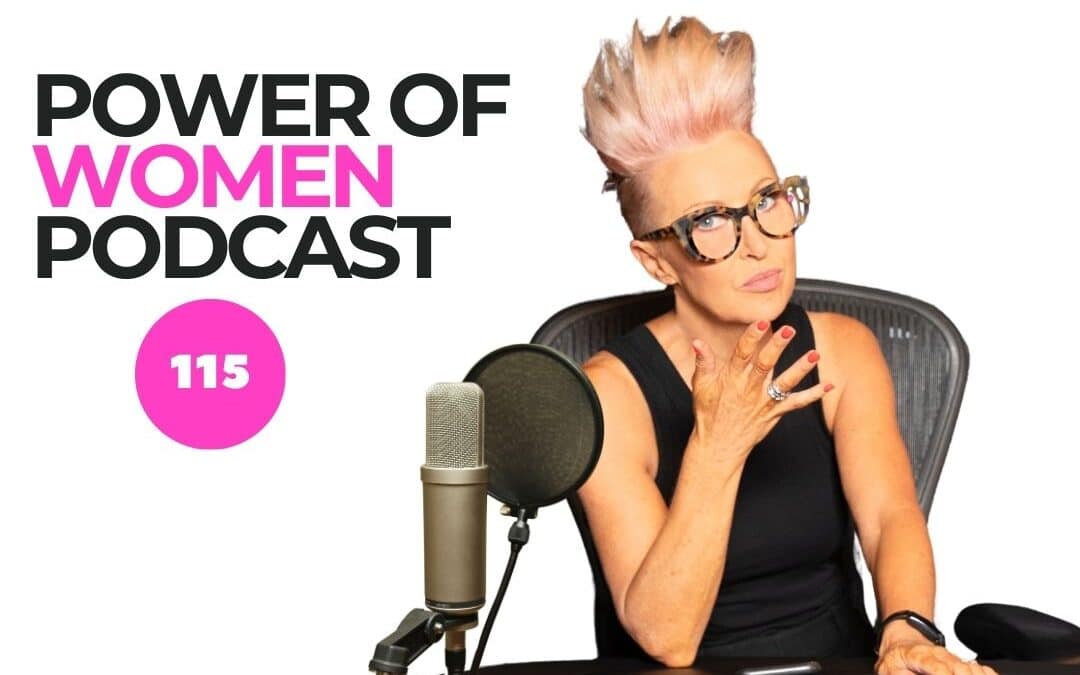
Are Women the Future of Politics?

Are Women the Future of Politics?

In this episode of the Power of Women podcast, Di Gillett interviews Kellie Sloane, the leader of the Liberal Party of New South Wales. The conversation is centred around the evolving role of women in politics.

Kellie with her optimistic outlook, embodies the spirit of resilience and strength that many women bring to the political arena. The conversation delves into the reasons behind this shift, emphasising the growing expectation for accountability and higher standards from leaders.

With a significant representation of women and younger voices in her team, Kellie believes that the political landscape is shifting towards a more inclusive and balanced environment.

This conversation serves as a powerful reminder of the impact women are having in politics today.


➡️You’ll Hear :

Why community must come first

Leadership lessons from crisis

Why voters value empathetic leadership

Why Kellie believes that kindness is a strength in leadership

The importance of bipartisan cooperation

How diversity in politics brings different perspectives to public policy

Why integrity is non-negotiable.


Key Takeaways:

  • Voters value empathetic leadership
  • Kindness is not weakness
  • There is rise of women across the political spectrum
  • Bipartisan cooperation is healthy
  • We need a strong opposition to hold the Government of the day to account.
📖 Read the full transcript of this conversation here.

FULL TRANSCRIPT:

DI GILLETT [HOST] (00:04)

Kellie when you hear the words power of women, what comes to mind?


KELLIE SLOANE MP [GUEST] (00:09)

and optimism and all my girlfriends and just generations of great energy.


DI GILLETT [HOST] (00:15)

Leadership is tested most clearly at moments of disruption. And when we’re talking about politics, women are at the center of that shift. I’m Di Gillett and this is the Power of Women podcast. And what I love about this platform is the opportunity to showcase and celebrate the strength, resilience and achievement of women from all walks of life. Today, I am joined by Kellie Sloane, leader at the Liberal Party of New South Wales.


and in fact one of the most consequential figures in state politics right now. Kellie leads at a moment when expectations of political leadership are changing, greater accountability, deeper scrutiny and higher standards. And as the events of December 2025 in Bondi Beach in Australia revealed, at a time when we have never experienced such volatility in the community.


Callie has spoken publicly about issues left to the margins. Men’s health, Australia’s declining birth rate, economic participation, infrastructure, and importantly, access to healthcare. And only a few weeks ago, she announced a new shadow ministry, positioning her team as government ready as we approach 2027. This is a conversation about why women are changing politics.


At a time when change is a daily headline. Kellie Sloane, welcome to the Power of Women podcast.


KELLIE SLOANE MP [GUEST] (01:47)

Thank you, Di. It’s so great to be with you.


DI GILLETT [HOST] (01:50)

Great to see you, Kellie. And for those listening who feel somewhat disillusioned by politics, we’re trying to put pay to that in today’s conversation. Kellie, love to reveal a backstory of where somebody’s come from and what brings them to current day. You’ve built an incredibly successful career outside politics. Why the shift and why now?


KELLIE SLOANE MP [GUEST] (02:18)

first job was as a journalist, a television journalist. I worked for Channel 9 primarily for about 14 years. And I had the great privilege of standing with people in moments of crisis, moments of loss, and moments of opportunity and celebration. And in those moments, there was a real privilege in reporting on that, telling their stories. But I guess I increasingly got frustrated by


The fact that I couldn’t play an active role in the change that I wanted to see. So telling their story was important, but being an active participant in the change that I wanted to see in our community became something that was really motivating for me. So I left journalism and moved into the not-for-profit sector.


worked with Life Education was the CEO of that organization and your listeners might be familiar with Healthy Harold, the giraffe. That was the icon of that organization. Got me deeply involved in policy around children’s and young people’s health, their mental health, their physical health. So I started to get an itch to do more. And I guess there was a point where I thought,


You know, I’ve told people stories, I’ve advocated for them. Now let’s jump in and see if I can make an even bigger difference in politics. And here I am.


DI GILLETT [HOST] (03:37)

Fantastic. And I know there is a personal cost in stepping forward into public life and in particular in politics. And I know a lot of people would wrestle with what that looks like. How have you come to terms with that part of the decision to step up into politics?


KELLIE SLOANE MP [GUEST] (03:57)

I have my eyes wide open, have to say, having covered politics for so long as a journalist and interviewed lots of prime ministers and engaged with the political process. So I knew that going into it, it would be tough. And I had to be okay with that. I had to be okay with giving up a level of privacy, giving up a lot of family time, because as a member of parliament, people probably don’t realize that you’re up very early and you’re going to


community events every night, which is really terrific. And I really enjoy that part of the role, but it means less time with friends, less time with family. And so guess I’m, you know, had that chat with my husband and our boys, our boys are now teenagers. So they understood and they were very supportive. And so I’m really lucky to do that. And can I say, I have to say there’s so much more that’s positive about this role than negative and


I thought there would be a greater deal of skepticism, a greater deal of anger, a greater deal of hate. And I have to say, I’ve been pleasantly surprised by the warmth in the community. People who were inclined to vote for me, people who won’t vote for me, who have said, you know, we really respect what you do and what you’re putting your hand up for. So I think we have in Australia that healthy skepticism of politics and politicians, understandable. But there’s also a lot of people who say, thanks for what you’re doing.


DI GILLETT [HOST] (05:18)

Kellie, was there ⁓ a political figure either in Australia or globally who has influenced your decision to step forward or in fact your views?


KELLIE SLOANE MP [GUEST] (05:31)

strong strength and inspiration from a variety of different figures. Sometimes they’re very different. As an example, if you were to go back a number of decades, Margaret Thatcher, who had this steely determination even when opposed and just pushed through based on her values. I find that incredibly inspiring. But on the other hand, someone entirely different, like Jacinda Ardern in New Zealand, whose policies I may not agree with, but I really respect her for showing a


kind of leadership that really resonates with me. One that says that kindness is a strength and not a weakness. And then I also in more recent times and closer to home, Gladys Berejiklian, who, you know, through COVID really steered our state, gave us ⁓ comfort. And that came through her diligence and her work ethic. And I really admire that too. And she’s someone I check in with from time to time to get a bit of advice.


DI GILLETT [HOST] (06:30)

that’s wonderful, having mentors. I found this wonderful little booklet the other day in memorabilia from my late father who was also a state politician for a short period. And it’s a little book for 30 cents that says quotations from the chairman Henry Bolte. Now none of them are repeatable because they’re almost all sexist, but it’s the most hysterical little booklet that ⁓ probably should be in the political archives now that I…


KELLIE SLOANE MP [GUEST] (06:59)

Yeah


DI GILLETT [HOST] (07:00)

Yeah, incredible one. So on more serious note, Kellie, ⁓ we were really shaken in December 2025 with the tragedy at Bondi and you were front and centre at that event. What did that moment clarify for you about leadership?


KELLIE SLOANE MP [GUEST] (07:26)

I had been the opposition leader for less than three weeks ⁓ when the terrorism attack happened at Bondi Beach. I’m also the local member for that area and I was nearby at a separate Heineken celebration about to deliver a speech. I was standing on stage when the crowd started running and the place ended up in lockdown and I went to find out what was happening for my own safety. ended up having to jump into a


what’s called a Hatsola ambulance. was a community ambulance and the driver said there’s been a shooting at Bondi. My colleague has been shot. I’m going down there and I said, well, look, I’m coming with you. And we tore down to Bondi, arrived within minutes and as the shots were still being fired but was finishing up and we ended up parked under that bridge.


⁓ not knowing that the gunmen were above us still wrestling with the police and I went in ⁓ as did the ambulance driver and we attempted to help people and


In terms of what, you know, the moment of clarity from that, I think it’s something I always knew that community and all our decision-making community must come first, their safety, their, you know, a sense of bipartisanship was really important to me in the days and weeks after that attack that I felt it was very important to be working with the government to make sure that we were providing the resources locals needed, that we were there in lockstep when it came.


to supporting their grief, attending funerals, attending memorials, ⁓ an incredibly difficult time, incredibly difficult time and moments that I will certainly never forget my entire life.


DI GILLETT [HOST] (09:20)

How do you manage your own mental health having been fronted, etc. and then try and make clear headed decisions as part of that experience?


KELLIE SLOANE MP [GUEST] (09:32)

You know, I guess my answer is I just, really don’t know because there’s no one, there’s no textbook that can tell you how to manage that. So I think you draw on your own resolve and there are moments I’ll admit where, you know, I find it incredibly tough. And those moments often hit me out of the blue where I’ll stop and there’ll be just intense sadness. And I’ve talked with some of the other people that were there. ⁓


in the immediate aftermath of that shooting, the other first responders. I’ve got a lot of comfort talking to people like our surf lifeguards and lifesavers. We all went through that together and I find great comfort in that. And then I also feel, you know, it’s been important for the community that they knew I was there, that I understand and that I’m motivated only to support them.


in everything that I do. But I need, you know, it’ll be an ongoing process for anyone that was there. And in fact, even, you know, community members who weren’t there, but are feeling that secondhand trauma. And this is going to be a long process of healing and recovery for the community. I just have to channel those very real emotions I have into making sure that the decisions I make are empathetic, that they are putting people first.


that politics doesn’t come into it when we’re dealing with a national tragedy. But that I feel I’ve shared something with the community and in some ways that’s helped me because we all feel so helpless. it’s, yeah, exactly.


DI GILLETT [HOST] (11:19)

point of connection. Changing tack if we may. ⁓ Politics has been criticized and probably fairly so for toxic cultures up on the hill and outdated power dynamics. What’s your experience been?


KELLIE SLOANE MP [GUEST] (11:41)

I understandably politics has had a bad rap, politicians have had a bad rap. A lot of the people who observe through their TVs and online ⁓ feel like some politicians are in it for themselves, that they’re out of touch. And I understand all of that. My experience has actually been a pretty positive one. I entered parliament only three years ago. I think a lot of work had been done by my predecessors in terms of


calling out some of the bad behavior and addressing it. And in New South Wales Parliament, the Liberals Party Room is ⁓ almost half made up of women here. And we have a lot of young people. There are 10 millennials in our group. So we have a really balanced ⁓ party room. And I think that helps as well. There used to be a culture of a lot of drinking in Parliament, when there were the late night sittings. That just doesn’t happen anymore.


So I feel like it’s been incredibly positive that that doesn’t mean there’s not a lot of work to be done. But perhaps we’re also fortunate in New South Wales maybe compared to federal parliament where there might be bigger Stouches and maybe bigger Egos.


DI GILLETT [HOST] (12:55)

You may well be right. You may well be right. So Kellie, ⁓ do women in politics need to operate like the boys or is there an opportunity to elevate leadership and lead by example?


KELLIE SLOANE MP [GUEST] (13:12)

Maybe in the past they had to be a bit like the blokes. Look, I have to say though, there is an appetite for empathetic leadership. ⁓ Voters like voting for women because they see that we are pragmatic, that we are values-based, that we’re perhaps a little more consultative. By and large, a little less ego. ⁓


DI GILLETT [HOST] (13:16)

federal mob.


KELLIE SLOANE MP [GUEST] (13:40)

And I say that as a broad sense, of course there are exceptions, but I believe when women bring their true selves to politics, when they are authentic, when they are speaking on behalf of communities, driven by their lived experience, that makes us powerful. And they are values and leadership qualities that the community is crying out for.


So that is where if we bring our authentic selves to the chamber, to our public life, that is why people are wanting to vote for us. I think gone are the days of having to be like the boys to compete with the boys. These days, women are valued for the qualities they bring. And that’s not to diminish the values of men either and the qualities that they bring that are sometimes different. We work best when we’re in partnership.


And we have a variety of different skills. you know, I, but I do think that these days leadership isn’t about being combative. Leadership is not about clashes in the chamber. Leadership isn’t about opposing for the sake of opposing. True leadership in my mind is about reaching consensus, putting people at the heart of every decision you make and bringing your authentic self.


the life that you’ve lived into public life. And when you do that, people resonate with that. And I think that’s very positive for politics and public life.


DI GILLETT [HOST] (15:16)

And may that resonate beyond politics into every boardroom around the country because they’re great values. Thank you, Kellie.


You’re listening to The Power of Women podcasts and I’m talking with Kellie Sloane, Liberal Leader for New South Wales in Australia. And coming up, we’re going to explore if women lead differently.


If you’re loving the Power of Women podcasts, be sure to jump onto our YouTube channel and hit that subscribe button to ensure you never miss an episode. Kellie, the rise of women across the political spectrum and including the Teals has really disrupted that traditional pathway to power. In your view, does gender matter in politics?


KELLIE SLOANE MP [GUEST] (16:07)

Gender matters only in so much as it brings different perspectives into the chamber and into the development of public policy. I equally think that diversity of cultures and experience, ⁓ geographies is as important as well. So where we have almost half of our party room in New South Wales is females, so that’s a really good thing, but I’d like to see more diversity in terms of experience and upbringing and background as well. And that’s something that we have to consistently work on.


And I think if we have more voices at the table testing our ideas, challenging our ideas, that is really healthy for democracy.


DI GILLETT [HOST] (16:45)

That’s the ultimate boardroom, isn’t it? Testing and challenging. like that very much. Kellie, how do you actually describe your leadership style?


KELLIE SLOANE MP [GUEST] (16:55)

I like to think of myself as an empathetic leader, that I will be bipartisan when it matters, bring people together, but equally I can be tough. But I can be tough in the same breath as being kind. And I think, I hope that’s the kind of leadership that I’m bringing that people see in me. That someone who will always seek solutions before combat. ⁓


but that when the government needs to be held to account and when we have better ideas, we will forcefully prosecute those ideas. ⁓ So tough but kind. I hope that’s what people see in me.


DI GILLETT [HOST] (17:37)

We like that very much. you’re, am I right in saying would be the third liberal leader for, female liberal leader for New South Wales Parliament? was someone who preceded Gladys previously was there?


KELLIE SLOANE MP [GUEST] (17:55)

So


there was Christina Keneally ⁓ was a female premier. ⁓ And then look, we’ve had a long history though of women in the New South Wales Parliament. The first woman and her name was Millicent Preston Stanley was elected 100 years ago. And she was also the member for the Eastern suburbs. And she was a firebrand conservative woman, right? And she got into that parliament with all the blokes and she advocated strongly.


⁓ for women to have access to their kids in divorce, ⁓ a whole lot of social issues. That’s Incredibly groundbreaking and quite inspiring. So ⁓ we’ve had a long line of conservative women in politics. ⁓ But yeah, until sort of the last couple of decades, not as many women as we might have liked.


DI GILLETT [HOST] (18:31)

at that time.


Yeah, so if you look to more recent times, what do you think are the most significant changes women have brought to the fore over the last decade?


KELLIE SLOANE MP [GUEST] (19:00)

think women in leadership have made us feel safe in times of crisis. ⁓ I’m thinking particularly about Gladys Berejiklian as the New South Wales Premier during COVID, her work ethic, her diligence, turning up every day and we watched her on the TV every day looking at those numbers. That was an incredible strength and comfort to the people of New South Wales.


I also think that we have demonstrated more broadly, ⁓ females in leadership everywhere, that sort of willingness to bring people together to find solutions, ⁓ that understanding of community and the value of community and decision making. And there are plenty of blokes who recognise that as well, but women bring a different voice to it sometimes. And we bring an experience of


I guess raising families, the challenges of paying the bills, the juggle that we bring. And often, I think my observation has been whether it’s women who ⁓ have achieved ⁓ significant promotions in business as CEOs or in media like yourself or have gone into politics, we’re often really ready for those roles because


It’s a problem that we doubt ourselves so much in the lead up to it. We’ve had to work so hard to overcome so many things or juggle so many things, family and work and the mental load and all the rest of it. That by the time we jump into big roles, we battle hardened, we’re ready, we know how to juggle, we know how to prioritize and we know how to get the job done with as little messing around as possible.


DI GILLETT [HOST] (20:45)

think if you look forward to the Millennials who are in your rooms, do you think they’ll be having these same conversations about women at the table as we are or do you think it will have been put to bed by this?


KELLIE SLOANE MP [GUEST] (21:01)

I have to say we don’t even talk about it in our party room ⁓ as an issue. In fact, I stood up when I announced my first shadow cabinet and all my new shadow ministers. One of the journalists asked me, what’s the gender makeup? And I had to stop. And I can honestly tell you, I had not even thought about gender. And afterwards I reflected on that and thought,


That’s pretty good that we’re not talking about it in our party room. And I wish that for our federal colleagues and for other party rooms. But the conversations that we’re having are not about whether you have ovaries or not. They’re about how can we help families ⁓ get ahead? How can we help young female entrepreneurs succeed and get rid of the red tape? How can we provide more flexible work and home solutions so that women can get ahead without having to put family last?


⁓ They’re the conversations that we’re having. Women have told me, business women that I’ve met with, that they want better economic conditions, they want ⁓ better workplace laws, they want less government interference, they want to make sure that transport infrastructure is being developed so that they can get home faster.


And these are all things that Liberal governments have done successfully over the last few terms and will continue to advocate for in our policies.


DI GILLETT [HOST] (22:22)

Yeah, fantastic. So, March 2027 is approaching at a rate of knots. It is. And you’ve described your new shadow ministry as government ready. What would you like your constituents to understand around what that actually means?


KELLIE SLOANE MP [GUEST] (22:42)

Well, it means that we’ve got an incredible team ⁓ of former government ministers who know how government works, who have that experience that’s really important. But equally, we have a group of young people coming through that understand the real concerns of young families and communities who know where the state’s heading, not just where it’s been. And I think that that mix in our party room is incredibly important.


And we are all inspired by our predecessors who built an incredible legacy in New South Wales of transport infrastructure, of metros, of new hospitals, ⁓ and that we want to be ambitious for our state too. So we will be an ambitious team with great experience, ready to govern, and ready to ⁓ remind families in New South Wales who are finding it really tough that there is a better way forward.


because right across our country, cost of living is declining, ⁓ government bureaucracy is growing, union influence is increasing and small businesses are closing at a rate of knots. So we will present a policy platform over the coming months that we hope will be hopeful, ⁓ that will be ambitious and that they’ll see in my team.


not just me as leader, as a capable leader and a future Premier, but a team that will be incredibly strong for New South Wales.


DI GILLETT [HOST] (24:08)

Yeah, wonderful. Kellie, I appreciate the first few weeks of your role were certainly ⁓ extraordinary. Outside of that, the shift to politics lived up to your expectations?


KELLIE SLOANE MP [GUEST] (24:28)

It’s probably exceeded my expectations. I have seen the power that can come from good opposition. So it’s not just about jumping in and trying to get into government. We have developed policy that the government has adopted from the opposition benches. That’s really satisfying. We’ve also produced amendments to government legislation that have succeeded.


DI GILLETT [HOST] (24:51)

And that’s what a good opposition does.


KELLIE SLOANE MP [GUEST] (24:53)

It’s so healthy for the state. I have equally worked in a bipartisan fashion with the government to get good legislation through and to make what I’ve thought is ordinary legislation better. ⁓ I want the Premier and his team, every time they produce a policy, to be looking over their shoulder saying, what would Kellie think? What would the opposition say about this?


and sure that they dot the I’s and cross the T’s and sharpen their pencils and make sure that they are delivering the best for New South Wales. So at the very minimum, my job is to make sure that we hold this government to account, that they become a better government because of a tough opposition. And at the very best, then I hope to be in office in a year from now. But I’ve been incredibly satisfied by the work we’ve done in parliament, but also I have to say,


You know, nothing prepares you just for ⁓ how much you care for your community as a local member of parliament. And I get incredible satisfaction out of the small community events, out of going down to the surf clubs, about speaking to locals and trying to make a difference on the everyday issues that matter to them. And it’s a real privilege. I have to say it’s an incredible privilege.


DI GILLETT [HOST] (26:08)

Kellie, I’ve got a couple of rapid fire questions to throw at you as we wrap up today’s conversation. One issue you believe politics has underestimated for too long.


KELLIE SLOANE MP [GUEST] (26:21)

Social cohesion, we’ve taken that for granted. We need to try harder. We cannot say she’ll be right when it comes to our multicultural communities.


DI GILLETT [HOST] (26:32)

And leaderships treat Australia needs more of right now.


KELLIE SLOANE MP [GUEST] (26:37)

at courage to make tough decisions even when they’re not popular. I think we need that right now. We can’t please everyone.


DI GILLETT [HOST] (26:46)

and one decision principle you’ll never compromise on.


KELLIE SLOANE MP [GUEST] (26:51)

Integrity. Yeah, you have to stick to your values. I want to leave politics with my integrity intact and hopefully that will serve me well while I’m in the job.


DI GILLETT [HOST] (27:02)

Yeah, fantastic. Kellie, what a ⁓ refreshing and resounding positive take on life in politics and what your views are. I commend you on that and thank you for that and I have no doubt you become a role model for other women considering a path in politics. I know I grew up


As a school kid, if you asked me what I wanted to be, for years it was a politician and somehow it fell off the radar and I commend you on making that decision because it is a huge sacrifice. You’re a wife, you’re a mother, you’ve got the role of opposition which I sometimes think is tougher than the role of leading and you are doing it with such grace and conviction. It’s so impressive.


KELLIE SLOANE MP [GUEST] (27:54)

Thank you, Di And can I just say we need women like you in politics. It is never too late to step up. Can I also say to your viewers and listeners that we need more people in politics, whether it’s front and centre like me, whether it’s behind the scenes, whether it’s joining parties, whether it’s my party, the Liberal Party or the Labor Party, have a voice, have a say, because we need more people contributing to our democracy right now.


valuing our democracy and making sure that we hold every politician to account. So ⁓ thank you and thank you for the community that you provide for women.


DI GILLETT [HOST] (28:29)

Thank you Kellie and thank you so much for joining me today. I know that the time of a politician is scarce and heavily scheduled so much appreciation. Until next time.


Chapters:

00:00 The Power of Women in Politics

02:21 Kellie Sloane’s Journey to Politics

04:52 Navigating the Challenges of Public Life

07:04 Leadership in Times of Crisis

12:55 Empathetic Leadership: A New Approach

15:16 Leadership Styles and Gender Dynamics

12:55 Empathetic Leadership: A New Approach

28:29 The Future of Women in Political Leadership


Connect with Di:

Connect with Di on LinkedIn

Follow Power Of Women on LinkedIn

Follow Di on Instagram

The Power Of Women Podcast Instagram

Contact Di


Find Kellie Sloane MP at:

Website https://kelliesloane.com.au/

LinkedIn https://www.linkedin.com/in/kellie-sloane/

Instagram  https://www.instagram.com/kelliesloanemp/?hl=en


This is the home of unapologetic conversations and powerful stories of reinvention. New episodes drop every Monday to fuel your week with insights on leadership, resilience, and success. Subscribe and join a community of women who are changing the game.


Want more fearless, unfiltered stories that showcase authentic leadership?


💫 Subscribe to the Power Of Women Podcast on YouTube, Spotify, or Apple Podcasts

Your ⭐⭐⭐⭐⭐star review on Apple Podcasts or Spotify keeps these stories alive.


📩 Sign up for our newsletter where I share raw reflections and thought leadership on the Power Of Reinvention.


Disclaimer:  https://powerofwomen.com.au/podcast-disclaimer/