Select Page
Ultra-Processed Food Is Poison – Kate Save Tells Us Why

Ultra-Processed Food Is Poison – Kate Save Tells Us Why

Ultra-processed food now makes up 40% of the average Australian diet. In America, that figure sits at 70%. And if the trend holds – and Kate Save believes it will – we are not far behind.

Kate is a clinical dietitian, exercise physiologist, diabetes educator, and the founder of Be Fit Food. She has spent over 20 years watching what happens to bodies when people eat what the food industry tells them is food. And in this episode of the Power Of Women Podcast, she is done softening the message.

In this conversation, Di Gillett and Kate Save dig into the real drivers of chronic disease in Australia, why the weight loss drug industry is setting people up for a second round of failure, and why BMI has no business being the primary measure of anyone’s health. Kate also shares the three things every Australian woman can do differently today: not a program, not a subscription, just three changes rooted in 20 years of clinical evidence.


➡️You’ll Hear :

Why ultra-processed food is not a ‘sometimes food’ – it’s not food at all

The mental health study that should have changed healthcare funding, and didn’t

What visceral fat tells us that BMI never could

How women’s bodies respond differently to diet and why the approach needs to reflect that

Kate’s own 90-10 rule and how she eats on the road

The dark chocolate method for coming off sugar without going cold turkey – and it is a winner.


Key Takeaways:

Remove as many ultra-processed foods as possible – they are not a neutral choice

As you age, become more conscious of your carbohydrate intake and protect your muscle mass

Strength training is non-negotiable for women navigating hormonal change

The 1:1 carbohydrate-to-protein ratio is a simple rule with significant impact

One annual reset – even just a week – compounds over time into lasting change.


Kate said:

“Ultra-processed foods are literally poison. They really are.”

“We don’t have a healthcare system. We have a sick care system.”

“The weight gain is just the end result of not looking after yourself — or the environment not allowing you to be your best health.”

📖 Read the full transcript of this conversation here.

FULL TRANSCRIPT:

DI GILLETT – Power Of Women [HOST] (00:02)

Kate, power of women, who comes to mind when I say that?


KATE SAVE – Be Fit Food [Guest] (00:07)

Actually my parents, and this might sound odd, but I think my dad played such an important role in my sister and I’s life growing up that he empowered us and Mum had to fight for her power so it both of them.


DI GILLETT – Power Of Women [HOST] (00:22)

Very good. I don’t often have a guy or dad present it for Power of Women, so I love that.


and we’re a storytelling platform that showcases and celebrates the strength, resilience and achievements of women from all walks of life. So today we’re going to interrogate, we really what we eat?


And it’s one of those phrases that we have heard so many times that it’s almost lost its edge. But my guest today is going to give its edge. She’s a clinician, an entrepreneur, Shark Tank contestant and founder of Be Fit Food. And she spent 20 years on the front line of what happens when people eat what the food industry actually tells us is food. And a trigger warning because we are going to poke


just a few beers throughout the conversation. Joining me in the wonderful chocolate studios in South Melbourne, KATE Save, welcome to the Power Of Women.


KATE SAVE – Be Fit Food [Guest] (01:37)

Thank you for having me, Di.


DI GILLETT – Power Of Women [HOST] (01:40)

Kate, I know there’ll be listeners who will know your name from Shark Tank or they’ve been purchasing your fabulous product on the shelves or been in a clinical setting with you, but I want to understand who you were before all of that. Who’s the young woman who said food and wellbeing was going to be where you put your focus?


KATE SAVE – Be Fit Food [Guest] (02:04)

Well, it was the person who has never believed that food had the power to heal rather than just make people sick. And in this day and age, I think as well, food is blamed for a lot of sickness, but the food that we’re blaming isn’t really food.


But for me, my journey was ⁓ starting as a young child who had tummy aches all the time and my parents were told that it was what I was eating that was making me sick. But my parents knew that I ate really well and that was highly unlikely and they were told perhaps it was dairy and I was lactose intolerant. So we never had dairy. I didn’t even really try dairy until


I found out that when yogurt was popular in my teen years that it was lower lactose because of the way that it’s made and that was sort of my first real exposure to dairy so I knew it wasn’t food.


DI GILLETT – Power Of Women [HOST] (03:00)

That was the starting point. Yeah. Did you get to the bottom of what it was?


KATE SAVE – Be Fit Food [Guest] (03:04)

Well, it took 19 years and just before my 20th birthday I had an MRI after 18 years of investigation and they said you’ve got a tumour in your bile duct and you need emergency surgery. ⁓ wow. Yeah.


DI GILLETT – Power Of Women [HOST] (03:20)

Wow, and did that resolve it?


KATE SAVE – Be Fit Food [Guest] (03:23)

Well, mostly it caused other issues. So a lot of my anatomy was removed and rejoined and the body doesn’t like that. Fit’s not built like that. ⁓ hence my further interest in nutrition and not being medicated for the things that didn’t go so well for the surgery and finding a way to help the body adapt and take control again.


DI GILLETT – Power Of Women [HOST] (03:49)

of personal experience. Yeah. So you trained as a dietitian and exercise physiologist, but you went further than that. You were running clinics in private hospitals and managing complex patients. I mean, I could say your own story was one of the most complex patients, but is there, without naming names, ⁓ a patient that comes to mind that set you on the


that became Be Fit Food.


KATE SAVE – Be Fit Food [Guest] (04:22)

Really the biggest instigator was working at a bariatric surgery clinic and not one particular patient but 100 % of the patients that had got into the situation where they didn’t think their weight was reversible by any other means other than the surgery and yes for some people metabolically things can go down that path so far that


no matter what they do without other interventions, it’s a really hard, long path and some people would say you can’t do it and then there are definitely outliers where people have done it without surgery and medication but for me, I just knew we were setting them up for failure by not teaching them how to eat and starting their whole weight loss journey with synthetic bars and shakes to get them to lose weight before the surgery which shrunk the liver.


that permitted the surgeon to actually operate at a lower risk. So I wanted to create a whole food version that would shrink the liver and allow the surgery to go ahead, but also teach the person in that two to six weeks before surgery how to eat. So once they’d had the surgery.


That was embedded for the rest of their life rather than this taste for chocolate shakes and synthetic bars, which after around two years we would find when people started regaining weight, they thought the way to lose weight was mere replacement shakes.


DI GILLETT – Power Of Women [HOST] (05:54)

is the weight loss drug industry doing exactly the same thing in saying, we’re not going to train you, how do we, we’re just going to give you the quick fix with no education behind a long term process to sustainable, better fuel in our system.


KATE SAVE – Be Fit Food [Guest] (06:17)

So this is such a multifaceted question because if you go to a well-resourced GP clinic where they involve a multidisciplinary team where they might have dietitians, exercise physiologists, psychologists, then they may be capable of putting someone on the weight loss medication.


DI GILLETT – Power Of Women [HOST] (06:21)

one of the bears.


KATE SAVE – Be Fit Food [Guest] (06:43)

and seeing it through with the support of all the other health professionals, whether they’re on that medication for life, which is what is recommended by the drug companies because all of the way to dates have shown that when you go off the drug, you do regain the weight. So the idea is you go on it and you stay on it. However, well, I don’t even know if that would be


DI GILLETT – Power Of Women [HOST] (06:53)

Fit is.


Isn’t that clever?


KATE SAVE – Be Fit Food [Guest] (07:09)

I mean, they’re looking at other drugs now that will sort of help with the maintenance post that drug. But ⁓ I don’t even know if that’s what they intended because realistically, it becomes a problem for them. because then all of a sudden, people are saying the drug doesn’t work. Well, it does whilst you’re using it and you’re compliant and you’re eating the right way and your mindset.


DI GILLETT – Power Of Women [HOST] (07:24)

So


KATE SAVE – Be Fit Food [Guest] (07:36)

is in the right place and your sweet cravings are gone, but they show even on the drug. So you get this huge drop in your sweet cravings at the start and then like in the first six months and at 12 months you don’t have the cravings, it’s coming back a little bit, but by two years it’s really sort of worn off. So if people haven’t learned how to have a healthier lifestyle in that two years, then they’ve become reliant on the drug and that’s tough.


DI GILLETT – Power Of Women [HOST] (08:05)

Fit is and they haven’t learned how to fight that craving themselves. I know in giving up sugar myself in in 2023 there are still the odd occasion where it’s like, but I know how to fight it through mindset but I wouldn’t if I thought I’m just relying on the drug to do the work for me.


KATE SAVE – Be Fit Food [Guest] (08:18)

Yes.


So true, and if you didn’t have 30 to 50 kilos to lose as well, it’s just you’re not reliant on looking at the scales for change for positive reinforcement. Your positive reinforcement is that you had less sugar. Whereas a lot of the time, the less sugar is tied to the number on the scales. And if the number of the scales isn’t moving, then the less sugar becomes… Yeah, yeah.


DI GILLETT – Power Of Women [HOST] (08:48)

a irrelevant.


KATE SAVE – Be Fit Food [Guest] (08:51)

People are tying their health to the weight on the scales, which is not accurate because that’s whole of gravity on earth. Fit’s got nothing to do with our body composition. obesity was previously the category, was categorized by BMI, but that’s no longer the case either. ⁓ Obesity is now a multifactorial health condition, which is now classified by the metabolic health conditions.


that are associated and body composition instead of BMI because it’s about how much of your weight is lean body mass and how much of it is actually fat mass. And is that fat mass the hazardous fat mass, not the stuff that sits under the skin, but is it the visceral fat that’s causing chronic disease? And what I thought was really interesting is if people go for liposuction, have all their fat cells pulled out,


if they go for a health test to check their risk of diabetes and things that no, doesn’t change. So just removing fat cells is not the problem. The problem is actually in the whole system, the functioning of the system. we’re not one particular cell, so you can’t just pull a part out and think that’s going to fix the problems where we’re so much more complex and obesity is so much more complex.


DI GILLETT – Power Of Women [HOST] (09:51)

What change?


BMI have any relevance at all as a measure in this DNA?


KATE SAVE – Be Fit Food [Guest] (10:19)

If you don’t have access to any other tools, I would still say over BMI, I would use waist circumference because it’s actually the waist that’s around your middle that is going to dictate your risk of chronic disease more so than your BMI. BMI is a population-based number, so it’s something that you can use as a bit of an average, but people aren’t averages, they’re individuals. So until you know…


what their lean body mass is and you really want to understand their lifestyle as well because there could be people out there that have got a reasonable lean body mass and a reasonable weight but if they have a terrible lifestyle because they’re highly stressed, they’re not eating a nutritious diet, it’s more of a starvation diet and if they’re not doing the work in terms of the physical activity and even cardiovascular health so they could be doing strength without anything else for


other parts of the body. ⁓ Fit still doesn’t mean you’re healthy and people try and oversimplify it.


DI GILLETT – Power Of Women [HOST] (11:22)

I was fit, I was a size 10, I ate healthily except for my sugar addiction and when I gave up sugar I have lost 16 centimetres off my waist. I was visually a lean-ish looking person, but it 16 centimetres. there ⁓


KATE SAVE – Be Fit Food [Guest] (11:40)

Wow


Yeah, that’s incredible. That’s really incredible and that was probably insulin resistant. So insulin is a fat storage hormone that would have been directing weight towards the middle and no doubt you were going through female changes.


DI GILLETT – Power Of Women [HOST] (12:05)

Absolutely.


I was coming out the back end of menopause. I was 60 when I gave up. 59. So yeah. I had no idea there was that level of fat even sitting on my body.


KATE SAVE – Be Fit Food [Guest] (12:09)

Rise.


Yeah.


That’s incredible that such a, you know, one shift in your behaviour could give that change. I think if there’s one takeaway for people as well is just pick something you can stick to. Fit doesn’t matter what you do. If you’re consistent and you stick to it, you will see improvement.


DI GILLETT – Power Of Women [HOST] (12:36)

There you go. So what’s your relationship like with food, Kate? Do you have moments like any of us where you want to splurge or treat yourself?


KATE SAVE – Be Fit Food [Guest] (12:48)

I must say I enjoy food freedom, but I have my own little nuances in my head that give me that food freedom. For example, a lot of people say it’s the 80-20 rule. And for me, I think it’s more of a 90-10. And that’s only because if I had more time in my day, I would exercise more, and then it could be 80-20. But if I eat bad food 20 % of the time, and I don’t have hours to exercise.


it’s not going to work for me. So 90-10 means I eat well because I enjoy good food most of the time but then I can have whatever I want in that 10 % and you never pay the price for that because you do enough to stay healthy that your body will actually become metabolically flexible and it will burn more calories when you’re eating more calories.


DI GILLETT – Power Of Women [HOST] (13:37)

And I mean, before we started recording today, you said you’ve had two days of ridiculously early, early flights. so you’ve learned to manage your regime to fit that, and that is such a discipline.


KATE SAVE – Be Fit Food [Guest] (13:52)

Prioritising food when you are busy is so important if it’s the only thing you do. I mean of course if you can do walking meetings and all those sorts of things but if you’re physically tired to a desk or on a plane and it’s just not possible then when you have an opportunity to eat and that will come up at some point in the day whether it’s something you’re buying.


Prioritize, like think about what is going to nourish me and that’s it’s so important we are.


DI GILLETT – Power Of Women [HOST] (14:25)

do


do when you travel? Do you take food with you so that you’ve got the right food at your disposal at whatever time? Or how do do it?


KATE SAVE – Be Fit Food [Guest] (14:34)

would take emergency snacks in my bag, so I would always have, whether it’s in my car or in my briefcase, I’ve got raw nuts in there. if I’m starving, I’m going to eat that. And that just, I know it ties me over until I can get something to eat. I have tins of tuna in my car, in my bag that I carry around that if I’m absolutely stuck, there’s something to eat. I’m never going to grab a Mars bar or a packet of chips. I just wouldn’t do that.


Whereas if I was at a party and I wanted some chips, I’d have some chips. if I’m… Yeah, that’s right. If I go to the cinema with my kids, I’ll get a choc top. But I’m not going to eat that because I’m hungry. I’m going to eat that because I want to have a treat. So then when I’m travelling, it doesn’t matter what restaurant pretty much you put me in except fast food, I will find something really nutritious. I had a… ⁓


DI GILLETT – Power Of Women [HOST] (15:08)

There’s your 10%.


right thing to


KATE SAVE – Be Fit Food [Guest] (15:32)

I’d never really had one before, a ramen bowl last night. They’re fabulous. Yeah, a seafood one and I asked for no noodles. I just thought I don’t need the noodles, why I’ve got late nights, lots of work, little exercise, but give me all the seafood, all the veggies, delicious filling.


DI GILLETT – Power Of Women [HOST] (15:50)

There’s


the informed decision making rather than just letting the circumstances dictate. Yeah. Yeah. Fit’s so doable.


KATE SAVE – Be Fit Food [Guest] (15:58)

Fit is, yeah, and it’s one little change. And I think the most important thing when you’re eating out is whatever is in that meal, could even be, you know, salmon and greens, but it’s got a big hollandaise sauce or something. Just ask for on the side.


DI GILLETT – Power Of Women [HOST] (16:10)

side or…


yep, perfect. So you launched B-Fit Food in 2015. What was the core premise behind the proposition of the brand?


KATE SAVE – Be Fit Food [Guest] (16:25)

So initially it was actually called bariatric essentials and it was this replacement for meal replacements. wanted to have whole food for people to eat instead of meal replacements but what it became was so much more than that.


DI GILLETT – Power Of Women [HOST] (16:40)

Do that as a brand name, Riznick,


KATE SAVE – Be Fit Food [Guest] (16:43)

horrible


because if you got a box turned up at work and it said bariatric on it, people are like…


DI GILLETT – Power Of Women [HOST] (16:49)

What’s wrong with you?


KATE SAVE – Be Fit Food [Guest] (16:51)

So then we quickly sort of moved to just BE and then we went, what does that even mean? So then it went to be fit food. Yeah. And I didn’t like health as a word, health food. I just think health food has so much health washing around it. Whereas fit to me means if you are fit, you are probably interested.


in your health as well. Fit’s not just one thing. Fit’s not thin, it’s not skinny, it’s fit.


DI GILLETT – Power Of Women [HOST] (17:23)

And you’ve got a ⁓ clinician background, not a food manufacturing background. So what was the journey like to actually being somebody who recommended to actually producing?


KATE SAVE – Be Fit Food [Guest] (17:37)

I never wanted to manufacture the food, but it got to the point where my customers or clients were bringing in so many bags of labels and packets with them at every consult. Can I eat this? Can I eat this? And I’m like, I’ve given you a meal plan. You need to cook it yourself, but I don’t have time. And then,


I recognise the issue wasn’t that they didn’t know what to do and it was they physically didn’t have the time and they might once a week or twice a week but they didn’t seven times a week, three times a day. And if you muck that up more than, you know, one day a week, there goes your day. Yeah. So that was the real reason behind it and what we noticed when people were using it before surgery, they were getting so confident with the amount of weight that they were losing that they thought,


DI GILLETT – Power Of Women [HOST] (18:10)

You’ve already said you’re 10%.


KATE SAVE – Be Fit Food [Guest] (18:24)

Do I need the surgery? Can I do this on my own? And some people went ahead with the surgery and others didn’t. They were empowered that they finally had control of the health and they were so confused as to why nobody had told them this is what you need to eat to lose weight. This is it.


DI GILLETT – Power Of Women [HOST] (18:45)

Isn’t that fascinating that, and your word says it all, that they need to be told. They haven’t got the curiosity to go and find that themselves. Hence why businesses like yours need to exist because a lot of people don’t have the curiosity that leads them there. Naturally, it needs to be presented or packaged.


KATE SAVE – Be Fit Food [Guest] (19:07)

Yeah, and the number of people that would say to me, if you just prepped my food for me or, you know, stood in front of my fridge or locked up the pantry, I’d be able to stick to it. And you hear that enough and you think, I’m just going to drop this food at your door. As long as you promise me you’ll eat nothing else, I can guarantee you 100 % this will work.


And that’s what it became for us. Fit’s not something people stay on for life. They use it every season. They use it after Christmas, before a big holiday, before their birthday. Maybe they’ve got their daughter’s wedding or they use it to feel good about themselves. And once they feel good, all of their other choices are in the right direction.


DI GILLETT – Power Of Women [HOST] (19:52)

Fit does.


Yeah, absolutely is. I say I gave up sugar. As a result of that, you give up and change a whole lot of other things around it. But it’s the impetus that leads to the broader change.


KATE SAVE – Be Fit Food [Guest] (20:06)

What was the sugar decision around?


DI GILLETT – Power Of Women [HOST] (20:08)

Well, my sugar decision was literally one of these moments. I was launching another business with a couple of friends, had gone into a studio, sat in front of the studio, they did a take and I looked at the monitor and I went, I look like this balloon face. I wasn’t overweight, but sugar had created a sugar bloat.


KATE SAVE – Be Fit Food [Guest] (20:10)

can’t.


Shit.


Thanks


Okay.


DI GILLETT – Power Of Women [HOST] (20:37)

And even if, and you could, and I could see it extreme in some days and not in others depending on how much sugar I’d had. But my sugar consumption was high. Fit was, it was in muffins, it was in chocolate and grazing at my desk late at night. So it was actually, I didn’t like what I saw down the monitor, which then was like, well, just a second, if I can see it, it’s got to be everywhere.


And that was the tipping point. So it was vanity in some respects, but the roll-on effect of wellbeing and the feeling after the event of taking it out is just, I mean, I could sit here and talk to you for hours about that.


KATE SAVE – Be Fit Food [Guest] (21:09)

X


That’s interesting. The number one thing that we saw with our customers, so they would come in our physical store when we used to have one, but we don’t now. We’re online in chemists’ warehouse and supermarkets. But they’d come in and say, I going to like it? What’s it to be like, et cetera? And we’d say, look, it’s meat and vegetables, herbs and spices. You’ll get used to the flavor because if you don’t like that, you need to learn because your brain’s been tricked by all the processing you’re eating. And then they’d come back in a week and they’d said,


you won’t believe it and I’d be like what do you mean? Well you told me the food was going to be awful and I’m like I didn’t tell you that. I just said you’d need to have a healthy palate to like the food and they’re like well the food’s great but you won’t understand how I feel and they’re no no it’s not the weight loss it’s not the weight loss and I’m like I know but how I feel and they go I’ve never slept so well I’ve got so much energy.


DI GILLETT – Power Of Women [HOST] (22:14)

My bones don’t ache, I’ve got no inflammation.


KATE SAVE – Be Fit Food [Guest] (22:17)

Yeah. And


it’s, so it’s got nothing to do with the weight loss.


DI GILLETT – Power Of Women [HOST] (22:20)

No, the weight loss is the incidental thing that happens.


KATE SAVE – Be Fit Food [Guest] (22:24)

Yeah and it really the weight gain is just the end result of not looking after yourself. That’s right. Or it’s not really it’s the environment that you’re in so you may be doing your best that you can in that environment but that environment won’t allow you to be your best health.


DI GILLETT – Power Of Women [HOST] (22:43)

Yeah, and aren’t supermarkets, with the exception of your product, full of things that are actually pushing against that.


KATE SAVE – Be Fit Food [Guest] (22:53)

Ultra-processed foods are literally poison. They really are.


DI GILLETT – Power Of Women [HOST] (23:00)

that thought, we’ll come back to that because that’s something I just want to do bit of a deeper dive. Could we talk about Shark Tank for a moment? First of all, whose idea was it to go on the show? Did you pursue it or did they approach you?


KATE SAVE – Be Fit Food [Guest] (23:09)

Yes.


I got into a cash flow debacle and I’d put my life savings into this business and I had a business partner at the time who was earning significantly more than me and he wasn’t working in the business so he had an income.


DI GILLETT – Power Of Women [HOST] (23:22)

Don’t we all in business?


KATE SAVE – Be Fit Food [Guest] (23:38)

And I didn’t because I was working in the business and not taking a salary. And when your savings are gone and you’re working for nothing and you’ve got all the energy to give but no money, you’ve got to find a way to raise some money without, you know, losing all of your equity in the business. I auditioned and I got through to the first round, but then my business partner said it would be career suicide to go ahead with it and that I wasn’t to do it because it would reflect poorly on both of us. So I withdrew.


DI GILLETT – Power Of Women [HOST] (24:08)

I’m hearing a lot of self-interest here.


KATE SAVE – Be Fit Food [Guest] (24:11)

Yeah, and look, if anyone’s watched Shark Tank out there, they can tear you and your business apart. So I understood I just was going to do it anyway. I waited a year and I reapplied and I got through and I said to my business partner, you don’t need to come. And he said, great, I’ve been advised.


DI GILLETT – Power Of Women [HOST] (24:14)

Fit might have been good advice.


KATE SAVE – Be Fit Food [Guest] (24:37)

definitely do not go on TV. And I was like, okay.


DI GILLETT – Power Of Women [HOST] (24:42)

You’ve got a face for television, maybe he didn’t.


KATE SAVE – Be Fit Food [Guest] (24:46)

Well yeah, that was a whole other story. You think you’re walking in there for a one minute pitch and over two hours of interrogation later I’m still being asked questions. There’s no breaks. There’s no can I have a glass of water? Can I go to the toilet? None of that. You just need to hold it all together.


DI GILLETT – Power Of Women [HOST] (25:00)

Fit’s in here.


KATE SAVE – Be Fit Food [Guest] (25:08)

And I ended up bringing my business partner out for proof of life just so I could take a breath out the back for 10 seconds and come in. we got the deal done on air. However, off air was a very different story.


DI GILLETT – Power Of Women [HOST] (25:25)

So did you end up with an investor in the end?


KATE SAVE – Be Fit Food [Guest] (25:28)

I did, but it was nine months of, it was a couple of months of due diligence and it was a flat out no. And then it was nine months of turning up anyway and showing how quickly we were progressing, the lives we were changing and what the future could hold.


DI GILLETT – Power Of Women [HOST] (25:46)

You


up in a real life pitch outside of Shakti to get the investment.


KATE SAVE – Be Fit Food [Guest] (25:49)

Yeah, that’s


right. And when it finally went to air, it was about a month later that we actually got the investment and that was 11 months after it was filmed. wow. So I thought when we filmed it, walked out with the cheque and we didn’t.


DI GILLETT – Power Of Women [HOST] (26:07)


So did it deliver what it promised or it was just a different process?


KATE SAVE – Be Fit Food [Guest] (26:12)

No, quite different. So apparently in the, with the original Sharks, it was something like a hundred episodes and roughly half got deals on air, but only a handful actually got physical investment. Got it. So, and I understand from the investors point of view, maybe there were people that were making up numbers or things didn’t stack up. Yeah.


DI GILLETT – Power Of Women [HOST] (26:35)

They


obviously have to do DD after the event. That makes sense.


KATE SAVE – Be Fit Food [Guest] (26:39)

Yeah. But it isn’t presented that way.


DI GILLETT – Power Of Women [HOST] (26:42)

No, well that doesn’t make for good television. But since then you’ve been Telstra Business of the Year 2018, again in 2022. Does that herald the moments you’re most proud of or are there other moments?


KATE SAVE – Be Fit Food [Guest] (26:58)

They are definitely the moments I’m most proud of because they were about celebrating the team. A business is a handful of people working towards a common goal. So a business doesn’t exist without people, maybe AI businesses and a few other things, but someone really needs to be the lifeblood. And that was the team. watching them, you we got a limousine that was a crown and it was nice.


DI GILLETT – Power Of Women [HOST] (27:24)

and you celebrate it.


KATE SAVE – Be Fit Food [Guest] (27:26)

Yeah, we really celebrated and the finals are up in Sydney and I took my sister and my mum and my husband and the team and we had an amazing time and they are definitely the highlight.


DI GILLETT – Power Of Women [HOST] (27:38)

Fantastic. Well I’m talking with Kate Save, CEO and founder of Be Fit Food and coming up we are going to interrogate whether you really are what you eat.


KATE SAVE – Be Fit Food [Guest] (27:51)

If you’re


DI GILLETT – Power Of Women [HOST] (27:51)

Loving the Power of Women podcasts, be sure to jump onto our YouTube channel and hit that subscribe button to ensure you never miss an episode. Kate, I want to pivot now because I think one of the most important conversations and whilst we’ve talked about the business, what I really want to talk about is people’s relationship now with food. You’ve spent 20 years and have an enormous amount of clinical data as a result of that.


and you’ve built a business responding to a need, I might call it a crisis in reality. Let’s name the crisis, how bad is it?


KATE SAVE – Be Fit Food [Guest] (28:32)

Fit’s insurmountable at the moment. There is no end to it in sight because the solutions that are being presented are really treatment, not prevention. And that’s the scary thing that you’re waiting until people have fallen off the cliff to try and revive their bodies rather than… it’s the best way. Yeah. And that’s scary because…


All it takes really is for our healthcare system to do a bit of a flip and actually focus on health, not sick care. it was said, and I think it was actually by one of the previous health ministers, that if the current 5 % of the Australian health budget was doubled to 10%, then there would be a long-term reduction in the overall burden of


the sick care costs, that’s all it would take. So it’s not huge shifts in funding that will do this, but that’s not on the agenda at the moment. I wish it was, but if it’s that simple, we’ve got to find a way to plug it in because without a doubt, every single day, I mean, it was just physical health issues. Now it’s mental health issues.


DI GILLETT – Power Of Women [HOST] (29:50)

So we truly have a sick care system, not a health care system.


KATE SAVE – Be Fit Food [Guest] (29:53)

And one of the most interesting studies looked at mental health conditions, so managing major depression and anxiety, either with counselling or with a Mediterranean diet. So with counselling you got 7 % remission in major depression and anxiety. With a Mediterranean diet it was around 32 or 34 % remission, like almost five times the remission rate.


There are mental health care plans funding the counselling but there’s no mental health care funding for the food or the dietitians or that sort


DI GILLETT – Power Of Women [HOST] (30:31)

Plenty of funding going to organisations that are producing what we’re going to talk about next, which is ultra-processed And therein lies the conundrum. So we hear about ultra-processed food, but I’m sure the majority of population don’t truly understand what it is and as such don’t understand when or in what food products they’re eating.


ultra-processed food. Can you break it down for us? What is it?


KATE SAVE – Be Fit Food [Guest] (31:04)

I think in the most simplest terms, they are foods that you couldn’t make yourself at home. Try and make a Twisty. Try and make a Sarkatar. Try and make a Coca Cola. are things that you can’t make yourself. That if you pick up that packet, they’re not ingredients you would have in your cupboard.


DI GILLETT – Power Of Women [HOST] (31:27)

And there’s the other point, they’re things in packets and boxes largely.


KATE SAVE – Be Fit Food [Guest] (31:31)

Yes, that are not actually always made of food.


DI GILLETT – Power Of Women [HOST] (31:35)

And really sitting in a fridge because they’ve got life span.


KATE SAVE – Be Fit Food [Guest] (31:40)

scary about it too is it’s not always the things that are on the packet that are causing the harm, it’s the things that are not even on the packet that that food has been processed or the way it’s been processed that is going to damage our health or already damaging our health. Fit’s actually what’s not in the food that is more harmful to us than what is.


DI GILLETT – Power Of Women [HOST] (32:02)

in the food. Isn’t that interesting? So do you know from all of the data you’ve collected what percentage of the average diet is ultra processed food?


KATE SAVE – Be Fit Food [Guest] (32:15)

In Australia it’s believed to be around 40 percent but in America it’s up to 70 percent. Wow. So we follow American trends and with how time poor people are I can see that it will be increasingly


DI GILLETT – Power Of Women [HOST] (32:32)

and we’re being gradually on an upward curve.


KATE SAVE – Be Fit Food [Guest] (32:34)

Absolutely and if you look at new products in the supermarket they’re not new fruit and vegetables. No. You know we didn’t bring a new livestock cattle range or something like that. We are creating what I would call man-made food and people will say but aren’t these protein bars good for me or these protein shakes or these ⁓ things that are actually man-made food that going back


know decades ago, we didn’t, that stuff wasn’t even dreamt of and so people go no this is good for me and they’ll tell me a hundred reasons why these foods are good for them and I said go and look at the populations around the world that are living beyond a hundred without chronic health disease, without diabetes, cancer.


DI GILLETT – Power Of Women [HOST] (33:22)

and see what they’re reaching.


KATE SAVE – Be Fit Food [Guest] (33:24)

They don’t even know these things exist. So that is not the solution to health. So I don’t care what miracle product we’re going to put in something to stimulate natural GLP-1. If it’s not a whole food and you’re actually extracting one ingredient from a whole food and thinking that’s going to fix your health, that’s not right. Our body is so complex and so is obesity as a condition that we need a food matrix, not single


Mmm. Things were pulled from all different pill packets and…


DI GILLETT – Power Of Women [HOST] (33:57)

And I’m guessing that also played into why you wanted to be called fit, not health, due to the food brand name. I can see why.


KATE SAVE – Be Fit Food [Guest] (34:05)

Yeah.


Yeah, you need to actually, if you want to be healthy, it’s a healthy mindset. Fit’s not one healthy food or it’s not food restriction or it’s not ⁓ walking every day on its own. If you genuinely want to be fit, then you need to do all of the things that make you healthy. And I think another funny analogy of this is when you read a packet of something and you see that it’s got X amount of carbs, protein, fat,


calories you read the label and you go this is good isn’t it because people do that to me every single day. I’m like have you read the ingredients list and they’re like what do you mean I’m just I’m just asking you about the carbs and fat and the calories I’m like that almost doesn’t really exist because those numbers on that packet do not reflect what that does in your body. I’ll give you an example of that if you’ve got a handful of nuts and then you’ve got those same nuts you put them through a machine you turn them into peanut butter


They might have the same amount of calories. They’re exactly the same food. They’re both 100 grams of nuts effectively. When you eat the 100 grams of nuts, you will only absorb around 70 to 75 % of the calories. When you eat the peanut butter, you will absorb probably close to 100 % of the calories. Wow. And that’s what I mean about it. Fit’s the things that are not on the label as well as what’s missing that is the problem. Fit’s how we are processing the food.


So yes, clean labeling is important, but think about what happened to that food. that’s where the secret to whole food is the structure that is keeping it together. Fit’s, you know, apples and apple juice. People go, well, it can’t be that bad. For me, it’s a hundred percent pure apple. I’m like, that apple juice, I think would have more fructose and sugar than Coca-Cola. Like you could not drink anything worse.


DI GILLETT – Power Of Women [HOST] (36:03)

Fit reminds me of a podcast episode I did last year with with Alison Cork out of the UK and I think it really comes down to the point of if you pick up the apple there’s no label on it. If you pick up the bottle of juice it requires a hell of a lot of labeling to to qualify what’s what’s in it so. And it’s what you want to eat. ⁓


KATE SAVE – Be Fit Food [Guest] (36:16)

Yes.


If you were to make your own


juice, it’s never going to look like the one in the container. No, it doesn’t. Why? Why? And especially weeks later, it’s not that colour, it’s not that smell, that taste. The enzymes have killed it because the food was alive and now the food is dead.


DI GILLETT – Power Of Women [HOST] (36:43)

Yeah, there you go. The food is dead. That’s a pretty, pretty blunt point. So we get into this conversation of the body positivity movement, says we shouldn’t talk about obesity, yet we’ve got obesity as a disease state and chronic illness. Where do you sit on the tension of should we or shouldn’t we talk about our weight?


KATE SAVE – Be Fit Food [Guest] (37:07)

I think we should be talking about our composition because you can be healthy at any size if you have, you tell me about your lifestyle and everything you eat and then I will be able to tell you and give me your body composition tests as well. Yes. Fit is not your pull of gravity on earth and that is what people are trying to relate it to.


DI GILLETT – Power Of Women [HOST] (37:24)

to my waistline discussion.


KATE SAVE – Be Fit Food [Guest] (37:35)

I can be healthy at this week. Well, tell me how much sleep did you get? How many steps a day did you strength train and how many vegetables? Did you have your 30 different plant-based foods this week? Did you have your protein at every meal? Did you have some healthy fats? Did you avoid ultra-processed And usually what I’m hearing is most people are, they’re fasting for a long time because they’ve heard fasting is good for them. And some people might want to fast and I’m not…


against fasting but if you are fasting for half the day and then having a ultra-processed protein bar and then having an energy drink and then going to the gym and during the day maybe having some coffees to get you through to control your calories and to get thin that is not getting healthy.


DI GILLETT – Power Of Women [HOST] (38:24)

That’s I used to do and it so does not work. can so relate to that. So being the Power of Women podcast, in your clinical experience, how different is the discussion you have with women versus the discussion you’re having with men?


KATE SAVE – Be Fit Food [Guest] (38:43)

Fit is chalk and cheese. Fit really is chalk and cheese because I don’t want to over generalise but most men can be quite black and white when it comes to food and their lifestyle choices and their time commitments and if they say I want to lose 10 kilos and I want to do it ⁓ in six weeks, can you help me?


DI GILLETT – Power Of Women [HOST] (38:56)

You’re not over-generated.


KATE SAVE – Be Fit Food [Guest] (39:12)

I’ll say yes, they’ll say just write down here exactly what I need to do and they will stick to that. They will, if I tell them sleep between this time and this time, eat exactly this and train exactly this much, they won’t let anything get their way. they will get the result.


DI GILLETT – Power Of Women [HOST] (39:26)

characters than us women?


Because they’re doers


KATE SAVE – Be Fit Food [Guest] (39:32)

their


body also reacts in a more predictable way. ⁓ Whereas a female might do exactly the same thing as a male counterpart and we see this with beef-fed food when they’re on a controlled diet. The male and female do exactly the same thing, eat exactly the same thing, the males get better results than the females.


DI GILLETT – Power Of Women [HOST] (39:53)

In the end does it even out or?


KATE SAVE – Be Fit Food [Guest] (39:55)

Fit does because if you have an ⁓ on or off yes or no mindset, that switch is going to flick at some point. So that moderation is kind of the key but having those moments where you reset, so I would say at least once a year, everybody should do a little reset, even if it’s just a week. Reset for a week. We do it with all our tech.


We so do, don’t we? like that reset for a week could be as simple as no alcohol, no processed food, more vegetables every meal or something like that. Yeah, and then one of those things that you’ve done you don’t bring back and that’s how you get improvement. And another thing with women that I think, this is men and women, but particularly women, whatever you’re doing now,


DI GILLETT – Power Of Women [HOST] (40:30)

Drink more water.


KATE SAVE – Be Fit Food [Guest] (40:47)

you will, let’s say you’re running at a particular pace in life, right? Yep. And you’re eating particular food, you’ve got your exercise regime, next year you’ll have to run a little bit faster to actually keep up with that. And the year after that, the decade after that, you need to get faster and faster. But as you’re aging,


DI GILLETT – Power Of Women [HOST] (41:04)

That’s you going the other direction


KATE SAVE – Be Fit Food [Guest] (41:06)

harder and harder and this is where the weight gain in women really creeps up. So then you actually need to


DI GILLETT – Power Of Women [HOST] (41:11)

Good analogy, yeah.


We’re


physically getting slower and what we say, I’m still doing the same things as what I was doing, but in actual fact you’re not because the energy spent is not the same.


KATE SAVE – Be Fit Food [Guest] (41:26)

Yeah and if you are doing the same things that’s not enough because as we age we’ve got this progressive loss of muscle mass just because of the change in hormones, the change in ⁓ everything, particularly in a female if you’re losing estrogen as well. So we need to find ways to get stronger as we age and that will sort of counteract or offset so we don’t need to keep turning up the pace to just stay where we are.


DI GILLETT – Power Of Women [HOST] (41:52)

complex. The human body is complex, but you have pointed it out so clearly and articulately. I can’t end the conversation without some really strong takeaway points, if I could, for the listeners, Kate. So if we got every Australian woman to do three things differently, and I’m not talking about a 12-week program or signing up to anything, but making three


changes in their lives today for the betterment of their wellbeing. What would they be?


KATE SAVE – Be Fit Food [Guest] (42:28)

removing as many ultra processed foods as they can. There may be something like a plant based milk could technically be called ultra processed. So there may be a couple of exceptions to that, but try and remove as many as you can. The second one would be as you age, be more mindful of your carbohydrate intake because we become more carbohydrate intolerant as we age because our muscle mass actually helps to


pull the glucose out of the bloodstream. So the third one would be strength-train to try and maintain as much muscle as you can whilst you’re moderating your carbohydrate and being conscious of protein. So that one-to-one carb-to-protein ratio is a really good rule that if you’re having 20 grams of carbs, have 20 grams of protein or more. And if you can have 30 grams of protein with 15 grams of carbs, even better. That’s right.


Yeah. And not all carbs are bad because vegetables and fruit are carbs, if it’s ultra-processed we’ve already wiped out those carbs.


DI GILLETT – Power Of Women [HOST] (43:33)

And if you want a simple example, it’s what you did with your ramen. You had the ramen, took out the carb content being the noodles, lost nothing in so doing and had an appropriate meal to the time of day and the energy you’d expended.


KATE SAVE – Be Fit Food [Guest] (43:52)

And I didn’t notice, like anyone else in the rest of the restaurant, if they were served that meal without the noodles, by the time you get through, I had the seafood one, the seafood and veggies, you don’t get much of the soup there and whatever. Most people are not finishing the noodles. And if you have that discipline to stop halfway with the noodles, good on you. But if you have that discipline, you’re probably not.


DI GILLETT – Power Of Women [HOST] (44:02)

You struggling to even eat noodles?


KATE SAVE – Be Fit Food [Guest] (44:16)

listening right now taking notes going what should I do because they are the people that actually don’t look at things like weight loss medications or weight loss surgery because they have discipline. If you have that discipline this is not you ⁓ but for people that don’t have the discipline that are thinking of trying those things don’t order the noodles with the ramen and then you didn’t have to exert the discipline you just ate the food and


DI GILLETT – Power Of Women [HOST] (44:40)

of you. And therein lies the reality. We can’t put discipline into a tablet or into an injection, but we can put it into the mindset of the choices that we make.


KATE SAVE – Be Fit Food [Guest] (44:57)

Absolutely.


DI GILLETT – Power Of Women [HOST] (44:58)

Brilliant.


Kate, thank you so much. could talk about health and wellbeing, the sick care versus health care, the damage we do with the foods that are pushed at us on every TV screen and in supermarket aisles until I’m another 20 years older. There’s just so much in it that’s important, but this is a super, super important episode.


I made significant life changes on top of what was already a reasonably healthy lifestyle. 60 or at 59 and the changes have been mind blowing and to the point, and I think I might have shared this with you before, the addiction of the benefits of how much better I feel.


KATE SAVE – Be Fit Food [Guest] (45:36)

Yes,


DI GILLETT – Power Of Women [HOST] (45:56)

supersedes the feeling of what picking up a chocolate or something as a short term fix would be any day. if you haven’t made the start or you do it together, get together with a group of friends and make a pact and say, let’s try this for a period of time and try and move the needle because we’re living longer but we’re not living better. And it’s within


your grasp to take the decisions to change that paradigm.


KATE SAVE – Be Fit Food [Guest] (46:29)

I’ve got just one little idea for people that are listening that are maybe chocoholic self-declared and they think I can’t live without chocolate I could give up all other sugar you physically can train yourself to go from your milk chocolate to a mildly dark chocolate to a little bit darker and a little bit darker and darker and the flavor that becomes addictive there is that cocoa bitterness which


If people go, I hate dark chocolate. Well, did you like red wine growing up? Probably not. Did you like, some people might have liked olives or strong flavours or bitter things.


DI GILLETT – Power Of Women [HOST] (47:04)

is also


Train yourself through the sweetness to actually getting out of it and enjoy the bitter.


KATE SAVE – Be Fit Food [Guest] (47:16)

And then you’ll find that you actually can’t go back once you’ve done it and you’ve got all those different grades, know, you’re 40%, 60, 70, 80, 85.


DI GILLETT – Power Of Women [HOST] (47:27)

That


full-blown milk chocolate to cold turkey. Now not everybody can do that, I appreciate, but that is such a fabulous idea to wean yourself off it. Brilliant, you heard it here. Until next time.


KATE SAVE – Be Fit Food [Guest] (47:31)

Yeah.
 

Chapters [Audio]

00:00   Power of Women and the person who shaped Kate’s

03:04   The health crisis that changed everything

04:22   From hospital clinics to founding Be Fit Food

06:17   The weight loss drug debate

08:48   BMI is dead. Here’s what really matters

12:36   Kate’s 90-10 rule and food freedom

15:08   The launch of Be Fit Food

21:09   What clients reported after one week of whole food

23:09   Shark Tank: the real story

26:58   Telstra Business of the Year

28:22   Sick care versus healthcare

30:20   Ultra-processed food — what it is and why it matters

36:03   Body weight, body composition and health at every size

38:43   Men versus women: why the approach differs

40:19   The annual reset

42:20   Three changes every Australian woman can make today

46:24   The dark chocolate pathway off sugar


Connect with Di:

Connect with Di on LinkedIn

Follow Power Of Women on LinkedIn

Follow Di on Instagram

The Power Of Women Podcast Instagram

Contact Di


Find Kate Save at:

Be Fit Food https://befitfood.com.au/

LinkedIn https://www.linkedin.com/in/katesavebefitfood/

Instagram https://www.instagram.com/katesave/


This is the home of unapologetic conversations and powerful stories of reinvention. New episodes drop every 2nd Monday to fuel your week with insights on leadership, resilience, and success. Subscribe and join a community of women who are changing the game.

Want more fearless, unfiltered stories?

💫 Subscribe to the Power Of Women Podcast on YouTube, Spotify, or Apple Podcasts

Your ⭐⭐⭐⭐⭐star review on Apple Podcasts or Spotify keeps these stories alive.


📩 Sign up for our newsletter where I share insights and thought leadership in the Power Of Women Podcast Brief.


Disclaimer:  https://powerofwomen.com.au/podcast-disclaimer/
Let’s Talk About Women’s Longevity: Why We Should Rethink Ageing & Healthspan

Let’s Talk About Women’s Longevity: Why We Should Rethink Ageing & Healthspan

In this powerful and deeply relevant conversation, Di Gillett is joined by Maddy Dychtwald, globally recognised futurist, author, and co-founder of Age Wave – to talk about longevity and challenge outdated narratives around ageing, retirement, women’s health and relevance.

Women are living longer than ever before – yet spending more years in declining health. Maddy unpacks why lifespan is the least useful measure of ageing, why healthspan and brainspan matter far more, and how up to 90% of our long-term health outcomes are within our control.

This conversation goes well beyond theory. From inflammation, menopause, and Alzheimer’s risk, to workforce ageism, outdated retirement models, and the power of lifestyle choice, this episode is a call to reclaim agency – personally, professionally, and biologically.

This is not about anti-ageing.
It’s about ageing with authority, vitality, and intention.


We explore:

  • Why women are winning the longevity lottery, but paying a hidden price
  • The critical difference between lifespan, healthspan and brainspan
  • How inflammation accelerates ageing – and what actually reduces it
  • Why women are twice as likely to develop Alzheimer’s
  • The outdated retirement model that no longer serves women or economies
  • Ageism as the last socially acceptable bias
  • Why older women are an untapped workforce advantage
  • How purpose, attitude, and social connection directly impact longevity
  • The lifestyle levers that matter most – beyond diet and exercise.


Key takeaways:

  • Up to 90% of health and wellbeing is influenced by lifestyle, environment, and access to science
  • Ageing well is not about genetics – it’s about epigenetics and choice
  • Health systems treat illness; longevity requires prevention
  • Muscle mass, inflammation reduction and social connection are non-negotiables
  • Retirement as we know it was designed for a world that no longer exists
  • Older women bring resilience, wisdom, and leadership – not obsolescence
  • Attitude toward ageing can extend life expectancy by up to 7.5 years.


Maddy said:

“We truly are becoming the CEOs of our own health and wellbeing.”

“Up to 90% of our health and wellbeing has to do with our lifestyle choices, our environment and the science that we have access to.”

“People associate the 70s and the 80s as being a time for falling apart. And I refuse to be that.”

📖 Read the full transcript of this conversation here 👇

FULL TRANSCRIPT:

MADDY DYCHTWALD: Guest (00:02)

On the very first day of the 20th century, average life expectancy was only 47. So inflammation is a huge deal. ⁓ It’s one of the what’s called hallmarks of aging. So in other words, it’s one of the factors that really create negative health spans. They tell us that up to 90%, 90 %?


of our health and wellbeing has to do with our lifestyle choices, our environment, and the science that we have access to. We have fewer young people entering the workforce ⁓ than we ever did before. So in many corporate environments, in many entrepreneurial environments, we need the older workers ⁓ just because we need those bodies. You know, get rid of the gluten, get rid of the dairy.


get rid of as much sugar as you can. So, you know, I did that. And by the way, that was the secret sauce.


Okay, so ⁓ I’ve been digging deep into aging, longevity, the new retirement for close to 40 years. 40 years, and that’s probably longer than some of your listeners have even been alive. And what I’ve really come to understand is that a couple things. First, we women, we are very different than men. And the way we age and we


behave in the second half of life very different than men. ⁓ The other thing that I came to really understand is that longevity, it’s been kind of like a bro thing up until now. Part of the reason I got so obsessed with really understanding aging and longevity is because when I looked at what books and information was out there,


It was mostly dominated by men. And I’m like, whoa, this is really wrong. We need to change this drama. We need to bring women into the fold and have us better understand how we can live better longer. And that’s really what I’m all about.


DI GILLETT: Host (02:27)

What if everything you’ve been told about aging is wrong? And what if the only thing standing in your way is the outdated narrative we’ve inherited? I’m Di Gillett and welcome to the Power of Women podcast. And what I love about this platform is the opportunity to showcase and celebrate the strength, resilience and achievements of women from all walks of life.


And today’s conversation is absolutely one of those that we all need to hear because we’re living through a longevity revolution, especially for women. And as today’s guest points out, we’re living longer than ever before. Women are outliving men by five years and 50 year old women today can expect another 35 years in life. But there is an uncomfortable truth because we’re living longer.


but we’re not living well. And the average woman spends the last 14 years of life in declining health despite science saying that 70 to 90 % of our longevity is within our control. My guest today is a global visionary who is rewriting the narrative of what it means to age as a woman. Maddy Dychtwald is a celebrated author, researcher,


and co-founder of Age Wave, the world’s leading consultancy on aging, retirement, and the future of longevity. And for more than 40 years, she’s studied how longer lives are reshaping identity, health, work, money, and purpose. And her book, Ageless Aging, is a blueprint for women not just to live longer, but to live better, stronger, sharper, and more empowered.


Maddy Dychtwald welcome to the Power of Women podcast.


MADDY DYCHTWALD: Guest (04:22)

Thanks Di it’s a pleasure to be here.


DI GILLETT: Host (04:25)

Fab. Maddy, I feel so privileged and I know you’ve mentioned that you’re going through a cleanse at the moment, which I think is terribly fitting with the lifestyle that you lead and are promoting. And you’re a subject matter expert on the topics of aging, longevity, brain span, lifespan, and you’ve been recognised by Forbes as one of the top 50 futurists globally.


What actually drew you to this work in the first place?


MADDY DYCHTWALD: Guest (05:00)

Believe it or not, it was just kind of by accident, which so many things in our lives happened by accident. I was working in Los Angeles as an actress, and I was an actress at the time, not an actor. I was lucky enough to be… I know, right? Very big distinction. And at the time, I was lucky enough to be employed all the time, doing a lot of television commercials, working on a soap opera.


And when I started to realize is I would go to auditions and they would talk to women who were like 30 plus as if they were over the hill. And I’m like, what, what, what’s going on here? What kind of reality is that, that women, once they hit a certain age, whether it be 30, 50, or even 70, that they no longer count, that they’re no longer relevant to their social.


lifestyle, workplace. ⁓ It just seemed so insane to me that I became really interested in it. And then coincidentally, I met my husband who had written a book about the demographic shifts, which he called age wave. So about the fact that we used to be a world where all the action was with younger people because that’s where the growth in the marketplace was.


but that it has really, we’ve seen a flip-flop. We’ve seen suddenly that while people in the younger age groups, ⁓ they used to be fast growing, ⁓ that’s where we’re seeing shrinking populations. And in the 50 plus population, we see them as the fastest growing populations. So the whole idea of what is old and what is young,


is beginning to shift as a result.


DI GILLETT: Host (07:00)

How long ago was that that they were talking to 30 year olds with or purporting 30 year olds were were aging Maddy just to put a line a line


MADDY DYCHTWALD: Guest (07:11)

Sure,


that’s a good question. So I’m 75.


DI GILLETT: Host (07:16)

And look at you!


MADDY DYCHTWALD: Guest (07:18)

Well, thank you, I think. You know what, this is such a really difficult thing to talk about because you can look great at any age, at 60, at 90, at 42, and you can look horrible also at those ages, depending on the way you live your life and the science that you are able to have access to. So, you know, most of it is up to you, but not all of it.


So yeah, at the time, 50 was considered over the hill. In fact, Ken and I, my husband, when we started Age Wave, we would go into corporations that we were working with as keynote speakers to talk about the future of aging and longevity. And at that time, 50 was considered over the hill for women and men.


DI GILLETT: Host (08:11)

Yeah. And that’s been a big part of what I’m reporting on the podcast. I’m early 60s and you’ve now become my pinup for 70s. I think I’ve become look pretty amazing. But similarly to you, it’s been lifestyle choices behind that. that


MADDY DYCHTWALD: Guest (08:26)

yourself.


DI GILLETT: Host (08:35)

That is part of what I would love to explore in detail with you today, Maddy. Because you describe this as a point in time that it’s a longevity revolution. For the female listening, what exactly do you mean by that?


MADDY DYCHTWALD: Guest (08:54)

Okay, so throughout most of history, people really didn’t have the opportunity to age. They died. ⁓ In fact, you would see that it wasn’t until the 20th century that we saw average life expectancy begin to skyrocket. as an example, on the first day, well, actually, let’s try that again. On the very first day,


Of the 20th century, average life expectancy was only 47. 47. And by the last day of the 20th century, it had gone all the way up on average for women and men, the average went all the way up to 78. So think about, yeah, it’s like year longevity. What I think of as a longevity bonus.


DI GILLETT: Host (09:43)

Goosebumps, yeah. Literally got goosebumps.


MADDY DYCHTWALD: Guest (09:51)

30 extra years of life.


DI GILLETT: Host (09:54)

So how much of that do we contribute to medicine versus how we actually choose to live?


MADDY DYCHTWALD: Guest (10:01)

That is a great question. So a lot of the breakthroughs that happened in the 20th century had to do with science and medicine breakthroughs, had to do with antibiotics were suddenly very popular and accepted. ⁓ Sanitation, simple things like sanitation and refrigeration really helped us to live better longer. But today, the kinds of breakthroughs we see and the kind of breakthroughs we need


are very, very different than what they were then. Now, today, more lifestyle and environmental kinds of breakthroughs are needed. And I would say that the science is still evolving, so it puts a lot of pressure on the lifestyle choices we make. We truly are becoming the CEOs of our own health and wellbeing.


DI GILLETT: Host (10:55)

I love that framing. So the stats are really concerning, Maddy, because we’re living, as you’ve just pointed out, we’re definitely living longer than ever. Yet we’re spending more years in poor health. Where’s the disconnect happening?


MADDY DYCHTWALD: Guest (11:14)

Okay, so this is a very simple thing to understand. So just to put it into context, we used to think that genetics were our destiny, that it had nothing to do with the choices we made in our lives, that most of our 75 % of our health and wellbeing had to do with our genes. yeah, so that, okay, no problem. We don’t have to care about what we eat or if we exercise or.


what our sleep looks like and yada, yada, yada. But the most recent breakthroughs in science tell us a very different story. They tell us that up to 90%, 90 % of our health and wellbeing has to do with our lifestyle choices, our environment and the science that we have access to. Now that’s literally a breakthrough kind of


concept that we are in charge of our own health and well-being and that the choices we make make a difference in not only how long we live but in how well we live and that is huge. That has to do with our health span and our brain span as well as the number of years or our lifespan.


DI GILLETT: Host (12:33)

Why are so many people ignorant to this? know you’re out there, you’re going and doing presentations. What is the reason? And I’m going to focus on women being the power of women, Maddy, but why is there such a large cohort that just don’t know this?


MADDY DYCHTWALD: Guest (12:53)

That is the million dollar question. Actually, it’s the trillion dollar question because that’s how much it’s costing us in terms of our health and well-being on a personal level, on a societal level. It’s a huge number.


DI GILLETT: Host (13:07)

So that was my question, what is the cost of not knowing and it’s trillion.


MADDY DYCHTWALD: Guest (13:11)

The cost is enormous and part of the problem, part of the challenge, I should say challenge, is that we’ve created a health system in our country that is really a sick care system rather than a healthcare system. So we’re not so great about preventing disease. We are fantastic at treating disease once it happens.


DI GILLETT: Host (13:39)

we’re the same. Yeah. It’s that band-aid approach to everything of let’s let’s approach the the cure-all after the event rather than preventing the event. That is such a ridiculous mindset for intelligent people to come to.


MADDY DYCHTWALD: Guest (13:55)

Yeah, but you know what? A lot of people just don’t know, don’t understand. Also, some people just don’t care and they don’t necessarily like trust the science.


DI GILLETT: Host (14:06)

Can I be not to be a conspiracy theorist, but is it commercially advantageous to keep the system running as healthcare?


MADDY DYCHTWALD: Guest (14:16)

I think there’s a lot of frustration with the healthcare system by not just patients, but people who work in the healthcare system. Now, I want to be really clear that most of the people who work in healthcare are very well-meaning and they want to do a good job, but they’ve been taught to do things in a way that no longer is effective.


And I think that that’s the rub. mean, the average doctor spends 15 minutes at most with a patient. I mean, how can you get anything accomplished in those 15 minutes? ⁓ It’s just not conceivable. yeah, it’s integrated into the system. So, which means even more so that each and every one of us needs to understand that there is a solution.


And the solution is, by the way, this kind of holistic recipe. It’s not just about one thing, but it’s about things like sleep and exercise and nutrition and social connections. ⁓ Your work life really matters. mean, all these things work together. They don’t exist in silos. Now, I know this is really hard to kind of keep in your mind without a visual, but


When I set out to write Ageless Aging, I reached out to my network of experts, which are top experts, researchers, scientists, physicians. And I was surprised that, first I was surprised that almost everyone got back to me. So there was like 90 people that got back to me. But besides that, I was surprised to see there was a lot of agreement about what works, what doesn’t work. So, yeah.


I think that ultimately it is. We know what works and it’s not about your genes, it’s about turning the good genes on and turning the bad genes off. That’s called epigenetics.


DI GILLETT: Host (16:10)

Good starting point.


Yeah. Now you mentioned ⁓ social connection. Yes. And there must be an interface between social connection and the fact that we are still wedded to a 1980s, an 1880s version of retirement. Because retirement is one of these things that does absolutely lead to social


disconnection because it’s the point where so many people come together. Why are we so outdated in how we’re hanging on to this whole view of what is the retirement age and when we call time on our careers?


MADDY DYCHTWALD: Guest (17:08)

That’s a very complicated question. Let me try to pull some of the threads on that. You’re right. 1880s Otto von Bismarck was the one who created the first pension program for Europe. And at the time, average life expectancy was only 47. And he chose the number 65 as retirement age. So think about that for a minute. He was a very


DI GILLETT: Host (17:34)

Until


you died.


MADDY DYCHTWALD: Guest (17:36)

Yeah, exactly. It was not meant to be for anyone, for very few people. ⁓ Let’s fast forward to today where average life expectancy has skyrocketed all the way up to in the US, 78. It’s even higher in Australia, in Great Britain, and a lot of other countries. And what we see is that because we’ve been wedded to a system that was put into place


such a long time ago, it is creating incredible stress on our government and our governments. mean, it’s global issue, not just in the United States and then on us individually, because as you pointed out so beautifully, Dee, ⁓ the workplace happens to be a great place for socialization. Just to put it into a context.


My company Age Wave, we do a lot of research. And one of the questions we’ve asked in a very recent study that we put out there was we asked retirees and we asked pre-retirees, what are you going to miss most about the workplace? So we asked pre-retirees, people who are still working, and they said, we’re going to miss the money. And when you think about it, that makes a lot of sense. I mean,


Living on a fixed income seems overwhelming and seems like, know, wow, if I could delay that for a little while, that would be a smart move. So that makes sense. However, when we asked retirees, they had a very different answer. They said it was the social connections. The money still mattered, but the social connections soared.


DI GILLETT: Host (19:27)

And those in the workplace just hadn’t imagined it because they hadn’t experienced it and they didn’t. That was yeah.


MADDY DYCHTWALD: Guest (19:32)

Exactly.


Because of COVID, we saw a lot of people stay home to work and we’re beginning to see that change. People are going back into the workplace. Why? Because they’re finding that they missed the social connection, the brainstorming, the ideas that you can come up with as a group rather than being single-minded.


DI GILLETT: Host (19:57)

Yeah, I can understand that. We’re having the same experience here in Australia, Maddy. what happens to a woman cognitively, psychologically, physically, when she gives up work and it’s before time, it might have been imposed upon her or they pulled the pin or they’ve simply lost their job?


MADDY DYCHTWALD: Guest (20:20)

Interestingly, while we know that women have won the longevity lottery, mean, we live longer than men, as you pointed out, in every country, ⁓ actually in every species. So it’s not just in humans.


DI GILLETT: Host (20:35)

That’s so yeah. Yeah. There you go


MADDY DYCHTWALD: Guest (20:38)

Yeah, but we spend more years in retirement than men. And the impact that that has is pretty dramatic. ⁓ First, we’re taking off time along the way to care give our children.


DI GILLETT: Host (20:53)

So we’ve got broken income in retirement savings.


MADDY DYCHTWALD: Guest (20:57)

That’s That’s exactly right. Yeah. You know the answer. Yeah. We’re not getting the pensions that we should. We’re not getting the social security that we should. Then we retire early, oftentimes because we could be married if we are married or partnered to someone who’s a little bit older than us who might be getting sick and need us to care for them. ⁓ Add to that.


DI GILLETT: Host (21:23)

This


lottery is looking pretty shabby at the moment.


MADDY DYCHTWALD: Guest (21:26)

Oh, I can make it even worse. I won’t try to make it worse because women are incredibly having the information that you can be in charge of your own health and well-being and that you can find mechanisms to stay socially active and full of a sense of purpose and take the right steps to live better longer. Not only does that feel empowering, it can increase our vitality.


our mental energy and our sense of purpose and wellbeing. So yeah, I would tell every single woman out there and I talk about it in Ageless Aging, ⁓ there’s some hacks, there’s some steps that each and every one of us ought to take to live better longer, especially women.


DI GILLETT: Host (22:18)

And you’re a pin up for that, Maddy, because you’re, I mean, but you are, you’re professionally engaged, you’re out there in the community, you’re following, and we’ll get to that in some more detail if we could, some lifestyle protocols that are improving your longevity and wellbeing, the importance being the two things together.


Could I ask if you had the opportunity, and I’m sure you do to an extent in the work that you’re doing, but if you could sit down in front of CEOs and hiring managers in organizations across the marketplace, what would you be telling them about retirement and the older workforce?


MADDY DYCHTWALD: Guest (23:11)

Mm.


See, that’s a simple but complicated question. For one thing, we have fewer young people entering the workforce ⁓ than we ever did before. So in many corporate environments, in many entrepreneurial environments, we need the older workers ⁓ just because we need those bodies. Second, exactly. Older workers.


There’s some stereotypes that they’re not tech savvy. That is not true at all. ⁓ There’s some stereotypes that don’t really take into account the fact that they have wisdom and accumulated experience that can be of value to not just themselves and their company, but to their coworkers, especially to younger workers. And what we’ve seen is there’s this great opportunity


for older workers to mentor young ones and younger ones to mentor older ones because they can share skills. And it’s very empowering for everyone. So I think that there’s these misconceptions and concepts that older workers do not have wisdom, which is totally false, that they are not resilient. And in fact, studies have shown that


The older we get, the more resilience we get. So we’re able to handle stress far better than younger people. And we know that, you we’ve been through a lot. We’ve been through COVID, we’ve been through up turns and down turns in the marketplace. We’ve been sick, we’ve cared for older adults, younger children. We’ve seen it all. So we know that we can not only get through it, but that we can…


actually prevail and do well. And I think that having that kind of a mindset is an incredibly valuable tool for any worker and that corporate leaders who don’t take advantage of it are going to be losing out come the next decade.


DI GILLETT: Host (25:27)

And I think on that aging piece, Maddy, too, with wisdom, we’ve only got to look at indigenous cultures around the world who actually value elders as distinct to how we seem to do in first world cultures. We’ve got a lot to learn.


MADDY DYCHTWALD: Guest (25:44)

That’s right. That’s right. And we have not learned the lesson well. mean, this one ism that is still very acceptable is ageism, especially aimed at women, especially something that I call lookism, the idea that, well, if you don’t look a certain way, we don’t want you around.


DI GILLETT: Host (26:05)

Well, we all know gray for men is applauded, gray for women is criticized. Proud to palm. Yeah, yeah, so we know that. Well, coming up, how inflammation actually accelerates aging and why women are twice as likely to develop Alzheimer’s.


If you’re loving the Power of Women podcasts, be sure to jump onto our YouTube channel and hit that subscribe button to ensure you never miss an episode. I’m talking with Maddy Dychtwald, globally renowned futurist and subject matter expert about extending our health span, our brain span and our lifespan. Maddy, you write that lifespan is the least meaningful.


measure of aging and that health span and brain span are actually what matters. Why are we still focusing then on the wrong matrix?


MADDY DYCHTWALD: Guest (27:05)

I think the idea, okay, let me try this another way. Here we are in the 21st century and there are a lot of what I call tech bros who are at the leading edge of longevity and they’re great. I mean, they’re really, they wanna see how long they can live and they haven’t necessarily connected it with the idea of how well they can live.


So they’re investing a lot of dollars and a lot of time and a lot of energy into extending lifespan or life expectancy, which we’ve done a pretty good job of. Let’s be honest about it. However, there is a total disconnect between lifespan and health span and as well brain span. And let me tell you what I mean by that. How span it’s really simple. The number of healthy years that you live. So in


The US also in Australia, by the way The average person spends the last 12 years of their lives in a cascade of poor health things simple as aches and pains ⁓ heart disease ⁓ All kinds of chronic degenerative diseases of strokes people are frightened of strokes worst of all


Alzheimer’s disease and I’ve seen it firsthand. My mom, yes. I mean, when you see someone suffering from Alzheimer’s disease, it not only breaks your heart, it scares you to death.


DI GILLETT: Host (28:33)

have on.


That’s


right. Yeah, that’s right. How much has, and that’s an interesting point, Maddy, how much has watching your parents in the generation before you sparked you and motivated the actions that you’re taking?


MADDY DYCHTWALD: Guest (29:01)

No, it’s a great deal. I would just say that, you know, watching my mom, my husband, Ken, his mom also suffered from Alzheimer’s disease and it manifested very differently in each of our parents. But watching both of them was, it was heartbreaking. And we became, Ken and I both became advocates for, let’s not see how many great caregivers we can get, which is important, but there are a lot of people


doing that work. Instead, we wanted to help fund the research to find a cure for Alzheimer’s disease. And you know what? We still haven’t found a cure.


DI GILLETT: Host (29:44)

So let’s get into a conversation we could then about inflammation because I think that’s, there’s a direct correlation here. What are we doing in living our lives that is the trigger to this inflammation in our body that’s leading to our aches and pains, that’s leading to the cognitive decline? Is there one or two significant areas you could highlight?


for us.


MADDY DYCHTWALD: Guest (30:16)

Okay, me, so inflammation is a huge deal. ⁓ It’s one of the, what’s called hallmarks of aging. So in other words, it’s one of the factors that really create negative health spans and brain spans in your life, no matter who you are. And what’s so beautiful about inflammation is a lot of it is within our control. So I’ll use myself as an example. ⁓


seven years ago, was experiencing excruciating hip pain. And I’m a huge exerciser, which by the way is probably the best thing that I do for myself. But I was like limping around to the point where my son turned around and said to me, mom, what’s with you? You look like you’re 90 years old, get yourself to the doctor. So I did and I tried everything. I tried ⁓ just, know, cortisone treatments and.


I tried going to physical therapy. I tried stem cells. I tried PRP. I did it all. And all of it worked for a very short time. And finally got an MRI and I learned that I was bone on bone in both my hips. I had been born with hip dysplasia and I didn’t know that, you know. Today they do something about it with an infant, but for me, like nobody knew.


even what hip dysplasia was 75 years ago. So, you know, I became hysterical. My doctor said to me, you need to get hip replacements. So I did my research, found a doctor to do a double hip replacement, both hips at once, but he couldn’t take me for three months. And so I said to him, what should I do in the meantime? And he says, well, get a cane. And I’m like,


Okay, that’s a great idea as a last resort, but it’s not the way I that’s not the visual I have of myself. So I reached out to my network of people, people like Mark Hyman and Andy Weil, and I said, what should I do? And they told me, you’ve got to fight inflammation. It’s that simple. And they told me number one, get out an anti inflammatory diet. So it’s not that hard.


I was already eating pretty healthy, it’s, you know, get rid of the gluten, get rid of the dairy, get rid of as much sugar as you can. So, you know, I did that. And by the way, that was the secret sauce. I also did a few other things, but that was the secret sauce. I started meditating, started visualization. All of these things worked, but within six weeks, I think mostly through the diet and I continued exercising, but through the diet.


I no longer had any pain at all in my hips. It all went away. I looked at my biomarkers through blood tests, no inflammation in my body whatsoever. So it is something that is within our control. So I would advise anyone who has those aches and pains or dealing with diabetes or heart disease, try an anti-inflammatory diet. It may sound really hard. It’s not.


DI GILLETT: Host (33:39)

And if you don’t believe Maddy, I came to the same realization only three years after you, Maddy, with the same thing. I was having six monthly PRP on my hip. I was booked in for hip replacement on one hip, but kept it at bay with PRP. Then during COVID, I don’t have hip dysplasia, but I have a lifetime of skiing and horse riding accidents that have caught up with me. ⁓


and bone on bone. had bunion pain. I ended up in hospital during COVID. And the blessing was with nerve pain, they couldn’t operate because of COVID restrictions. But then six months later, I too came to the realization that inflammation was my kryptonite, fueled by my love of sugar. And I


And I went cold turkey on sugar, which as you know, means you go cold turkey on nearly all processed food. Yep. And I’ve, I’ve not had PRP since I have not had, I have, I have ⁓ nerve atrophy on, on, on a numb leg because clearly my, my nerve was, was trapped, but I don’t have the bunion pain. I don’t have the aches. I don’t have the pain. I don’t have the sugar bloating that I used to have.


MADDY DYCHTWALD: Guest (34:39)

almost everything.


DI GILLETT: Host (35:03)

visually because it was causing this build up of bloating in your system. it’s a no-brainer and it’s just a commitment to doing it.


MADDY DYCHTWALD: Guest (35:17)

It is, it’s a big commitment. know, there were two people that I respect greatly. I’m always asked, where do I begin? And there’s two different points of view. ⁓ One of the physicians at Mayo Clinic told me, well, pick one way to get started with it’s, you know, exercise or what you eat or your sleep, whatever seems easy, start there. And then you’re going to have some success.


and you can start incrementally adding other ingredients from that holistic recipe. On the other hand, ⁓ I’m friends with Dr. Dean Ornish and Dean said to me, no, I would not do that at all. I would say do it all at once. And then within three weeks, you’re gonna feel so different, so much better that you’ll be highly committed. you know, there’s two different ways to skin a cat.


DI GILLETT: Host (36:16)

So women are twice as likely to develop Alzheimer’s. Why is that?


MADDY DYCHTWALD: Guest (36:26)

Okay, so I don’t think that we know the answer to that, but we do know that it is in fact true. I think that you can blame menopause a little bit. I think that when women go through menopause and they’re not doing hormone replacement therapy, there’s some radical things that go on in your body. There’s been this assumption in the past


that the symptoms of menopause were just uncomfortable and suffer through it. But in fact, that is not true. They are not just symptoms. There are things that change in your body that have detrimental effect on your health, including the shrinking of gray matter in your brain. And you do not want that happening. And so I. The new.


black box prescription for menopause really does include hormone replacement unless, unless there’s a big unless unless you have reproductive cancers running in your family.


DI GILLETT: Host (37:41)

Yeah, I what what is the acceptance of HRT like in the US I know Australia’s Australia’s still mixed. I mean, I’ve I’m I’m 61 and I’ve been on HRT for the better part of of 20 years and even with my health care providers, it’s still controversial because I I don’t follow mainstream medicine I follow


compounding medicine for my HRT and I get wrapped over the knuckles for it regularly but I’ll take that as my choice. How are women accepting the fact that HRT is important in the US?


MADDY DYCHTWALD: Guest (38:29)

Okay, well, this is a very complicated question, but the simple answer is things are getting better. ⁓ As you know, there was this huge study, the Women’s Health Initiative that was done. And it’s important to keep in mind that in the study, they were looking at women all over the age of 60. and they were using, ⁓ they weren’t using bioidentical hormones, they were using synthetic


hormones. In fact, they were using hormones ⁓ that were derived from a horse’s urine. So if that’s what you want to put in your body, don’t expect great results. And they didn’t get great results. What they found, they stopped the study because a lot of women who were in the study were getting heart disease rather than being protected from it. So that was what many gynecologists and regular doctors have


based their knowledge on. So they’re well-meaning. So it’s not like they mean to mess us up, but in fact they are messing us up. So the more recent science tells a very different story. Number one, you need to start hormone replacement early like you did. ⁓ You want it to start early. You can’t go into it at age 60. That is a no-no. ⁓ Second, you don’t want to use synthetic hormones. You want to use bioidentical hormones.


And yeah, those are two really important pieces of the puzzle. knowing that that is the science that is being talked about now. However, in the United States, it’s still not, it’s just beginning to open the door to the conversation. So women who are on the cutting edge of knowledge and information, they know it, they’re doing it, they’re great.


The average woman in the United States feels a tremendous amount of confusion and ⁓ fear, a lot of fear around it.


DI GILLETT: Host (40:38)

With good reason.


MADDY DYCHTWALD: Guest (40:40)

Absolutely, and I don’t blame them. But I have spoken to some of the top menopause specialists in our country, ⁓ and they have a different story. They say, yes, yes, you do want to have hormone replacement. And some of them even suggest that it’s just progesterone that is the problem for women who have reproductive cancer running in their families.


So you don’t take the progesterone and there are things you can do instead of taking the progesterone.


DI GILLETT: Host (41:18)

Yeah. Maddy, you’ve said it’s not just ⁓ sleep and diet and exercise. And I think we’ve touched on all of those, albeit we haven’t really delved into sleep today. But what are the less obvious levers that women aren’t paying attention to that we should be?


MADDY DYCHTWALD: Guest (41:39)

Well, we talked a little bit about social connection, and I think that we need to just underline the fact that loneliness is the equivalent of smoking 15 cigarettes a day. So.


DI GILLETT: Host (41:51)

Can repeat that? Loneliness? That is extraordinary.


MADDY DYCHTWALD: Guest (41:56)

Yeah, it’s the equivalent of smoking 15 cigarettes a day. Yeah, so you need to take it seriously. And this whole idea of sense of purpose, ⁓ we talk about it as a nice to have, but what we’re beginning to recognize is that it’s a biological imperative, that there actually are deep connections between your brain health


DI GILLETT: Host (42:01)

Wow.


MADDY DYCHTWALD: Guest (42:24)

and having a sense of purpose. again, you don’t have to be starting a podcast or a nonprofit to be having a sense of purpose. You may not even have to go back into the workplace. Maybe it’s just walking your dog in the morning or taking care of your grandchildren. I mean, you don’t want to dictate to people how they get a sense of purpose. It’s different for everyone. So that’s something. But the one that I love the most is this idea of our attitude because


Attitude doesn’t cost a penny and it doesn’t take a lot of time, but there have been studies that have done Dr. Becca Levy from Yale was the famous longitudinal study in the US in the Midwest. She learned that having a positive attitude about your own aging and the aging of those around you can add up to seven and a half years to your lifespan and can improve your cardiovascular health.


by 40%. I mean, imagine that.


DI GILLETT: Host (43:26)

That’s extraordinary. But there has to be a correlation between that and having a sense of purpose. Attitude and sense of purpose are intertwined.


MADDY DYCHTWALD: Guest (43:37)

See, I think all of these things are intertwined. if you, by the way, money has something to do with it as well, finances, you if you don’t, using money as an example, if you don’t have your financial house in order, ⁓ your cortisol levels are going to go through the roof. You’re not going to be able to sleep at night. You’re probably going to eat a lot of processed foods instead of the healthy ones.


DI GILLETT: Host (43:56)

Okay.


MADDY DYCHTWALD: Guest (44:06)

I mean, there’s just…


DI GILLETT: Host (44:07)

So


cool.


MADDY DYCHTWALD: Guest (44:10)

It is, it’s a virtuous circle.


DI GILLETT: Host (44:14)

So with all of that in mind, is there a specific insight from these experts that you’ve been working with that’s actually changed how you’ve lived your life?


MADDY DYCHTWALD: Guest (44:25)

Yeah, first of all, I’m very happy that I’ve always been big into exercise. But one of the things that I didn’t really realize was the importance of building muscle mass. ⁓ It’s critical as one gets older. think that recognizing the fact that sarcopenia or loss of muscle mass begins as early as in your 30s.


So you need that strengthening exercises. You need to build it into your life. In fact, ⁓ one of the physicians that I interviewed for ageless aging told me that he believed that muscle strength should be a new vital sign, similar to our heart rate and our blood pressure. That’s how important it is. So that was a big aha. What else? think as you get older, that’s


you need more protein and I think that message I mean if you go on social media it’s all over the place yeah it is and


DI GILLETT: Host (45:29)

There’s good protein and there’s bad protein.


MADDY DYCHTWALD: Guest (45:32)

That’s


exactly right. And getting into a precursor to an amino acid that ⁓ builds protein, I think is a little bit more of an efficient way of building protein than eating gobs of protein.


DI GILLETT: Host (45:48)

Yeah. Yeah.


MADDY DYCHTWALD: Guest (45:50)

You could never meet all your protein needs if you just like gobble down a lot of protein.


DI GILLETT: Host (45:56)

Yeah, and of course there’s different forms of protein being vegetable and animal.


MADDY DYCHTWALD: Guest (46:03)

That’s right. There’s one other thing that I need to underline for you that really I did change now that I’m really thinking it through. ⁓ I used to love having a glass of wine with dinner every night. And the most recent science tells us that even small amounts of alcohol can be toxic for your health, especially your brain health.


DI GILLETT: Host (46:27)

I was at a function earlier in the week and there were 20 people in this room and it was the first time I saw the majority of people go for non-alcoholic options. Now that’s probably got a high sugar component so there’s, you know, choose your…


MADDY DYCHTWALD: Guest (46:48)

I know,


there’s a trade-off, if I’m gonna have sugar, I might as well have alcohol.


DI GILLETT: Host (46:51)

Yeah, but it was very interesting. And I know in talking to people in the hospitality industry across the country, that the consumption of alcohol, particularly with the younger generation coming through, has gone down. So the message is getting through somewhere. It’s a slow, slow burn. Maddy.


Thank you so much. I’ve got a couple of rapid fire questions if I could throw them at you. One word you want women to associate with aging.


MADDY DYCHTWALD: Guest (47:30)

⁓ Empowerment.


DI GILLETT: Host (47:33)

A daily non-negotiable for your own lifespan.


MADDY DYCHTWALD: Guest (47:38)

Exercise.


DI GILLETT: Host (47:39)

Yeah. The most surprising thing longevity research has taught you.


MADDY DYCHTWALD: Guest (47:47)

that I’m the CEO of My Own Health.


DI GILLETT: Host (47:51)

and a belief about aging you once held that you no longer do.


MADDY DYCHTWALD: Guest (47:57)

You know, I guess the one thing that kind of surprises me and that I wasn’t expecting was that ageism is real and it’s out there and everyone experiences it. And so when people say to me, my God, you look so young. You know, I don’t take that as a necessarily.


DI GILLETT: Host (48:20)

How does that land with you? Does that feel positive and a compliment or does that feel annoying and some other negative thought?


MADDY DYCHTWALD: Guest (48:33)

I feel like it’s a social moray from another century. I think that, you know, this is one version of 75 and part of that and a big part of that has to do with the way I live my life. And it’s reflected in the way I look. mean, exercise and diet and sleep and all of these things together contribute to


not just the way you feel, but the way you look. yeah, I feel like, yes, I look youthful, but I don’t look necessarily young.


DI GILLETT: Host (49:13)

Yeah, and I think that is such an important distinction. So if somebody said, I applaud you for the way in which you live your life, that would probably land better than somebody saying, you defy your age.


MADDY DYCHTWALD: Guest (49:29)

Makes me a little uncomfortable. just, um, I just did a LinkedIn post about it because we need to find ways to recognize that as we get older, we, there’s different forms of beauty and it’s, know, I mean, we’re not going to look like we looked when we were 20. I mean, there’s just no way. mean, we see you.


DI GILLETT: Host (49:52)

and you look vital and I think that’s probably what we don’t say when we’re we’re applauding somebody who who looks all of those things at at an age that we have traditionally didn’t associate with those traits.


MADDY DYCHTWALD: Guest (50:08)

You hit it right on the nose. I think that that is 100 % true. ⁓ People associate the 70s and the 80s as being a time for falling apart. And I refuse to be that, or I don’t want to be that. And I’m sure that I’m going to have to deal with some things that are going to be setbacks. But I do see a lot of people around me falling apart. ⁓


DI GILLETT: Host (50:37)

And that’s where the attitude comes in. That’s where you’re on the front foot in how you approach it. Maddy, this is such a valuable conversation and it’s one I could get lost in infinitum and I can see what has drawn you and your husband into it as a point of specialization and I absolutely applaud you for what you are doing and if you haven’t


found Maddy on LinkedIn, I suggest you do because her thought leadership pieces are so insightful and I’ve become ⁓ an avid reader of the insights that you’re putting out there. How else does somebody find you Maddy and the work that you’re doing?


MADDY DYCHTWALD: Guest (51:29)

Well, I’m not sure about Australia, but I do know that Ageless Aging became a national bestseller in the US and it’s available. Bookstores everywhere, Amazon of course, and they can also go to my website, agewave.com or maddydykewald.com.


DI GILLETT: Host (51:50)

Fantastic, fabulous. Well, if you haven’t got on to the health span longevity ⁓ area in terms of your pursuits of learning, I really suggest you do. And I suggest that you share this particular episode of podcast with somebody that you value, because that could just be the trigger to put it on your radar. Until next time.


Chapters:

00:00 The Longevity Revolution: Understanding Ageing

02:52 Women and Ageing: A Unique Perspective

06:00 The Shift in Retirement: Rethinking Age and Work

08:54 Lifestyle Choices: The Key to Health and Longevity

12:11 The Disconnect: Living Longer but Not Better

15:11 Social Connections and the Impact of Retirement

18:06 The Value of Older Workers in Today’s Workforce

20:57 Challenging Ageism: Embracing Wisdom and Experience

24:10 Health Span vs. Lifespan: What Really Matters

27:31 Lifespan vs. Healthspan: Understanding the Disconnect

29:44 The Impact of Inflammation on Health

36:16 Menopause and Its Effects on Women’s Health

41:39 The Importance of Social Connection and Purpose

44:25 Insights from Experts on Ageing and Health


Connect with Di:

Connect with Di on LinkedIn

Follow Power Of Women on LinkedIn

Follow Di on Instagram

The Power Of Women Podcast Instagram

Contact Di


Find Maddy Dychtwald at:

Website https://maddydychtwald.com/

LinkedIn https://www.linkedin.com/in/maddydychtwald/

Instagram https://www.instagram.com/maddydychtwald/


This is the home of unapologetic conversations and powerful stories of reinvention. New episodes drop every Monday to fuel your week with insights on leadership, resilience, and success. Subscribe and join a community of women who are changing the game.


💫 If this conversation shifted your thinking, share it with a woman you respect.


💫 Subscribe to the Power Of Women Podcast on YouTube, Spotify, or Apple Podcasts — and join the conversation redefining what it means to age, lead and live well.

Your ⭐⭐⭐⭐⭐star review on Apple Podcasts or Spotify keeps these stories alive.


📩 Sign up for our newsletter where I share raw reflections and thought leadership on the Power Of Reinvention.


Disclaimer:  https://powerofwomen.com.au/podcast-disclaimer/
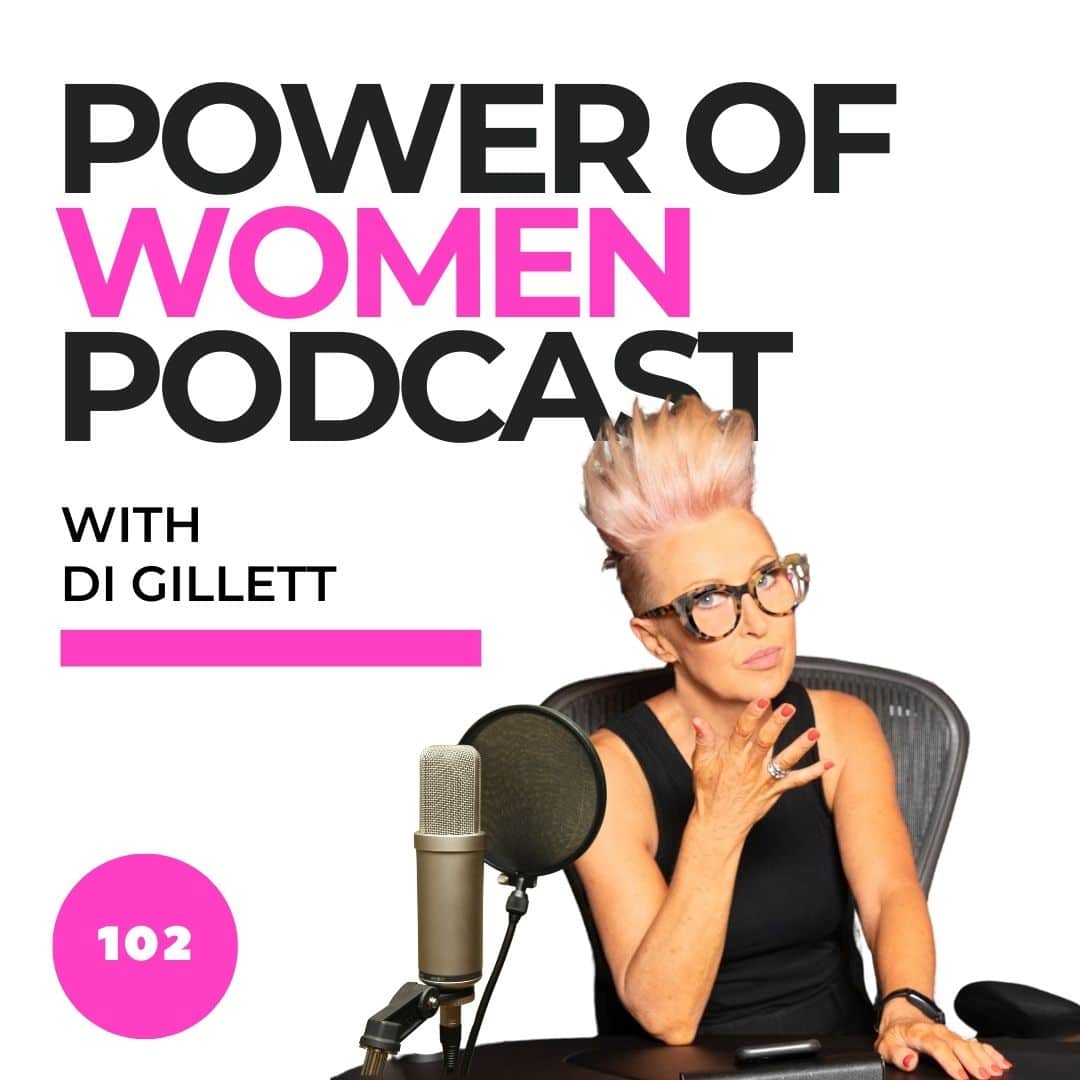
Baring All: My Alopecia Story — Losing My Hair But Not My Identity

Baring All: My Alopecia Story — Losing My Hair But Not My Identity

What happens when the very thing you’ve always been known for, your appearance, suddenly changes?

In this solo episode of the Power Of Women Podcast, I share my raw and deeply personal journey with Alopecia totalis. When all my hair fell out, leaving me bald as a badger, as the saying goes.

What began as an identity-shattering experience of losing all my hair became one of the most defining lessons in resilience I’ve ever lived through. From brutal medical treatments and moments of despair, to unexpected acts of kindness and the courage to speak out, this chapter of my life reshaped not only who I am but also how I show up in the world.

This story starts in 1999, when out of the blue, I developed Alopecia totalis. For someone who had always been known for her long blonde hair, the slow, torturous process of watching it fall out strand by strand was devastating.

Western medicine offered little compassion and even fewer solutions. I endured thousands of cortisone injections, harsh treatments, and blunt words from specialists who saw me as a case rather than a person. None of this was done with any level of compassion or support. It was the most clinical, gut-wrenching experience.

Eventually, alternative therapies, Chinese herbal medicine, and a long journey of healing led to my hair regrowth.

However, this story isn’t just about alopecia. It’s about reclaiming power, resilience, and the courage to speak out. Lessons I now carry into every episode of the Power Of Women Podcast.


In this episode, we explore:

The emotional impact of Alopecia totalis and the identity shift it forced.

Why Western medicine wasn’t the answer for me, and the path toward alternative therapies.

The lowest moment of my journey — and how I pulled myself back.

Building a wig business to create solutions for myself and others.

The random act of kindness that still stays with me.

Lessons in resilience, self-worth, and speaking out to support others.


This is some of what I said:

“I am far more than how I look. I have the resilience to pull myself back from the darkest moment of my life.”

“If you have the courage to speak out about adversity to help others, that is something I cannot stress enough as being a fabulous thing to do.”


💥 New episodes drop every Monday to power your week.

📖 Read the FULL TRANSCRIPT of this conversation here: 👉

FULL TRANSCRIPT:

Di Gillett (00:08)

Hey, I’m Di Gillett and welcome to the Power of Women Podcast. We’re a platform that showcases and celebrates the strength, resilience and experience of women from all walks of life. And today, since I launched the podcast some 18 months ago, I have put all my energy into sharing the stories of some truly incredible and amazing women.


But what I’ve realised is that I actually have a few powerful stories and lessons of my own to share that hopefully will inspire and support others. And I also want to give a shout out to Tori Archbold and thank her for the time we’ve spent together which has afforded me a bigger picture view of what’s next for Power of Women.


So the story I want to open up with today is one that I actually shared on all of my social platforms over the last couple of weeks. And that is when in 1999, out of the blue, I developed Alopecia totalis. Now I was defined by my looks. Sadly, I…


openly admit that. I had long blonde hair, lots of people would comment on it and give me positive feedback. It was my one crowning aspect of my character that I prided myself on. So what happened in 1999 and it was horrendous and it was this slow torturous experience that started


six months earlier where one day at the hairdressers they commented that I had a little bit of hair missing above my ears on both sides of my head. And that slowly became this increasing pattern of baldness that went from my ears to the top of my head over a period of six months. And it was identical


in the way it fell out on both sides of my head. So it was following this very distinct pattern. Getting in the shower each morning and looking down on the shower floor and seeing loads and loads of my prized blonde hair on the shower floor was absolutely gutting. And I can remember going to a particular


dermatologist in the CBD where I was living at the time, my first question was, am I going to lose all my hair? And he very bluntly, without any sugar coating, said, probably. And then proceeded in that particular visit to his clinic to inject up to 2,000 cortisone needles into my rapidly balding head.


was agonizing and I can remember saying to him I can hear the needles actually piercing the skin. You could hear that pop where that syringe was actually breaking through the surface of the skin and I pointed that out to this practitioner and he said I’m sorry the needles probably got blunt where we’ve hit the scalp.


None of this was done with any level of compassion or support. It was the most clinical gut-wrenching experience. And I had walked out of my office to come to this appointment. And I remember jumping on a tram to take the ride back to the office and my head was spinning. I’d just been told all of my hair was going to fall out. I’d just had this agonizing treatment that was delivered in the most brutal manner.


And the messaging from this specialist was beyond words. So then various journeys, I started to think, what am I going to do? And I kept down the Western medicine path, which saw me land at the clinic, another clinic in my hometown of probably one of Australia’s preeminent dermatologists. And that was a really short-lived relationship. And it was


One that ended in a manner which is not uncommon with me if I find something doesn’t fit with my beliefs or my ideas or my values, I speak out and I speak out in a direct and blunt manner. So I started to visit this second specialist who was also a dermatologist and in the world of hair loss there’s a whole lot of other sub-specialists that branch off, trichologists and all sorts of things.


and that had been an unsuccessful journey. So I’m at the rooms of this second dermatologist and his process was similar to the first. Inject you with cortisone and then he would apply this acidic tincture to my nail balding scalp and put you under this heat lamp for an intense period in what was for all intents and purposes a celerium.


And after the third session with this preeminent dermatologist, I said to him, I think your whole process is deeply flawed. And here’s my reasons why. You’re injecting me with cortisone, and cortisone is going to cause pits in my bones and irreparable damage. You’re putting this acidic tincture on my head and then putting me under a heat lamp, which there is no doubt over time is going to give me skin cancer.


So I’m beginning to get suspicious about, know, this is a lifelong engagement until I have no life left with these specialists because one cure causes something else. And his delivery of that was, well, if you don’t believe what I’m doing, don’t bother coming back. I won’t say on this podcast quite what my direct response with it because it is packed full of expletives, but suffice to say you could not have


me to walk back through his doors for another appointment ever again. So then I thought I don’t know what I’m going to do. By this stage I am nearly bald. Nearly bald. I’m starting to wear bandanas. I’m starting to explore what to do with wigs. And at the same time I thought I need to start to look beyond Australia for a cure because I couldn’t find anything here.


And I started to do some research and look at international marketplaces. It seemed at the time that Princess Caroline of Monaco was tackling a similar issue that she wasn’t overly public about, but I’d found a few threads. And keep in mind in 1999, the internet certainly wasn’t the resource tool that it is today and chat GPT did not exist.


So I kept looking at alternative medicine. My biggest problem with Western medicine was that the whole approach to treating this hair loss, which had been termed alopecia totalis, because I was now losing my eyelashes, my eyebrows, all of the hair on my body, which in some respects was a great thing, in other respects was just a nightmare, was that the Western medicine approach to this was to treat


the condition on the surface to treat the after the event where clearly something in my system or in my life or in my surroundings had actually caused this and Western medicine had no interest in that. So the journey went on and I went to naturopaths and all sorts of things and I had some horrendous experiences along the way.


And some of those were I was now close to bald with just a small amount of hair at the top of my head, which if I wore a bandana, allowed me to have sort of some thinning strands down the side of my bandana, which kind of didn’t necessarily announce to the world that I was completely bald. So with my corporate suits going into a CBD office every day,


I integrated a bandana into part of my look. The problem with doing that though was in going and pitching for business and I was in the recruitment and search space was that when you’re trying to pitch for business with clients that might be a particular campaign that was going to last for months and months and months, you could see it all over the client’s face that they had some reticence around engaging you.


because they actually didn’t know whether you were going to be around for that many months because the assumption of hair loss was immediately cancer. So I realised there and then that I had to actually share what I was going through openly, otherwise the commercial fallout of that was going to impact my financial future. And whilst I was in a relationship at the time,


There was no financial support from that relationship and long story short, that relationship which was loaded with coercive control was probably one of the many causal factors that actually kicked off this alopecia totalis which falls into the autoimmune family. I had to show up my financial future and I can remember some


really awful experiences. went to a client meeting one side of town on a particular windy day with my bandana on and I decided to walk back to the office which was probably, I don’t know, about five city blocks across town. Windy day, roaring north wind and halfway back heading back for another meeting at my office, my bandana flew off.


And here I am stuck in the middle of the city in a bright red suit which in its own right stood out. My bandana had blown off and I am standing there with a few bloody strands of hair blowing in the wind and I was absolutely gutted. And I remember walking past a particular shop in the city which was the tie rack which specialised in men’s ties and


and all sorts of scarves. And the woman, when I was walking past the front of the store, saw me and beckoned me to come in. And she had realized what was happening. And she offered me a bandana. And she tied it on my head, wouldn’t let me pay for it, and set me on my way back to my office. And that


a bit like an episode that I’m also releasing this week with Hannah Asafiri was my own personal experience of a random act of kindness that has stuck with me for years. So my balding journey is continuing and I am now down to literally a 20 cent piece circle of hair left on the top of my head.


which at this stage is still long. hadn’t brought myself to be able to do anything with it other than to hang on to it for dear life. And I can remember making the decision to shave that bit off with my then partner’s home shaver because he had a number one blade. And whilst it was one single sweep of the shaver to take it off, it was the…


most challenging thing to do and probably took me 20 minutes to actually take that one sweep and shave it off. Another thing that had happened before I had done that, the company that I was with required us all to go to Sydney for a promotional tour where my business was partnering with the global brand Monster.


as a promotional campaign and I remember it required us to walk around Sydney CBD literally wearing sandwich boards promoting the launch of Monster. It was September and it was blowing a gale in Sydney and I now have it embedded in my brain that September is the windiest month of the year in Australia and it was similar to that experience of losing my bandana.


between meetings previously where walking around the city literally with people looking at you because you’re walking around with this sandwich board on as a walking billboard, wearing a bandana, looking like I was on my last legs, it was probably one of the most horrendous tasks at that point in time to be asked to do.


And we also had a black tie event with the company on the final evening of our billboard walking. And I backed out of that because I just couldn’t work out how to front up to this black tie event and make a bandana work and make it work in terms of presenting me as a perfectionist as I wanted to present. So we come back to Melbourne after that Sydney visit and two days after


I’m on my way to the office. My then partner was driving me to work that morning. And I said to him, I can’t go in. I’m going to ring them and tell them I just can’t go in. And so I made a phone call into the office and spoke to my then line manager who said to me, why aren’t you coping? The bluntness of his reaction of aren’t I coping with losing my hair, going bald, can’t find a cure.


just gutted me. And I went back home. My then partner went off to work and I was home alone and I had to say I hit probably the darkest moment of my life. And I actually seriously contemplated not staying around. I seriously contemplated my own demise. And I sat with that for a few hours.


And in sitting with that for a few hours and writing down on it, not in a journal at that point in time, but on a piece of paper, I did two columns. What I couldn’t cope with and another column, what could I change? I couldn’t cope with how I looked. I couldn’t cope with how I felt. And I couldn’t cope with the fact that I couldn’t find a cure. And I also couldn’t cope


with the fact that I couldn’t find any wigs that fitted me and that was a big part of not being able to control how I looked. On the right hand side of what I could control, I could control speaking out about what I was feeling rather than hiding it. I could, if I put my skills and my network to the test,


solve or start to work on a solution for wigs, if I actually started to develop my own wigs that would fit my particularly small head, which was the issue with wigs in the marketplace at that time. And as such, I could then control how I face the world. So the right-hand column won out and


I set about starting a small wig business, not really from a commercial venture, more from my own personal use. Albeit I sold and gave away a few to other people that I started to come into contact with through what was an alopecia network within my home state. I also started to advocate for people, particularly children struggling with alopecia because I found that I had a voice


that I could speak out about it and talk publicly rather than hiding behind what was happening to me. And I found strength in that and I could share that strength with kids because kids going through an alopecia journey, be it partial or total baldness, in the schoolyard found themselves in a very difficult place. And the schoolyard, as we know, is somewhere where bullying is rife.


And for somebody with any points of difference or something that made them look strange or look odd, made them a target for bullying. So I started to do some work there. The other thing I started to do was I thought I could do more than just talk about this. I could put pen to paper and start to write a book. And my working title for the book was Bulled as a Badger. And I


did garner the interest of two publishing houses. And I started that book, but I have to say regrettably, I never finished it. And maybe that’s something in my unfinished journey again. So I’m still exploring cures. I’m now completely bald. I can’t find a cure. And a friend, in fact, the wife of a friend of mine,


coercive controlling partner suggested that rather than look internationally and do all of this exploring that I was doing, she recommended a very alternative therapist who she put a lot of trust in that was in my hometown in Melbourne. So I made an appointment and drove down to this particular clinic.


And I can never forget walking in the door. was this very rudimentary clinic, in almost a semi-industrial part of Melbourne. And it had a pale blue facade. And the place was called Inerchi and the practitioner was Doug Davies. And in those days, my attire, my work attire was corporate suits and stiletto heels.


And I remember walking into the doors to this very alternative clinic where on the right was a counter and behind that counter was just jars and jars and jars of Chinese medicinal herbs. And on the left was the waiting room and everybody in the waiting room was sitting with their shoes off that they had put on this rack just inside the door. And those shoes were primarily Birkenstocks and all varieties of flat shoes. And the only pair of Louboutin


high heels on that rack were mine. And I hadn’t met Doug at this stage and he walked out to his next appointment, which was me, and he looked at the shoe rack and he looked around and saw me sitting there in a corporate suit and said, Diane, I said yes. And that started the beginning of an incredible relationship with Doug and a two to two and a half year journey of twists and turns that


resulted in me opening my eyes, embracing very alternative therapies and meditation and yoga and a journey with Chinese herbs and custom-made tinctures that over the course of two and a half years got the most amazing result of getting my hair back. Now it wasn’t a linear journey. There were fits and starts. It would start to grow back. It would fall out.


Heartbreaking. Get back on track again, start to grow, we change the medicines. And if anybody’s done Chinese herbal medicine, when somebody asks you to boil these Chinese herbs up into a tea, you know it makes the residents that you might be sharing with anybody else absolutely unlivable because the pungent smell of the tea is unforgettable. And it also takes time. So I’d said to Doug, look,


This whole process is adding more stress into my world when stress is part of my problem. And I need a different solution. I need you to grind these herbs down and turn them into capsules that I can swallow instead of boiling the teas. And he said to me, that’ll take more time. I said, I appreciate that. That I am prepared to acknowledge, but it is the only way I can integrate this ⁓


Process that I’m going through with you into my life without it becoming another part of the problem Which big ticket was probably stress from relationships stress from work stress from being a perfectionist Poor blood flow from having broken my back in a skiing accident many years prior All of these things were an amalgam of things that had my body stiffen up that the net result was Blood flow was compromised to my head


that ultimately led to the hair loss. Now whether in fact my hair loss was an autoimmune disorder, which I actually really question, and whether it was more these causal effects that had caused stress in my body to stiffen and in fact compromise blood flow, which I actually think was more to the point. Through that time, I referred many other


Women in particular who had suffered hair loss, some who had been bald for over 20 years, I referred them to Doug and they started their own amazing journeys of recovery. And one of the proudest moments was leading into Doug Davies finally retiring some, I think probably 10 years ago now, was when they reached out and asked me to write a testimonial for a book that was being written as part of his… ⁓


retirement exit and sitting down and putting a small testimonial to paper that was reflective of this journey was probably one of the hardest things I’ve ever had to put to paper because it had all of those emotions flooding back up and that was probably the first time that I had revisited that story for about 10 years. But I do want to say what this particular journey which


covered the period of 1999 to 2004 where I was just coming into, for the first time, having a full head of short hair when I met my husband George Danekian at a best friend’s wedding. And I remember going on a walk along the beach with George as one of our first dates. And it was the first time I had walked along the waterfront not afraid


of the wind either blowing off my bandana or my wig for the first time in four years. And I can’t tell you how impactful, it’s making me emotional talking about it, how impactful that was to actually take that walk along the beach without fear of being exposed literally. So that four year journey taught me that I am in fact


more than how I look because over that four-year journey I was headhunted twice for significant roles in the recruitment and search space. I also learned that I had the resilience to pull myself back from the darkest moment of my life and identify what I had to live for. And I also identified that I had the courage to speak out publicly


about what I was experiencing as a means of helping others and that was probably one of the most important learnings of all. One of my failures though out of this was I did say at the time when I’d started to get my hair back that I would never be defined by my hair ever again. Well for those who know what I look like today and it’s now 2025


You would have to say I probably never been more defined by my hair in any other point in time in my life than I am today because it is the first statement that probably people notice about me when I walk through the door. So that’s a failure. However, what I am never fazed by is the fact that at any day when my hairdo doesn’t work, I don’t call that a bad hair day because when you have had a hair day,


bad hair day that is actually losing your hair, that changes the benchmark for what a bad hair day is. So I don’t have any bad hair days. So if I can leave you with those three lessons about what I really felt were the most impactful, I am more than I look. I am far more than what I look like. That I have the resilience to pull myself back from my darkest moments.


and I believe you do too, and that if you have the courage to speak out about adversity and things that you’ve experienced in your life to help others, to really help others get back on their journey to recovery, whatever that journey might be, that is something I cannot stress enough as being a fabulous thing to do. So.


I am going to do more episodes at the Power of Women that are solo episodes because I think I do have some stories to share, not all out of adversity, but stories to share that hopefully might inspire others in the same way as some of the incredible stories that I am privileged to share with you through the podcast interviews with the amazing women that I’m bringing to the table and giving a platform through the Power of Women podcast.


I’m going to do the same with just a few more stories like this where I speak to you one on one. I hope it resonated. I hope it’s helpful. Until next time.

Connect with Di:

Connect with Di on LinkedIn

Follow Power Of Women on LinkedIn

Follow Di on Instagram

The Power Of Women Podcast Instagram

Contact Di


Want more fearless, unfiltered stories?


✨ Subscribe to the Power Of Women Podcast on YouTube, Spotify, or Apple Podcasts

Your ⭐⭐⭐⭐⭐star review on Apple Podcasts or Spotify keeps these stories alive.


📩 Sign up for our newsletter — where I share raw reflections and thought leadership on the Power Of Reinvention.

Ep.32 Shirley Wardle | How To Navigate Your Way From Burnout To Balance

Ep.32 Shirley Wardle | How To Navigate Your Way From Burnout To Balance

We’re diving into something so many of us have faced at some point in our lives: Burnout. It can creep in and take a serious toll on our health and well-being as well as impact those around us. In this episode of the Power Of Women podcast, I engage in a candid discussion with Shirley Wardle, an Australian-born, UK-based female executive who has navigated a remarkable career across multiple industries—including telecommunications, media & broadcast, and cybersecurity. Despite her impressive achievements, the relentless pace and high-stakes demands of corporate life took their toll, leading her to the brink of burnout. Shirley opens up about her journey through the corporate ranks, the warning signs she ignored, and the turning point that forced her to reset. The turning point is still raw & still elicits an emotional reaction when talking about it. After stepping away from her executive role, she discovered a new path to balance and well-being. Shirley has just launched a rejuvenating Pilates oasis in the heart of Kent, UK—a project that symbolises her commitment to both physical and mental health.

Tune in to hear how Shirley transformed burnout into a fresh start, what she learned about maintaining well-being in high-pressure environments, and how she’s using her experience to help others find balance in their own lives.

Shirley Wardle

Ep.26 Zoe Bingley-Pullin | The Relationship Between Our Hormones & Our Diet

Ep.26 Zoe Bingley-Pullin | The Relationship Between Our Hormones & Our Diet

Why what we eat matters when it comes to hormonal health. This week on the Power Of Women podcast Di is joined by Nutritionist Zoe Bingley-Pullin to discuss her latest book, “Eat You Way To Healthy Hormones”, an ideal guide to becoming the champion of your own health. We dive deep into the relationship between how we feel and what we should eat to better manage perimenopause and menopause, which then sets the foundations for aging well for women over 40, 50 & 60. Zoe is another inspiring female entrepreneur and a passionate advocate for women’s health & wellbeing.

Zoe Bingley Pullin